
BuddhistCatholicContemplativeEvangelicalGeneral ChristianHinduJewishLatter-day SaintMuslimNew VisionsProgressive Christian
Beliefs
- Buddhist
- Catholic
- Contemplative
- Evangelical
- General Christian
- Hindu
- Jewish
- Latter-day Saint
- More Voices
- Muslim
- New Visions
- Pagan
- Progressive Christian
Topics
- Religion News
- Food and Religion
- Sports and Religion
- Religious Art
- Religious Music and Entertainment
- Religious Events
- History and Religion
- Style and Religion
- Politics and Religion
- Women in Religion
- Recreation Outdoors and Religion
- Business Finance and Religion
- Careers Workplace and Religion
- Education and Religion
- Family Parenting and Religion
- Health Fitness and Religion
- Home and Religion
- Relationships and Religion
- Technology and Religion
- Travel and Religion
Columnists
- Buddhist Columnists
- Business Finance and Religion Columnists
- Careers Workplace and Religion Columnists
- Catholic Columnists
- Contemplative Columnists
- Education and Religion Columnists
- Evangelists Columnists
- Family Parenting and Religion Columnists
- General Christian Columnists
- Health Fitness and Religion Columnists
- Hindu Columnists
- History and Religion Columnists
- Home and Religion Columnists
- Jewish Columnists
- More Voices Columnists
- Latter Day Columnists
- Muslim Columnists
- New Visions Columnists
- Nonreligious Columnists
- Pagan Columnists
- Politics and Religion Columnists
- Progressive Columnists
- Recreation Outdoors and Religion Columnists
- Relationships and Religion Columnists
- Religion News Columnists
- Religious Art Columnists
- Religious Events Columnists
- Religious Music and Entertainment Columnists
- Sports and Religion Columnists
- Style and Religion Columnists
- Technology and Religion Columnists
- Travel and Religion Columnists
- Women in Religion Columnists
Resource Library
- 2026 Calendar
- Library of World Religions
- The 100 Most Holy Places on Earth
- Patheos Answers
- Podcasts
- Videos
- Faith Leaders Database
- Anglican Episcopalian
- Bahai
- Baptist
- Buddhism
- Christianity
- Confucianism
- Eastern Orthodoxy
- Hinduism
- Holiness and Pentecostal
- ISKCON
- Islam
- Judaism
- Lutheran
- Methodist
- The Church of Jesus Christ of Latter-day Saints
- New Age
- Paganism
- Presbytarian and Reformed
- Protestantism
- Religion Behind the Scenes
- Roman Catholic
- Scientology
- Shia Islam
- Sikhism
- Sufism
- Sunni Islam
- Taoism
- Zen
- See all religions
Research Tools
 Ad-Free & Subscriber Log-In Subscription Support
Ad-Free & Subscriber Log-In Subscription Support
Follow Patheos 

- Trending:
- Forgiveness
- |
- Marriage
- |
- Consciousness
- |
- Death Penalty
- |
- Election
- |
- Halloween
 Unequally Yoked
- Home
- Catholic
- Mary’s “Amen” and Our “No”s [Pope Francis Bookclub]
Mary’s “Amen” and Our “No”s [Pope Francis Bookclub]
Last updated on: March 25, 2014 at 3:26 pm by Leah Libresco
Mary’s “Amen” and Our “No”s [Pope Francis Bookclub] 2014-03-25T15:26:48-04:00 Leah Libresco
Patheos Explore the world's faith through different perspectives on religion and spirituality! Patheos has the views of the prevalent religions and spiritualities of the world.
In 2014, I’m reading and blogging through Pope Francis/Cardinal Bergoglio’s Open Mind, Faithful Heart: Reflections on Following Jesus. Every Monday, I’ll be writing about the next meditation in the book, so you’re welcome to peruse them all and/or read along.
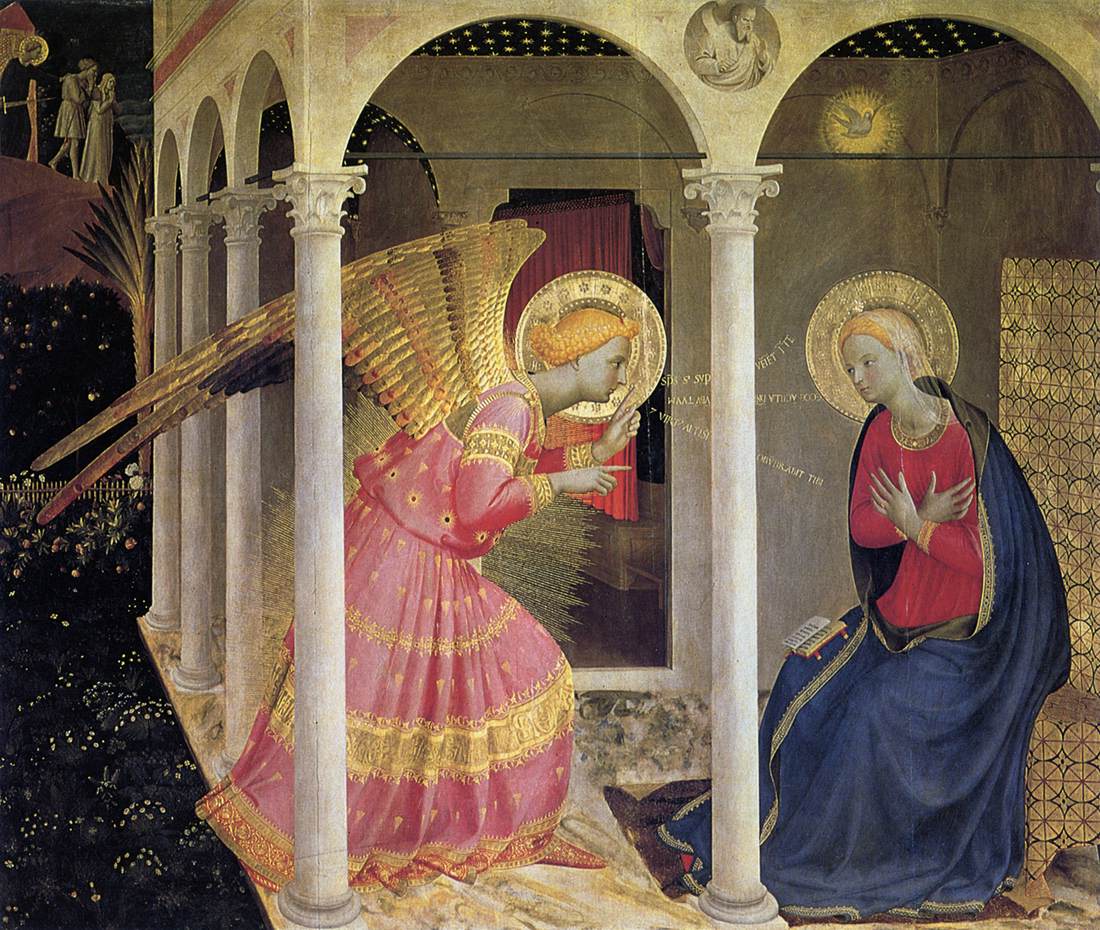
Today is the Feast of the Annunciation, the solemnity in which the Church celebrates Mary’s “Amen” and consent to be part of God’s plan for salvation. But, in our day-to-day lives, we seldom have moments that feel like such obvious invitations to cooperate with grace, and even the ones we do encounter are hardly heralded by the appearance of the Angel Gabriel. But, as Pope Francis points out in this week’s chapter of Open Mind, Faithful Heart, moments of temptation (which seem a lot more common, at least in my life) are also opportunities for grace. He writes:
However [the Devil] attacks, he is always astute in his planning. He knows what he wants. And if he attacks something, it is because he recognizes that it is dangerous. That is why Christian tradition asserts that where there is temptation there is also grace. Temptation is a “difficult time,” Cardinal Pironio tells us, and as such “it belongs to the designs of the Father, being essentially a time of grace and salvation.”
So, when I feel my anger or impatience flare, I’m not necessarily far from God. I’m holding something very precious in my hands, my love and charity, and I have to decide whether to keep it fast or let it go. Each moment of temptation is a chance to turn back to God, and even to be reminded of what He is.
The apophatic strain of theology (also known as via negativa) defines God by what He is not. He is not finite, changeable, etc. We may not have a very good grasp on what it really means to be outside of time, but we know what it’s like to be within time, from our own experience, and we know that God is somehow different.
So, in a moment of temptation, I’m being reminded of what God is not and what I am actually allowed to leave behind, if I choose to. My contempt, my callousness isn’t my proper inheritance, they’re poisoned gifts that I accepted in error, that I’m free to relinquish at any moment.
I might not know exactly what I need to do to put on Christ, but every small, daily temptation is a chance to learn. By saying “No” to each of them (or as many as I can manage), I can grow close enough to God to start recognizing what I could be saying “Amen” to in their stead. What can I do with the time freed up by giving up Threes/2048? If I put aside anger toward an acquaintance, what feeling could blossom in its stead?
While I’m still mired in “the night that covers me / Black as the Pit from pole to pole” I don’t have the perspective to see or desire the graces that Mary said “Amen” to, but, by struggling my way out by a series of small “No”s, I may be able to say yes. Till them, like Puddleglum from C.S. Lewis’s The Silver Chair, I will keep turning away from shadows even when I can’t quite see light:
Suppose we have only dreamed, or made up, all those things-trees and grass and sun and moon and stars and Aslan himself. Suppose we have. Then all I can say is that, in that case, the made-up things seem a good deal more important than the real ones. Suppose this black pit of a kingdom of yours is the only world. Well, it strikes me as a pretty poor one. And that’s a funny thing, when you come to think of it. We’re just babies making up a game, if you’re right. But four babies playing a game can make a play-world which licks your real world hollow. That’s why I’m going to stand by the play world. I’m on Aslan’s side even if there isn’t any Aslan to lead it. I’m going to live as like a Narnian as I can even if there isn’t any Narnia.
When I can’t quite grasp the idea of God, or am mired in despair, I know Him by his difference from the way that I’m wicked or wounded. At the most basic, in a moment of temptation, the answer to “What is God?” is “Not this!” And that “No” denies the great lie, that weakness and wickedness is the best we can hope for. Actual strength may be beyond me, but the desire for strength is within my grasp. The more I hold on to that desire, the more alert and better prepared I’ll be to accept strength, if it’s offered.
Previous Post

March 24, 2014
The PEG who dwells with us
Next Post
March 26, 2014 Hope without Sentimentality
Browse Our Archives
Select a Category 7 Quick Takes Apologetics Atheism Book Conversion Debate Tactics Debates Epistemology/Philosophy Housekeeping Ideological Turing Test Marriage Morality in Practice Parsing Catholicism Possibly Heretical Radio Reviews/Recommendations Sequence Index Spiritual Practice Uncategorized
Select a Month April 2017 March 2017 January 2017 December 2016 September 2016 August 2016 July 2016 June 2016 May 2016 April 2016 March 2016 February 2016 January 2016 December 2015 November 2015 October 2015 September 2015 August 2015 July 2015 June 2015 May 2015 April 2015 March 2015 February 2015 January 2015 December 2014 November 2014 October 2014 September 2014 August 2014 July 2014 June 2014 May 2014 April 2014 March 2014 February 2014 January 2014 December 2013 November 2013 October 2013 September 2013 August 2013 July 2013 June 2013 May 2013 April 2013 March 2013 February 2013 January 2013 December 2012 November 2012 October 2012 September 2012 August 2012 July 2012 June 2012 May 2012 April 2012 March 2012 February 2012 January 2012 December 2011 November 2011 October 2011 September 2011 August 2011 July 2011 June 2011 May 2011 April 2011 March 2011 February 2011 January 2011 December 2010 November 2010 October 2010 September 2010 August 2010 July 2010 June 2010
Follow Us!
TAKE THE
Religious Wisdom Quiz
Who was Esther's cousin and guardian?
Select your answer to see how you score.
Haman Ezra Nehemiah Mordecai
Related posts from Unequally Yoked

Starving Laypeople of Devotion in Church

Aunt Alberta And Being Right (but the boring...

The Virtues of Sad Songs (a piece for...

The (Extra) Mercy of My Conversion
TRENDING AT PATHEOS Catholic

Creation, Preservation, and Teleology in Catholic Theology
As I write this, it is very early Monday morning. Like millions...

The Parable Of The Sower And The Word...
One of Christ’s most famous parables is that of the sower who...

Rejecting Doom: Christian Hope And Human Action
Christianity is a religion of hope. We are to have hope and...

Why I Choose the Eucharist Over the Sermon
Choose the Eucharist, Not the Sermon What are we supposed to get...

5 Design Elements Found in Spiritually Rooted Homes
Putting Spirituality Into Home Decor Our homes are more than our living...

Credo: A Story of God Told with the...
About 10 years ago, I began to imagine a personal "Credo" that...
view all Catholic blogs
Ad-Free & Subscriber Log-In Subscription Support
- About Us
- 2026 Calendar
- Videos
- Podcasts
- Library of World Religions
- Faith In Media Tracker
- Advertise With Us
- Write for Us
- Privacy Policy
- Terms of Service
- Do Not Sell My Data
- Contact Us
- Radiant Digital
- Manage Newsletter Subscriptions
- Unsubscribe From Notifications
- Sitemap
Copyright 2008-2026, Patheos. All rights reserved.
Subscription Support Ad-Free & Subscriber Log-In
Follow Patheos