
BuddhistCatholicContemplativeEvangelicalGeneral ChristianHinduJewishLatter-day SaintMuslimNew VisionsProgressive Christian
Beliefs
- Buddhist
- Catholic
- Contemplative
- Evangelical
- General Christian
- Hindu
- Jewish
- Latter-day Saint
- More Voices
- Muslim
- New Visions
- Pagan
- Progressive Christian
Topics
- Religion News
- Food and Religion
- Sports and Religion
- Religious Art
- Religious Music and Entertainment
- Religious Events
- History and Religion
- Style and Religion
- Politics and Religion
- Women in Religion
- Recreation Outdoors and Religion
- Business Finance and Religion
- Careers Workplace and Religion
- Education and Religion
- Family Parenting and Religion
- Health Fitness and Religion
- Home and Religion
- Relationships and Religion
- Technology and Religion
- Travel and Religion
Columnists
- Buddhist Columnists
- Business Finance and Religion Columnists
- Careers Workplace and Religion Columnists
- Catholic Columnists
- Contemplative Columnists
- Education and Religion Columnists
- Evangelists Columnists
- Family Parenting and Religion Columnists
- General Christian Columnists
- Health Fitness and Religion Columnists
- Hindu Columnists
- History and Religion Columnists
- Home and Religion Columnists
- Jewish Columnists
- More Voices Columnists
- Latter Day Columnists
- Muslim Columnists
- New Visions Columnists
- Nonreligious Columnists
- Pagan Columnists
- Politics and Religion Columnists
- Progressive Columnists
- Recreation Outdoors and Religion Columnists
- Relationships and Religion Columnists
- Religion News Columnists
- Religious Art Columnists
- Religious Events Columnists
- Religious Music and Entertainment Columnists
- Sports and Religion Columnists
- Style and Religion Columnists
- Technology and Religion Columnists
- Travel and Religion Columnists
- Women in Religion Columnists
Resource Library
- 2026 Calendar
- Library of World Religions
- The 100 Most Holy Places on Earth
- Patheos Answers
- Podcasts
- Videos
- Faith Leaders Database
- Anglican Episcopalian
- Bahai
- Baptist
- Buddhism
- Christianity
- Confucianism
- Eastern Orthodoxy
- Hinduism
- Holiness and Pentecostal
- ISKCON
- Islam
- Judaism
- Lutheran
- Methodist
- The Church of Jesus Christ of Latter-day Saints
- New Age
- Paganism
- Presbytarian and Reformed
- Protestantism
- Religion Behind the Scenes
- Roman Catholic
- Scientology
- Shia Islam
- Sikhism
- Sufism
- Sunni Islam
- Taoism
- Zen
- See all religions
Research Tools
 Ad-Free & Subscriber Log-In Subscription Support
Ad-Free & Subscriber Log-In Subscription Support
Follow Patheos 

- Trending:
- Forgiveness
- |
- Marriage
- |
- Consciousness
- |
- Death Penalty
- |
- Election
- |
- Halloween
 Unequally Yoked
- Home
- Catholic
- Who Needs Literature for Problem Solving?
Who Needs Literature for Problem Solving?
Last updated on: February 4, 2014 at 10:56 am by Leah Libresco
Who Needs Literature for Problem Solving? 2014-02-04T10:56:36-05:00 Leah Libresco
Patheos Explore the world's faith through different perspectives on religion and spirituality! Patheos has the views of the prevalent religions and spiritualities of the world.
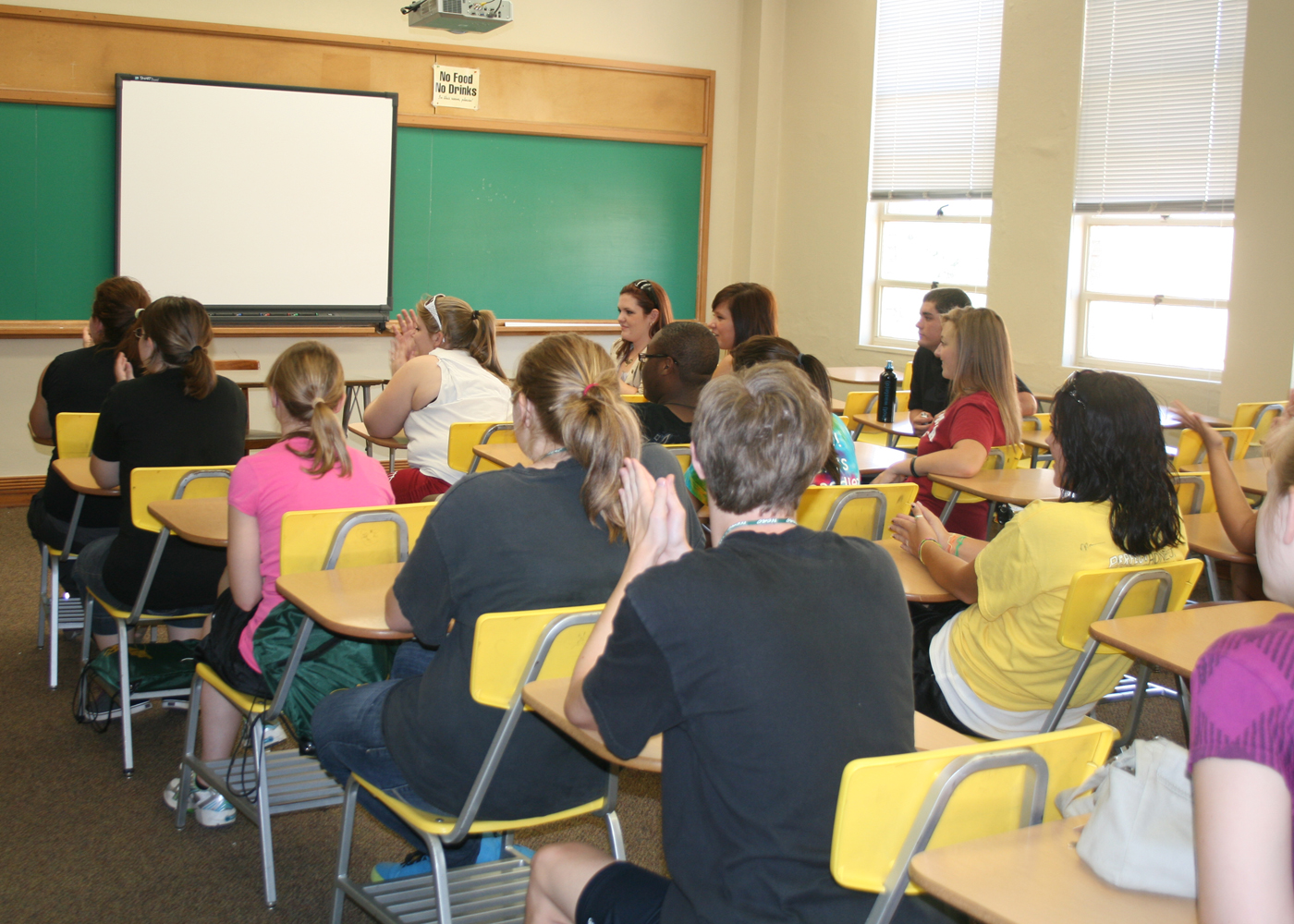
When I was watching the State of the Union last week, one of the lines in the education section rubbed me the wrong way, and I’m blogging on the topic at AmCon today:
In his State of the Union last week, President Obama talked a little about how he wants to improve the education system, but his most revealing line might have been where he listed the subjects he thinks our schools should be teaching:
Teachers and principals in schools from Tennessee to Washington, D.C., are making big strides in preparing students with the skills for the new economy—problem solving, critical thinking, science, technology, engineering, math.
History, philosophy, social studies, comparative theology, and literature are all left off the list. Obama chose to focus on the hard sciences, as opposed to the social (or, more pointedly, “soft”) sciences of the humanities. The classes he chose to emphasize are all about solving problems handed to you, not about choosing which parts of your society, life, or state are problematic.
Perhaps this was only because Obama was talking about how schools prepare our children to join the economy. In order to do a job, it may only be necessary to have the technical skills to manage the tasks delegated to you. But, as a citizen, we need more. As an eventual parent, spouse, or friend, we need more.
In the most recent issue of First Things, Helen Rittelmeyer paints a picture of what our politics look like when we start pushing philosophy, history, and other non-numerical disciplines out of the problem solving toolbox. She turns to the Roper v. Simmons and Miller v. Alabama Supreme Court cases, which examined the justness of sentencing children to death or life without parole.
The Roper majority did not explicitly refer to any neuroscientific studies, though several amici did. This omission was rectified in the subsequent juvenile-offender case Miller v. Alabama (2012), in which Justice Elena Kagan, distressingly confident that scientific and social-scientific conclusions are reliable and impartial and mean just what they appear to mean to the average layman, cited an amicus brief that states: “It is increasingly clear that adolescent brains are not yet fully mature in regions and systems related to higher-order executive function such as impulse control, planning ahead, and risk avoidance.”
The Roper and Miller majorities obviously meant to convey the message, “Executing juvenile offenders, or sentencing them to life without parole, is wrong. We abhor the idea. It revolts us. We would as soon bring back drawing and quartering as affirm this practice in twenty-first-century America.” In a decision hinging on the definition of cruelty, such ethical resolve is entirely appropriate. Yet when taking this moral stand, the justices felt it necessary to reach for evidence, and when reaching for evidence, they looked to behavioral science and neurology.
I’m still, naturally, an enormous fan of math and science. (I’m in the middle of Edward Frenkel’s memoir Love and Math: The Heart of Hidden Reality right now, and enjoying the heck out of it). But our education system often treats STEM fields as the only useful subjects. Standardized testing reveals our priorities, and, when teachers are primarily tested and evaluated on their ability to teach formulas and facts, their other disciplines get short shrift. This tendency is particularly pronounced in elementary school, when students have a single teacher for all subjects, and, thus, all time is fungible. As tests approach, elementary school teachers may skimp on history and art to go over times tables again.
And even in the higher grades, since we tend to teach what we can test, English is reduced to reading comprehension and social studies to memorization. Students are evaluated on their ability to decrypt what an author meant by a motif, not on employing one themselves or on deciding when it’s best to say something slant. In history, they’re more often tested on the timelines of social movements than on how knowing the blind spots of the past might help us spot those in our own age.
I don’t want to, as Helen fears, make the arts justify themselves according to their utility, but I’d kind of like the pendulum to swing far enough that we could accuse more people of overusing literature as their default approach to problems.
Previous Post

February 3, 2014
Lost in the Weeds and the Wheat [Pope Francis Bookclub]
Next Post

February 5, 2014 Getting Sex Ed from Literature
Browse Our Archives
Select a Category 7 Quick Takes Apologetics Atheism Book Conversion Debate Tactics Debates Epistemology/Philosophy Housekeeping Ideological Turing Test Marriage Morality in Practice Parsing Catholicism Possibly Heretical Radio Reviews/Recommendations Sequence Index Spiritual Practice Uncategorized
Select a Month April 2017 March 2017 January 2017 December 2016 September 2016 August 2016 July 2016 June 2016 May 2016 April 2016 March 2016 February 2016 January 2016 December 2015 November 2015 October 2015 September 2015 August 2015 July 2015 June 2015 May 2015 April 2015 March 2015 February 2015 January 2015 December 2014 November 2014 October 2014 September 2014 August 2014 July 2014 June 2014 May 2014 April 2014 March 2014 February 2014 January 2014 December 2013 November 2013 October 2013 September 2013 August 2013 July 2013 June 2013 May 2013 April 2013 March 2013 February 2013 January 2013 December 2012 November 2012 October 2012 September 2012 August 2012 July 2012 June 2012 May 2012 April 2012 March 2012 February 2012 January 2012 December 2011 November 2011 October 2011 September 2011 August 2011 July 2011 June 2011 May 2011 April 2011 March 2011 February 2011 January 2011 December 2010 November 2010 October 2010 September 2010 August 2010 July 2010 June 2010
Follow Us!
TAKE THE
Religious Wisdom Quiz
In Philippians, what does Paul say he has learned in any and every situation?
Select your answer to see how you score.
To pray without ceasing To trust God To be content To give thanks
Related posts from Unequally Yoked

Rational Faith: More working hypothesis than logical proof

Running the numbers on smokers, migrants, cancer, and...
I've taken a job at FiveThirtyEight!

Life Lessons that Can't be Taught at College's...
TRENDING AT PATHEOS Catholic

Rejecting Doom: Christian Hope And Human Action
Christianity is a religion of hope. We are to have hope and...

It’s What Comes From Within Which Matters
One of the most difficult things for us to understand is why...

Why I Choose the Eucharist Over the Sermon
Choose the Eucharist, Not the Sermon What are we supposed to get...

5 Design Elements Found in Spiritually Rooted Homes
Putting Spirituality Into Home Decor Our homes are more than our living...

Credo: A Story of God Told with the...
About 10 years ago, I began to imagine a personal "Credo" that...

The Anatomy of Divine Revelation in Catholic Thought
The claim that God has made Himself known to human beings is...
view all Catholic blogs
Ad-Free & Subscriber Log-In Subscription Support
- About Us
- 2026 Calendar
- Videos
- Podcasts
- Library of World Religions
- Faith In Media Tracker
- Advertise With Us
- Write for Us
- Privacy Policy
- Terms of Service
- Do Not Sell My Data
- Contact Us
- Radiant Digital
- Manage Newsletter Subscriptions
- Unsubscribe From Notifications
- Sitemap
Copyright 2008-2026, Patheos. All rights reserved.
Subscription Support Ad-Free & Subscriber Log-In
Follow Patheos