
BuddhistCatholicContemplativeEvangelicalGeneral ChristianHinduJewishLatter-day SaintMuslimNew VisionsProgressive Christian
Beliefs
- Buddhist
- Catholic
- Contemplative
- Evangelical
- General Christian
- Hindu
- Jewish
- Latter-day Saint
- More Voices
- Muslim
- New Visions
- Pagan
- Progressive Christian
Topics
- Religion News
- Food and Religion
- Sports and Religion
- Religious Art
- Religious Music and Entertainment
- Religious Events
- History and Religion
- Style and Religion
- Politics and Religion
- Women in Religion
- Recreation Outdoors and Religion
- Business Finance and Religion
- Careers Workplace and Religion
- Education and Religion
- Family Parenting and Religion
- Health Fitness and Religion
- Home and Religion
- Relationships and Religion
- Technology and Religion
- Travel and Religion
Columnists
- Buddhist Columnists
- Business Finance and Religion Columnists
- Careers Workplace and Religion Columnists
- Catholic Columnists
- Contemplative Columnists
- Education and Religion Columnists
- Evangelists Columnists
- Family Parenting and Religion Columnists
- General Christian Columnists
- Health Fitness and Religion Columnists
- Hindu Columnists
- History and Religion Columnists
- Home and Religion Columnists
- Jewish Columnists
- More Voices Columnists
- Latter Day Columnists
- Muslim Columnists
- New Visions Columnists
- Nonreligious Columnists
- Pagan Columnists
- Politics and Religion Columnists
- Progressive Columnists
- Recreation Outdoors and Religion Columnists
- Relationships and Religion Columnists
- Religion News Columnists
- Religious Art Columnists
- Religious Events Columnists
- Religious Music and Entertainment Columnists
- Sports and Religion Columnists
- Style and Religion Columnists
- Technology and Religion Columnists
- Travel and Religion Columnists
- Women in Religion Columnists
Resource Library
- 2026 Calendar
- Library of World Religions
- The 100 Most Holy Places on Earth
- Patheos Answers
- Podcasts
- Videos
- Faith Leaders Database
- Anglican Episcopalian
- Bahai
- Baptist
- Buddhism
- Christianity
- Confucianism
- Eastern Orthodoxy
- Hinduism
- Holiness and Pentecostal
- ISKCON
- Islam
- Judaism
- Lutheran
- Methodist
- The Church of Jesus Christ of Latter-day Saints
- New Age
- Paganism
- Presbytarian and Reformed
- Protestantism
- Religion Behind the Scenes
- Roman Catholic
- Scientology
- Shia Islam
- Sikhism
- Sufism
- Sunni Islam
- Taoism
- Zen
- See all religions
Research Tools
 Ad-Free & Subscriber Log-In Subscription Support
Ad-Free & Subscriber Log-In Subscription Support
Follow Patheos 

- Trending:
- Forgiveness
- |
- Marriage
- |
- Consciousness
- |
- Death Penalty
- |
- Election
- |
- Halloween
 Unequally Yoked
- Home
- Catholic
- Forgiving is Not Endorsing
Forgiving is Not Endorsing
Last updated on: February 10, 2014 at 11:10 am by Leah Libresco
Forgiving is Not Endorsing 2014-02-10T11:10:07-05:00 Leah Libresco
Patheos Explore the world's faith through different perspectives on religion and spirituality! Patheos has the views of the prevalent religions and spiritualities of the world.
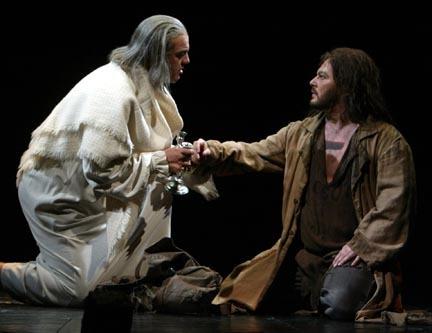
Before he passed away, Pope John Paul II entrusted a number of his personal letters to Cardinal Stanislaw Dziwisz, his secretary, and asked him to burn the letters after the pontiff was dead. Not only did Cardinal Dziwisz fail to carry out the pope’s wishes, he is now releasing the edited papers as a book.
The Cardinal is releasing the private notes because he finds them spiritually lovely, not because there’s some very exciting secret or scandal contained within. But, for me, the most interesting part of this story has been this remark by R. Andrew Chesnut, as reported by The New York Times.
R. Andrew Chesnut, a professor of religious studies at Virginia Commonwealth University, noted that the book was not covered by the dogma of papal infallibility, which applies to pronouncements of church doctrine but not to a pope’s personal musings. In the end, he said, John Paul would probably have absolved the cardinal for what some consider a moral transgression.
“The pope, though he may have been irritated, would have forgiven him,” he said.
There’s a very curious understanding of absolution in these two paragraphs. If forgiveness is extended, it seems to say, the fault couldn’t have been that severe. The pope’s presumptive forgiveness is enough to, in the phrasing of the article, downgrade a moral transgression to an irritation.
To forgive someone is not to sanction or endorse the previous transgression. And it’s not a prerequisite that the person forgiven have acted in good faith or in the service of some competing good. The pope could just as easily forgive an assassin (as, indeed, he did), but his act of charity wouldn’t leave us saying that the whole attempted assassination was morally negligible.
Otherwise, we’re selling forgiveness short. We’re saying it can only be extended to the people who aren’t really bad at all; it’s more like the perfunctory “Sorry!” “’Sokay” when you bump into someone on the subway.
When we talk about forgiveness, we’re often talking about acceptance, warts and all. If the Pope forgave the Cardinal, he must accept all of him, including his broken promise, so the broken promise can’t be that serious, if it, too, can be accepted and loved.
But absolution looks more like reminding ourselves which parts of us should be accepted and which should be opposed. When a penitent comes seeking forgiveness or absolution, whether in a confessional or from a friend, ze has already distanced zerself from zer sin. Not in the sense of forgetting about the act or ignoring it, but by regretting it and recognizing it as alien to zerself and zer telos.
When someone offers us forgiveness, he or she is recognizing in turn that we are not our sin. It’s more akin to a cancerous grown that we struggle to corral. It’d be odd to hear someone say, “I love and value all of you, including your tumor!” It would be just as strange to say, “I accept all of you, including your sin” since that would mean granting sin some legitimate tenancy within us.
When we forgive someone, we acknowledge sin as sin without essentializing it. The forgiveness the pope would offer would be removing the Homeric epithet of “the oathbreaker Cardinal” or “the assassin Mehmet Ali Aǧca” and restoring us as “the child of God, who broke an oath.”
Sin is something we do, not something we should give up and say we are. Seeking forgiveness begins when we recognize and detest our sins, and is extended when a friend agrees with us, and shows us that it’s possible to loathe them and love us.
This is the second day of our Novena to St. Dymphna. You can find the prayers here and a little background on why we’re praying it here.
Previous Post
February 7, 2014
Courage is What You Do in the Presence of Fear
Next Post

February 9, 2014 Aidez-moi, s'il vous plait?
Browse Our Archives
Select a Category 7 Quick Takes Apologetics Atheism Book Conversion Debate Tactics Debates Epistemology/Philosophy Housekeeping Ideological Turing Test Marriage Morality in Practice Parsing Catholicism Possibly Heretical Radio Reviews/Recommendations Sequence Index Spiritual Practice Uncategorized
Select a Month April 2017 March 2017 January 2017 December 2016 September 2016 August 2016 July 2016 June 2016 May 2016 April 2016 March 2016 February 2016 January 2016 December 2015 November 2015 October 2015 September 2015 August 2015 July 2015 June 2015 May 2015 April 2015 March 2015 February 2015 January 2015 December 2014 November 2014 October 2014 September 2014 August 2014 July 2014 June 2014 May 2014 April 2014 March 2014 February 2014 January 2014 December 2013 November 2013 October 2013 September 2013 August 2013 July 2013 June 2013 May 2013 April 2013 March 2013 February 2013 January 2013 December 2012 November 2012 October 2012 September 2012 August 2012 July 2012 June 2012 May 2012 April 2012 March 2012 February 2012 January 2012 December 2011 November 2011 October 2011 September 2011 August 2011 July 2011 June 2011 May 2011 April 2011 March 2011 February 2011 January 2011 December 2010 November 2010 October 2010 September 2010 August 2010 July 2010 June 2010
Follow Us!
TAKE THE
Religious Wisdom Quiz
Which Psalm contains "Create in me a clean heart, O God"?
Select your answer to see how you score.
Psalm 70 Psalm 33 Psalm 110 Psalm 51
Related posts from Unequally Yoked

The Tony-Winning Guide To Temptation And Grace

Hedgehogs of Redemption and the Comedy of Grace

Mercy, Justice, and How To Tell The Difference

Pinning down *which* error is made in this...
TRENDING AT PATHEOS Catholic

Rejecting Doom: Christian Hope And Human Action
Christianity is a religion of hope. We are to have hope and...

It’s What Comes From Within Which Matters
One of the most difficult things for us to understand is why...

Why I Choose the Eucharist Over the Sermon
Choose the Eucharist, Not the Sermon What are we supposed to get...

5 Design Elements Found in Spiritually Rooted Homes
Putting Spirituality Into Home Decor Our homes are more than our living...

Credo: A Story of God Told with the...
About 10 years ago, I began to imagine a personal "Credo" that...

The Anatomy of Divine Revelation in Catholic Thought
The claim that God has made Himself known to human beings is...
view all Catholic blogs
Ad-Free & Subscriber Log-In Subscription Support
- About Us
- 2026 Calendar
- Videos
- Podcasts
- Library of World Religions
- Faith In Media Tracker
- Advertise With Us
- Write for Us
- Privacy Policy
- Terms of Service
- Do Not Sell My Data
- Contact Us
- Radiant Digital
- Manage Newsletter Subscriptions
- Unsubscribe From Notifications
- Sitemap
Copyright 2008-2026, Patheos. All rights reserved.
Subscription Support Ad-Free & Subscriber Log-In
Follow Patheos