
BuddhistCatholicContemplativeEvangelicalGeneral ChristianHinduJewishLatter-day SaintMuslimNew VisionsProgressive Christian
Beliefs
- Buddhist
- Catholic
- Contemplative
- Evangelical
- General Christian
- Hindu
- Jewish
- Latter-day Saint
- More Voices
- Muslim
- New Visions
- Pagan
- Progressive Christian
Topics
- Religion News
- Food and Religion
- Sports and Religion
- Religious Art
- Religious Music and Entertainment
- Religious Events
- History and Religion
- Style and Religion
- Politics and Religion
- Women in Religion
- Recreation Outdoors and Religion
- Business Finance and Religion
- Careers Workplace and Religion
- Education and Religion
- Family Parenting and Religion
- Health Fitness and Religion
- Home and Religion
- Relationships and Religion
- Technology and Religion
- Travel and Religion
Columnists
- Buddhist Columnists
- Business Finance and Religion Columnists
- Careers Workplace and Religion Columnists
- Catholic Columnists
- Contemplative Columnists
- Education and Religion Columnists
- Evangelists Columnists
- Family Parenting and Religion Columnists
- General Christian Columnists
- Health Fitness and Religion Columnists
- Hindu Columnists
- History and Religion Columnists
- Home and Religion Columnists
- Jewish Columnists
- More Voices Columnists
- Latter Day Columnists
- Muslim Columnists
- New Visions Columnists
- Nonreligious Columnists
- Pagan Columnists
- Politics and Religion Columnists
- Progressive Columnists
- Recreation Outdoors and Religion Columnists
- Relationships and Religion Columnists
- Religion News Columnists
- Religious Art Columnists
- Religious Events Columnists
- Religious Music and Entertainment Columnists
- Sports and Religion Columnists
- Style and Religion Columnists
- Technology and Religion Columnists
- Travel and Religion Columnists
- Women in Religion Columnists
Resource Library
- 2026 Calendar
- Library of World Religions
- The 100 Most Holy Places on Earth
- Patheos Answers
- Podcasts
- Videos
- Faith Leaders Database
- Anglican Episcopalian
- Bahai
- Baptist
- Buddhism
- Christianity
- Confucianism
- Eastern Orthodoxy
- Hinduism
- Holiness and Pentecostal
- ISKCON
- Islam
- Judaism
- Lutheran
- Methodist
- The Church of Jesus Christ of Latter-day Saints
- New Age
- Paganism
- Presbytarian and Reformed
- Protestantism
- Religion Behind the Scenes
- Roman Catholic
- Scientology
- Shia Islam
- Sikhism
- Sufism
- Sunni Islam
- Taoism
- Zen
- See all religions
Research Tools
 Ad-Free & Subscriber Log-In Subscription Support
Ad-Free & Subscriber Log-In Subscription Support
Follow Patheos 

- Trending:
- Forgiveness
- |
- Marriage
- |
- Consciousness
- |
- Death Penalty
- |
- Election
- |
- Halloween
 Unequally Yoked
- Home
- Catholic
- Philosophy Class Should Be Perilous
Philosophy Class Should Be Perilous
Last updated on: November 18, 2013 at 3:28 pm by Leah Libresco
Philosophy Class Should Be Perilous 2013-11-18T15:28:02-05:00 Leah Libresco
Patheos Explore the world's faith through different perspectives on religion and spirituality! Patheos has the views of the prevalent religions and spiritualities of the world.
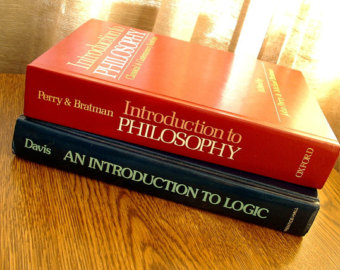
Over at Friendly Atheist, there’s a trailer for a terrible looking Christian movie, where a noble Christian student stands up to his bullying atheist philosophy professor who begins the semester by essentially asking telling his students that they’ll need to disavow religion in order to pass. Cue the intense stares, montages, lazy apologetics, and guest appearance by a Christian rock band.
Hemant Mehta titled his post “This Must Be What Christian Apologists Think A College Philosophy Class Is Like.” I think he’s probably right, at least for a certain subset of isolated Christians, who have read about atheists on the internet, but still don’t know any in person. Almost no professors behave this way, especially as all you’d be teaching your students is to pander to you, not to change their worldview.
But there is a tendency in philosophy classes (at least some that I’ve taken) that should concern Christians and probably atheists as well. In my one year philosophy survey (Plato to Wittgenstein, courtesy of Directed Studies – possibly the best decision I made at Yale), we spent a reasonable amount of time tackling proofs for the existence of God. We read Anselm and Augustine and Aquinas.
A class full of students being led through theology by a professor who wants to make sure they grasp the basic argument and then the reasons people objected might sound like exactly what the makers of that movie feared. But, in a bunch of the philosophy sections, there was no soaring music or dramatic confrontations.
A reasonable proportion of the professors covered philosophy the way people imagine organic chemistry is taught: a lengthy list of obscure facts to memorize, along with their relationships to each other, for use in some later class or practice. Second term of Directed Studies, I had a much drier professor who never asked us if we planned to live differently after reading Hegel, or even, in the abstract, what we’d have to give up or change if we found him compelling. The papers I wrote that term were much more book report-y.
But I was lucky enough to have Professor Andre Willis (on loan from the Div School) who would go over our reading in Epictetus’s Handbook, make sure we understood the material, and then would ask. “So… Stoicism. Would you do it?”
(Cue freshman-Leah throwing her hand into the air, saying “Of course! How could you allow your mind to be corrupted by the demands of your body? And why would you indulge yourself being uselessly sad about things you can’t control? How wasteful!” and surprising the heck out of her classmates).
Professor Willis treated every piece of reading we had assigned as a live question. If we thought the arguments or rebuttals were compelling, we might well walk out of the class with a new way to live. We weren’t storing up information against some future exam; we were bringing in test cases from our own lives as well as from the readings. I can certainly imagine Professor Willis’s class being a threat to a student’s faith, or another’s atheism, or a third’s deontology of any stripe. He did us the courtesy of treating philosophy as high stakes.
It should be much more jarring for a Christian student to sit in a room full of students and a professor who treat philosophical questions about the existence of God as purely abstract and low-key than to be the student of the angry professor in the film. The character is clearly disrespectful of his students, shouting them down and threatening them, but he at least is respectful of his field, and believes the ideas he teaches have normative consequences.
Previous Post

November 17, 2013
Prizes for the 2013 Ideological Turing Test
Next Post

November 19, 2013 Disenchanting the Villain
Browse Our Archives
Select a Category 7 Quick Takes Apologetics Atheism Book Conversion Debate Tactics Debates Epistemology/Philosophy Housekeeping Ideological Turing Test Marriage Morality in Practice Parsing Catholicism Possibly Heretical Radio Reviews/Recommendations Sequence Index Spiritual Practice Uncategorized
Select a Month April 2017 March 2017 January 2017 December 2016 September 2016 August 2016 July 2016 June 2016 May 2016 April 2016 March 2016 February 2016 January 2016 December 2015 November 2015 October 2015 September 2015 August 2015 July 2015 June 2015 May 2015 April 2015 March 2015 February 2015 January 2015 December 2014 November 2014 October 2014 September 2014 August 2014 July 2014 June 2014 May 2014 April 2014 March 2014 February 2014 January 2014 December 2013 November 2013 October 2013 September 2013 August 2013 July 2013 June 2013 May 2013 April 2013 March 2013 February 2013 January 2013 December 2012 November 2012 October 2012 September 2012 August 2012 July 2012 June 2012 May 2012 April 2012 March 2012 February 2012 January 2012 December 2011 November 2011 October 2011 September 2011 August 2011 July 2011 June 2011 May 2011 April 2011 March 2011 February 2011 January 2011 December 2010 November 2010 October 2010 September 2010 August 2010 July 2010 June 2010
Follow Us!
TAKE THE
Religious Wisdom Quiz
According to James, what should you do if you lack wisdom?
Select your answer to see how you score.
Ask God, who gives generously Seek counsel from elders Study the Torah diligently Fast and pray for seven days
Related posts from Unequally Yoked

And You Shall Know the Free Thinkers By...

What's the Difference between Forgiveness and Self-Deception?

In the Moral Landscape, There Still Be Dragons

The Uncharity of Ideological Containment
TRENDING AT PATHEOS Catholic

The Parable Of The Sower And The Word...
One of Christ’s most famous parables is that of the sower who...

Rejecting Doom: Christian Hope And Human Action
Christianity is a religion of hope. We are to have hope and...

Why I Choose the Eucharist Over the Sermon
Choose the Eucharist, Not the Sermon What are we supposed to get...

5 Design Elements Found in Spiritually Rooted Homes
Putting Spirituality Into Home Decor Our homes are more than our living...

Credo: A Story of God Told with the...
About 10 years ago, I began to imagine a personal "Credo" that...

The Anatomy of Divine Revelation in Catholic Thought
The claim that God has made Himself known to human beings is...
view all Catholic blogs
Ad-Free & Subscriber Log-In Subscription Support
- About Us
- 2026 Calendar
- Videos
- Podcasts
- Library of World Religions
- Faith In Media Tracker
- Advertise With Us
- Write for Us
- Privacy Policy
- Terms of Service
- Do Not Sell My Data
- Contact Us
- Radiant Digital
- Manage Newsletter Subscriptions
- Unsubscribe From Notifications
- Sitemap
Copyright 2008-2026, Patheos. All rights reserved.
Subscription Support Ad-Free & Subscriber Log-In
Follow Patheos