
BuddhistCatholicContemplativeEvangelicalGeneral ChristianHinduJewishLatter-day SaintMuslimNew VisionsProgressive Christian
Beliefs
- Buddhist
- Catholic
- Contemplative
- Evangelical
- General Christian
- Hindu
- Jewish
- Latter-day Saint
- More Voices
- Muslim
- New Visions
- Pagan
- Progressive Christian
Topics
- Religion News
- Food and Religion
- Sports and Religion
- Religious Art
- Religious Music and Entertainment
- Religious Events
- History and Religion
- Style and Religion
- Politics and Religion
- Women in Religion
- Recreation Outdoors and Religion
- Business Finance and Religion
- Careers Workplace and Religion
- Education and Religion
- Family Parenting and Religion
- Health Fitness and Religion
- Home and Religion
- Relationships and Religion
- Technology and Religion
- Travel and Religion
Columnists
- Buddhist Columnists
- Business Finance and Religion Columnists
- Careers Workplace and Religion Columnists
- Catholic Columnists
- Contemplative Columnists
- Education and Religion Columnists
- Evangelists Columnists
- Family Parenting and Religion Columnists
- General Christian Columnists
- Health Fitness and Religion Columnists
- Hindu Columnists
- History and Religion Columnists
- Home and Religion Columnists
- Jewish Columnists
- More Voices Columnists
- Latter Day Columnists
- Muslim Columnists
- New Visions Columnists
- Nonreligious Columnists
- Pagan Columnists
- Politics and Religion Columnists
- Progressive Columnists
- Recreation Outdoors and Religion Columnists
- Relationships and Religion Columnists
- Religion News Columnists
- Religious Art Columnists
- Religious Events Columnists
- Religious Music and Entertainment Columnists
- Sports and Religion Columnists
- Style and Religion Columnists
- Technology and Religion Columnists
- Travel and Religion Columnists
- Women in Religion Columnists
Resource Library
- 2026 Calendar
- Library of World Religions
- The 100 Most Holy Places on Earth
- Patheos Answers
- Podcasts
- Videos
- Faith Leaders Database
- Anglican Episcopalian
- Bahai
- Baptist
- Buddhism
- Christianity
- Confucianism
- Eastern Orthodoxy
- Hinduism
- Holiness and Pentecostal
- ISKCON
- Islam
- Judaism
- Lutheran
- Methodist
- The Church of Jesus Christ of Latter-day Saints
- New Age
- Paganism
- Presbytarian and Reformed
- Protestantism
- Religion Behind the Scenes
- Roman Catholic
- Scientology
- Shia Islam
- Sikhism
- Sufism
- Sunni Islam
- Taoism
- Zen
- See all religions
Research Tools
 Ad-Free & Subscriber Log-In Subscription Support
Ad-Free & Subscriber Log-In Subscription Support
Follow Patheos 

- Trending:
- Forgiveness
- |
- Marriage
- |
- Consciousness
- |
- Death Penalty
- |
- Election
- |
- Halloween
 Unequally Yoked
- Home
- Catholic
- Keeping Ideas Close Enough to Play With
Keeping Ideas Close Enough to Play With
Last updated on: November 26, 2013 at 3:37 pm by Leah Libresco
Keeping Ideas Close Enough to Play With 2013-11-26T15:37:16-05:00 Leah Libresco
Patheos Explore the world's faith through different perspectives on religion and spirituality! Patheos has the views of the prevalent religions and spiritualities of the world.
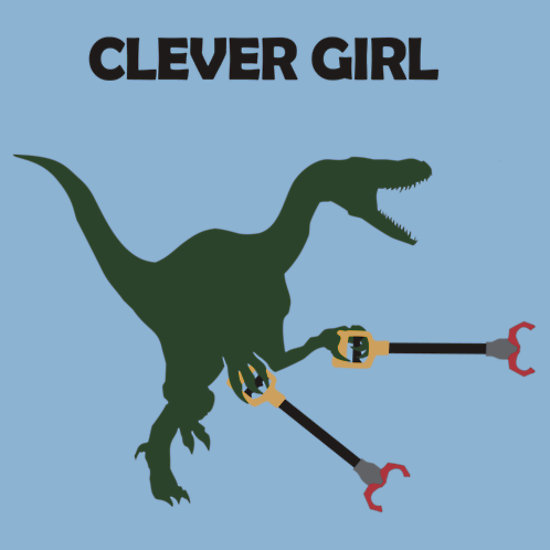
What my brain feels like while I’m reading
My friend Brienne is working on extending and teaching memory techniques. Think Moonwalking with Einstein, on steroids. In a recent blog post, she addresses the question most people have about memory feats: How important is this kind of thing when I can carry the internet in my pocket? I’ve been known to interrupt people by saying “Hang on, let me put that in my real brain,” when they’re trying to give me book recommendations or schedule something, and my phone isn’t in my hand. It’s second nature for me to store important information outside me head. But there’s a cost to that, Brienne writes:
After all, there’s no reason for most of us to know that a mole of carbon atoms is 6.022*10^23 atoms of carbon: In the unlikely event that you need to do stoichiometry, Wolfram Alpha will answer all of your questions. This much is certainly true. But in the context of a discussion of mnemonics, something about it feels off. “We don’t need internal memory because our external memory is so much better” misframes the relationship between memory and learning.
If you take a 400 level college course, it probably has prerequisites. You must first have taken a related 300 or 200 level course. Why?
Because often, in order to learn things you first must know things. Human memory is a massive network of associations, and recognizing relationships among concepts requires each concept be located somewhere in that network. Without well-traveled pathways, the memories will get lost. They will find neither conscious awareness nor each other.
You cannot innovate, you cannot invent, and you cannot seamlessly integrate information stored only externally. Creativity is not a magical spell for creating something out of nothing. It’s the ability to make new associations among old ideas and new data. To be creative, the raw materials must reside in internal memory. Wikipedia is simply not available to the subtle workings of fluid intelligence.
This is how I feel when I’m reading. It’s true that I often need to look up quotations from books, but I get a clear sense when some idea or scene has slipped into my my internal vocabulary (in the sense of yesterday’s Hofstadter post). To be able to make connections between ideas or to test or extend them, I need to be fluent in them to begin with.
I can’t easily express myself in French when I need to keep looking up the differences between “connaître” and “savoir.” Both mean to know, but the former is closer to “to be familliar with” (as in a neighborhood) and the second is closer to “to know a fact” (as in an address). And I won’t end up connaître-ing a chartacter or a thinker whose subtleties pass below my level of awareness.
Sometime, when I’m preparing a post (or, in college, a debate speech) I basically feel as though everything I hear and read passes within reach of large grabber-arms attached to various concepts. There are a family of arms belonging to the “philosophy of medicine” neighborhood which may be specifically attached to proprioception (or, within that, prosthetic limbs, sense augmentation, borders between my fingers and my keyboard as instruments of my will) or the sin-eating/drone warfare/PTSD cluster, etc.
I wouldn’t be able to flag and play with these ideas without some seed information stored in my memory, not my google docs, that the new readings compliment or clash with. I’m interested in Brienne’s ongoing series on memory, not so much because I need to memorize a lot of data, but because I’m curious about how some ideas end up with grabby-arms, and how I can consciously promote other interests to that status, if I want.
Previous Post
November 25, 2013
It's Hard to Do Vocabulary Drills in Personal Languages
Next Post

November 27, 2013 Seeing through the Cloud of Saints
Browse Our Archives
Select a Category 7 Quick Takes Apologetics Atheism Book Conversion Debate Tactics Debates Epistemology/Philosophy Housekeeping Ideological Turing Test Marriage Morality in Practice Parsing Catholicism Possibly Heretical Radio Reviews/Recommendations Sequence Index Spiritual Practice Uncategorized
Select a Month April 2017 March 2017 January 2017 December 2016 September 2016 August 2016 July 2016 June 2016 May 2016 April 2016 March 2016 February 2016 January 2016 December 2015 November 2015 October 2015 September 2015 August 2015 July 2015 June 2015 May 2015 April 2015 March 2015 February 2015 January 2015 December 2014 November 2014 October 2014 September 2014 August 2014 July 2014 June 2014 May 2014 April 2014 March 2014 February 2014 January 2014 December 2013 November 2013 October 2013 September 2013 August 2013 July 2013 June 2013 May 2013 April 2013 March 2013 February 2013 January 2013 December 2012 November 2012 October 2012 September 2012 August 2012 July 2012 June 2012 May 2012 April 2012 March 2012 February 2012 January 2012 December 2011 November 2011 October 2011 September 2011 August 2011 July 2011 June 2011 May 2011 April 2011 March 2011 February 2011 January 2011 December 2010 November 2010 October 2010 September 2010 August 2010 July 2010 June 2010
Follow Us!
TAKE THE
Religious Wisdom Quiz
How many plagues did God send upon Egypt?
Select your answer to see how you score.
Seven Twenty Ten Twelve
Related posts from Unequally Yoked

I'm keynoting at a Con for Christian nerds!

How do you throw a fasting and silence...

Lenten disciplines draw on our weakness, not our...

I'm speaking about my conversion in Denver!
TRENDING AT PATHEOS Catholic

The Parable Of The Sower And The Word...
One of Christ’s most famous parables is that of the sower who...

Rejecting Doom: Christian Hope And Human Action
Christianity is a religion of hope. We are to have hope and...

Why I Choose the Eucharist Over the Sermon
Choose the Eucharist, Not the Sermon What are we supposed to get...

5 Design Elements Found in Spiritually Rooted Homes
Putting Spirituality Into Home Decor Our homes are more than our living...

Credo: A Story of God Told with the...
About 10 years ago, I began to imagine a personal "Credo" that...

The Anatomy of Divine Revelation in Catholic Thought
The claim that God has made Himself known to human beings is...
view all Catholic blogs
Ad-Free & Subscriber Log-In Subscription Support
- About Us
- 2026 Calendar
- Videos
- Podcasts
- Library of World Religions
- Faith In Media Tracker
- Advertise With Us
- Write for Us
- Privacy Policy
- Terms of Service
- Do Not Sell My Data
- Contact Us
- Radiant Digital
- Manage Newsletter Subscriptions
- Unsubscribe From Notifications
- Sitemap
Copyright 2008-2026, Patheos. All rights reserved.
Subscription Support Ad-Free & Subscriber Log-In
Follow Patheos