
BuddhistCatholicContemplativeEvangelicalGeneral ChristianHinduJewishLatter-day SaintMuslimNew VisionsProgressive Christian
Beliefs
- Buddhist
- Catholic
- Contemplative
- Evangelical
- General Christian
- Hindu
- Jewish
- Latter-day Saint
- More Voices
- Muslim
- New Visions
- Pagan
- Progressive Christian
Topics
- Religion News
- Food and Religion
- Sports and Religion
- Religious Art
- Religious Music and Entertainment
- Religious Events
- History and Religion
- Style and Religion
- Politics and Religion
- Women in Religion
- Recreation Outdoors and Religion
- Business Finance and Religion
- Careers Workplace and Religion
- Education and Religion
- Family Parenting and Religion
- Health Fitness and Religion
- Home and Religion
- Relationships and Religion
- Technology and Religion
- Travel and Religion
Columnists
- Buddhist Columnists
- Business Finance and Religion Columnists
- Careers Workplace and Religion Columnists
- Catholic Columnists
- Contemplative Columnists
- Education and Religion Columnists
- Evangelists Columnists
- Family Parenting and Religion Columnists
- General Christian Columnists
- Health Fitness and Religion Columnists
- Hindu Columnists
- History and Religion Columnists
- Home and Religion Columnists
- Jewish Columnists
- More Voices Columnists
- Latter Day Columnists
- Muslim Columnists
- New Visions Columnists
- Nonreligious Columnists
- Pagan Columnists
- Politics and Religion Columnists
- Progressive Columnists
- Recreation Outdoors and Religion Columnists
- Relationships and Religion Columnists
- Religion News Columnists
- Religious Art Columnists
- Religious Events Columnists
- Religious Music and Entertainment Columnists
- Sports and Religion Columnists
- Style and Religion Columnists
- Technology and Religion Columnists
- Travel and Religion Columnists
- Women in Religion Columnists
Resource Library
- 2026 Calendar
- Library of World Religions
- The 100 Most Holy Places on Earth
- Patheos Answers
- Podcasts
- Videos
- Faith Leaders Database
- Anglican Episcopalian
- Bahai
- Baptist
- Buddhism
- Christianity
- Confucianism
- Eastern Orthodoxy
- Hinduism
- Holiness and Pentecostal
- ISKCON
- Islam
- Judaism
- Lutheran
- Methodist
- The Church of Jesus Christ of Latter-day Saints
- New Age
- Paganism
- Presbytarian and Reformed
- Protestantism
- Religion Behind the Scenes
- Roman Catholic
- Scientology
- Shia Islam
- Sikhism
- Sufism
- Sunni Islam
- Taoism
- Zen
- See all religions
Research Tools
 Ad-Free & Subscriber Log-In Subscription Support
Ad-Free & Subscriber Log-In Subscription Support
Follow Patheos 

- Trending:
- Forgiveness
- |
- Marriage
- |
- Consciousness
- |
- Death Penalty
- |
- Election
- |
- Halloween
 Unequally Yoked
- Home
- Catholic
- The Ones Who Walk Away from Dresediel Lex
The Ones Who Walk Away from Dresediel Lex
Last updated on: October 29, 2013 at 5:01 pm by Leah Libresco
The Ones Who Walk Away from Dresediel Lex 2013-10-29T17:01:23-04:00 Leah Libresco
Patheos Explore the world's faith through different perspectives on religion and spirituality! Patheos has the views of the prevalent religions and spiritualities of the world.
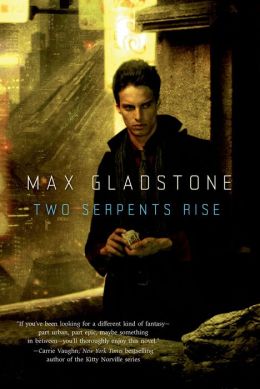
Max Gladstone’s Two Serpents Rise, is his second book in the Craft sequence and falls chronologically before his first book, Three Parts Dead. His first novel took place in Alt Coulomb, a city where at least one god is alive and when and living on the faith of his worshippers. The new novel, set in Dresediel Lex, is in a city where the gods have been replaced by something a good deal more industrial.
Before the Dresediel Lex’s gods had their place usurped, they were of the feathered serpents, sustained by sacrificed hearts on the top of pyramids variety. The novel’s protaganist, Caleb, is the son of the last high priest of their order, who is now an insurgent leading a rump caucus of worshippers. Caleb, meanwhile, works for the organization that supplanted his father and his father’s faith. Red King Consolidated uses Craft (magic powered by human souls — a fraction of your own or somebody else’s) to run the city.
The story is largely about the tension between the old ways and the new, and also a romance, a conspiracy, and some particularly horrifying demons. But it’s mostly a story about relationships and sacrifice. Craft is transactional, to do magic, something always changes hands. Think of it as being like, at minimum, the dollar that has to be paid to make a sales contract real.
But sacrifices are given freely, without thought of recompense. Only some of the temple sacrifices under the old system were volunteers, but partisans of the old system say at least their sacrifices were felt as loss and were visible. The new masters of Dresediel Lex have democratized sacrifice, and any drain on souls is more at the level of taxation in our world – a small to moderate inconvenience, but not painful. Is it worse to be hurt so slowly and lengthily that you can’t feel the ache? Is there something more sublime about making payment into sacrifice, instead of mere debt, and enshrining it in ritual?
In our world, the closest analogy I can come up with is monks, friars, nuns, and sisters. These are people wholly consecrated to religious life, whose devotion we cannot ignore. For many orders, their habits mark them out as set apart, when we run into them on the street. Of course, some cloistered nuns or monastics are nearly invisible to us, turning their lives over to prayer but separated from the world they pray for. How do we stay conscious of their work, and remain startled by its intensity? How do we keep manageable sacrifices and gifts of ourselves from feeling humdrum and dull?
I received a free copy of this book for review. You can read parts one and two of my interview with the author, Max Gladstone, at the links. He’s also done another interview with Alyssa Rosenberg of ThinkProgress, which I heartily recommend. And you can follow Max on his own blog here.
Previous Post
October 28, 2013
Q&A with Max Gladstone (Part 2)
Next Post

October 31, 2013 Costumes, Constraint, and Chapel Veils
Browse Our Archives
Select a Category 7 Quick Takes Apologetics Atheism Book Conversion Debate Tactics Debates Epistemology/Philosophy Housekeeping Ideological Turing Test Marriage Morality in Practice Parsing Catholicism Possibly Heretical Radio Reviews/Recommendations Sequence Index Spiritual Practice Uncategorized
Select a Month April 2017 March 2017 January 2017 December 2016 September 2016 August 2016 July 2016 June 2016 May 2016 April 2016 March 2016 February 2016 January 2016 December 2015 November 2015 October 2015 September 2015 August 2015 July 2015 June 2015 May 2015 April 2015 March 2015 February 2015 January 2015 December 2014 November 2014 October 2014 September 2014 August 2014 July 2014 June 2014 May 2014 April 2014 March 2014 February 2014 January 2014 December 2013 November 2013 October 2013 September 2013 August 2013 July 2013 June 2013 May 2013 April 2013 March 2013 February 2013 January 2013 December 2012 November 2012 October 2012 September 2012 August 2012 July 2012 June 2012 May 2012 April 2012 March 2012 February 2012 January 2012 December 2011 November 2011 October 2011 September 2011 August 2011 July 2011 June 2011 May 2011 April 2011 March 2011 February 2011 January 2011 December 2010 November 2010 October 2010 September 2010 August 2010 July 2010 June 2010
Follow Us!
TAKE THE
Religious Wisdom Quiz
Who asked Jesus, "What is truth?"
Select your answer to see how you score.
Peter Caiaphas Judas Pilate
Related posts from Unequally Yoked



The Boring, Quiet Rituals That Sustain Us Spiritually

Starving Laypeople of Devotion in Church
TRENDING AT PATHEOS Catholic

Rejecting Doom: Christian Hope And Human Action
Christianity is a religion of hope. We are to have hope and...

It’s What Comes From Within Which Matters
One of the most difficult things for us to understand is why...

Why I Choose the Eucharist Over the Sermon
Choose the Eucharist, Not the Sermon What are we supposed to get...

5 Design Elements Found in Spiritually Rooted Homes
Putting Spirituality Into Home Decor Our homes are more than our living...

Credo: A Story of God Told with the...
About 10 years ago, I began to imagine a personal "Credo" that...

The Anatomy of Divine Revelation in Catholic Thought
The claim that God has made Himself known to human beings is...
view all Catholic blogs
Ad-Free & Subscriber Log-In Subscription Support
- About Us
- 2026 Calendar
- Videos
- Podcasts
- Library of World Religions
- Faith In Media Tracker
- Advertise With Us
- Write for Us
- Privacy Policy
- Terms of Service
- Do Not Sell My Data
- Contact Us
- Radiant Digital
- Manage Newsletter Subscriptions
- Unsubscribe From Notifications
- Sitemap
Copyright 2008-2026, Patheos. All rights reserved.
Subscription Support Ad-Free & Subscriber Log-In
Follow Patheos