
BuddhistCatholicContemplativeEvangelicalGeneral ChristianHinduJewishLatter-day SaintMuslimNew VisionsProgressive Christian
Beliefs
- Buddhist
- Catholic
- Contemplative
- Evangelical
- General Christian
- Hindu
- Jewish
- Latter-day Saint
- More Voices
- Muslim
- New Visions
- Pagan
- Progressive Christian
Topics
- Religion News
- Food and Religion
- Sports and Religion
- Religious Art
- Religious Music and Entertainment
- Religious Events
- History and Religion
- Style and Religion
- Politics and Religion
- Women in Religion
- Recreation Outdoors and Religion
- Business Finance and Religion
- Careers Workplace and Religion
- Education and Religion
- Family Parenting and Religion
- Health Fitness and Religion
- Home and Religion
- Relationships and Religion
- Technology and Religion
- Travel and Religion
Columnists
- Buddhist Columnists
- Business Finance and Religion Columnists
- Careers Workplace and Religion Columnists
- Catholic Columnists
- Contemplative Columnists
- Education and Religion Columnists
- Evangelists Columnists
- Family Parenting and Religion Columnists
- General Christian Columnists
- Health Fitness and Religion Columnists
- Hindu Columnists
- History and Religion Columnists
- Home and Religion Columnists
- Jewish Columnists
- More Voices Columnists
- Latter Day Columnists
- Muslim Columnists
- New Visions Columnists
- Nonreligious Columnists
- Pagan Columnists
- Politics and Religion Columnists
- Progressive Columnists
- Recreation Outdoors and Religion Columnists
- Relationships and Religion Columnists
- Religion News Columnists
- Religious Art Columnists
- Religious Events Columnists
- Religious Music and Entertainment Columnists
- Sports and Religion Columnists
- Style and Religion Columnists
- Technology and Religion Columnists
- Travel and Religion Columnists
- Women in Religion Columnists
Resource Library
- 2026 Calendar
- Library of World Religions
- The 100 Most Holy Places on Earth
- Patheos Answers
- Podcasts
- Videos
- Faith Leaders Database
- Anglican Episcopalian
- Bahai
- Baptist
- Buddhism
- Christianity
- Confucianism
- Eastern Orthodoxy
- Hinduism
- Holiness and Pentecostal
- ISKCON
- Islam
- Judaism
- Lutheran
- Methodist
- The Church of Jesus Christ of Latter-day Saints
- New Age
- Paganism
- Presbytarian and Reformed
- Protestantism
- Religion Behind the Scenes
- Roman Catholic
- Scientology
- Shia Islam
- Sikhism
- Sufism
- Sunni Islam
- Taoism
- Zen
- See all religions
Research Tools
 Ad-Free & Subscriber Log-In Subscription Support
Ad-Free & Subscriber Log-In Subscription Support
Follow Patheos 

- Trending:
- Forgiveness
- |
- Marriage
- |
- Consciousness
- |
- Death Penalty
- |
- Election
- |
- Halloween
 Unequally Yoked
- Home
- Catholic
- Six Impossible Things Before Breakfast
Six Impossible Things Before Breakfast
Last updated on: May 1, 2013 at 5:32 pm by Leah Libresco
Six Impossible Things Before Breakfast 2013-05-01T17:32:39-04:00 Leah Libresco
Patheos Explore the world's faith through different perspectives on religion and spirituality! Patheos has the views of the prevalent religions and spiritualities of the world.
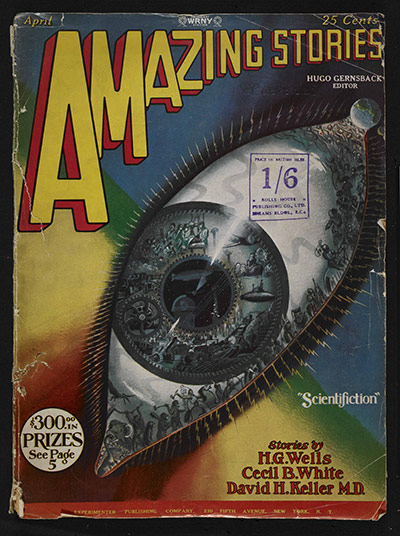
There’s always been more fiction than explicit philosophy on this blog and, in C.S. Lewis’s Of Other Worlds: Essays and Stories, he puts his finger on why I like sidling up on meaning of life questions in this way. Lewis is discussing various subtypes of science fiction — starting with the ones where plot and character take a back seat to the author showing you a clever engineering problem and ending up here:
In all these the impossibility is, as I have said, a postulate. Something to be granted before the story gets going. Within that frame we inhabit the known world and are as realistic as anyone else. But, in the next type (and the last I shall deal with) the marvellous is in the grain of the whole work. We are, throughout, in another world. What makes the world valuable is not, of course, mere multiplication of the marvellous either for comic effect (as in Baron Munchausen and sometimes in Ariosto and Boiardo) or for mere astonishment (as, I think, in the worst of the Arabian Nights or in some children’s stories), but it’s quality, it’s flavour. If good novels are comments on life, good stories of this sort are (which are very much rarer) are actual additions to life; they give, like certain rare dreams, sensations we never had before, and enlarge our conception of the range of possible experiences. Hence the difficulty of discussing them at all with those who refuse to be taken out of what they call ‘real life’ — which means, perhaps, the groove through some far wider area of possible experience to which our senses and our biological, social, or economic interests usually confine us.
One of the reasons I’ve always liked science fiction is that it took human nature and tried to figure out which parts of it were needed for us to still recognise each other as human. How much of our current idea of being human is tied too tightly to current trends and culture How would we behave if we were exposed to different stresses? What could we give up or augment before being too alien to still belong to our tradition?
Fiction doesn’t just give us the opportunity to think new thoughts, it gives us the chance to do it with training wheels on. It’s a lot easier to think about Javert, notice problems, and notice that I share them than it is to just introspect and expect to come up with true beliefs on a subject where I have a lot of bias. Fiction (like my LARPing strategy) lets us encounter possibly threatening ideas without setting off our defenses.
And, for me, anyway, it’s also been a way of encountering ordinary, no-LEDs-in-eyebrows people without setting off defences. Fiction helps make it clear that people (even people who disagree with you) usually act in ways that feel intellectually consistent from the inside. So it was fiction that helped me start to catch on to the typical mind fallacy. The most tempting thing to do is to just treat other people like they’re speaking French, and make sure I’m translating, but getting first or third person limited views of other people’s minds helps make me curious about what it would be like to try on a different disposition and what I might lose or gain.
Previous Post

April 26, 2013
Keep Calm and Report Bugs
Next Post

May 2, 2013 An Apologia for Tentavism
Browse Our Archives
Select a Category 7 Quick Takes Apologetics Atheism Book Conversion Debate Tactics Debates Epistemology/Philosophy Housekeeping Ideological Turing Test Marriage Morality in Practice Parsing Catholicism Possibly Heretical Radio Reviews/Recommendations Sequence Index Spiritual Practice Uncategorized
Select a Month April 2017 March 2017 January 2017 December 2016 September 2016 August 2016 July 2016 June 2016 May 2016 April 2016 March 2016 February 2016 January 2016 December 2015 November 2015 October 2015 September 2015 August 2015 July 2015 June 2015 May 2015 April 2015 March 2015 February 2015 January 2015 December 2014 November 2014 October 2014 September 2014 August 2014 July 2014 June 2014 May 2014 April 2014 March 2014 February 2014 January 2014 December 2013 November 2013 October 2013 September 2013 August 2013 July 2013 June 2013 May 2013 April 2013 March 2013 February 2013 January 2013 December 2012 November 2012 October 2012 September 2012 August 2012 July 2012 June 2012 May 2012 April 2012 March 2012 February 2012 January 2012 December 2011 November 2011 October 2011 September 2011 August 2011 July 2011 June 2011 May 2011 April 2011 March 2011 February 2011 January 2011 December 2010 November 2010 October 2010 September 2010 August 2010 July 2010 June 2010
Follow Us!
TAKE THE
Religious Wisdom Quiz
How long did Persian empire rule?
Select your answer to see how you score.
180 years 200 years 150 years 250 years
Related posts from Unequally Yoked

Rational Faith: More working hypothesis than logical proof

Life Lessons that Can't be Taught at College's...

Books that Change the Way You Think [Radio...

Your religion... is it bigger than a breadbox?
TRENDING AT PATHEOS Catholic

Rejecting Doom: Christian Hope And Human Action
Christianity is a religion of hope. We are to have hope and...

It’s What Comes From Within Which Matters
One of the most difficult things for us to understand is why...

Why I Choose the Eucharist Over the Sermon
Choose the Eucharist, Not the Sermon What are we supposed to get...

5 Design Elements Found in Spiritually Rooted Homes
Putting Spirituality Into Home Decor Our homes are more than our living...

Credo: A Story of God Told with the...
About 10 years ago, I began to imagine a personal "Credo" that...

The Anatomy of Divine Revelation in Catholic Thought
The claim that God has made Himself known to human beings is...
view all Catholic blogs
Ad-Free & Subscriber Log-In Subscription Support
- About Us
- 2026 Calendar
- Videos
- Podcasts
- Library of World Religions
- Faith In Media Tracker
- Advertise With Us
- Write for Us
- Privacy Policy
- Terms of Service
- Do Not Sell My Data
- Contact Us
- Radiant Digital
- Manage Newsletter Subscriptions
- Unsubscribe From Notifications
- Sitemap
Copyright 2008-2026, Patheos. All rights reserved.
Subscription Support Ad-Free & Subscriber Log-In
Follow Patheos