
BuddhistCatholicContemplativeEvangelicalGeneral ChristianHinduJewishLatter-day SaintMuslimNew VisionsProgressive Christian
Beliefs
- Buddhist
- Catholic
- Contemplative
- Evangelical
- General Christian
- Hindu
- Jewish
- Latter-day Saint
- More Voices
- Muslim
- New Visions
- Pagan
- Progressive Christian
Topics
- Religion News
- Food and Religion
- Sports and Religion
- Religious Art
- Religious Music and Entertainment
- Religious Events
- History and Religion
- Style and Religion
- Politics and Religion
- Women in Religion
- Recreation Outdoors and Religion
- Business Finance and Religion
- Careers Workplace and Religion
- Education and Religion
- Family Parenting and Religion
- Health Fitness and Religion
- Home and Religion
- Relationships and Religion
- Technology and Religion
- Travel and Religion
Columnists
- Buddhist Columnists
- Business Finance and Religion Columnists
- Careers Workplace and Religion Columnists
- Catholic Columnists
- Contemplative Columnists
- Education and Religion Columnists
- Evangelists Columnists
- Family Parenting and Religion Columnists
- General Christian Columnists
- Health Fitness and Religion Columnists
- Hindu Columnists
- History and Religion Columnists
- Home and Religion Columnists
- Jewish Columnists
- More Voices Columnists
- Latter Day Columnists
- Muslim Columnists
- New Visions Columnists
- Nonreligious Columnists
- Pagan Columnists
- Politics and Religion Columnists
- Progressive Columnists
- Recreation Outdoors and Religion Columnists
- Relationships and Religion Columnists
- Religion News Columnists
- Religious Art Columnists
- Religious Events Columnists
- Religious Music and Entertainment Columnists
- Sports and Religion Columnists
- Style and Religion Columnists
- Technology and Religion Columnists
- Travel and Religion Columnists
- Women in Religion Columnists
Resource Library
- 2026 Calendar
- Library of World Religions
- The 100 Most Holy Places on Earth
- Patheos Answers
- Podcasts
- Videos
- Faith Leaders Database
- Anglican Episcopalian
- Bahai
- Baptist
- Buddhism
- Christianity
- Confucianism
- Eastern Orthodoxy
- Hinduism
- Holiness and Pentecostal
- ISKCON
- Islam
- Judaism
- Lutheran
- Methodist
- The Church of Jesus Christ of Latter-day Saints
- New Age
- Paganism
- Presbytarian and Reformed
- Protestantism
- Religion Behind the Scenes
- Roman Catholic
- Scientology
- Shia Islam
- Sikhism
- Sufism
- Sunni Islam
- Taoism
- Zen
- See all religions
Research Tools
 Ad-Free & Subscriber Log-In Subscription Support
Ad-Free & Subscriber Log-In Subscription Support
Follow Patheos 

- Trending:
- Forgiveness
- |
- Marriage
- |
- Consciousness
- |
- Death Penalty
- |
- Election
- |
- Halloween
 Unequally Yoked
- Home
- Catholic
- Oh, the places you might not want to go!
Oh, the places you might not want to go!
Last updated on: May 25, 2013 at 6:42 pm by Leah Libresco
Oh, the places you might not want to go! 2013-05-25T18:42:44-04:00 Leah Libresco
Patheos Explore the world's faith through different perspectives on religion and spirituality! Patheos has the views of the prevalent religions and spiritualities of the world.
Tomorrow, I get to watch my brother graduate, and I’m quite excited for him, and, well, for the commencement speaker: Joss Whedon. Since my brother is not a public figure, and Whedon is, I’ll limit the content of this post to only one of these awesome people.
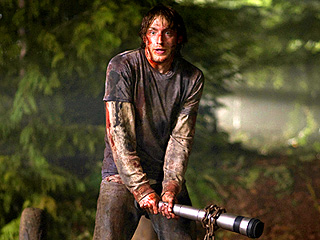
There were two quite interesting pieces on the arts in The New York Times this weekend. A feature on Whedon mentioned his delightful habit of having Shakespeare parties while shooting Buffy and Angel, and the impact this had on his plans for the show.
[T]he readings helped Mr. Whedon learn about the untapped potential of his actors. After seeing Ms. Acker as Lady Capulet in “Romeo and Juliet,” he decided to kill off her “Angel” character and turn her into a merciless demon. He recalled: “I was like, ‘Oh, I’ve never seen her be frightening. I think the world should see that, too.’ ”
Once you cast someone, you tend to keep seeing them through the lens of their role as currently conceived. Watching his actors experiment in another context gave Whedon the chance to reevaluate what he had to work with. I’ve liked having Shakespeare readings chez moi for similar reason — in a new context, my friends sometimes surprise me. A viewing of Passion means I get to hear opinions I otherwise wouldn’t have known how to elicit on the relationship of yearning, eros, and agape. A reading of Arcadia means a friend who was reading the text for the first time gave Valentine a much warmer character than I would have expected could work.
But there can be a cost to experimentation. In the magazine section, there was a feature piece on BYU’s animation program, and the prevalence of Mormons in media. The part of the article I found most striking was the sense of responsibility the students expressed.
Now, Strong said, he avoids even some PG-13 movies. “You never know what’s going to come up on that screen, and once you see something, you can’t get it out of your head. Ever.” He thought a moment, then asked: “What’s the name of that film?” I don’t know what I expected him to say, but I was surprised when he said, “ ‘Wedding Crashers.’ ”
In high school, a friend persuaded him to sneak into the movie, and the nudity, as well as Vince Vaughn and Owen Wilson’s general attitude toward women, shook him. After that, when he saw a girl, his first thoughts would be about whether she was attractive; he felt himself moving through the world essentially casting or rejecting its inhabitants as possible extras in “Wedding Crashers.” You could argue that this was only the harmless awakening of a teenage male mind. But Strong didn’t see it this way. In fact, he feels so uneasy about this stretch of his life that later, when he began dating his future wife, he made a point of discussing it with her. (“I had changed,” he explained, “but I wanted anything like that to be open between us.”)
Art can prompt yearnings or questions we’d rather not be aware of; there was a reason that Plato thought it might be necessary to throw the poets out of his Republic. It’s not a matter of being ostriches with out head in the sand, but of not privileging a hypothesis. It’s not helpful for Iago to ask about Desdemona’s fidelity, since Othello is incapable of letting go of the question. Our consumption of art shapes our assumptions, and it’s useful to pause and think about what you want to feed into your model of the world, or what you want to reinforce a yearning for.
This is why I was ultimately so uncomfortable when I saw The Cabin in the Woods, Whedon’s admittedly brilliant horror story. Unlike Buffy, where the heroine is strengthened, weakened, but mostly just defined by her connections to others, Cabin seemed casually nihilistic. In the final scene, the survivors seem to despair without being upset by their nihilism. There’s nothing left that they’d like to preserve or fight for. They give up on themselves, each other, and the rest of humanity.
And I’d been enjoying the wit of it all so much up to that point. I felt a bit betrayed to have so much obvious cleverness and delight in creation go into the service of a story that seemed to discard all humanity, on net, as so much dust. It felt like Whedon had used his abilities in the service of something that was antipathetic to all his care and concerns.
I think this is what the LDS filmmakers are worried about, and I think they’re right to be concerned. The NYT writer is clearly worried that the BYU films may become unbalanced somehow. Too focused on morals, too cleaned up, or just too goshdarn cheery. A movie that feels untrue is certainly not likely to be persuasive, but a film like Of Gods and Men can make it plain that there’s nothing fantastical or saccharine about goodness.
But Wheedon’s story about Shakespeare nights makes it clear that it’s useful to have a little noise and variance, even if you’re pretty confident you’re on to a good thing. So I wouldn’t be upset or surprised if the LDS animators end up making some films at odds with their values or that have effects on their audience that they didn’t expect. The main thing is that they won’t be transgressive for the sake of transgression and edge. It can be useful to sidle up on truth by exploring the grotesque. After all, I’m still not sure if my discomfort with the nihilism of Cabin was Whedon’s goal. It was a horror movie, after all.
Previous Post

May 24, 2013
7 Quick Takes (5/24/13)
Next Post

May 26, 2013 Anyone have an ideological immersion course?
Browse Our Archives
Select a Category 7 Quick Takes Apologetics Atheism Book Conversion Debate Tactics Debates Epistemology/Philosophy Housekeeping Ideological Turing Test Marriage Morality in Practice Parsing Catholicism Possibly Heretical Radio Reviews/Recommendations Sequence Index Spiritual Practice Uncategorized
Select a Month April 2017 March 2017 January 2017 December 2016 September 2016 August 2016 July 2016 June 2016 May 2016 April 2016 March 2016 February 2016 January 2016 December 2015 November 2015 October 2015 September 2015 August 2015 July 2015 June 2015 May 2015 April 2015 March 2015 February 2015 January 2015 December 2014 November 2014 October 2014 September 2014 August 2014 July 2014 June 2014 May 2014 April 2014 March 2014 February 2014 January 2014 December 2013 November 2013 October 2013 September 2013 August 2013 July 2013 June 2013 May 2013 April 2013 March 2013 February 2013 January 2013 December 2012 November 2012 October 2012 September 2012 August 2012 July 2012 June 2012 May 2012 April 2012 March 2012 February 2012 January 2012 December 2011 November 2011 October 2011 September 2011 August 2011 July 2011 June 2011 May 2011 April 2011 March 2011 February 2011 January 2011 December 2010 November 2010 October 2010 September 2010 August 2010 July 2010 June 2010
Follow Us!
TAKE THE
Religious Wisdom Quiz
Which prophet bought a field to symbolize hope for Israel's future?
Select your answer to see how you score.
Jeremiah Hosea Ezekiel Isaiah
Related posts from Unequally Yoked

The Tony-Winning Guide To Temptation And Grace

Hedgehogs of Redemption and the Comedy of Grace

Mercy, Justice, and How To Tell The Difference
Running the Stats on Shakespeare!
TRENDING AT PATHEOS Catholic

The Parable Of The Sower And The Word...
One of Christ’s most famous parables is that of the sower who...

Rejecting Doom: Christian Hope And Human Action
Christianity is a religion of hope. We are to have hope and...

Why I Choose the Eucharist Over the Sermon
Choose the Eucharist, Not the Sermon What are we supposed to get...

5 Design Elements Found in Spiritually Rooted Homes
Putting Spirituality Into Home Decor Our homes are more than our living...

Credo: A Story of God Told with the...
About 10 years ago, I began to imagine a personal "Credo" that...

The Anatomy of Divine Revelation in Catholic Thought
The claim that God has made Himself known to human beings is...
view all Catholic blogs
Ad-Free & Subscriber Log-In Subscription Support
- About Us
- 2026 Calendar
- Videos
- Podcasts
- Library of World Religions
- Faith In Media Tracker
- Advertise With Us
- Write for Us
- Privacy Policy
- Terms of Service
- Do Not Sell My Data
- Contact Us
- Radiant Digital
- Manage Newsletter Subscriptions
- Unsubscribe From Notifications
- Sitemap
Copyright 2008-2026, Patheos. All rights reserved.
Subscription Support Ad-Free & Subscriber Log-In
Follow Patheos