
BuddhistCatholicContemplativeEvangelicalGeneral ChristianHinduJewishLatter-day SaintMuslimNew VisionsProgressive Christian
Beliefs
- Buddhist
- Catholic
- Contemplative
- Evangelical
- General Christian
- Hindu
- Jewish
- Latter-day Saint
- More Voices
- Muslim
- New Visions
- Pagan
- Progressive Christian
Topics
- Religion News
- Food and Religion
- Sports and Religion
- Religious Art
- Religious Music and Entertainment
- Religious Events
- History and Religion
- Style and Religion
- Politics and Religion
- Women in Religion
- Recreation Outdoors and Religion
- Business Finance and Religion
- Careers Workplace and Religion
- Education and Religion
- Family Parenting and Religion
- Health Fitness and Religion
- Home and Religion
- Relationships and Religion
- Technology and Religion
- Travel and Religion
Columnists
- Buddhist Columnists
- Business Finance and Religion Columnists
- Careers Workplace and Religion Columnists
- Catholic Columnists
- Contemplative Columnists
- Education and Religion Columnists
- Evangelists Columnists
- Family Parenting and Religion Columnists
- General Christian Columnists
- Health Fitness and Religion Columnists
- Hindu Columnists
- History and Religion Columnists
- Home and Religion Columnists
- Jewish Columnists
- More Voices Columnists
- Latter Day Columnists
- Muslim Columnists
- New Visions Columnists
- Nonreligious Columnists
- Pagan Columnists
- Politics and Religion Columnists
- Progressive Columnists
- Recreation Outdoors and Religion Columnists
- Relationships and Religion Columnists
- Religion News Columnists
- Religious Art Columnists
- Religious Events Columnists
- Religious Music and Entertainment Columnists
- Sports and Religion Columnists
- Style and Religion Columnists
- Technology and Religion Columnists
- Travel and Religion Columnists
- Women in Religion Columnists
Resource Library
- 2026 Calendar
- Library of World Religions
- The 100 Most Holy Places on Earth
- Patheos Answers
- Podcasts
- Videos
- Faith Leaders Database
- Anglican Episcopalian
- Bahai
- Baptist
- Buddhism
- Christianity
- Confucianism
- Eastern Orthodoxy
- Hinduism
- Holiness and Pentecostal
- ISKCON
- Islam
- Judaism
- Lutheran
- Methodist
- The Church of Jesus Christ of Latter-day Saints
- New Age
- Paganism
- Presbytarian and Reformed
- Protestantism
- Religion Behind the Scenes
- Roman Catholic
- Scientology
- Shia Islam
- Sikhism
- Sufism
- Sunni Islam
- Taoism
- Zen
- See all religions
Research Tools
 Ad-Free & Subscriber Log-In Subscription Support
Ad-Free & Subscriber Log-In Subscription Support
Follow Patheos 

- Trending:
- Forgiveness
- |
- Marriage
- |
- Consciousness
- |
- Death Penalty
- |
- Election
- |
- Halloween
 Unequally Yoked
- Home
- Catholic
- Pardon me, are you using that education?
Pardon me, are you using that education?
Last updated on: April 24, 2013 at 3:52 pm by Leah Libresco
Pardon me, are you using that education? 2013-04-24T15:52:11-04:00 Leah Libresco
Patheos Explore the world's faith through different perspectives on religion and spirituality! Patheos has the views of the prevalent religions and spiritualities of the world.
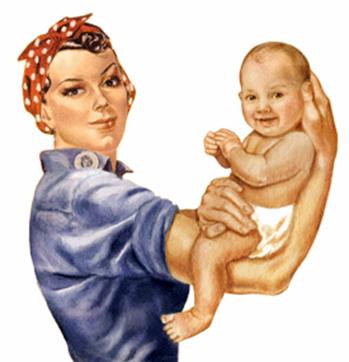
In The Guardian, Keli Goff has some harsh words for women in my demographic who become stay at home mothers. In “Female Ivy League graduates have a duty to stay in the workforce” she writes:
But in the long run, degrees from competitive institutions should serve as more than modern day charm school or debutante diplomas. Sadly, it appears some women and men see them as such, simply a piece of paper to affirm that a woman is good spouse material for yet another man to use his Harvard Law degree to make partner at a law firm, while his wife stays home, never using hers.
Perhaps instead of bickering over whether or not colleges and universities should ask us to check boxes declaring our racial identity, the next frontier of the admissions should revolve around asking people to declare what they actually plan to do with their degrees. There’s nothing wrong with someone saying that her dream is to become a full-time mother by 30. That is an admirable goal. What is not admirable is for her to take a slot at Yale Law School that could have gone to a young woman whose dream is to be in the Senate by age 40 and in the White House by age 50.
Let me skip past any question about how far below the Ivies you can go before it’s ok by Goff to fritter away your diploma on your family, and go to the more important question: what is education for? I think Goff and I would agree that you learn to understand the world better and be able to act in it, but the conventional workplace isn’t the only place you can find a vocation.
Goff assumes that women who leave the workforce will cease to use the education that they paid for, but there’s nowhere you can go that learning about beauty and citizenship and character and tradition aren’t relevant. The liberal arts are supposed to have taken up philosophy’s mantle as preparation for death — the study of how we should live.
In my senior year at college, I spent about half my coursework on preparation for a Masters of Public Health (which I skipped out on when I got a job offer), and it’s true that I don’t frequently need to refer to the very technical knowledge I learned about which proteins are on the surface of what kind of T-cell. But every time I’m sick, I can remember my understanding of the immune system and the awe that swept over me at it’s beauty and complexity. The proteins I kept having to look up; the wonder stayed with me without effort.
The real skill you’re picking up from education is problem solving. You work in a lot of domains (some that you’re highly fluent in, some less so) and learn what strategies their practitioners have developed and add them to your arsenal or adapt them to your liking. And, as you learn so many different ways of thinking, you develop a kind of intellectual curiosity and compassion for other minds.
Even if a conceptual framework is poorly suited for the purpose at hand, you can be interested in how and why someone devised it. The lapses of the past make you wonder about your own blind spots, and the ideas you would have discarded but came to understand and love when you were stuck with them over a semester make you a bit less likely to kick over Chesterton’s fence.
The college grad starting out as a junior staffer or an administrative assistant may not be making much use of the more highfalutin’ skills she picked up, but those ideas and habits aren’t in abeyance until she gets promoted. They shape her choices outside of work and help her decide what organizations and causes she wants to serve, whether in a highly skilled way or not. Someone’s occupation shouldn’t be the only domain they expect to think critically in, and our place of employment isn’t the only space for us to give back.
Modern stay at home mothers might struggle to find ways to connect to their communities, but this isn’t because they’ve withdrawn from the workforce, it’s because the workforce is the only broad bond most people experience. The woman in the workforce and the stay at home mom could both use more Nisbettian communities and opportunities to learn and live well with others.
Previous Post

April 23, 2013
The Sin of Inconvenience
Next Post

April 25, 2013 The rule of my heart is mine! And no other's!
Browse Our Archives
Select a Category 7 Quick Takes Apologetics Atheism Book Conversion Debate Tactics Debates Epistemology/Philosophy Housekeeping Ideological Turing Test Marriage Morality in Practice Parsing Catholicism Possibly Heretical Radio Reviews/Recommendations Sequence Index Spiritual Practice Uncategorized
Select a Month April 2017 March 2017 January 2017 December 2016 September 2016 August 2016 July 2016 June 2016 May 2016 April 2016 March 2016 February 2016 January 2016 December 2015 November 2015 October 2015 September 2015 August 2015 July 2015 June 2015 May 2015 April 2015 March 2015 February 2015 January 2015 December 2014 November 2014 October 2014 September 2014 August 2014 July 2014 June 2014 May 2014 April 2014 March 2014 February 2014 January 2014 December 2013 November 2013 October 2013 September 2013 August 2013 July 2013 June 2013 May 2013 April 2013 March 2013 February 2013 January 2013 December 2012 November 2012 October 2012 September 2012 August 2012 July 2012 June 2012 May 2012 April 2012 March 2012 February 2012 January 2012 December 2011 November 2011 October 2011 September 2011 August 2011 July 2011 June 2011 May 2011 April 2011 March 2011 February 2011 January 2011 December 2010 November 2010 October 2010 September 2010 August 2010 July 2010 June 2010
Follow Us!
TAKE THE
Religious Wisdom Quiz
True or False: 1 Peter teaches that believers are living stones being built into a spiritual house.
Select your answer to see how you score.
TRUE FALSE
Related posts from Unequally Yoked

How do you throw a fasting and silence...

Starving Laypeople of Devotion in Church

The Tony-Winning Guide To Temptation And Grace

Hedgehogs of Redemption and the Comedy of Grace
TRENDING AT PATHEOS Catholic

The Parable Of The Sower And The Word...
One of Christ’s most famous parables is that of the sower who...

Rejecting Doom: Christian Hope And Human Action
Christianity is a religion of hope. We are to have hope and...

Why I Choose the Eucharist Over the Sermon
Choose the Eucharist, Not the Sermon What are we supposed to get...

5 Design Elements Found in Spiritually Rooted Homes
Putting Spirituality Into Home Decor Our homes are more than our living...

Credo: A Story of God Told with the...
About 10 years ago, I began to imagine a personal "Credo" that...

The Anatomy of Divine Revelation in Catholic Thought
The claim that God has made Himself known to human beings is...
view all Catholic blogs
Ad-Free & Subscriber Log-In Subscription Support
- About Us
- 2026 Calendar
- Videos
- Podcasts
- Library of World Religions
- Faith In Media Tracker
- Advertise With Us
- Write for Us
- Privacy Policy
- Terms of Service
- Do Not Sell My Data
- Contact Us
- Radiant Digital
- Manage Newsletter Subscriptions
- Unsubscribe From Notifications
- Sitemap
Copyright 2008-2026, Patheos. All rights reserved.
Subscription Support Ad-Free & Subscriber Log-In
Follow Patheos