
BuddhistCatholicContemplativeEvangelicalGeneral ChristianHinduJewishLatter-day SaintMuslimNew VisionsProgressive Christian
Beliefs
- Buddhist
- Catholic
- Contemplative
- Evangelical
- General Christian
- Hindu
- Jewish
- Latter-day Saint
- More Voices
- Muslim
- New Visions
- Pagan
- Progressive Christian
Topics
- Religion News
- Food and Religion
- Sports and Religion
- Religious Art
- Religious Music and Entertainment
- Religious Events
- History and Religion
- Style and Religion
- Politics and Religion
- Women in Religion
- Recreation Outdoors and Religion
- Business Finance and Religion
- Careers Workplace and Religion
- Education and Religion
- Family Parenting and Religion
- Health Fitness and Religion
- Home and Religion
- Relationships and Religion
- Technology and Religion
- Travel and Religion
Columnists
- Buddhist Columnists
- Business Finance and Religion Columnists
- Careers Workplace and Religion Columnists
- Catholic Columnists
- Contemplative Columnists
- Education and Religion Columnists
- Evangelists Columnists
- Family Parenting and Religion Columnists
- General Christian Columnists
- Health Fitness and Religion Columnists
- Hindu Columnists
- History and Religion Columnists
- Home and Religion Columnists
- Jewish Columnists
- More Voices Columnists
- Latter Day Columnists
- Muslim Columnists
- New Visions Columnists
- Nonreligious Columnists
- Pagan Columnists
- Politics and Religion Columnists
- Progressive Columnists
- Recreation Outdoors and Religion Columnists
- Relationships and Religion Columnists
- Religion News Columnists
- Religious Art Columnists
- Religious Events Columnists
- Religious Music and Entertainment Columnists
- Sports and Religion Columnists
- Style and Religion Columnists
- Technology and Religion Columnists
- Travel and Religion Columnists
- Women in Religion Columnists
Resource Library
- 2026 Calendar
- Library of World Religions
- The 100 Most Holy Places on Earth
- Patheos Answers
- Podcasts
- Videos
- Faith Leaders Database
- Anglican Episcopalian
- Bahai
- Baptist
- Buddhism
- Christianity
- Confucianism
- Eastern Orthodoxy
- Hinduism
- Holiness and Pentecostal
- ISKCON
- Islam
- Judaism
- Lutheran
- Methodist
- The Church of Jesus Christ of Latter-day Saints
- New Age
- Paganism
- Presbytarian and Reformed
- Protestantism
- Religion Behind the Scenes
- Roman Catholic
- Scientology
- Shia Islam
- Sikhism
- Sufism
- Sunni Islam
- Taoism
- Zen
- See all religions
Research Tools
 Ad-Free & Subscriber Log-In Subscription Support
Ad-Free & Subscriber Log-In Subscription Support
Follow Patheos 

- Trending:
- Forgiveness
- |
- Marriage
- |
- Consciousness
- |
- Death Penalty
- |
- Election
- |
- Halloween
 Unequally Yoked
- Home
- Catholic
- What Do We Owe All the Valjeans?
What Do We Owe All the Valjeans?
Last updated on: January 17, 2013 at 9:09 am by Leah Libresco
What Do We Owe All the Valjeans? 2013-01-17T09:09:49-05:00 Leah Libresco
Patheos Explore the world's faith through different perspectives on religion and spirituality! Patheos has the views of the prevalent religions and spiritualities of the world.
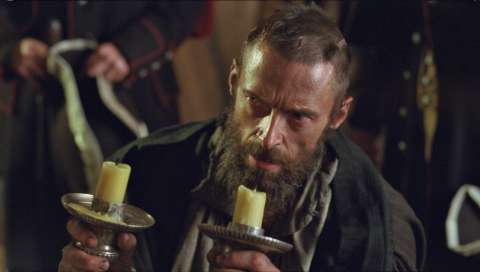
Since Les Mis seems to prompt endless reprises on this blog, you won’t be surprised to find I’m over at First Things today talking about Valjean, Javert, and what we owe to the prisoners in our criminal justice system.
When Jean Valjean appears for the first time in the stage musical Les Misérables, he is in the process of being paroled, and he is in an argument with his former jailer. When Inspector Javert barks out “You are a thief,” Valjean replies, “I stole a loaf of bread.” For Valjean, his crime is an action in the past, regretted and repented. From Javert’s point of view, the crime isn’t something Valjean did; it’s something he is, now and forever.
Our criminal justice system frequently takes the same view. Over five million citizens are denied the right to vote because they have committed a felony. Disenfranchisement is not akin to parole check-ins or other prudent defenses against recidivism. It is a denial of the former prisoner’s membership in the body politic.
When a prisoner’s sentence is finished, the debt between him and society is settled. The time served made restitution for the crime committed, so now the criminal justice system must reintegrate him into full participation in society. If prison does not prepare prisoners to become full, happy, healthy citizens, we have not held up our end of the bargain. The social contract and the bounds of civil society demand this much of us.
Go to First Things’s On the Square feature to read the rest of the essay and to find out which duties and relationships ask even more of us than the social contract.
— — —
As bonus content for the blog readers: I was struck by different things on my three viewings of the Les Miserables movie, but I was always particularly drawn in to the big forgiveness scenes (the Bishop with Valjean, Valjean with Fantine (and vice versa), and Valjean with Javert). For the week after viewing number three, I kept returning to one line in the encounter between Valjean and Javert outside the barricade.
Valjean says to Javert: “You are wrong, and always have been wrong.” It’s easy, on the page, to read those as words of condemnation, but, when well-staged (as it is in the movie), I think it’s clear that Valjean is offering this line as a gift to Javert. Thinking about the lines reminded me of an article I’d read a long time ago in The New Yorker about the use of mirror therapy for phantom limb pain.
Among them is an experiment that Ramachandran performed with volunteers who had phantom pain in an amputated arm. They put their surviving arm through a hole in the side of a box with a mirror inside, so that, peering through the open top, they would see their arm and its mirror image, as if they had two arms. Ramachandran then asked them to move both their intact arm and, in their mind, their phantom arm—to pretend that they were conducting an orchestra, say. The patients had the sense that they had two arms again. Even though they knew it was an illusion, it provided immediate relief. People who for years had been unable to unclench their phantom fist suddenly felt their hand open; phantom arms in painfully contorted positions could relax.
Valjean isn’t blaming Javert for living in error, but he’s trying to draw his attention to the way he stands athwart the world, refusing mercy. He’s inviting him to notice that he could live differently, that he might have the chance to unclench, that his constant feeling of opposition isn’t the natural way to be.
I kept coming back to this plea in prayer, particularly in my daily examen, to ask for the grace and desire to hear “You are wrong, and always have been wrong” where needed, and to accept this insight as a gift; the only possible way to avert: “…and always will be wrong.”
Previous Post

January 16, 2013
God and the Moral Law in Mormonism
Next Post

January 18, 2013 7 Les Mis Takes (1/18/13)
Browse Our Archives
Select a Category 7 Quick Takes Apologetics Atheism Book Conversion Debate Tactics Debates Epistemology/Philosophy Housekeeping Ideological Turing Test Marriage Morality in Practice Parsing Catholicism Possibly Heretical Radio Reviews/Recommendations Sequence Index Spiritual Practice Uncategorized
Select a Month April 2017 March 2017 January 2017 December 2016 September 2016 August 2016 July 2016 June 2016 May 2016 April 2016 March 2016 February 2016 January 2016 December 2015 November 2015 October 2015 September 2015 August 2015 July 2015 June 2015 May 2015 April 2015 March 2015 February 2015 January 2015 December 2014 November 2014 October 2014 September 2014 August 2014 July 2014 June 2014 May 2014 April 2014 March 2014 February 2014 January 2014 December 2013 November 2013 October 2013 September 2013 August 2013 July 2013 June 2013 May 2013 April 2013 March 2013 February 2013 January 2013 December 2012 November 2012 October 2012 September 2012 August 2012 July 2012 June 2012 May 2012 April 2012 March 2012 February 2012 January 2012 December 2011 November 2011 October 2011 September 2011 August 2011 July 2011 June 2011 May 2011 April 2011 March 2011 February 2011 January 2011 December 2010 November 2010 October 2010 September 2010 August 2010 July 2010 June 2010
Follow Us!
TAKE THE
Religious Wisdom Quiz
What did Jesus do just before raising Lazarus from the dead?
Select your answer to see how you score.
He wept He prayed He preached He climbed a hill
Related posts from Unequally Yoked

The Tony-Winning Guide To Temptation And Grace

Hedgehogs of Redemption and the Comedy of Grace

Mercy, Justice, and How To Tell The Difference

Running the Stats on Shakespeare!
TRENDING AT PATHEOS Catholic

Rejecting Doom: Christian Hope And Human Action
Christianity is a religion of hope. We are to have hope and...

It’s What Comes From Within Which Matters
One of the most difficult things for us to understand is why...

Why I Choose the Eucharist Over the Sermon
Choose the Eucharist, Not the Sermon What are we supposed to get...

5 Design Elements Found in Spiritually Rooted Homes
Putting Spirituality Into Home Decor Our homes are more than our living...

Credo: A Story of God Told with the...
About 10 years ago, I began to imagine a personal "Credo" that...

The Anatomy of Divine Revelation in Catholic Thought
The claim that God has made Himself known to human beings is...
view all Catholic blogs
Ad-Free & Subscriber Log-In Subscription Support
- About Us
- 2026 Calendar
- Videos
- Podcasts
- Library of World Religions
- Faith In Media Tracker
- Advertise With Us
- Write for Us
- Privacy Policy
- Terms of Service
- Do Not Sell My Data
- Contact Us
- Radiant Digital
- Manage Newsletter Subscriptions
- Unsubscribe From Notifications
- Sitemap
Copyright 2008-2026, Patheos. All rights reserved.
Subscription Support Ad-Free & Subscriber Log-In
Follow Patheos