
BuddhistCatholicContemplativeEvangelicalGeneral ChristianHinduJewishLatter-day SaintMuslimNew VisionsProgressive Christian
Beliefs
- Buddhist
- Catholic
- Contemplative
- Evangelical
- General Christian
- Hindu
- Jewish
- Latter-day Saint
- More Voices
- Muslim
- New Visions
- Pagan
- Progressive Christian
Topics
- Religion News
- Food and Religion
- Sports and Religion
- Religious Art
- Religious Music and Entertainment
- Religious Events
- History and Religion
- Style and Religion
- Politics and Religion
- Women in Religion
- Recreation Outdoors and Religion
- Business Finance and Religion
- Careers Workplace and Religion
- Education and Religion
- Family Parenting and Religion
- Health Fitness and Religion
- Home and Religion
- Relationships and Religion
- Technology and Religion
- Travel and Religion
Columnists
- Buddhist Columnists
- Business Finance and Religion Columnists
- Careers Workplace and Religion Columnists
- Catholic Columnists
- Contemplative Columnists
- Education and Religion Columnists
- Evangelists Columnists
- Family Parenting and Religion Columnists
- General Christian Columnists
- Health Fitness and Religion Columnists
- Hindu Columnists
- History and Religion Columnists
- Home and Religion Columnists
- Jewish Columnists
- More Voices Columnists
- Latter Day Columnists
- Muslim Columnists
- New Visions Columnists
- Nonreligious Columnists
- Pagan Columnists
- Politics and Religion Columnists
- Progressive Columnists
- Recreation Outdoors and Religion Columnists
- Relationships and Religion Columnists
- Religion News Columnists
- Religious Art Columnists
- Religious Events Columnists
- Religious Music and Entertainment Columnists
- Sports and Religion Columnists
- Style and Religion Columnists
- Technology and Religion Columnists
- Travel and Religion Columnists
- Women in Religion Columnists
Resource Library
- 2026 Calendar
- Library of World Religions
- The 100 Most Holy Places on Earth
- Patheos Answers
- Podcasts
- Videos
- Faith Leaders Database
- Anglican Episcopalian
- Bahai
- Baptist
- Buddhism
- Christianity
- Confucianism
- Eastern Orthodoxy
- Hinduism
- Holiness and Pentecostal
- ISKCON
- Islam
- Judaism
- Lutheran
- Methodist
- The Church of Jesus Christ of Latter-day Saints
- New Age
- Paganism
- Presbytarian and Reformed
- Protestantism
- Religion Behind the Scenes
- Roman Catholic
- Scientology
- Shia Islam
- Sikhism
- Sufism
- Sunni Islam
- Taoism
- Zen
- See all religions
Research Tools
 Ad-Free & Subscriber Log-In Subscription Support
Ad-Free & Subscriber Log-In Subscription Support
Follow Patheos 

- Trending:
- Forgiveness
- |
- Marriage
- |
- Consciousness
- |
- Death Penalty
- |
- Election
- |
- Halloween
 Unequally Yoked
- Home
- Catholic
- This Prayer Book is a Stub…
This Prayer Book is a Stub…
Last updated on: December 9, 2012 at 3:59 pm by Leah Libresco
This Prayer Book is a Stub… 2012-12-09T15:59:34-05:00 Leah Libresco
Patheos Explore the world's faith through different perspectives on religion and spirituality! Patheos has the views of the prevalent religions and spiritualities of the world.
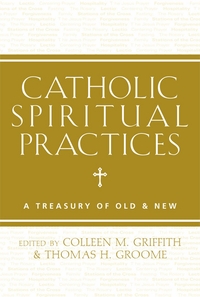
This month, the Patheos Book Club is reading Catholic Spiritual Practices: A Treasury of Old and New, a collection of description of and reflections on common Catholic spiritual practice. The book is essentially a tasting menu; each of the twenty-six meditations is only a few pages long. It’s the book equivalent of Lewis’s Wood between the Worlds (or Grossman’s Neitherlands).
This book alone would not be enough to get you engaged in any form of spiritual praxis, but you might end up with a Catholic Spiritual Practices-shelf, full of books you got after having your attention caught by one of the brief essays. The editors of the collection did a nice job recruiting priests, religious, and laypeople to introduce these practices. In the space allotted, some authors share their personal experiences with a prayer tradition, and others talk about the way a particular discipline has emerged through and shaped Church history. Not all of the essayists are Catholic, since some of these traditions are widely appreciated across Christendom, so, sometimes the way that a practice fits into a specifically Catholic theology is left as an exercise to the reader.
I was pleasantly surprised at how many of these traditions I’ve encountered (it’s nice to have a vibrant parish with a lot of enthusiastic, talkative people my own age). One that has proved affecting for me is the Ignatian practice of the examen. So, in the spirit of the book I’m reviewing, I’ll give you a short personal reflection in case it sparks your interest.
After I read The Presence of God by Father Anselm Moynihan, O.P., I had a better idea of what prayer was, but not how to do it. You see, at one point, Fr. Moynihan advises:
The twofold practice of often recalling to ourselves the fact of God’s indwelling in our heart and of continually addressing our intimate, secret conversation to him instead of ourselves, is one of the best means of disposing ourselves for the operation of the gift of wisdom and obtaining from him the experience of his presence.
The trouble is, my internal monologue tends to look a lot like this:
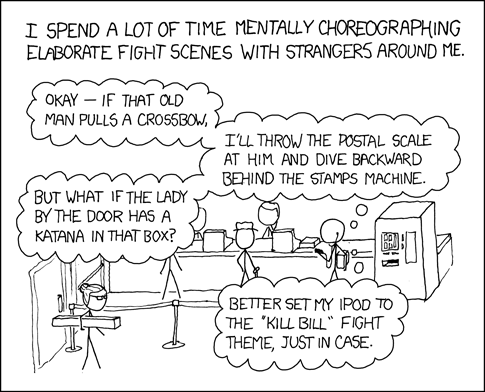
So I wasn’t really sure what to do with the advice from the book. However, after my baptism, I read The Examen Prayer: Ignatian Wisdom for Our Lives Today by Father Timothy Gallagher. The Examen is a way of reflecting on the day through prayer. I started doing it after Mass, and it made it a lot easier to prepare for Confession and to spot moments where I needed to ask God’s forgiveness and aid.
Noticing sin and uncharity feels a lot like spotting Ugh Fields in LessWrong parlance. The trick is noticing the thing you’re flinching away from and then turning into it. It’s pretty hard to do, since, when you notice something you’ve screwed up, your first thought is usually “I suck,” which isn’t a nice-feeling thought to think. So, essentially, you punish yourself for noticing, and train yourself to avoid noticing your sins in the first place. (Imagine a company that cared a lot about quality control, but where management freaked out and got angry when employees spotted errors to correct. Soon you’d have trained your workers to not bring them to your attention).
LessWrong tends to recommend rewarding yourself immediately for noticing the error. Give yourself an m&m, pump your fist and say “Go me!” anything to break the conditioning pattern. And the circuit-breaking thought that helps me get through the Examen is gratitude.
Here’s how I think of it: sin is like a cancer; it grows and spreads through my character. Even a small error can quickly become dangerous if unchecked. Now, the trouble when coming up with cancer treatments isn’t sussing out ways to kill cancer cells, it’s finding a way to preferentially kill them while leaving our healthy cells untouched. In a similar way, the real struggle is disentangling myself from my sin. There a basically two approaches to the cancer problem: you can find a drug or a treatment that attacks a weakness peculiar to cancer cells (i.e. disrupting their abnormal angiogenesis) or you can try to make sure your poisons are administered in a localized way right where the cancer is (targeted radiation, nanoparticle-mediated drug delivery).
When I can, I like to do my daily Examen in the church after Mass. When I notice a flinch and lean into it, one thing I reflect on is that I’ve just consumed the Eucharist. Christ’s body is a part of my body, and, by holding my transgressions in my mind, I’m helping that grace be precisely targeted. It’s beyond my ability to create a balm in Gilead, but the Examen helps me cooperate with its administration.
Previous Post

December 8, 2012
Fixed is not Unbroken
Next Post
December 10, 2012 Finishing the Imago Dei
Browse Our Archives
Select a Category 7 Quick Takes Apologetics Atheism Book Conversion Debate Tactics Debates Epistemology/Philosophy Housekeeping Ideological Turing Test Marriage Morality in Practice Parsing Catholicism Possibly Heretical Radio Reviews/Recommendations Sequence Index Spiritual Practice Uncategorized
Select a Month April 2017 March 2017 January 2017 December 2016 September 2016 August 2016 July 2016 June 2016 May 2016 April 2016 March 2016 February 2016 January 2016 December 2015 November 2015 October 2015 September 2015 August 2015 July 2015 June 2015 May 2015 April 2015 March 2015 February 2015 January 2015 December 2014 November 2014 October 2014 September 2014 August 2014 July 2014 June 2014 May 2014 April 2014 March 2014 February 2014 January 2014 December 2013 November 2013 October 2013 September 2013 August 2013 July 2013 June 2013 May 2013 April 2013 March 2013 February 2013 January 2013 December 2012 November 2012 October 2012 September 2012 August 2012 July 2012 June 2012 May 2012 April 2012 March 2012 February 2012 January 2012 December 2011 November 2011 October 2011 September 2011 August 2011 July 2011 June 2011 May 2011 April 2011 March 2011 February 2011 January 2011 December 2010 November 2010 October 2010 September 2010 August 2010 July 2010 June 2010
Follow Us!
TAKE THE
Religious Wisdom Quiz
What is the Hebrew name for the book of Genesis?
Select your answer to see how you score.
Elohim Torah Shema Bereshit
Related posts from Unequally Yoked



The Boring, Quiet Rituals That Sustain Us Spiritually

Starving Laypeople of Devotion in Church
TRENDING AT PATHEOS Catholic

Rejecting Doom: Christian Hope And Human Action
Christianity is a religion of hope. We are to have hope and...

It’s What Comes From Within Which Matters
One of the most difficult things for us to understand is why...

Why I Choose the Eucharist Over the Sermon
Choose the Eucharist, Not the Sermon What are we supposed to get...

5 Design Elements Found in Spiritually Rooted Homes
Putting Spirituality Into Home Decor Our homes are more than our living...

Credo: A Story of God Told with the...
About 10 years ago, I began to imagine a personal "Credo" that...

The Anatomy of Divine Revelation in Catholic Thought
The claim that God has made Himself known to human beings is...
view all Catholic blogs
Ad-Free & Subscriber Log-In Subscription Support
- About Us
- 2026 Calendar
- Videos
- Podcasts
- Library of World Religions
- Faith In Media Tracker
- Advertise With Us
- Write for Us
- Privacy Policy
- Terms of Service
- Do Not Sell My Data
- Contact Us
- Radiant Digital
- Manage Newsletter Subscriptions
- Unsubscribe From Notifications
- Sitemap
Copyright 2008-2026, Patheos. All rights reserved.
Subscription Support Ad-Free & Subscriber Log-In
Follow Patheos