
BuddhistCatholicContemplativeEvangelicalGeneral ChristianHinduJewishLatter-day SaintMuslimNew VisionsProgressive Christian
Beliefs
- Buddhist
- Catholic
- Contemplative
- Evangelical
- General Christian
- Hindu
- Jewish
- Latter-day Saint
- More Voices
- Muslim
- New Visions
- Pagan
- Progressive Christian
Topics
- Religion News
- Food and Religion
- Sports and Religion
- Religious Art
- Religious Music and Entertainment
- Religious Events
- History and Religion
- Style and Religion
- Politics and Religion
- Women in Religion
- Recreation Outdoors and Religion
- Business Finance and Religion
- Careers Workplace and Religion
- Education and Religion
- Family Parenting and Religion
- Health Fitness and Religion
- Home and Religion
- Relationships and Religion
- Technology and Religion
- Travel and Religion
Columnists
- Buddhist Columnists
- Business Finance and Religion Columnists
- Careers Workplace and Religion Columnists
- Catholic Columnists
- Contemplative Columnists
- Education and Religion Columnists
- Evangelists Columnists
- Family Parenting and Religion Columnists
- General Christian Columnists
- Health Fitness and Religion Columnists
- Hindu Columnists
- History and Religion Columnists
- Home and Religion Columnists
- Jewish Columnists
- More Voices Columnists
- Latter Day Columnists
- Muslim Columnists
- New Visions Columnists
- Nonreligious Columnists
- Pagan Columnists
- Politics and Religion Columnists
- Progressive Columnists
- Recreation Outdoors and Religion Columnists
- Relationships and Religion Columnists
- Religion News Columnists
- Religious Art Columnists
- Religious Events Columnists
- Religious Music and Entertainment Columnists
- Sports and Religion Columnists
- Style and Religion Columnists
- Technology and Religion Columnists
- Travel and Religion Columnists
- Women in Religion Columnists
Resource Library
- 2026 Calendar
- Library of World Religions
- The 100 Most Holy Places on Earth
- Patheos Answers
- Podcasts
- Videos
- Faith Leaders Database
- Anglican Episcopalian
- Bahai
- Baptist
- Buddhism
- Christianity
- Confucianism
- Eastern Orthodoxy
- Hinduism
- Holiness and Pentecostal
- ISKCON
- Islam
- Judaism
- Lutheran
- Methodist
- The Church of Jesus Christ of Latter-day Saints
- New Age
- Paganism
- Presbytarian and Reformed
- Protestantism
- Religion Behind the Scenes
- Roman Catholic
- Scientology
- Shia Islam
- Sikhism
- Sufism
- Sunni Islam
- Taoism
- Zen
- See all religions
Research Tools
 Ad-Free & Subscriber Log-In Subscription Support
Ad-Free & Subscriber Log-In Subscription Support
Follow Patheos 

- Trending:
- Forgiveness
- |
- Marriage
- |
- Consciousness
- |
- Death Penalty
- |
- Election
- |
- Halloween
 Unequally Yoked
- Home
- Catholic
- Can you Cyrano de Bergerac your moral philosophy?
Can you Cyrano de Bergerac your moral philosophy?
Last updated on: December 6, 2012 at 6:30 pm by Leah Libresco
Can you Cyrano de Bergerac your moral philosophy? 2012-12-06T18:30:45-05:00 Leah Libresco
Patheos Explore the world's faith through different perspectives on religion and spirituality! Patheos has the views of the prevalent religions and spiritualities of the world.
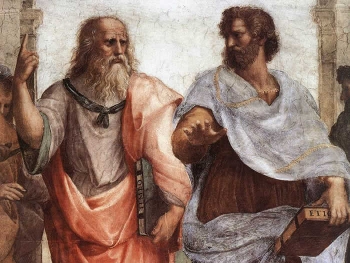
Yesterday, I linked to Luke Muelhauser’s commentary on the inability of philosophers to come to consensus. He’s continued on the topic, proposing a curriculum for building better philosophers in “Train Philosophers with Pearl and Kahneman, not Plato and Kant.”
His list of recommended topics include Bayesian statistics, machine learning, mathematical logic, game theory, cognitive neuroscience, etc. (Go to the link to see his syllabus). When you look over all the prerequisites, you can see why Luke concludes, “I do think philosophy should be a Highly Advanced subject of study that requires lots of prior training in maths and the sciences, like string theory but hopefully more productive.”
Luke’s approach made for a really interesting contrast with a recent post on Just Thomism:
[T]he fact is that settled questions involve our indifference to finding out the answers for ourselves. To the extent that some question is settled, we’re usually uninterested in going back and seeing the arguments for it, even when the arguments are demonstrative. But philosophy deals with the sort of questions that individuals want to answer for themselves – even where philosophy has demonstrations to give it still has to give them entirely from the beginning to each person in each new generation. Fundamental questions about God or evil or human goodness or the human mind will never be settled simply because there is something inhuman in thinking we could settle them in such a way that subsequent generations would have to take our answers for granted as opposed to working out the whole problem from the beginning for themselves.
Philosophy can’t ever advance because the whole point of philosophy is that everyone gets to start at the beginning, so far as this is possible. There is still a role for discipleship and moving through a pre-determined order of questioning, and by my own lights there are even some pretty-much-settled philosophical questions, but ultimately philosophy is about getting to the bottom of things for yourself, and so it is not supposed to progress much farther than the progress that one person can make in his own lifetime.
And a commenter on LessWrong hit on a similar point:
[I]t would be greatly beneficial if science were kept secret. It would be wonderful if students had the opportunity to make scientific discoveries on their own, and being trained to think that way would greatly advance the rate of scientific progress. Making a scientific breakthrough would be something a practicing scientist would be used to, rather than something that happens once a generation, and so it would happen more reliably. Rather than having science textbooks, students could start with old (wrong) science textbooks or just looking at the world, and they’d have to make all their own mistakes along the way to see what making a breakthrough really involves.
This is how Philosophy is already taught! While many philosophers have opinions on what Philosophical questions have already been settled, they do not put forth their opinions straightforwardly to undergrads. Rather, students are expected to read the original works and figure out for themselves what’s wrong with them.
For example, students might learn about the debate between Realism and Nominalism, and then be expected to write a paper about which one they think is correct (or neither). Sure, we could just tell them the entire debate was confused, but then we won’t be training future philosophers in the same way we would like to train future scientists. The students should be able to work out for themselves what the problems were, so that they will be able to make philosophical breakthroughs in the future.
Part of what all these blockquotes are dancing around is whether it’s important for everyone to know how to practise philosophy, or whether we just need proficient philosophers to suss out the answers more efficiently and conclusively and then pass the answers back to us. When NASA announces that they found perchlorates on Mars, I don’t double check their work or their interpretation. I’m not levelled up enough to do that.
I don’t need to understand calculus to catch a ball (though as it happens, I’m better at the former than the latter). I wouldn’t need do more than addition to be able to avoid being fleeced if all I had to do was make change, but, in an age of collateralized debt obligations, I either need to learn a lot about risk really fast, or I need to set up a pretty trustworthy, reliable gate keeper. Since we have reason to suspect (for theological or purely empirical reasons) that our moral reasoning still has a few bugs to work out, don’t we need a class of philosopher-regulators?
But it’s a little weirder to say that I’m comfortable deferring my understanding of the good life to a class of academics, even Kahneman-reading academics. First of all, as I mentioned when discussing Thinking Fast and Slow, Kahneman’s work can identify inconsistencies in our reasoning without telling us which element to jettison. But the biggest objection isn’t that professional philosophers aren’t good enough at telling us the answers; it’s that we feel a particular duty to be fluent in these answers ourselves.
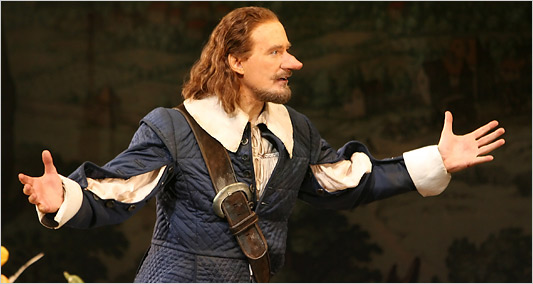
“You don’t need me after all? Ok, I’ll go work on some more quips”
But, no one (except sometimes me) says that learning math is necessary to build character. Learning math is part of having a more accurate picture of the world, and that’s awesome. But it doesn’t tell you what to do with your data. That falls into the realm of practical wisdom (what Aristotle called phronesis). And developing phronesis isn’t the kind of thing you want to outsource, anymore than you’d like to turn over your relationship with your spouse to a data-mining algorithm that was better than you at predicting what response in a conversation would make zer love you most.
A virtue ethicist wants to become the good person, not just look up what the good person would do and then do it. That means we need to sharpen our moral perception just as we might strengthen muscles. We can’t be like a student plugging formulas into a calculator without an idea of how they work conceptually. Otherwise, we’re not becoming better people; we’re just giving up our moral agency.
freedom means choosing a master
Previous Post

December 5, 2012
The First Thing We Do, Let's Kill All the Philosophers
Next Post

December 7, 2012 7 Quick Takes (12/7/12)
Browse Our Archives
Select a Category 7 Quick Takes Apologetics Atheism Book Conversion Debate Tactics Debates Epistemology/Philosophy Housekeeping Ideological Turing Test Marriage Morality in Practice Parsing Catholicism Possibly Heretical Radio Reviews/Recommendations Sequence Index Spiritual Practice Uncategorized
Select a Month April 2017 March 2017 January 2017 December 2016 September 2016 August 2016 July 2016 June 2016 May 2016 April 2016 March 2016 February 2016 January 2016 December 2015 November 2015 October 2015 September 2015 August 2015 July 2015 June 2015 May 2015 April 2015 March 2015 February 2015 January 2015 December 2014 November 2014 October 2014 September 2014 August 2014 July 2014 June 2014 May 2014 April 2014 March 2014 February 2014 January 2014 December 2013 November 2013 October 2013 September 2013 August 2013 July 2013 June 2013 May 2013 April 2013 March 2013 February 2013 January 2013 December 2012 November 2012 October 2012 September 2012 August 2012 July 2012 June 2012 May 2012 April 2012 March 2012 February 2012 January 2012 December 2011 November 2011 October 2011 September 2011 August 2011 July 2011 June 2011 May 2011 April 2011 March 2011 February 2011 January 2011 December 2010 November 2010 October 2010 September 2010 August 2010 July 2010 June 2010
Follow Us!
TAKE THE
Religious Wisdom Quiz
Who wrote the Book of Acts?
Select your answer to see how you score.
Luke Peter Paul Mark
Related posts from Unequally Yoked

Rational Faith: More working hypothesis than logical proof

Life Lessons that Can't be Taught at College's...

Books that Change the Way You Think [Radio...

Your religion... is it bigger than a breadbox?
TRENDING AT PATHEOS Catholic

Rejecting Doom: Christian Hope And Human Action
Christianity is a religion of hope. We are to have hope and...

It’s What Comes From Within Which Matters
One of the most difficult things for us to understand is why...

Why I Choose the Eucharist Over the Sermon
Choose the Eucharist, Not the Sermon What are we supposed to get...

5 Design Elements Found in Spiritually Rooted Homes
Putting Spirituality Into Home Decor Our homes are more than our living...

Credo: A Story of God Told with the...
About 10 years ago, I began to imagine a personal "Credo" that...

The Anatomy of Divine Revelation in Catholic Thought
The claim that God has made Himself known to human beings is...
view all Catholic blogs
Ad-Free & Subscriber Log-In Subscription Support
- About Us
- 2026 Calendar
- Videos
- Podcasts
- Library of World Religions
- Faith In Media Tracker
- Advertise With Us
- Write for Us
- Privacy Policy
- Terms of Service
- Do Not Sell My Data
- Contact Us
- Radiant Digital
- Manage Newsletter Subscriptions
- Unsubscribe From Notifications
- Sitemap
Copyright 2008-2026, Patheos. All rights reserved.
Subscription Support Ad-Free & Subscriber Log-In
Follow Patheos