
BuddhistCatholicContemplativeEvangelicalGeneral ChristianHinduJewishLatter-day SaintMuslimNew VisionsProgressive Christian
Beliefs
- Buddhist
- Catholic
- Contemplative
- Evangelical
- General Christian
- Hindu
- Jewish
- Latter-day Saint
- More Voices
- Muslim
- New Visions
- Pagan
- Progressive Christian
Topics
- Religion News
- Food and Religion
- Sports and Religion
- Religious Art
- Religious Music and Entertainment
- Religious Events
- History and Religion
- Style and Religion
- Politics and Religion
- Women in Religion
- Recreation Outdoors and Religion
- Business Finance and Religion
- Careers Workplace and Religion
- Education and Religion
- Family Parenting and Religion
- Health Fitness and Religion
- Home and Religion
- Relationships and Religion
- Technology and Religion
- Travel and Religion
Columnists
- Buddhist Columnists
- Business Finance and Religion Columnists
- Careers Workplace and Religion Columnists
- Catholic Columnists
- Contemplative Columnists
- Education and Religion Columnists
- Evangelists Columnists
- Family Parenting and Religion Columnists
- General Christian Columnists
- Health Fitness and Religion Columnists
- Hindu Columnists
- History and Religion Columnists
- Home and Religion Columnists
- Jewish Columnists
- More Voices Columnists
- Latter Day Columnists
- Muslim Columnists
- New Visions Columnists
- Nonreligious Columnists
- Pagan Columnists
- Politics and Religion Columnists
- Progressive Columnists
- Recreation Outdoors and Religion Columnists
- Relationships and Religion Columnists
- Religion News Columnists
- Religious Art Columnists
- Religious Events Columnists
- Religious Music and Entertainment Columnists
- Sports and Religion Columnists
- Style and Religion Columnists
- Technology and Religion Columnists
- Travel and Religion Columnists
- Women in Religion Columnists
Resource Library
- 2026 Calendar
- Library of World Religions
- The 100 Most Holy Places on Earth
- Patheos Answers
- Podcasts
- Videos
- Faith Leaders Database
- Anglican Episcopalian
- Bahai
- Baptist
- Buddhism
- Christianity
- Confucianism
- Eastern Orthodoxy
- Hinduism
- Holiness and Pentecostal
- ISKCON
- Islam
- Judaism
- Lutheran
- Methodist
- The Church of Jesus Christ of Latter-day Saints
- New Age
- Paganism
- Presbytarian and Reformed
- Protestantism
- Religion Behind the Scenes
- Roman Catholic
- Scientology
- Shia Islam
- Sikhism
- Sufism
- Sunni Islam
- Taoism
- Zen
- See all religions
Research Tools
 Ad-Free & Subscriber Log-In Subscription Support
Ad-Free & Subscriber Log-In Subscription Support
Follow Patheos 

- Trending:
- Forgiveness
- |
- Marriage
- |
- Consciousness
- |
- Death Penalty
- |
- Election
- |
- Halloween
 Unequally Yoked
- Home
- Catholic
- The Monster is Father of the Man
The Monster is Father of the Man
Last updated on: November 21, 2012 at 6:12 pm by Leah Libresco
The Monster is Father of the Man 2012-11-21T18:12:20-05:00 Leah Libresco
Patheos Explore the world's faith through different perspectives on religion and spirituality! Patheos has the views of the prevalent religions and spiritualities of the world.

As I warned you, I’m taking some time before I write anything specifically about being received into the Catholic Church. In the meantime, I hope my thoughts on the National Theatre’s production of Frankenstein will do. After all, it’s also about the surprise of becoming a new creation
England’s National Theatre tapes some of its performances and allows them to be shown around the world. This past summer, I was lucky enough to see their production of Frankenstein twice through this program (one evening Benedict Cumberbatch played Frankenstein, and one evening he played the monster).
Mary Shelley’s Frankenstein is such a classic that there were moments that I felt frustrated with how hackneyed the play seemed to be. It’s hard to stage a trope namer without straying into camp or irony. And one part of the story felt terribly worn out, until I’d seen it twice.
As directed by Danny Boyle (who also managed the gonzo opening ceremonies for the London Olympics), Frankenstein is emotionally stunted. When he meets his monster, he mostly marvels at himself; every beauty in the monster is the result of his art, no credit accrues to the individual standing before him. He pushes aside his fiancée for his work and recovers from the death of his brother by becoming more clipped and fixated on hiding what he has made. When the creature confronts Frankenstein’s wife, it’s not surprising that there’s more warmth and charity in that encounter (well, before it turns violent) than in any scene Frankenstein has shared with her.
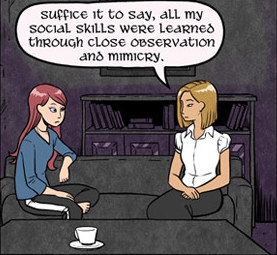
So, I was rolling my eyes a little in my seat. A story about how a person is divorced from their own humanity, but finds an unexpected tutor in the person assumed to be inhuman who turns out to excel him in charity? Together, they fight crime! But, then, something the creature said while pleading for a mate, brought me up short on the second viewing.
Frankenstein asks what the creature would do with a wife. “I would cherish her!” the creature blurts out. Even in his ugliness, the creature assumed his fervent worship would compel love. I was reminded of the relentless, grotesque love of Fosca from Passion.
The creature turns his attentions to his creator after his hopes of a companion of his own kind are destroyed. If they’re both unfit for the company of the rest of the world, perhaps they should be brothers. Frankenstein weeps and seems to have an epiphany, finally understanding the dignity and beauty of companionship. But if we don’t grant his conversion as positive, it becomes more tragic and less cliché.
Like us, Frankenstein knows the story of the Unexpected Tutor, and he’s relieved to finally find and accept his role in it. But the creature isn’t up to the role Frankenstein and our pattern-matching brains are casting him in. The ultimate proof of Frankenstein’s brokenness is that he mistakes differently broken for whole. A victim of Dunning-Kruger, Frankenstein doesn’t know enough about his deficiency to be able to find a physician.
What came to mind, watching Frankenstein, wretched, experience the relief of his false epiphany was the words from Isaiah 55:2, “Why spend money on what is not bread, and your labor on what does not satisfy?” Or Aaron Sorkin’s gloss on this sentiment in The American President:
People want leadership, Mr. President, and in the absence of genuine leadership, they’ll listen to anyone who steps up to the microphone. They want leadership. They’re so thirsty for it they’ll crawl through the desert toward a mirage, and when they discover there’s no water, they’ll drink the sand.
freedom means choosing a master
Previous Post
November 20, 2012
Singing my way to the Sacraments [Index]
Next Post

November 22, 2012 The obvious Thanksgiving post...
Browse Our Archives
Select a Category 7 Quick Takes Apologetics Atheism Book Conversion Debate Tactics Debates Epistemology/Philosophy Housekeeping Ideological Turing Test Marriage Morality in Practice Parsing Catholicism Possibly Heretical Radio Reviews/Recommendations Sequence Index Spiritual Practice Uncategorized
Select a Month April 2017 March 2017 January 2017 December 2016 September 2016 August 2016 July 2016 June 2016 May 2016 April 2016 March 2016 February 2016 January 2016 December 2015 November 2015 October 2015 September 2015 August 2015 July 2015 June 2015 May 2015 April 2015 March 2015 February 2015 January 2015 December 2014 November 2014 October 2014 September 2014 August 2014 July 2014 June 2014 May 2014 April 2014 March 2014 February 2014 January 2014 December 2013 November 2013 October 2013 September 2013 August 2013 July 2013 June 2013 May 2013 April 2013 March 2013 February 2013 January 2013 December 2012 November 2012 October 2012 September 2012 August 2012 July 2012 June 2012 May 2012 April 2012 March 2012 February 2012 January 2012 December 2011 November 2011 October 2011 September 2011 August 2011 July 2011 June 2011 May 2011 April 2011 March 2011 February 2011 January 2011 December 2010 November 2010 October 2010 September 2010 August 2010 July 2010 June 2010
Follow Us!
TAKE THE
Religious Wisdom Quiz
What river did John baptize Jesus in?
Select your answer to see how you score.
Nile River Red Sea Jordan River Tigris River
Related posts from Unequally Yoked



The Boring, Quiet Rituals That Sustain Us Spiritually

Starving Laypeople of Devotion in Church
TRENDING AT PATHEOS Catholic

Rejecting Doom: Christian Hope And Human Action
Christianity is a religion of hope. We are to have hope and...

It’s What Comes From Within Which Matters
One of the most difficult things for us to understand is why...

Why I Choose the Eucharist Over the Sermon
Choose the Eucharist, Not the Sermon What are we supposed to get...

5 Design Elements Found in Spiritually Rooted Homes
Putting Spirituality Into Home Decor Our homes are more than our living...

Credo: A Story of God Told with the...
About 10 years ago, I began to imagine a personal "Credo" that...

The Anatomy of Divine Revelation in Catholic Thought
The claim that God has made Himself known to human beings is...
view all Catholic blogs
Ad-Free & Subscriber Log-In Subscription Support
- About Us
- 2026 Calendar
- Videos
- Podcasts
- Library of World Religions
- Faith In Media Tracker
- Advertise With Us
- Write for Us
- Privacy Policy
- Terms of Service
- Do Not Sell My Data
- Contact Us
- Radiant Digital
- Manage Newsletter Subscriptions
- Unsubscribe From Notifications
- Sitemap
Copyright 2008-2026, Patheos. All rights reserved.
Subscription Support Ad-Free & Subscriber Log-In
Follow Patheos