
BuddhistCatholicContemplativeEvangelicalGeneral ChristianHinduJewishLatter-day SaintMuslimNew VisionsProgressive Christian
Beliefs
- Buddhist
- Catholic
- Contemplative
- Evangelical
- General Christian
- Hindu
- Jewish
- Latter-day Saint
- More Voices
- Muslim
- New Visions
- Pagan
- Progressive Christian
Topics
- Religion News
- Food and Religion
- Sports and Religion
- Religious Art
- Religious Music and Entertainment
- Religious Events
- History and Religion
- Style and Religion
- Politics and Religion
- Women in Religion
- Recreation Outdoors and Religion
- Business Finance and Religion
- Careers Workplace and Religion
- Education and Religion
- Family Parenting and Religion
- Health Fitness and Religion
- Home and Religion
- Relationships and Religion
- Technology and Religion
- Travel and Religion
Columnists
- Buddhist Columnists
- Business Finance and Religion Columnists
- Careers Workplace and Religion Columnists
- Catholic Columnists
- Contemplative Columnists
- Education and Religion Columnists
- Evangelists Columnists
- Family Parenting and Religion Columnists
- General Christian Columnists
- Health Fitness and Religion Columnists
- Hindu Columnists
- History and Religion Columnists
- Home and Religion Columnists
- Jewish Columnists
- More Voices Columnists
- Latter Day Columnists
- Muslim Columnists
- New Visions Columnists
- Nonreligious Columnists
- Pagan Columnists
- Politics and Religion Columnists
- Progressive Columnists
- Recreation Outdoors and Religion Columnists
- Relationships and Religion Columnists
- Religion News Columnists
- Religious Art Columnists
- Religious Events Columnists
- Religious Music and Entertainment Columnists
- Sports and Religion Columnists
- Style and Religion Columnists
- Technology and Religion Columnists
- Travel and Religion Columnists
- Women in Religion Columnists
Resource Library
- 2026 Calendar
- Library of World Religions
- The 100 Most Holy Places on Earth
- Patheos Answers
- Podcasts
- Videos
- Faith Leaders Database
- Anglican Episcopalian
- Bahai
- Baptist
- Buddhism
- Christianity
- Confucianism
- Eastern Orthodoxy
- Hinduism
- Holiness and Pentecostal
- ISKCON
- Islam
- Judaism
- Lutheran
- Methodist
- The Church of Jesus Christ of Latter-day Saints
- New Age
- Paganism
- Presbytarian and Reformed
- Protestantism
- Religion Behind the Scenes
- Roman Catholic
- Scientology
- Shia Islam
- Sikhism
- Sufism
- Sunni Islam
- Taoism
- Zen
- See all religions
Research Tools
 Ad-Free & Subscriber Log-In Subscription Support
Ad-Free & Subscriber Log-In Subscription Support
Follow Patheos 

- Trending:
- Forgiveness
- |
- Marriage
- |
- Consciousness
- |
- Death Penalty
- |
- Election
- |
- Halloween
 Unequally Yoked
- Home
- Catholic
- Steelmanning one of Dennett’s arguments
Steelmanning one of Dennett’s arguments
Last updated on: November 10, 2012 at 2:01 pm by Leah Libresco
Steelmanning one of Dennett’s arguments 2012-11-10T14:01:48-05:00 Leah Libresco
Patheos Explore the world's faith through different perspectives on religion and spirituality! Patheos has the views of the prevalent religions and spiritualities of the world.
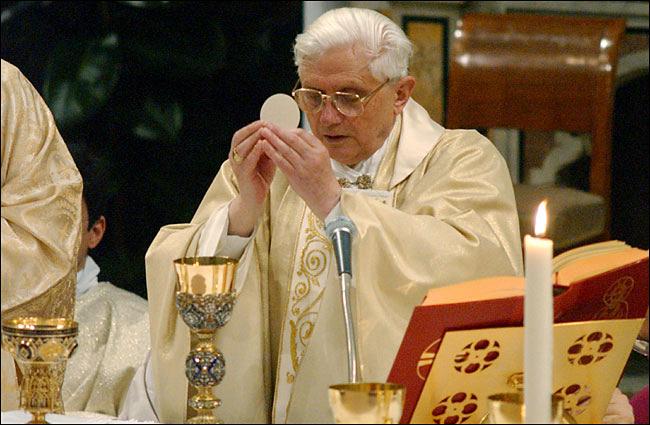
This post is part of a series discussing Daniel Dennett’s Breaking the Spell.
Back in the cultural history of religion sections of the book, Dennett touches on a very powerful argument against religion. He writes:
“And here is an interesting fact: the transition between folk religion to organized religion is marked by a shift in beliefs from those with very clear, concrete consequences to those with systematically elusive consequences–paying lip service is just about the only way you can act on them…
But what could you do to show that you really believe that the wine in the chalice has been transformed into the blood of Christ?”
Then the argument went a little awry in a way that would have caused him to flunk his own exam for scholars of religion:
You could bet a large sum of money on it and then to send the wine to the biology lab to see if there was hemoglobin in it (and recover the genome of Jesus from the DNA in the bargain!)–except the creed has been cleverly shielded from just such concrete tests. It would be a sacrilege to remove the wine from the ceremony and, besides, taking the wine out of the holy context would surely untransubstantiate it, turning it back into ordinary wine. There is really only one action you can take to demonstrate this belief: you can say that you believe it, over and over, as fervently as the occasion demands.”
Dennett is proposing a testing a quality of the Eucharist that Catholics don’t think exists. We went over this during the argument about PZ Myers desecrating a Host. Transubstantiation is changing the essence of the bread and the wine while leaving their accidents (everything accessible to the senses) unchanged. If wine changed its accidents into blood (Christ’s or anyone elses) that would be, as far as I’m concerned, transfiguration, and you should take it up with Professor McGonegal, not the Pontiff.
It’s too bad Dennett made this mistake, since the facts actually support his point better than the error does. A change in accident is empirically verifiable. A change in essence is not. Catholicism isn’t denying Dennett and others the chance to test it’s claims with regard to the Eucharist, it’s making claims that are empirically unverifiable.
A religion that retreats to Invisible Garage Dragon claims is a lot harder to debunk, but it’s hard not to see that as a defensive, besieged move. A religion that says nothing touching the natural world or human lives can’t offer much in the way of moral philosophy. I like Overheard at Yale Div School’s take on this:
“Any faith tradition worth its salt will tell you what to do with your food, your time, your genitals, and your money. Otherwise it’s not a real religion.”
Once a religion shrinks its claims down to the size of, say, moral therapeutic deism, there’s not enough there there to do more than pay lip service, as Dennett says, and then there’s little reason to just keep professing belief in belief.
I did not convert because of empirically testable claims about Catholicism. There may be miraculous cures that ought to convince atheists, but I haven’t encountered them. Starting from an atheist prior, a spontaneous remission or other ideopathic healing might be surprising, but not surprising enough to outweigh the prior estimate of the improbability of God. But there are other kinds of claims to examine.
Some are the more abstract philosophical claims for the necessity of God, which are interesting, but not accessible or urgent feeling unless you have a strong scholastic bent. But religions also make moral claims, and that’s where, a la Chesterton, we can try and see whether a theology is a truth-telling thing. Is it self-consistent? Does it cover the things you already know to be true? Where it makes different moral claims, do they turn out, on further inspection, to be right after all?
This kind of investigation is more akin to how a chess novice would recognize Kasparov as proficient. The novice doesn’t have the skill to discern whether each move is clever or foolish, but she can see that Kasparov keeps winning. Correct moral judgement is less obvious than checkmate, but the general idea is the same. It’s the problem of finding a teacher when you know that you’re deficient in the subject of instruction. And these moral claims do require more than lip service.
freedom means choosing a master
Previous Post

November 9, 2012
If only I could throw dinner parties for semi-fictional characters...
Next Post

November 11, 2012 Am I my schismatic's keeper?
Browse Our Archives
Select a Category 7 Quick Takes Apologetics Atheism Book Conversion Debate Tactics Debates Epistemology/Philosophy Housekeeping Ideological Turing Test Marriage Morality in Practice Parsing Catholicism Possibly Heretical Radio Reviews/Recommendations Sequence Index Spiritual Practice Uncategorized
Select a Month April 2017 March 2017 January 2017 December 2016 September 2016 August 2016 July 2016 June 2016 May 2016 April 2016 March 2016 February 2016 January 2016 December 2015 November 2015 October 2015 September 2015 August 2015 July 2015 June 2015 May 2015 April 2015 March 2015 February 2015 January 2015 December 2014 November 2014 October 2014 September 2014 August 2014 July 2014 June 2014 May 2014 April 2014 March 2014 February 2014 January 2014 December 2013 November 2013 October 2013 September 2013 August 2013 July 2013 June 2013 May 2013 April 2013 March 2013 February 2013 January 2013 December 2012 November 2012 October 2012 September 2012 August 2012 July 2012 June 2012 May 2012 April 2012 March 2012 February 2012 January 2012 December 2011 November 2011 October 2011 September 2011 August 2011 July 2011 June 2011 May 2011 April 2011 March 2011 February 2011 January 2011 December 2010 November 2010 October 2010 September 2010 August 2010 July 2010 June 2010
Follow Us!
TAKE THE
Religious Wisdom Quiz
What does "Deuteronomy" mean in Greek?
Select your answer to see how you score.
Many Stories Sacred Song Second Law Great Journey
Related posts from Unequally Yoked

I'm speaking about my conversion in Denver!



The Boring, Quiet Rituals That Sustain Us Spiritually
TRENDING AT PATHEOS Catholic

Rejecting Doom: Christian Hope And Human Action
Christianity is a religion of hope. We are to have hope and...

It’s What Comes From Within Which Matters
One of the most difficult things for us to understand is why...

Why I Choose the Eucharist Over the Sermon
Choose the Eucharist, Not the Sermon What are we supposed to get...

5 Design Elements Found in Spiritually Rooted Homes
Putting Spirituality Into Home Decor Our homes are more than our living...

Credo: A Story of God Told with the...
About 10 years ago, I began to imagine a personal "Credo" that...

The Anatomy of Divine Revelation in Catholic Thought
The claim that God has made Himself known to human beings is...
view all Catholic blogs
Ad-Free & Subscriber Log-In Subscription Support
- About Us
- 2026 Calendar
- Videos
- Podcasts
- Library of World Religions
- Faith In Media Tracker
- Advertise With Us
- Write for Us
- Privacy Policy
- Terms of Service
- Do Not Sell My Data
- Contact Us
- Radiant Digital
- Manage Newsletter Subscriptions
- Unsubscribe From Notifications
- Sitemap
Copyright 2008-2026, Patheos. All rights reserved.
Subscription Support Ad-Free & Subscriber Log-In
Follow Patheos