
BuddhistCatholicContemplativeEvangelicalGeneral ChristianHinduJewishLatter-day SaintMuslimNew VisionsProgressive Christian
Beliefs
- Buddhist
- Catholic
- Contemplative
- Evangelical
- General Christian
- Hindu
- Jewish
- Latter-day Saint
- More Voices
- Muslim
- New Visions
- Pagan
- Progressive Christian
Topics
- Religion News
- Food and Religion
- Sports and Religion
- Religious Art
- Religious Music and Entertainment
- Religious Events
- History and Religion
- Style and Religion
- Politics and Religion
- Women in Religion
- Recreation Outdoors and Religion
- Business Finance and Religion
- Careers Workplace and Religion
- Education and Religion
- Family Parenting and Religion
- Health Fitness and Religion
- Home and Religion
- Relationships and Religion
- Technology and Religion
- Travel and Religion
Columnists
- Buddhist Columnists
- Business Finance and Religion Columnists
- Careers Workplace and Religion Columnists
- Catholic Columnists
- Contemplative Columnists
- Education and Religion Columnists
- Evangelists Columnists
- Family Parenting and Religion Columnists
- General Christian Columnists
- Health Fitness and Religion Columnists
- Hindu Columnists
- History and Religion Columnists
- Home and Religion Columnists
- Jewish Columnists
- More Voices Columnists
- Latter Day Columnists
- Muslim Columnists
- New Visions Columnists
- Nonreligious Columnists
- Pagan Columnists
- Politics and Religion Columnists
- Progressive Columnists
- Recreation Outdoors and Religion Columnists
- Relationships and Religion Columnists
- Religion News Columnists
- Religious Art Columnists
- Religious Events Columnists
- Religious Music and Entertainment Columnists
- Sports and Religion Columnists
- Style and Religion Columnists
- Technology and Religion Columnists
- Travel and Religion Columnists
- Women in Religion Columnists
Resource Library
- 2026 Calendar
- Library of World Religions
- The 100 Most Holy Places on Earth
- Patheos Answers
- Podcasts
- Videos
- Faith Leaders Database
- Anglican Episcopalian
- Bahai
- Baptist
- Buddhism
- Christianity
- Confucianism
- Eastern Orthodoxy
- Hinduism
- Holiness and Pentecostal
- ISKCON
- Islam
- Judaism
- Lutheran
- Methodist
- The Church of Jesus Christ of Latter-day Saints
- New Age
- Paganism
- Presbytarian and Reformed
- Protestantism
- Religion Behind the Scenes
- Roman Catholic
- Scientology
- Shia Islam
- Sikhism
- Sufism
- Sunni Islam
- Taoism
- Zen
- See all religions
Research Tools
 Ad-Free & Subscriber Log-In Subscription Support
Ad-Free & Subscriber Log-In Subscription Support
Follow Patheos 

- Trending:
- Forgiveness
- |
- Marriage
- |
- Consciousness
- |
- Death Penalty
- |
- Election
- |
- Halloween
 Unequally Yoked
- Home
- Catholic
- Handy Dandy Blogging Advice!
Handy Dandy Blogging Advice!
Last updated on: November 13, 2012 at 3:54 pm by Leah Libresco
Handy Dandy Blogging Advice! 2012-11-13T15:54:09-05:00 Leah Libresco
Patheos Explore the world's faith through different perspectives on religion and spirituality! Patheos has the views of the prevalent religions and spiritualities of the world.
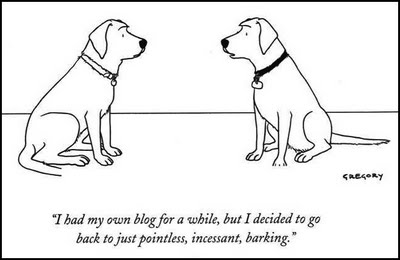
This weekend, I went up to Baltimore to attend a session of the Fall General Assembly of the U.S. Conference of Catholic Bishops (USCCB). The session was called, “An Encounter With Social Media: Bishops and Bloggers Dialogue” and included a presentation of survey results about Catholic blog reading habits, a panel discussion, small group discussion, and then a period where the bishops asked questions of the bloggers en masse and then we switched and asked them questions.
They encouraged us to livetweet the event using the hashtag #bpsblog, which I used to double check if I were the youngest person in the room. (I was tied with Anna Williams, a junior fellow at First Things). Anyway, as a young person, I get a little nervous when adults express generic enthusiasm for blogs and social media. “Yes! Yes! More of this thing! Try to remember to post frequently.”
Content aside, what makes for a good blog post?
There’s not always enough discussion of what to post, or how it might differ from the writing that you’re already doing in your essay for the parish bulletin or whatnot. I got to talk a bit about form and content at the meeting, and some of it is applicable outside the Catholic blogosphere.
The first rule of a good blog post is that, if you tried to transfer it to another format, it wouldn’t work as well. So, what are the unique markers of blogging as a medium? I think the most important fact is that, when someone is reading your blog, they’re online. That means it’s easy for them to move to a different site or post and keep reading.
So, the magic words are blockquote and hyperlink. What blogs do better than any other medium is to share references for a conversation. Go watch this video, and then discuss. Here’s my take on this article, and here’s someone who disagrees (plus a blockquote and short rebuttal). There was a big argument in the combox of an old post, go check out the whole thing or get up to speed with these key permalinks.
You can write in more conventional styles (like the non-hyperlinked op-ed or essay), and, if the content is good enough, delightful! But if you’re trying to figure out whether to start a blog or what to put on it and you don’t plan to make use of the open-link-in-new-tab advantages, it might be worth asking if it’s actually a blog you want to start.
Oh no, I’m blogging for an institution!
My sympathies! This might be a place where blog-as-aggregator/curator works really well. Lots of the bishops weren’t really sure what a parish or diocesan blog ought to do, and I think Andrew Sullivan’s Daily Dish blog is a good model. Share essays, prayers, art, and commentary from all over the blogosphere and comment/expand/make connections where appropriate.
When this idea came up, several people in the room said that curating links wasn’t authentic enough, and that people come to your facebook page or blog to be close to you. I disagree. Choosing reveals character. I might learn more about someone by looking over their bookshelf than having an awkward, half-hour conversation. And, after looking over the titles on their shelf, I’m probably better prepared to have an interesting coffee klatsch.

Ok, now let’s talk about content…
Looking over the survey results, several people seemed dispirited by the respondents reports that they go online to be entertained. But entertainment and deep content aren’t opposed. I said to one of the other bloggers at the pub that Catholicism (and a lot of other topics) could us a Vi Hart. Hart’s math videos are interesting without being gimmicky, and she doesn’t dumb down her material. Oh, let’s just pause and watch one for a second:
http://www.youtube.com/watch?v=X1E7I7_r3Cw
I’d love to see someone translate the metaphysics of The Last Superstition into fast-talking doodle-y videos, but, luckily for those of us who can’t draw, that’s not the only way to get people’s attention for abstract-seeming topics. When it comes to talking about ethics and morality, I’ve found that bloggers who do cultural criticism provide great entry points for new or casual readers.
When I write about healthy relationships in the context of Harry Potter, I’m starting from material that people already know and are fluent in. That way, I’m not trying to teach you a whole new language of technical terms before/while we’re having the discussion. And talking about the arts naturally lends itself to this discussion, since we like to pick sides, decide why something seems unrealistic or repulsive, or talk about why we’re so in thrall to beauty and whether that’s ok.
Here’s a list of some of the culture bloggers I really like: Rod Dreher, Alan Jacobs, Noah Millman, Alyssa Rosenberg, and Eve Tushnet. They don’t all blog about culture full time, but I often get a better sense of their philosophy from their theatre and book reviews than any other writing they do. And that’s when I start itching to try it out, pick a fight, or grab a blockquote and a link and talk to you all about it.
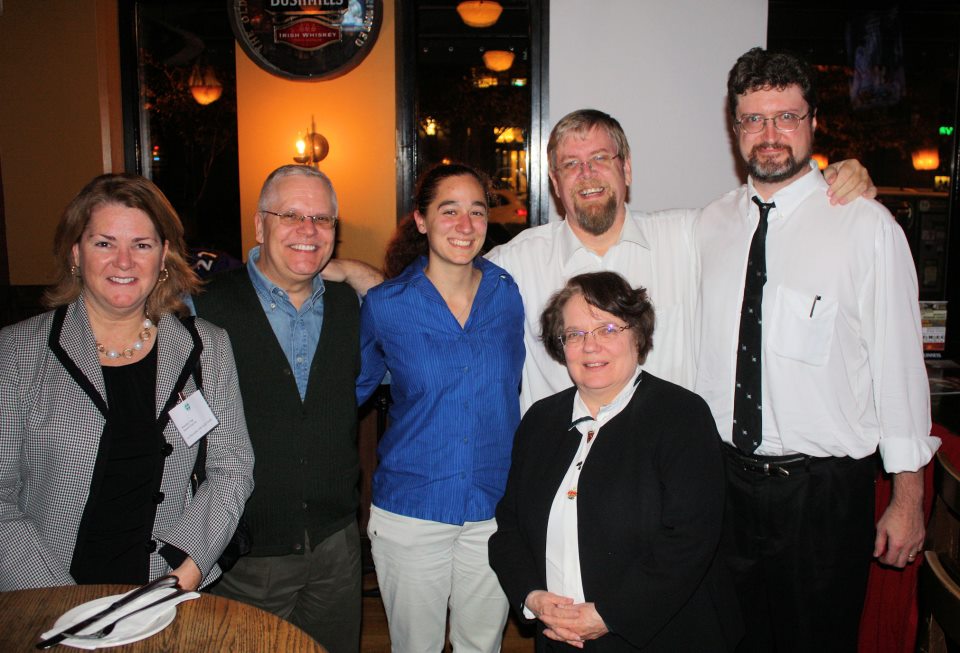
Other Patheos bloggers were in attendance for the panel (that’s our post discussion get together shot above), and here’s a linkaround of their reactions and impressions:
- Kathy Schiffer – “Look Out! Catholic Bloggers Take Baltimore by Storm!“
- Deacon Greg Kandra – “The Patheos Posse“
- Mark Shea – “Happy Jollity!“
- Frank Weathers – “The Bloggers Meet The Bishops, On Tape, Via YouTube“
- Thomas L. McDonald – “In Baltimore With Bishops and Bloggers“
Previous Post

November 12, 2012
The Day After Veterans Day
Next Post

November 14, 2012 Here's what's coming up this week...
Browse Our Archives
Select a Category 7 Quick Takes Apologetics Atheism Book Conversion Debate Tactics Debates Epistemology/Philosophy Housekeeping Ideological Turing Test Marriage Morality in Practice Parsing Catholicism Possibly Heretical Radio Reviews/Recommendations Sequence Index Spiritual Practice Uncategorized
Select a Month April 2017 March 2017 January 2017 December 2016 September 2016 August 2016 July 2016 June 2016 May 2016 April 2016 March 2016 February 2016 January 2016 December 2015 November 2015 October 2015 September 2015 August 2015 July 2015 June 2015 May 2015 April 2015 March 2015 February 2015 January 2015 December 2014 November 2014 October 2014 September 2014 August 2014 July 2014 June 2014 May 2014 April 2014 March 2014 February 2014 January 2014 December 2013 November 2013 October 2013 September 2013 August 2013 July 2013 June 2013 May 2013 April 2013 March 2013 February 2013 January 2013 December 2012 November 2012 October 2012 September 2012 August 2012 July 2012 June 2012 May 2012 April 2012 March 2012 February 2012 January 2012 December 2011 November 2011 October 2011 September 2011 August 2011 July 2011 June 2011 May 2011 April 2011 March 2011 February 2011 January 2011 December 2010 November 2010 October 2010 September 2010 August 2010 July 2010 June 2010
Follow Us!
TAKE THE
Religious Wisdom Quiz
What symbol is most commonly associated with Christianity worldwide?
Select your answer to see how you score.
The dove The lamb The cross The fish
Related posts from Unequally Yoked

Starting Conversations During Francis's Visit

Desiring Abundance of Life, Not Just Absence of...
Why Not Refer to ISIS by an Epithet?

Life Lessons that Can't be Taught at College's...
TRENDING AT PATHEOS Catholic

Rejecting Doom: Christian Hope And Human Action
Christianity is a religion of hope. We are to have hope and...

It’s What Comes From Within Which Matters
One of the most difficult things for us to understand is why...

Why I Choose the Eucharist Over the Sermon
Choose the Eucharist, Not the Sermon What are we supposed to get...

5 Design Elements Found in Spiritually Rooted Homes
Putting Spirituality Into Home Decor Our homes are more than our living...

Credo: A Story of God Told with the...
About 10 years ago, I began to imagine a personal "Credo" that...

The Anatomy of Divine Revelation in Catholic Thought
The claim that God has made Himself known to human beings is...
view all Catholic blogs
Ad-Free & Subscriber Log-In Subscription Support
- About Us
- 2026 Calendar
- Videos
- Podcasts
- Library of World Religions
- Faith In Media Tracker
- Advertise With Us
- Write for Us
- Privacy Policy
- Terms of Service
- Do Not Sell My Data
- Contact Us
- Radiant Digital
- Manage Newsletter Subscriptions
- Unsubscribe From Notifications
- Sitemap
Copyright 2008-2026, Patheos. All rights reserved.
Subscription Support Ad-Free & Subscriber Log-In
Follow Patheos