
BuddhistCatholicContemplativeEvangelicalGeneral ChristianHinduJewishLatter-day SaintMuslimNew VisionsProgressive Christian
Beliefs
- Buddhist
- Catholic
- Contemplative
- Evangelical
- General Christian
- Hindu
- Jewish
- Latter-day Saint
- More Voices
- Muslim
- New Visions
- Pagan
- Progressive Christian
Topics
- Religion News
- Food and Religion
- Sports and Religion
- Religious Art
- Religious Music and Entertainment
- Religious Events
- History and Religion
- Style and Religion
- Politics and Religion
- Women in Religion
- Recreation Outdoors and Religion
- Business Finance and Religion
- Careers Workplace and Religion
- Education and Religion
- Family Parenting and Religion
- Health Fitness and Religion
- Home and Religion
- Relationships and Religion
- Technology and Religion
- Travel and Religion
Columnists
- Buddhist Columnists
- Business Finance and Religion Columnists
- Careers Workplace and Religion Columnists
- Catholic Columnists
- Contemplative Columnists
- Education and Religion Columnists
- Evangelists Columnists
- Family Parenting and Religion Columnists
- General Christian Columnists
- Health Fitness and Religion Columnists
- Hindu Columnists
- History and Religion Columnists
- Home and Religion Columnists
- Jewish Columnists
- More Voices Columnists
- Latter Day Columnists
- Muslim Columnists
- New Visions Columnists
- Nonreligious Columnists
- Pagan Columnists
- Politics and Religion Columnists
- Progressive Columnists
- Recreation Outdoors and Religion Columnists
- Relationships and Religion Columnists
- Religion News Columnists
- Religious Art Columnists
- Religious Events Columnists
- Religious Music and Entertainment Columnists
- Sports and Religion Columnists
- Style and Religion Columnists
- Technology and Religion Columnists
- Travel and Religion Columnists
- Women in Religion Columnists
Resource Library
- 2026 Calendar
- Library of World Religions
- The 100 Most Holy Places on Earth
- Patheos Answers
- Podcasts
- Videos
- Faith Leaders Database
- Anglican Episcopalian
- Bahai
- Baptist
- Buddhism
- Christianity
- Confucianism
- Eastern Orthodoxy
- Hinduism
- Holiness and Pentecostal
- ISKCON
- Islam
- Judaism
- Lutheran
- Methodist
- The Church of Jesus Christ of Latter-day Saints
- New Age
- Paganism
- Presbytarian and Reformed
- Protestantism
- Religion Behind the Scenes
- Roman Catholic
- Scientology
- Shia Islam
- Sikhism
- Sufism
- Sunni Islam
- Taoism
- Zen
- See all religions
Research Tools
 Ad-Free & Subscriber Log-In Subscription Support
Ad-Free & Subscriber Log-In Subscription Support
Follow Patheos 

- Trending:
- Forgiveness
- |
- Marriage
- |
- Consciousness
- |
- Death Penalty
- |
- Election
- |
- Halloween
 Unequally Yoked
- Home
- Catholic
- Dennett’s Thesis isn’t Evidence for Very Interesting Claims
Dennett’s Thesis isn’t Evidence for Very Interesting Claims
Last updated on: November 8, 2012 at 5:44 pm by Leah Libresco
Dennett’s Thesis isn’t Evidence for Very Interesting Claims 2012-11-08T17:44:31-05:00 Leah Libresco
Patheos Explore the world's faith through different perspectives on religion and spirituality! Patheos has the views of the prevalent religions and spiritualities of the world.
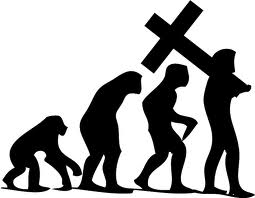
This post is part of a series discussing Daniel Dennett’s Breaking the Spell.
The main thrust of Daniel Dennett’s Breaking the Spell is that the history of religion is not incompatible with evolutionary theory. That sounds a lot less exciting than an attack on religion, but it’s what the book is actually about. Dennett’s book doesn’t mount up any direct evidence against the truth claims of religion, but it does make the argument that religion is something you might be reasonably likely to observe in a world where there was no god. That means the mere existence of religion is not strong evidence for the existence of god. Fine and dandy.
But that’s not really so big a claim. This is the same basic argument that evolutionary scientists have over a seemingly maladaptive trait or altruism. Is this phenomenon the kind of thing we really wouldn’t expect to see given what we know about evolution? There are a variety of ways to try to explore these questions. Sometimes we can play around with simpler analogues in species that reproduce and evolve swiftly and come up with general rules (like sex-signalling can turn into an our of control arms race). Sometimes we can monkey around within a population and see what animals are using as signals (playing different parts of song to see which are mating calls and which are alerts, showing college students silhouettes with different waist to hip ratios). And sometimes, we’re just using our imagination, to see if there’s a plausible path from a precursor creature to the behavior we know today.
I’m not knocking that method, mind you. It can help us make predictions that we can test using the fossil or artifact record. But Dennett does tend to treat it as a little more definitive than I would. A plausible path from A to B may be more of a testament to human ingenuity than to the likelihood of a certain cultural practice emerging due to evolutionary cruft.
At a certain point in the book, Dennett admits that all the data and speculation he’s mounting up doesn’t have much to say about the truth claims (metaphysical, historical, or ethical) of any religion:
“Notice, too, that this [universality] leaves wide open the possibility that divination… is a mutualist meme because it’s true …After all, the reason why water is deemed essential to life in every human culture is that it is essential to life. For the moment, though, my point is just that divination, which appears just about everywhere in human culture… could be understood as a natural phenomenon, paying for itself in the biological coin of replication, whether or not it is actually a source of reliable information”
The obvious next question is how you would test whether divination is a cultural replicator because it’s a guide to truth or whether it’s remains popular for some other reason. Dennett comes round to this question for the god proposition near the end of the book, and I’ll hit that section tomorrow. But before we tackle those specific arguments, I think I’ve got a handy inversion to explain why the kind of evidence Dennett is gathering isn’t that relevant to an atheist vs theist argument.
Dennett asks repeatedly “Cui bono?” Who benefits from a particular cultural practice? How is it paying for itself, is the currency increased access to food? Mates? Resistance to disease? But if a cultural practice benefiting people is a cue that it’s stated claims aren’t trustworthy, because they can be explained away, than we’re heading into really wacky epistemological territory.
“You can totally trust my philosophy, because living it is nearly impossible, really lowers the chance you’ll reproduce, and takes a major toll on your health. It’s so evolutionarily disadvantageous it is sustained only by our commitment to Truth, no matter the cost!”
I foresee a Stylite boom. Reserve your pillars now.
Previous Post
November 7, 2012
And, now, some #natesilverfacts
Next Post

November 8, 2012 Reading Dennett's Breaking the Spell [Index Post]
Browse Our Archives
Select a Category 7 Quick Takes Apologetics Atheism Book Conversion Debate Tactics Debates Epistemology/Philosophy Housekeeping Ideological Turing Test Marriage Morality in Practice Parsing Catholicism Possibly Heretical Radio Reviews/Recommendations Sequence Index Spiritual Practice Uncategorized
Select a Month April 2017 March 2017 January 2017 December 2016 September 2016 August 2016 July 2016 June 2016 May 2016 April 2016 March 2016 February 2016 January 2016 December 2015 November 2015 October 2015 September 2015 August 2015 July 2015 June 2015 May 2015 April 2015 March 2015 February 2015 January 2015 December 2014 November 2014 October 2014 September 2014 August 2014 July 2014 June 2014 May 2014 April 2014 March 2014 February 2014 January 2014 December 2013 November 2013 October 2013 September 2013 August 2013 July 2013 June 2013 May 2013 April 2013 March 2013 February 2013 January 2013 December 2012 November 2012 October 2012 September 2012 August 2012 July 2012 June 2012 May 2012 April 2012 March 2012 February 2012 January 2012 December 2011 November 2011 October 2011 September 2011 August 2011 July 2011 June 2011 May 2011 April 2011 March 2011 February 2011 January 2011 December 2010 November 2010 October 2010 September 2010 August 2010 July 2010 June 2010
Follow Us!
TAKE THE
Religious Wisdom Quiz
Who was David's great-grandmother?
Select your answer to see how you score.
Bathsheba Ruth Tamar Rahab
Related posts from Unequally Yoked



The Boring, Quiet Rituals That Sustain Us Spiritually

Starving Laypeople of Devotion in Church
TRENDING AT PATHEOS Catholic

Rejecting Doom: Christian Hope And Human Action
Christianity is a religion of hope. We are to have hope and...

It’s What Comes From Within Which Matters
One of the most difficult things for us to understand is why...

Why I Choose the Eucharist Over the Sermon
Choose the Eucharist, Not the Sermon What are we supposed to get...

5 Design Elements Found in Spiritually Rooted Homes
Putting Spirituality Into Home Decor Our homes are more than our living...

Credo: A Story of God Told with the...
About 10 years ago, I began to imagine a personal "Credo" that...

The Anatomy of Divine Revelation in Catholic Thought
The claim that God has made Himself known to human beings is...
view all Catholic blogs
Ad-Free & Subscriber Log-In Subscription Support
- About Us
- 2026 Calendar
- Videos
- Podcasts
- Library of World Religions
- Faith In Media Tracker
- Advertise With Us
- Write for Us
- Privacy Policy
- Terms of Service
- Do Not Sell My Data
- Contact Us
- Radiant Digital
- Manage Newsletter Subscriptions
- Unsubscribe From Notifications
- Sitemap
Copyright 2008-2026, Patheos. All rights reserved.
Subscription Support Ad-Free & Subscriber Log-In
Follow Patheos