
BuddhistCatholicContemplativeEvangelicalGeneral ChristianHinduJewishLatter-day SaintMuslimNew VisionsProgressive Christian
Beliefs
- Buddhist
- Catholic
- Contemplative
- Evangelical
- General Christian
- Hindu
- Jewish
- Latter-day Saint
- More Voices
- Muslim
- New Visions
- Pagan
- Progressive Christian
Topics
- Religion News
- Food and Religion
- Sports and Religion
- Religious Art
- Religious Music and Entertainment
- Religious Events
- History and Religion
- Style and Religion
- Politics and Religion
- Women in Religion
- Recreation Outdoors and Religion
- Business Finance and Religion
- Careers Workplace and Religion
- Education and Religion
- Family Parenting and Religion
- Health Fitness and Religion
- Home and Religion
- Relationships and Religion
- Technology and Religion
- Travel and Religion
Columnists
- Buddhist Columnists
- Business Finance and Religion Columnists
- Careers Workplace and Religion Columnists
- Catholic Columnists
- Contemplative Columnists
- Education and Religion Columnists
- Evangelists Columnists
- Family Parenting and Religion Columnists
- General Christian Columnists
- Health Fitness and Religion Columnists
- Hindu Columnists
- History and Religion Columnists
- Home and Religion Columnists
- Jewish Columnists
- More Voices Columnists
- Latter Day Columnists
- Muslim Columnists
- New Visions Columnists
- Nonreligious Columnists
- Pagan Columnists
- Politics and Religion Columnists
- Progressive Columnists
- Recreation Outdoors and Religion Columnists
- Relationships and Religion Columnists
- Religion News Columnists
- Religious Art Columnists
- Religious Events Columnists
- Religious Music and Entertainment Columnists
- Sports and Religion Columnists
- Style and Religion Columnists
- Technology and Religion Columnists
- Travel and Religion Columnists
- Women in Religion Columnists
Resource Library
- 2026 Calendar
- Library of World Religions
- The 100 Most Holy Places on Earth
- Patheos Answers
- Podcasts
- Videos
- Faith Leaders Database
- Anglican Episcopalian
- Bahai
- Baptist
- Buddhism
- Christianity
- Confucianism
- Eastern Orthodoxy
- Hinduism
- Holiness and Pentecostal
- ISKCON
- Islam
- Judaism
- Lutheran
- Methodist
- The Church of Jesus Christ of Latter-day Saints
- New Age
- Paganism
- Presbytarian and Reformed
- Protestantism
- Religion Behind the Scenes
- Roman Catholic
- Scientology
- Shia Islam
- Sikhism
- Sufism
- Sunni Islam
- Taoism
- Zen
- See all religions
Research Tools
 Ad-Free & Subscriber Log-In Subscription Support
Ad-Free & Subscriber Log-In Subscription Support
Follow Patheos 

- Trending:
- Forgiveness
- |
- Marriage
- |
- Consciousness
- |
- Death Penalty
- |
- Election
- |
- Halloween
 Unequally Yoked
- Home
- Catholic
- 7 Quick Book Recommendations
7 Quick Book Recommendations
Last updated on: November 30, 2012 at 8:17 am by Leah Libresco
7 Quick Book Recommendations 2012-11-30T08:17:26-05:00 Leah Libresco
Patheos Explore the world's faith through different perspectives on religion and spirituality! Patheos has the views of the prevalent religions and spiritualities of the world.

Tis the season for finding gifts, and how could you possibly do better than books? Seriously, when I was a little kid, the tooth fairy left money and YA fiction in our beds. It’s hard for me to cull from my list of favorites, so these seven books (plus one bonus recommendation) are all culled from things I read for the first time in 2012.
Oh, and don’t forget that when you buy books or anything on Amazon through my links, I get a small cut that I turn into more book purchases and reviews/meditations for you! You don’t need to be buying the item linked, anything you get after clicking my referral link counts.
— 1 —

Well, after a paen to Lewis on Monday, a defense of him on Wednesday, and some awfully good news for him yesterday, I feel obliged to kick off this list with his Reflections on the Psalms. Since I’ve been praying the Liturgy of the Hours, I was casting about for good references on the Psalms. There are better places to go if you want a big scholarly discussion of their history or in-depth analysis of individual psalms, but reading Lewis’s book is like having an intense conversation until the coffee shop closes with a friend who’s spent a long time with these verses.
— 2 —

I’ve mentioned I tend to appreciate Lewis more for his apologetics than his fantasy/scifi, but boy howdy do I love those genres generally and I really loved reading Orson Scott Card’s How to Write Science Fiction and Fantasy this year. I don’t write fiction, but you don’t need to need this book to love it.
I’ve always liked the Peggy Noonan remark that the beauty of a speech is in its logic, and Card does a great job of showing you how he’s thought through or been surprised by the consequences and relationships of the worlds he built. Oh, and Eliezer Yudkowsky has said this book helps him write Harry Potter and the Methods of Rationality. (I’d still like him to write and write faster).
— 3 —
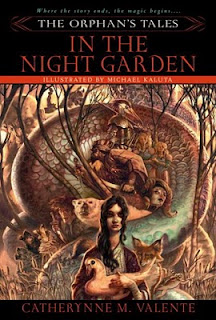
And while we’re talking about writing fantasy that casts a spell on the reader, I have to recommend Catherynne Valente’s The Orphan’s Tales: In the Night Garden and it’s sequel The Orphan’s Tales: In the Cities of Coin and Spice. Reading these books made me feel a lot of kinship with the king in Scheherazade – I was alternately enraptured and enraged.
But Scheherazade’s spouse had it easy; she started a new tale every night and stopped at the cliffhanger, so he couldn’t kill her the next day. Then she’d finish the story and start a new one the next night. In Valente’s two books, the characters in the stories that our girl is telling in the frame tale start telling stories of their own, or are told them by the people they meet. And the stories are so good, that you can’t decide which level down you need catharsis on most.
Not to mention that, a lot of the time, a nested story will cast new light on one of the stories still spinning out, sometimes when the antagonist gets a chance to talk, and sometimes when one narrative just glances off the other, but some small fact is explained (oh that’s where the three mute maidens stole the tongue they shared!).
If you’re looking for gifts for younger readers, try Valente’s The Girl Who Circumnavigated Fairyland in a Ship of Her Own Making and its sequel The Girl Who Fell Beneath Fairyland and Led the Revels There. It’s on a par with The Phantom Tollbooth in surreal beauty.
— 4 —

Like everyone else, apparently, I really liked Hillary Mantel’s Wolf Hall. (I didn’t love Bring Up the Bodies or A Place of Greater Safety quite as much). The length is part of what makes it excellent (and why I didn’t love Bodies); there’s a lot of room for Cromwell to have to work around his king and his culture. Mantel was also the cause of me reading A Man for All Seasons this year, which I juxtaposed with A Place of Greater Safety recently.
— 5 —

Mantel brought me into history through fiction, and Peter Brown caught me with his nonfiction work The Body and Society: Men, Women, and Sexual Renunciation in Early Christianity. It’s a nice reminder about how much work moral theology is, and it’s comforting to see that I’m not the only one who flails around a bit when it comes to all those questions about the realtionship between intellect and embodiment, caritas and eros.
Drew Gilpin Faust’s This Republic of Suffering: Death and the American Civil War is another great book that works through historical problems and makes you think awfully hard about the dignity of the body now. Not quite sure if it counts for this list, since I’d read excerpts before for an epidemiology class, but this year I actually read the whole thing.
— 6 —
My default mode is more puzzle-solving and abstract philosophizing than anything all that spiritual or communal. That’s why I’m really glad I read The Presence of God, Weeds among the Wheat, and The Examen Prayer: Ignatian Wisdom for Our Lives Today. I am not the best at thinking of God-the-Person instead of God-the-truth-proposition, and I found these helpful.
— 7 —

Earlier this year, when I was still working on the truth proposition problem, I was trying to decide what I needed to do to have finished doing due diligence so I could walk away from the question of God and feel intellectually satisfied. For some reason, I decided this meant I needed to read the big Christian novels I’d been so frequently recommended. Which is great, because it meant I finally read The Brothers Karamazov. I kept coming back to ideas and quotations from it for months. (And when that petered out, I think it was a sign I was due for a reread).
P.S. Did you know William Shatner played Alyosha in a film adaptation?!?
— 8 —
Unfortunately, many people are reading these great books on Kindle, which may be convenient, but makes it awfully hard for me to spot what you’re reading and strike up a conversation. So why not use a new signalling mechanism?
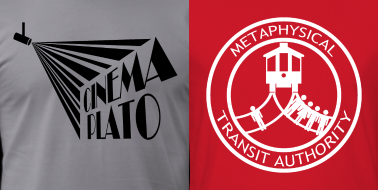
You can still buy either of the snazzy philosophy t-shirts my college friends and I designed in our spreadshirt store. And, according to Nick Carr, Google’s autonomous cars might be taking the thought out of thought-experiment when it comes to the trolley problem:
So you’re happily tweeting away as your Google self-driving car crosses a bridge, its speed precisely synced to the 50 m.p.h. limit. A group of frisky schoolchildren is also heading across the bridge, on the pedestrian walkway. Suddenly, there’s a tussle, and three of the kids are pushed into the road, right in your vehicle’s path. Your self-driving car has a fraction of a second to make a choice: Either it swerves off the bridge, possibly killing you, or it runs over the children. What does the Google algorithm tell it to do?
For more Quick Takes, visit Conversion Diary!

Next Post
November 30, 2012 On Doxologies, the Kingdom, and the Oxford Comma
Browse Our Archives
Select a Category 7 Quick Takes Apologetics Atheism Book Conversion Debate Tactics Debates Epistemology/Philosophy Housekeeping Ideological Turing Test Marriage Morality in Practice Parsing Catholicism Possibly Heretical Radio Reviews/Recommendations Sequence Index Spiritual Practice Uncategorized
Select a Month April 2017 March 2017 January 2017 December 2016 September 2016 August 2016 July 2016 June 2016 May 2016 April 2016 March 2016 February 2016 January 2016 December 2015 November 2015 October 2015 September 2015 August 2015 July 2015 June 2015 May 2015 April 2015 March 2015 February 2015 January 2015 December 2014 November 2014 October 2014 September 2014 August 2014 July 2014 June 2014 May 2014 April 2014 March 2014 February 2014 January 2014 December 2013 November 2013 October 2013 September 2013 August 2013 July 2013 June 2013 May 2013 April 2013 March 2013 February 2013 January 2013 December 2012 November 2012 October 2012 September 2012 August 2012 July 2012 June 2012 May 2012 April 2012 March 2012 February 2012 January 2012 December 2011 November 2011 October 2011 September 2011 August 2011 July 2011 June 2011 May 2011 April 2011 March 2011 February 2011 January 2011 December 2010 November 2010 October 2010 September 2010 August 2010 July 2010 June 2010
Follow Us!
TAKE THE
Religious Wisdom Quiz
What happened to Lot's wife as they fled Sodom?
Select your answer to see how you score.
She died by fire She became blind She turned into a pillar of salt She fell into a well
Related posts from Unequally Yoked



The Boring, Quiet Rituals That Sustain Us Spiritually

Starving Laypeople of Devotion in Church
TRENDING AT PATHEOS Catholic

Rejecting Doom: Christian Hope And Human Action
Christianity is a religion of hope. We are to have hope and...

It’s What Comes From Within Which Matters
One of the most difficult things for us to understand is why...

Why I Choose the Eucharist Over the Sermon
Choose the Eucharist, Not the Sermon What are we supposed to get...

5 Design Elements Found in Spiritually Rooted Homes
Putting Spirituality Into Home Decor Our homes are more than our living...

Credo: A Story of God Told with the...
About 10 years ago, I began to imagine a personal "Credo" that...

The Anatomy of Divine Revelation in Catholic Thought
The claim that God has made Himself known to human beings is...
view all Catholic blogs
Ad-Free & Subscriber Log-In Subscription Support
- About Us
- 2026 Calendar
- Videos
- Podcasts
- Library of World Religions
- Faith In Media Tracker
- Advertise With Us
- Write for Us
- Privacy Policy
- Terms of Service
- Do Not Sell My Data
- Contact Us
- Radiant Digital
- Manage Newsletter Subscriptions
- Unsubscribe From Notifications
- Sitemap
Copyright 2008-2026, Patheos. All rights reserved.
Subscription Support Ad-Free & Subscriber Log-In
Follow Patheos