
BuddhistCatholicContemplativeEvangelicalGeneral ChristianHinduJewishLatter-day SaintMuslimNew VisionsProgressive Christian
Beliefs
- Buddhist
- Catholic
- Contemplative
- Evangelical
- General Christian
- Hindu
- Jewish
- Latter-day Saint
- More Voices
- Muslim
- New Visions
- Pagan
- Progressive Christian
Topics
- Religion News
- Food and Religion
- Sports and Religion
- Religious Art
- Religious Music and Entertainment
- Religious Events
- History and Religion
- Style and Religion
- Politics and Religion
- Women in Religion
- Recreation Outdoors and Religion
- Business Finance and Religion
- Careers Workplace and Religion
- Education and Religion
- Family Parenting and Religion
- Health Fitness and Religion
- Home and Religion
- Relationships and Religion
- Technology and Religion
- Travel and Religion
Columnists
- Buddhist Columnists
- Business Finance and Religion Columnists
- Careers Workplace and Religion Columnists
- Catholic Columnists
- Contemplative Columnists
- Education and Religion Columnists
- Evangelists Columnists
- Family Parenting and Religion Columnists
- General Christian Columnists
- Health Fitness and Religion Columnists
- Hindu Columnists
- History and Religion Columnists
- Home and Religion Columnists
- Jewish Columnists
- More Voices Columnists
- Latter Day Columnists
- Muslim Columnists
- New Visions Columnists
- Nonreligious Columnists
- Pagan Columnists
- Politics and Religion Columnists
- Progressive Columnists
- Recreation Outdoors and Religion Columnists
- Relationships and Religion Columnists
- Religion News Columnists
- Religious Art Columnists
- Religious Events Columnists
- Religious Music and Entertainment Columnists
- Sports and Religion Columnists
- Style and Religion Columnists
- Technology and Religion Columnists
- Travel and Religion Columnists
- Women in Religion Columnists
Resource Library
- 2026 Calendar
- Library of World Religions
- The 100 Most Holy Places on Earth
- Patheos Answers
- Podcasts
- Videos
- Faith Leaders Database
- Anglican Episcopalian
- Bahai
- Baptist
- Buddhism
- Christianity
- Confucianism
- Eastern Orthodoxy
- Hinduism
- Holiness and Pentecostal
- ISKCON
- Islam
- Judaism
- Lutheran
- Methodist
- The Church of Jesus Christ of Latter-day Saints
- New Age
- Paganism
- Presbytarian and Reformed
- Protestantism
- Religion Behind the Scenes
- Roman Catholic
- Scientology
- Shia Islam
- Sikhism
- Sufism
- Sunni Islam
- Taoism
- Zen
- See all religions
Research Tools
 Ad-Free & Subscriber Log-In Subscription Support
Follow Patheos 

- Trending:
- Advent
- |
- Forgiveness
- |
- Thanksgiving
- |
- Election
- |
- Seasonal Holidays
- |
- Marriage
 Unequally Yoked
- Home
- Catholic
- Objective Morality and Hard to Get at Truths
Objective Morality and Hard to Get at Truths
Last updated on: October 19, 2012 at 12:01 pm by Leah Libresco
Objective Morality and Hard to Get at Truths 2012-10-19T12:01:17-04:00 Leah Libresco
Patheos Explore the world's faith through different perspectives on religion and spirituality! Patheos has the views of the prevalent religions and spiritualities of the world.

Bob Seidensticker has been checking out C.S. Lewis, and he’s put up a post explaining why he still doesn’t think it makes sense to talk about morality as objective. I’m going to reply over here, but I’d love to have Hemant Mehta of Friendly Atheist step in and backstop me.
You see, back when Hemant and I were scrapping on Justin Brierley’s radio show, Hemant agreed with me that the Taliban are flat out wrong about the moral status of women, as wrong as people who think the earth is flat. I was trying to press him on where the yardstick or rulebook or whatnot comes from, such that we can say that we more closely resemble this external standard than does the Taliban. We didn’t settle the question in an hour.
But Bob Seidensticker diverges from Hemant and me one step further back. While we’re arguing about what kind of thing the yardstick is, Bob denies it exists at all. (I’m tempted to say he denies the cat). He writes:
“Right” and “wrong” come with an implied point of view. I’m happy to say that the Nazis were wrong, but when I do so, the word wrong is grounded in my point of view. (Kind of obvious, right? I mean, whose point of view would I be using but my own?)
That statement is simply a less clumsy version of, “The Nazis were wrong according to Bob.” There is neither a need to imagine nor justification for an absolute standard.
…Like Lewis, I insist that you keep your commitments to me, that you follow the basic rules of civility, and so on. When you don’t, I’m annoyed not because you violated an absolute law; you violate my law. It ain’t much, but it’s all I’ve got, and that’s enough to explain the morality we see around us.
It’s funny that this comes up right after we were talking about E-Prime. E-Prime strikes “to be” and all it’s conjugations to remove some illusions that we’re talking about a shared reality. Truer to say “I feel that X is wrong” or “X makes me feel icky” than to just go round asserting truths everyone may not assent to. (E-Prime does allow “should” “ought” “must” and other normative verbs, though).
Before you can ask, Bob’s already taken a good hard bite of the Nazi bullet in the comment thread, so I’ll have to attack on a different front. Let’s go back to Lewis. One point Lewis brings up in Mere Christianity is that we treat supposedly subjective moral opinions very differently than we treat subjective aesthetic opinions or other mere preferences.

I have to tell people that I care if they wear shoes in my home, because that’s a preference we think people can reasonably vary on. But I generally don’t think it’s necessary to tell people I’d prefer they not steal my shoes, since I have a strong expectation that they know that rule already. It’s not just my law.
And even if you slot an awful lot of things into the “preference” category, when I slide up a meta-level and ask whether thwarting people’s preferences is a ok thing to do for its own sake, there’s a darned near universal intuition that the answer is no.
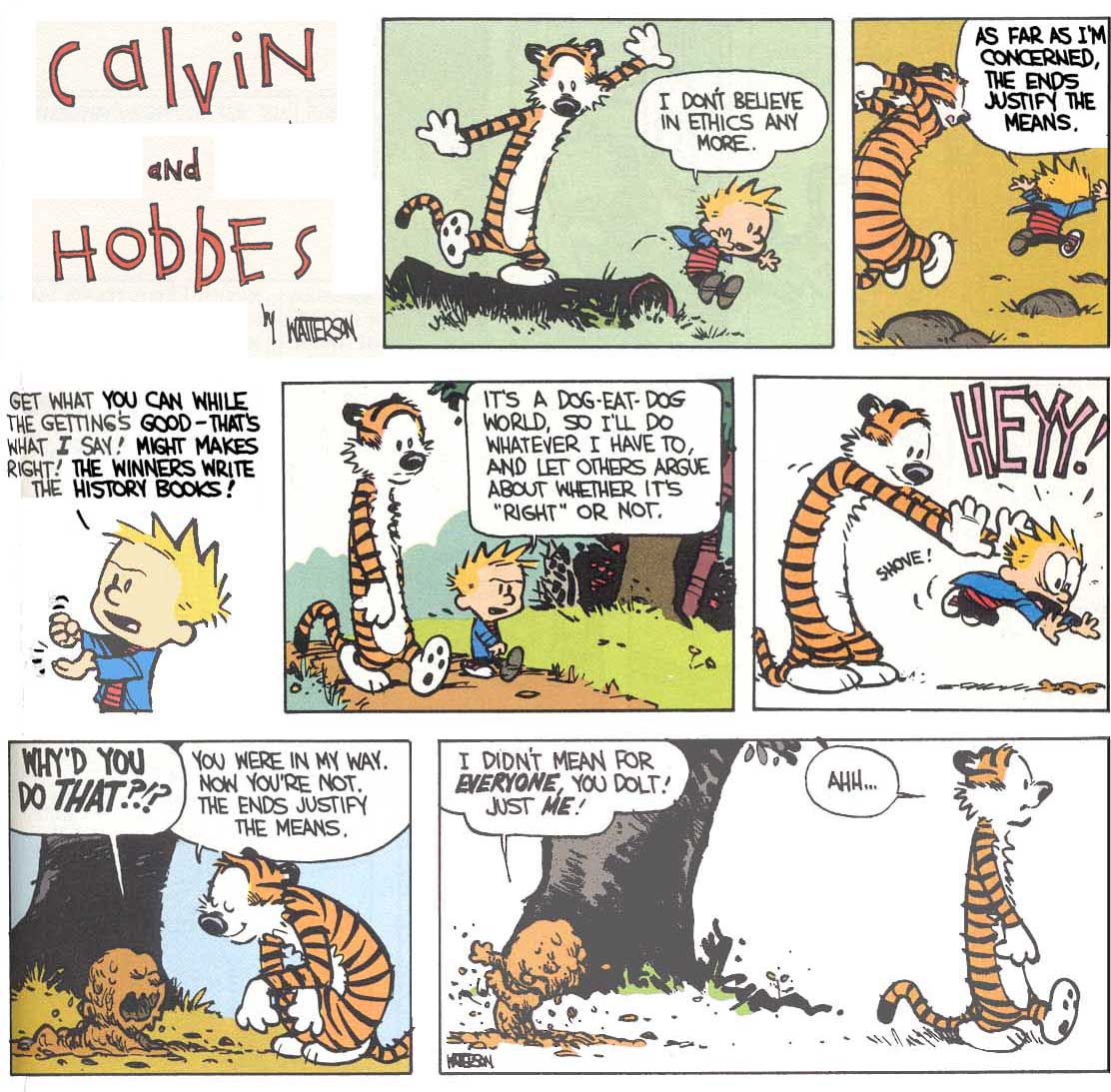
This agreement could be a matter of coincidence. It’s easy to think of widespread consensus that turned out to be untrue (the geocentric solar system comes to mind). But Bob is asserting something much stronger; he’s claiming that we can’t even ask if consensus is correlated with anything, since there’s nothing for the consensus to be true about. I think the standard of proof he sets to check if our map actually has a territory to correspond to is impractically high. His criteria is going to box out a lot of useful kinds of objective amoral truth. Take a look:
To the person who insists that objective morality exists, I say: show me. Take a vexing moral issue—abortion, euthanasia, stem cell research, capital punishment, sex before marriage, torture, and so on—and show us the objectively true moral position. If you want to say that objective morality exists but it’s not reliably accessible, then what good is it? This kind of objective morality that looks nonexistent might as well be.
I can think of some objective truths that exist but aren’t reliably accessible. At one end of the scale is Russell’s teapot (there either is or is not a teapot in orbit around the Sun somewhere between the orbits of Earth and Mars). That truth might be hard for us to verify, but our uncertainty doesn’t shape reality. The teapot either really exists or really doesn’t. (And we can make some educated guesses without any direct observations based on our prior beliefs about the world). So, the truth of the teapot is fairly inaccessible, but it still is either true or false. We just don’t much more about this question than we do about the exact number of socks currently in the DC metro area. (An answer exists, but it’s not very salient).

But moral law, if it exists, is extremely salient. If Bob’s main objection is that morality cannot be objective because our access to it is too imperfect and that’s unfair, then he’s really bringing up a theodicy problem — an argument against the existence God, not against some kind of objective moral rule. Absent an agent to help bridge the gap between humans and moral law, there’s no reason we can’t just endlessly transgress out of ignorance, like a race of Oedipuses.
After all, physics and math are interesting, relevant, human-independent, and quite difficult to access. Plenty of physics questions were untackleable until our instruments got better. And even as we learn more, a lay consensus is slow to emerge.
Physical laws may be true, but we aren’t forced to notice them. When I look at an object, I immediately perceive its color, but not other facts about its physical existence (like that it’s made of quarks). My knowledge of the physical world is limited, but with a good epistemology and more data, I can make it more accurate. I can talk about becoming more accurate only insofar as there’s something the model in my head can more accurately resemble.
If Bob doesn’t think there’s some external standard that his personal understanding of morality can grow to more perfectly resemble, then I’m really baffled about how he approaches new questions. Is the goal just to more perfectly and consistently live out your essentially arbitrary moral preferences? Because then how did authenticity sneak in as a universal virtue here? (I’m reminded of Bobby’s fatalism as an excuse for inaction in Company).
As it stands, I don’t understand why Bob feels a particular loyalty to his arbitrary moral preferences. Any debating atheist knows that we’re running on buggy hardware, and that humans unique in that we are the only creature that can study our programming and subvert it. There’s no reason for Bob to treat his moral preferences as any more sacred or central to his identity than his gastronomic preferences. Either set could be maladapted to his current environment, and it’s worth poking around to see if he can come up with something better. Does he really think we’re powerless in the face of these questions?
In his framework, we seem to be little wind-up dolls. We can’t direct our moral development, not because of a lack of power, but because there’s nothing to direct it towards. The only reason we should follow the dictates of our conscience is because it makes us feel uncomfortable when we don’t. That’s the same kind of discomfort we feel when we see a snake-shaped stick and don’t run, or when we see someone weird/unexpected looking and shudder. There’s no higher demand in Bob’s metaphysics that pulls us off the path of least resistance.
Previous Post

October 19, 2012
7 Quick Takes (10/19/12)
Next Post
October 21, 2012 Help me make a hymnal for the Liturgical Party Train
Browse Our Archives
Select a Category 7 Quick Takes Apologetics Atheism Book Conversion Debate Tactics Debates Epistemology/Philosophy Housekeeping Ideological Turing Test Marriage Morality in Practice Parsing Catholicism Possibly Heretical Radio Reviews/Recommendations Sequence Index Spiritual Practice Uncategorized
Select a Month April 2017 March 2017 January 2017 December 2016 September 2016 August 2016 July 2016 June 2016 May 2016 April 2016 March 2016 February 2016 January 2016 December 2015 November 2015 October 2015 September 2015 August 2015 July 2015 June 2015 May 2015 April 2015 March 2015 February 2015 January 2015 December 2014 November 2014 October 2014 September 2014 August 2014 July 2014 June 2014 May 2014 April 2014 March 2014 February 2014 January 2014 December 2013 November 2013 October 2013 September 2013 August 2013 July 2013 June 2013 May 2013 April 2013 March 2013 February 2013 January 2013 December 2012 November 2012 October 2012 September 2012 August 2012 July 2012 June 2012 May 2012 April 2012 March 2012 February 2012 January 2012 December 2011 November 2011 October 2011 September 2011 August 2011 July 2011 June 2011 May 2011 April 2011 March 2011 February 2011 January 2011 December 2010 November 2010 October 2010 September 2010 August 2010 July 2010 June 2010
Follow Us!
TAKE THE
Religious Wisdom Quiz
Which Psalm is a prayer of repentance after David's sin with Bathsheba?
Select your answer to see how you score.
Psalm 7 Psalm 23 Psalm 24 Psalm 51
Related posts from Unequally Yoked

Rational Faith: More working hypothesis than logical proof

Life Lessons that Can't be Taught at College's...
Books that Change the Way You Think [Radio...

Your religion... is it bigger than a breadbox?
TRENDING AT PATHEOS Catholic

Bad Survey Questions Distort Eucharistic Theology
It seems to be the newest thing: someone conducts a bad survey...

If Baptism Washes Away Sin, Why Do Catholics...
The seven sacraments stand as the foundation of Catholic ecclesial life. The...

Far from promoting indifference, inaction, or quietism, Paul consistently tells us to...

The Power of Setting a Good Example
Remember last August when the Chicago White Sox hosted a "Pope Hat...

A Catholic Critique of Biblical Unitarianism
If the statistics are to be believed, Unitarianism is rising worldwide. Although...

How Grandma Tourism Helps Grandparents Live Their Vocation
Grandma, The New Travel Influencer What started as a nostalgia-inspired social media...
view all Catholic blogs
Ad-Free & Subscriber Log-In Subscription Support
- About Us
- 2026 Calendar
- Videos
- Podcasts
- Library of World Religions
- Faith In Media Tracker
- Advertise With Us
- Write for Us
- Privacy Policy
- Terms of Service
- Do Not Sell My Data
- Contact Us
- Radiant Digital
- Manage Newsletter Subscriptions
- Unsubscribe From Notifications
- Sitemap
Copyright 2008-2026, Patheos, part of the Radiant Digital network of media brands. All rights reserved.
Subscription Support Ad-Free & Subscriber Log-In
Follow Patheos