
BuddhistCatholicContemplativeEvangelicalGeneral ChristianHinduJewishLatter-day SaintMuslimNew VisionsProgressive Christian
Beliefs
- Buddhist
- Catholic
- Contemplative
- Evangelical
- General Christian
- Hindu
- Jewish
- Latter-day Saint
- More Voices
- Muslim
- New Visions
- Pagan
- Progressive Christian
Topics
- Religion News
- Food and Religion
- Sports and Religion
- Religious Art
- Religious Music and Entertainment
- Religious Events
- History and Religion
- Style and Religion
- Politics and Religion
- Women in Religion
- Recreation Outdoors and Religion
- Business Finance and Religion
- Careers Workplace and Religion
- Education and Religion
- Family Parenting and Religion
- Health Fitness and Religion
- Home and Religion
- Relationships and Religion
- Technology and Religion
- Travel and Religion
Columnists
- Buddhist Columnists
- Business Finance and Religion Columnists
- Careers Workplace and Religion Columnists
- Catholic Columnists
- Contemplative Columnists
- Education and Religion Columnists
- Evangelists Columnists
- Family Parenting and Religion Columnists
- General Christian Columnists
- Health Fitness and Religion Columnists
- Hindu Columnists
- History and Religion Columnists
- Home and Religion Columnists
- Jewish Columnists
- More Voices Columnists
- Latter Day Columnists
- Muslim Columnists
- New Visions Columnists
- Nonreligious Columnists
- Pagan Columnists
- Politics and Religion Columnists
- Progressive Columnists
- Recreation Outdoors and Religion Columnists
- Relationships and Religion Columnists
- Religion News Columnists
- Religious Art Columnists
- Religious Events Columnists
- Religious Music and Entertainment Columnists
- Sports and Religion Columnists
- Style and Religion Columnists
- Technology and Religion Columnists
- Travel and Religion Columnists
- Women in Religion Columnists
Resource Library
- 2026 Calendar
- Library of World Religions
- The 100 Most Holy Places on Earth
- Patheos Answers
- Podcasts
- Videos
- Faith Leaders Database
- Anglican Episcopalian
- Bahai
- Baptist
- Buddhism
- Christianity
- Confucianism
- Eastern Orthodoxy
- Hinduism
- Holiness and Pentecostal
- ISKCON
- Islam
- Judaism
- Lutheran
- Methodist
- The Church of Jesus Christ of Latter-day Saints
- New Age
- Paganism
- Presbytarian and Reformed
- Protestantism
- Religion Behind the Scenes
- Roman Catholic
- Scientology
- Shia Islam
- Sikhism
- Sufism
- Sunni Islam
- Taoism
- Zen
- See all religions
Research Tools
 Ad-Free & Subscriber Log-In Subscription Support
Ad-Free & Subscriber Log-In Subscription Support
Follow Patheos 

- Trending:
- Forgiveness
- |
- Marriage
- |
- Consciousness
- |
- Death Penalty
- |
- Election
- |
- Halloween
 Unequally Yoked
- Home
- Catholic
- Here there be Dragons [Reply to JT]
Here there be Dragons [Reply to JT]
Last updated on: August 24, 2012 at 6:05 pm by Leah Libresco
Here there be Dragons [Reply to JT] 2012-08-24T18:05:03-04:00 Leah Libresco
Patheos Explore the world's faith through different perspectives on religion and spirituality! Patheos has the views of the prevalent religions and spiritualities of the world.
So, JT asked:
- You undoubtedly have a logical proof of some sort for a moral lawgiver. What is it?
No, I definitely don’t have a modus tollens, modus ponens style justification for my new position. I didn’t have one for my old position, and I doubt JT’s got one for his metaphysics. As the name suggests, metaphysics are hard to test.
So I end up approaching the problem from both sides. I look for things I’m really confident in or that I’m willing to presuppose (e.g. other minds exist, arbitrary murder is wrong, the worth of my life is at least within an order of maginitude of the worth of any randomly chosen human). These are first principles, and they’re pretty hard to prove (logically or otherwise). I’ll try and knock out a slightly less scattered list at some point in the future.
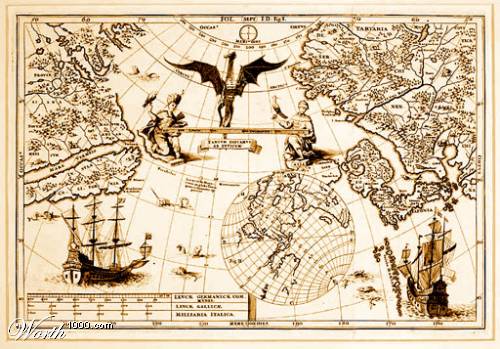
Imagine I’m trying to map out the ocean floor. These first principles are my soundings of depth. They may not be taken in a very systematic way, and there may be regions where I can’t take any soundings at all (the water’s too dangerous, my rope’s too short, etc). But this is the dataset I want any proposed map of the ocean floor to match.
The trouble is, I can end up with a lot of possible maps that satisfy these conditions. So now I start making some judgements about what a good map looks like. Maybe good maps of the ocean floor don’t have jump discontinuities. Maybe good maps are self-similar at a lot of different scales. This helps me pare down the list of possible maps, but the good map criterion is also hard to prove. Some of it is aesthetic, though I might also notice that certain principles of good maps do better than others at anticipating future soundings.
And that brings me to one of the biggest ways the ocean floor analogy isn’t a great stand-in for “How do you pick a metaphysics?” When we’re talking about moral philosophy, we start out with soundings in a lot of places. There isn’t much uncharted moral territory (by which I mean, places where we don’t have a preference between two outcomes or courses of actions). And some of the uncharted spots are boring and unhelpful. (Is “there are two identical twins unconscious in a pool and you can only save one, which one?” really going to help you distinguish between competing metaethical theories, or is it going to burn through working memory energy to little use?).

If only Socrates had one of these babies!
Sometimes, the closest I can get to new soundings is moral questions I change my mind about. Let’s say I used to prefer X, and now I prefer not-X, and I’ve been considering two metaethical systems: A and A’, which output as correct ‘X’ and ‘not-X’ respectively. Now that I’ve changed my mind, I should increase my expectation that A’ is true, since it was right before I was. (Note, this doesn’t work if you’ve adopted not-X because you became convinced A’ is likely. That way lies a feedback loop and madness).
And, at the abstract level at which I’m writing this post, that’s how Catholicism won me over. It matched a lot of the soundings I’d already taken, it predicted some measurements I later found myself having to revise, and it looked like a tolerably good map. It seemed like a better map than my virtue-ethics atheism. I suspect the place where JT and I disagree the most is not about the good map criteria, but about the moral soundings dataset I was trying to match up to a plausible map.

We can totally talk about overfitting worries at some point
Now, some people will say, why choose a map at all? Why not just plot all the soundings and use that? (This is the “Why truck with metaethics?” objection). There are a couple of reasons. First of all, when you pare off all the most uncertain bits, but the tattered map you’ve got left isn’t always going to be of much use. It’s good to come up with some kind of schema for thinking about the gaps; you probably aren’t indifferent between all possible depths.
Second, there’s something else I need to add to this analogy to make it resemble moral philosophy a little more closely. Imagine you’re checking ocean depths with a really sucky rope. I don’t just mean that your observations are a little noisy (though they are) but there’s a whole list of only recently-known failure modes for your instrument (and we’re not particularly confident that we’ve sussed out all of them). Thinking at the map level might make it easier to spot when your observations are buggy. You don’t want to take all your observations at face value.
Finally, it’s easier to have a discussion/debate with someone at the level of maps (and goodness of maps) than it is at the level of intuition datasets. Stirrings of conscience are an internal process; your interlocutor can’t watch you measure out fathoms of rope. So it’s easier to thrash things out when you can switch back and forth fluidly between predictions and theory (often using thought experiments).
And just one more thing: it’s at the map level that you get the concept of an ocean, not just a collection of points in xyz coordinate space.
Where does that leave me? Well, it’s possible that Catholicism/virtue ethics/teleology is a useful map, but it’s got some major deviations from the territory it’s supposed to depict (say, the existence of God). I don’t discount that possibility, and I’ve flagged some really weird observations it predicts that my intuitions still don’t resemble. But the map has proved helpful, so I expect the territory to have some level of correspondence. (Ptolemy’s epicycles got a lot right. You wouldn’t expect the model that replaced it to lose the ground it covered).
I don’t know that I’m right, but I think I’m less wrong. I think I’ve burned out some errors in my model of the world that won’t crop up again even if my confidence in the God map dipped below some critical threshold and another explanation surged ahead.
high energy theoretical ethics
Previous Post

August 23, 2012
"What do you wanna [stay single] for?"
Next Post
August 24, 2012 7 Quick Takes (8/24/12)
Browse Our Archives
Select a Category 7 Quick Takes Apologetics Atheism Book Conversion Debate Tactics Debates Epistemology/Philosophy Housekeeping Ideological Turing Test Marriage Morality in Practice Parsing Catholicism Possibly Heretical Radio Reviews/Recommendations Sequence Index Spiritual Practice Uncategorized
Select a Month April 2017 March 2017 January 2017 December 2016 September 2016 August 2016 July 2016 June 2016 May 2016 April 2016 March 2016 February 2016 January 2016 December 2015 November 2015 October 2015 September 2015 August 2015 July 2015 June 2015 May 2015 April 2015 March 2015 February 2015 January 2015 December 2014 November 2014 October 2014 September 2014 August 2014 July 2014 June 2014 May 2014 April 2014 March 2014 February 2014 January 2014 December 2013 November 2013 October 2013 September 2013 August 2013 July 2013 June 2013 May 2013 April 2013 March 2013 February 2013 January 2013 December 2012 November 2012 October 2012 September 2012 August 2012 July 2012 June 2012 May 2012 April 2012 March 2012 February 2012 January 2012 December 2011 November 2011 October 2011 September 2011 August 2011 July 2011 June 2011 May 2011 April 2011 March 2011 February 2011 January 2011 December 2010 November 2010 October 2010 September 2010 August 2010 July 2010 June 2010
Follow Us!
TAKE THE
Religious Wisdom Quiz
What Christian group is known for wearing black hats and beards?
Select your answer to see how you score.
Orthodox Jews Amish Mennonites Quakers
Related posts from Unequally Yoked

I'm speaking about my conversion in Denver!

Rational Faith: More working hypothesis than logical proof

Starting Conversations During Francis's Visit

Life Lessons that Can't be Taught at College's...
TRENDING AT PATHEOS Catholic

Rejecting Doom: Christian Hope And Human Action
Christianity is a religion of hope. We are to have hope and...

It’s What Comes From Within Which Matters
One of the most difficult things for us to understand is why...

Why I Choose the Eucharist Over the Sermon
Choose the Eucharist, Not the Sermon What are we supposed to get...

5 Design Elements Found in Spiritually Rooted Homes
Putting Spirituality Into Home Decor Our homes are more than our living...

Credo: A Story of God Told with the...
About 10 years ago, I began to imagine a personal "Credo" that...

The Anatomy of Divine Revelation in Catholic Thought
The claim that God has made Himself known to human beings is...
view all Catholic blogs
Ad-Free & Subscriber Log-In Subscription Support
- About Us
- 2026 Calendar
- Videos
- Podcasts
- Library of World Religions
- Faith In Media Tracker
- Advertise With Us
- Write for Us
- Privacy Policy
- Terms of Service
- Do Not Sell My Data
- Contact Us
- Radiant Digital
- Manage Newsletter Subscriptions
- Unsubscribe From Notifications
- Sitemap
Copyright 2008-2026, Patheos. All rights reserved.
Subscription Support Ad-Free & Subscriber Log-In
Follow Patheos