
BuddhistCatholicContemplativeEvangelicalGeneral ChristianHinduJewishLatter-day SaintMuslimNew VisionsProgressive Christian
Beliefs
- Buddhist
- Catholic
- Contemplative
- Evangelical
- General Christian
- Hindu
- Jewish
- Latter-day Saint
- More Voices
- Muslim
- New Visions
- Pagan
- Progressive Christian
Topics
- Religion News
- Food and Religion
- Sports and Religion
- Religious Art
- Religious Music and Entertainment
- Religious Events
- History and Religion
- Style and Religion
- Politics and Religion
- Women in Religion
- Recreation Outdoors and Religion
- Business Finance and Religion
- Careers Workplace and Religion
- Education and Religion
- Family Parenting and Religion
- Health Fitness and Religion
- Home and Religion
- Relationships and Religion
- Technology and Religion
- Travel and Religion
Columnists
- Buddhist Columnists
- Business Finance and Religion Columnists
- Careers Workplace and Religion Columnists
- Catholic Columnists
- Contemplative Columnists
- Education and Religion Columnists
- Evangelists Columnists
- Family Parenting and Religion Columnists
- General Christian Columnists
- Health Fitness and Religion Columnists
- Hindu Columnists
- History and Religion Columnists
- Home and Religion Columnists
- Jewish Columnists
- More Voices Columnists
- Latter Day Columnists
- Muslim Columnists
- New Visions Columnists
- Nonreligious Columnists
- Pagan Columnists
- Politics and Religion Columnists
- Progressive Columnists
- Recreation Outdoors and Religion Columnists
- Relationships and Religion Columnists
- Religion News Columnists
- Religious Art Columnists
- Religious Events Columnists
- Religious Music and Entertainment Columnists
- Sports and Religion Columnists
- Style and Religion Columnists
- Technology and Religion Columnists
- Travel and Religion Columnists
- Women in Religion Columnists
Resource Library
- 2026 Calendar
- Library of World Religions
- The 100 Most Holy Places on Earth
- Patheos Answers
- Podcasts
- Videos
- Faith Leaders Database
- Anglican Episcopalian
- Bahai
- Baptist
- Buddhism
- Christianity
- Confucianism
- Eastern Orthodoxy
- Hinduism
- Holiness and Pentecostal
- ISKCON
- Islam
- Judaism
- Lutheran
- Methodist
- The Church of Jesus Christ of Latter-day Saints
- New Age
- Paganism
- Presbytarian and Reformed
- Protestantism
- Religion Behind the Scenes
- Roman Catholic
- Scientology
- Shia Islam
- Sikhism
- Sufism
- Sunni Islam
- Taoism
- Zen
- See all religions
Research Tools
 Ad-Free & Subscriber Log-In Subscription Support
Ad-Free & Subscriber Log-In Subscription Support
Follow Patheos 

- Trending:
- Forgiveness
- |
- Marriage
- |
- Consciousness
- |
- Death Penalty
- |
- Election
- |
- Halloween
 Unequally Yoked
- Home
- Catholic
- “Careful the wish you make, wishes come true. Not free”
“Careful the wish you make, wishes come true. Not free”
Last updated on: August 30, 2012 at 2:11 pm by Leah Libresco
“Careful the wish you make, wishes come true. Not free” 2012-08-30T14:11:22-04:00 Leah Libresco
Patheos Explore the world's faith through different perspectives on religion and spirituality! Patheos has the views of the prevalent religions and spiritualities of the world.
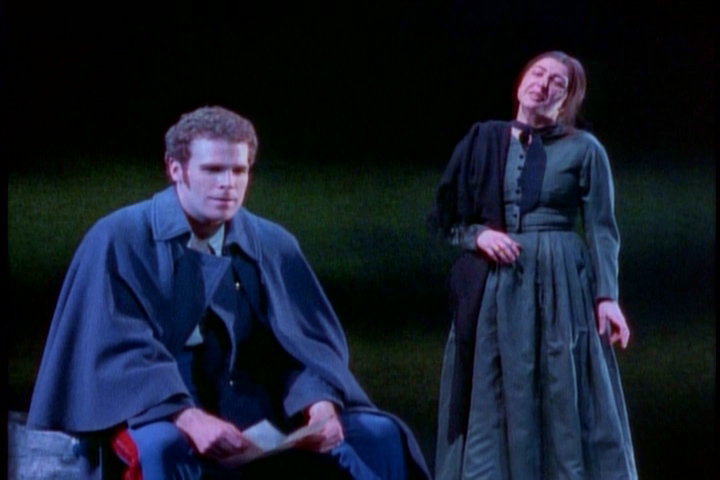
Yesterday, in my review of inSignificant, I started teasing the next thread of the Sondheim Symposium.
For Bobby to progress, he needs to make himself vulnerable and unsafe. We think of him transitioning into the role of servant, as Christ does. A future Bobby, we hope, won’t still be able to be described as “Exclusive you! Elusive you! Will any person ever get the juice of you?” as he is in “You Could Drive a Person Crazy.”
If Company ends with a choice to give oneself (albeit it to an as of yet unspecified beloved), Passion’s plot is driven by the difficulty of knowing of what to do when someone offers themself as a gift to you, unsolicited and possibly unwanted.
Pop over to Wikipedia, if you don’t mind, and check out the synopsis of Passion (it almost certainly won’t be staged near you any time soon, and, though you can and should order the DVD, I don’t think your experience will be spoiled by knowing the plot. Passion derives a lot of it’s tension from the how more than the what). I do really encourage you to click the video links in this post.
Unlike Bobby, Giorgio, the protagonist of Passion is already giving of himself. He’s quick to assume the best of others, and lights up at the possibility to be of use or of comfort to anyone he encounters. Unlike the other officers he serves with, he makes a personal connection with his men. Giorgio is more open than Bobby, but it’s not obvious whether he’s more vulnerable. At the beginning of the show, Giorgio has an easy grace; he shows none of the discomfort that Bobby calls down upon himself in “Being Alive” – the closing number of Company.
Giorgio’s suffering begins when he becomes the focus of Fosca’s love. Fosca is ill and not beautiful, but she is most off-putting because of her relentlessness. She pursues Giorgio without care for her own safety or his reputation. To get a sense of her unmerciful-feeling love, watch “Loving You” below.
Fosca’s love isn’t a gift, it’s a force of nature, and Giorgio only gets to choose how to respond to it. Over the course of the play, Giorgio will turn from his former love, the beautiful Clara, and cleave to the intense, upsetting Fosca. The two women’s loves stand in counterpoint to one another. Giorgio’s first song with Clara is titled simple “Happiness” and, in their letters to each other, they talk about:
Love that fills every waking moment,
Love that grows every single day,
Love that thinks everything is pure,
Everything is beautiful
Everything is possible
Love that fuses two into one,
Where we think the same thoughts,
Love the same things
Live as one.
Feel as one.
Breathe as one
Love that shuts away the world
That envelops my soul,
That ennobles my life
But while Giorgio and Clara feel completed by each other, Fosca approaches Giorgio with a brokenness that cannot be healed. Instead of offering gifts that make the beloved more self-sufficient and stable, Fosca offers up weakness, and challenges her beloved to choose to discomfort himself in order to respond to and care for that weakness. Regardless of what he chooses, Fosca will continue to humble herself grotesquely in pursuit of him.
Bobby casts himself open, choosing to be vulnerable to the next woman to come his way. Giorgio has received what Bobby sought. And tomorrow, I’ll discuss why I found it terrifying the first time I saw it staged, and how Fosca’s devotion is a weird inversion of the climax of 1984.
Previous Post

August 26, 2012
Weakness as Strength
Next Post
August 28, 2012 I'm at First Things today!
Browse Our Archives
Select a Category 7 Quick Takes Apologetics Atheism Book Conversion Debate Tactics Debates Epistemology/Philosophy Housekeeping Ideological Turing Test Marriage Morality in Practice Parsing Catholicism Possibly Heretical Radio Reviews/Recommendations Sequence Index Spiritual Practice Uncategorized
Select a Month April 2017 March 2017 January 2017 December 2016 September 2016 August 2016 July 2016 June 2016 May 2016 April 2016 March 2016 February 2016 January 2016 December 2015 November 2015 October 2015 September 2015 August 2015 July 2015 June 2015 May 2015 April 2015 March 2015 February 2015 January 2015 December 2014 November 2014 October 2014 September 2014 August 2014 July 2014 June 2014 May 2014 April 2014 March 2014 February 2014 January 2014 December 2013 November 2013 October 2013 September 2013 August 2013 July 2013 June 2013 May 2013 April 2013 March 2013 February 2013 January 2013 December 2012 November 2012 October 2012 September 2012 August 2012 July 2012 June 2012 May 2012 April 2012 March 2012 February 2012 January 2012 December 2011 November 2011 October 2011 September 2011 August 2011 July 2011 June 2011 May 2011 April 2011 March 2011 February 2011 January 2011 December 2010 November 2010 October 2010 September 2010 August 2010 July 2010 June 2010
Follow Us!
TAKE THE
Religious Wisdom Quiz
Who wrote the Book of Acts?
Select your answer to see how you score.
Luke Peter Paul Mark
Related posts from Unequally Yoked



The Boring, Quiet Rituals That Sustain Us Spiritually

Starving Laypeople of Devotion in Church
TRENDING AT PATHEOS Catholic

Rejecting Doom: Christian Hope And Human Action
Christianity is a religion of hope. We are to have hope and...

It’s What Comes From Within Which Matters
One of the most difficult things for us to understand is why...

Why I Choose the Eucharist Over the Sermon
Choose the Eucharist, Not the Sermon What are we supposed to get...

5 Design Elements Found in Spiritually Rooted Homes
Putting Spirituality Into Home Decor Our homes are more than our living...

Credo: A Story of God Told with the...
About 10 years ago, I began to imagine a personal "Credo" that...

The Anatomy of Divine Revelation in Catholic Thought
The claim that God has made Himself known to human beings is...
view all Catholic blogs
Ad-Free & Subscriber Log-In Subscription Support
- About Us
- 2026 Calendar
- Videos
- Podcasts
- Library of World Religions
- Faith In Media Tracker
- Advertise With Us
- Write for Us
- Privacy Policy
- Terms of Service
- Do Not Sell My Data
- Contact Us
- Radiant Digital
- Manage Newsletter Subscriptions
- Unsubscribe From Notifications
- Sitemap
Copyright 2008-2026, Patheos. All rights reserved.
Subscription Support Ad-Free & Subscriber Log-In
Follow Patheos