
BuddhistCatholicContemplativeEvangelicalGeneral ChristianHinduJewishLatter-day SaintMuslimNew VisionsProgressive Christian
Beliefs
- Buddhist
- Catholic
- Contemplative
- Evangelical
- General Christian
- Hindu
- Jewish
- Latter-day Saint
- More Voices
- Muslim
- New Visions
- Pagan
- Progressive Christian
Topics
- Religion News
- Food and Religion
- Sports and Religion
- Religious Art
- Religious Music and Entertainment
- Religious Events
- History and Religion
- Style and Religion
- Politics and Religion
- Women in Religion
- Recreation Outdoors and Religion
- Business Finance and Religion
- Careers Workplace and Religion
- Education and Religion
- Family Parenting and Religion
- Health Fitness and Religion
- Home and Religion
- Relationships and Religion
- Technology and Religion
- Travel and Religion
Columnists
- Buddhist Columnists
- Business Finance and Religion Columnists
- Careers Workplace and Religion Columnists
- Catholic Columnists
- Contemplative Columnists
- Education and Religion Columnists
- Evangelists Columnists
- Family Parenting and Religion Columnists
- General Christian Columnists
- Health Fitness and Religion Columnists
- Hindu Columnists
- History and Religion Columnists
- Home and Religion Columnists
- Jewish Columnists
- More Voices Columnists
- Latter Day Columnists
- Muslim Columnists
- New Visions Columnists
- Nonreligious Columnists
- Pagan Columnists
- Politics and Religion Columnists
- Progressive Columnists
- Recreation Outdoors and Religion Columnists
- Relationships and Religion Columnists
- Religion News Columnists
- Religious Art Columnists
- Religious Events Columnists
- Religious Music and Entertainment Columnists
- Sports and Religion Columnists
- Style and Religion Columnists
- Technology and Religion Columnists
- Travel and Religion Columnists
- Women in Religion Columnists
Resource Library
- 2026 Calendar
- Library of World Religions
- The 100 Most Holy Places on Earth
- Patheos Answers
- Podcasts
- Videos
- Faith Leaders Database
- Anglican Episcopalian
- Bahai
- Baptist
- Buddhism
- Christianity
- Confucianism
- Eastern Orthodoxy
- Hinduism
- Holiness and Pentecostal
- ISKCON
- Islam
- Judaism
- Lutheran
- Methodist
- The Church of Jesus Christ of Latter-day Saints
- New Age
- Paganism
- Presbytarian and Reformed
- Protestantism
- Religion Behind the Scenes
- Roman Catholic
- Scientology
- Shia Islam
- Sikhism
- Sufism
- Sunni Islam
- Taoism
- Zen
- See all religions
Research Tools
 Ad-Free & Subscriber Log-In Subscription Support
Ad-Free & Subscriber Log-In Subscription Support
Follow Patheos 

- Trending:
- Forgiveness
- |
- Marriage
- |
- Consciousness
- |
- Death Penalty
- |
- Election
- |
- Halloween
 Unequally Yoked
- Home
- Catholic
- Q&A on Mormon Priesthood (Part 2)
Q&A on Mormon Priesthood (Part 2)
Last updated on: December 11, 2012 at 4:16 pm by Leah Libresco
Q&A on Mormon Priesthood (Part 2) 2012-12-11T16:16:55-05:00 Leah Libresco
Patheos Explore the world's faith through different perspectives on religion and spirituality! Patheos has the views of the prevalent religions and spiritualities of the world.
Now that Michael’s given us an overview of the Mormon priesthood and answered some of my questions about how the priesthood relates to gender and transfiguration of spirit, I think we’ve all got enough background to go on to weirder and wonkier questions. Again, my questions are in bold, his answers follow, and he’s not to be blamed for the illustrations.

There is no tradition of stylites in Mormonism
Q: At various points in the history of Christianity, monks and ascetics were seen as particularly holy because they withdrew themselves from the world, contemplating only God. Is there any Mormon analogue to this role? Has there been a kinda-gnostic tradition in Mormonism that saw the material world as evil/dangerous?
There has never been a monastic tradition in the LDS Church. The closest you would get is a mission, wherein your time and energies are strictly regulated to make the most of your time proselytizing. Or maybe that time when all the Mormons removed themselves to the Mountain West, lived in a quasi-theocracy, and followed a system of collective economics (only somewhat kidding!).
And as to a gnostic tradition – I don’t think there’s been anything like that. In fact, one of Joseph Smith’s pronouncements – canonized in scripture – is that matter and spirit are the same substance, just that the latter is “purer” (don’t ask me what that means, exactly). In the same vein, we believe that God the Father and Jesus Christ (two separate beings!) have physical bodies, and that one of the primary purposes for human beings’ life on earth is to obtain bodies, like the one God has, that can be resurrected and kept eternally. We also believe that matter cannot be created nor destroyed, and that God’s creation of the universe was really molding it out of “matter unorganized” through whatever means you believe in (the LDS Church has no position on evolution). No creation ex nihilo here, but that’s another matter.
Of course, that does not mean that Mormons have not seen the political world as evil/dangerous. After having been driven out of at least multiple settlements with pitchfork, torch, and rifle close behind, being pursued to their desert sanctuary by federal troops, and being systematically disenfranchised, dispossessed, and discriminated against, I believe most people would come to feel that way. Nevertheless, even though the Mormon leadership in the 1800s was often at odds with American politics at large (and often downright derogatory toward American culture, but the feeling was mutual), they never turned their backs on the founding documents of the nation. Mormon Constitutionalism is very long-lifed, dating back to when in a revelation to Joseph Smith God implied that the American founders were inspired by Him to establish those documents. How literally is this to be taken? Your mileage may vary.

Wondering how I know Michael is a scifi fan?
Q: So, as the transhumanist, I’ve got to ask what does “one of the primary purposes for human beings’ life on earth is to obtain bodies” imply about how we treat them, how we’re allowed to modify them? I know you’re a scifi nerd, too, so are there any possible futures you see as in direct contravention of the correct attitude to the body?
Wow! James Cameron goes to Challenger Deep, and this question may as well be named just that.
I think that first is that we should not try to slough off or diminish our sense of embodiment. This principle formed the basic idea of a recent talk (Mormonspeak “sermon”) by apostle David A. Bednar (entitled “Things As They Really Are”), in which he cautioned against forgoing physical human contact for digital communication of whatever means. His point was that by ignoring our bodies, we move toward restoring ourselves to a premortal, pre-embodied state: we, in effect, regress to a previous, lower state of being. There are some things we can only learn and hone with bodies (among them the challenges of health, physicality, limitation, and imperfect communication). Moreover, just as the spirit is tried during its time on Earth, the body must be tried as well; both must be redeemed through the Atonement of Jesus Christ.
The Book of Mormon prophet Lehi had this to say, and I think it’s very pertinent to the LDS conception of physical bodies:
“For it must needs be, that there is an opposition in all things. If not so, my first-born in the wilderness, righteousness could not be brought to pass, neither wickedness, neither holiness nor misery, neither good nor bad. Wherefore, all things must needs be a compound in one; wherefore, if it should be one body it must needs remain as dead, having no life neither death, nor corruption nor incorruption, happiness nor misery, neither sense nor insensibility.”
We need both health and sickness to understand God and to become like Him. (There’s a lot more to this, but that gets off into the LDS conception of God, about which books on books have been written…)
In addition, the LDS Church, with Paul, teaches that the body is the temple of the Holy Spirit. Some types of body modification, such as tattoos and other permanent alterations that lead to (dare I say?) an “unnatural” appearance, are thereby discouraged. Nevertheless, we are not expected to accept everything that comes our way; my mother had plastic surgery to reconstruct what she had lost in a double mastectomy. I can’t say there’s an easy answer. It’s similar with the question of diminishing one’s connection to the body: how much, for example, should we try to mitigate pain, illness, and old age? I can’t say that I’ve thought too much about that subject.
The only futures I can project at present that would for certain controvert the Mormon idea of the body would be ones wherein the experience of embodiment is totally discarded. Maybe it’s something like the Matrix or the real-life Second Life of Surrogates, or perhaps it’s human brain functions converted into computer code. That’s the extreme, though; there’s a lot of gray in the middle. I don’t know how I would feel about deliberately replacing functional limbs with souped-up prosthetics, for example, though I’d probably come down against it. (This is where consulting the Mormon theologians and philosophers would come in handy. They’re thought a LOT more about embodiment than I have.)
On another note, I have no problem understanding the natural biases and heuristics of the human body, because it helps me think better about why I think and do things. I’ve even told people that I believe that sometimes God takes advantage of our natural thought processes to help us act properly.

Q: Are there ever times you wish your church had permanent clerics? Or advantages of that system you’d like to incorporate a different way?
There are benefits and disadvantages to both. One benefit of having a professional clergy would be that after going to grad school in Mormon Studies I might get a job! But alas, that is not to be.
One thing that I believe would come out of an organized clergy would be a byproduct of the training needed to get there: an LDS Church with a more systematic and well-defined theology, with theologians to elaborate it. As it stands, Mormon theology is a hobby for those with an interest in it (and some of those hobbyists are very good), while the Church mostly busies itself with trying to help its members live in a Christian fashion. Indeed, much of the confusion in popular culture concerning Mormon beliefs – as well as the sometimes stunning heterogeneity of popular Mormon belief once you venture beyond the core doctrines – comes from the large number of pronouncements by historical LDS leaders, many just speculating, that have never been officially refuted by subsequent leaders. The preferred policy is just to let peripheral matters fade into quiescence. While it would be nice if the Church came out and denounced some things (like past racist policies) outright, there’s also a part of me that loves the open, exploratory, undefined nature of LDS belief. I’m often glad there’s no LDS Aquinas.
On the other hand, another benefit might be better training among leaders. With an ever-changing leadership, leaders find themselves in positions for which they are utterly unprepared. If you were a young auto mechanic called as bishop, how would you counsel a woman who approaches you with concerns of faith that orbit obscure historical facts you’ve never heard of? If you’re a lawyer, how do you teach 5-year-olds about the New Testament? Sometimes the fruit of inexperience can verge on disastrous. However, the lay ministry and the mutability of callings are very horizontal forces in an otherwise very vertical hierarchy; besides, where else could the abovementioned people get those sorts of life experiences? Much of the beauty of the lay ministry resides in how violently it forces us into contact with our fellow men and women in cooperation toward common goals, and I have found that invaluable in my own life.
Thanks so much to Michael for correcting misinformation and satisfying my curiosity!
Previous Post

March 28, 2012
Q&A on Mormon Priesthood (Part 1)
Next Post
March 29, 2012 Debate with Justin Martyr [Index Post]
Browse Our Archives
Select a Category 7 Quick Takes Apologetics Atheism Book Conversion Debate Tactics Debates Epistemology/Philosophy Housekeeping Ideological Turing Test Marriage Morality in Practice Parsing Catholicism Possibly Heretical Radio Reviews/Recommendations Sequence Index Spiritual Practice Uncategorized
Select a Month April 2017 March 2017 January 2017 December 2016 September 2016 August 2016 July 2016 June 2016 May 2016 April 2016 March 2016 February 2016 January 2016 December 2015 November 2015 October 2015 September 2015 August 2015 July 2015 June 2015 May 2015 April 2015 March 2015 February 2015 January 2015 December 2014 November 2014 October 2014 September 2014 August 2014 July 2014 June 2014 May 2014 April 2014 March 2014 February 2014 January 2014 December 2013 November 2013 October 2013 September 2013 August 2013 July 2013 June 2013 May 2013 April 2013 March 2013 February 2013 January 2013 December 2012 November 2012 October 2012 September 2012 August 2012 July 2012 June 2012 May 2012 April 2012 March 2012 February 2012 January 2012 December 2011 November 2011 October 2011 September 2011 August 2011 July 2011 June 2011 May 2011 April 2011 March 2011 February 2011 January 2011 December 2010 November 2010 October 2010 September 2010 August 2010 July 2010 June 2010
Follow Us!
TAKE THE
Religious Wisdom Quiz
Who killed Goliath?
Select your answer to see how you score.
Jonathan Samson Saul David
Related posts from Unequally Yoked

The Story of Shmuel and Tailoring Support [Guest...
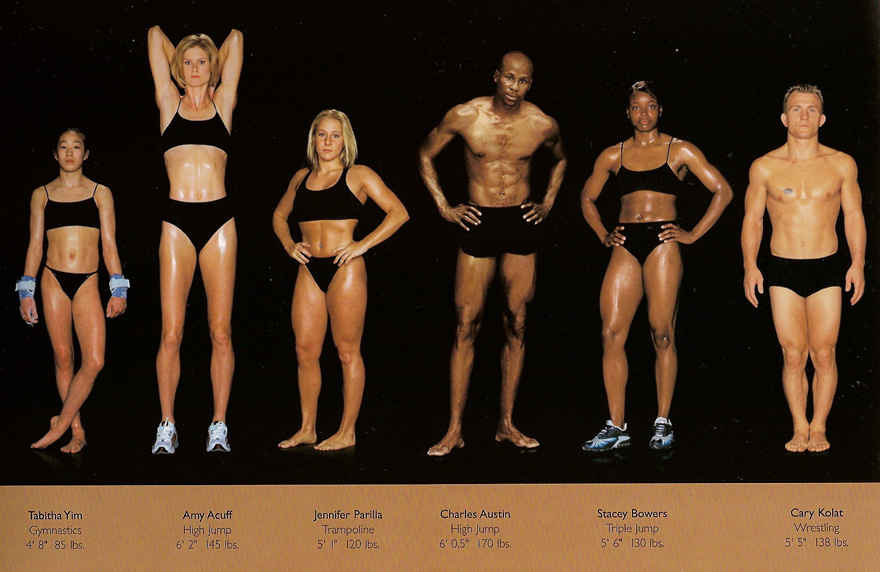
Harrison Bergeron-ing a Too-Exceptional Sprinter
God and the Moral Law in Mormonism
Mormon Enthusiasm for the Self-Made Man
TRENDING AT PATHEOS Catholic

Rejecting Doom: Christian Hope And Human Action
Christianity is a religion of hope. We are to have hope and...

It’s What Comes From Within Which Matters
One of the most difficult things for us to understand is why...

Why I Choose the Eucharist Over the Sermon
Choose the Eucharist, Not the Sermon What are we supposed to get...

5 Design Elements Found in Spiritually Rooted Homes
Putting Spirituality Into Home Decor Our homes are more than our living...

Credo: A Story of God Told with the...
About 10 years ago, I began to imagine a personal "Credo" that...

The Anatomy of Divine Revelation in Catholic Thought
The claim that God has made Himself known to human beings is...
view all Catholic blogs
Ad-Free & Subscriber Log-In Subscription Support
- About Us
- 2026 Calendar
- Videos
- Podcasts
- Library of World Religions
- Faith In Media Tracker
- Advertise With Us
- Write for Us
- Privacy Policy
- Terms of Service
- Do Not Sell My Data
- Contact Us
- Radiant Digital
- Manage Newsletter Subscriptions
- Unsubscribe From Notifications
- Sitemap
Copyright 2008-2026, Patheos. All rights reserved.
Subscription Support Ad-Free & Subscriber Log-In
Follow Patheos