
BuddhistCatholicContemplativeEvangelicalGeneral ChristianHinduJewishLatter-day SaintMuslimNew VisionsProgressive Christian
Beliefs
- Buddhist
- Catholic
- Contemplative
- Evangelical
- General Christian
- Hindu
- Jewish
- Latter-day Saint
- More Voices
- Muslim
- New Visions
- Pagan
- Progressive Christian
Topics
- Religion News
- Food and Religion
- Sports and Religion
- Religious Art
- Religious Music and Entertainment
- Religious Events
- History and Religion
- Style and Religion
- Politics and Religion
- Women in Religion
- Recreation Outdoors and Religion
- Business Finance and Religion
- Careers Workplace and Religion
- Education and Religion
- Family Parenting and Religion
- Health Fitness and Religion
- Home and Religion
- Relationships and Religion
- Technology and Religion
- Travel and Religion
Columnists
- Buddhist Columnists
- Business Finance and Religion Columnists
- Careers Workplace and Religion Columnists
- Catholic Columnists
- Contemplative Columnists
- Education and Religion Columnists
- Evangelists Columnists
- Family Parenting and Religion Columnists
- General Christian Columnists
- Health Fitness and Religion Columnists
- Hindu Columnists
- History and Religion Columnists
- Home and Religion Columnists
- Jewish Columnists
- More Voices Columnists
- Latter Day Columnists
- Muslim Columnists
- New Visions Columnists
- Nonreligious Columnists
- Pagan Columnists
- Politics and Religion Columnists
- Progressive Columnists
- Recreation Outdoors and Religion Columnists
- Relationships and Religion Columnists
- Religion News Columnists
- Religious Art Columnists
- Religious Events Columnists
- Religious Music and Entertainment Columnists
- Sports and Religion Columnists
- Style and Religion Columnists
- Technology and Religion Columnists
- Travel and Religion Columnists
- Women in Religion Columnists
Resource Library
- 2026 Calendar
- Library of World Religions
- The 100 Most Holy Places on Earth
- Patheos Answers
- Podcasts
- Videos
- Faith Leaders Database
- Anglican Episcopalian
- Bahai
- Baptist
- Buddhism
- Christianity
- Confucianism
- Eastern Orthodoxy
- Hinduism
- Holiness and Pentecostal
- ISKCON
- Islam
- Judaism
- Lutheran
- Methodist
- The Church of Jesus Christ of Latter-day Saints
- New Age
- Paganism
- Presbytarian and Reformed
- Protestantism
- Religion Behind the Scenes
- Roman Catholic
- Scientology
- Shia Islam
- Sikhism
- Sufism
- Sunni Islam
- Taoism
- Zen
- See all religions
Research Tools
 Ad-Free & Subscriber Log-In Subscription Support
Ad-Free & Subscriber Log-In Subscription Support
Follow Patheos 

- Trending:
- Forgiveness
- |
- Marriage
- |
- Consciousness
- |
- Death Penalty
- |
- Election
- |
- Halloween
 Unequally Yoked
- Home
- Catholic
- Q&A on Mormon Priesthood (Part 1)
Q&A on Mormon Priesthood (Part 1)
Last updated on: December 11, 2012 at 4:16 pm by Leah Libresco
Q&A on Mormon Priesthood (Part 1) 2012-12-11T16:16:05-05:00 Leah Libresco
Patheos Explore the world's faith through different perspectives on religion and spirituality! Patheos has the views of the prevalent religions and spiritualities of the world.
As a follow-up to Michael Haycock’s clarification of what it means to be a Mormon priest or bishop, I did a two-part Q&A about Mormon theology, hierarchy, and culture. My questions are in bold, his answers follow, and he has no culpability for my choice of pictures.
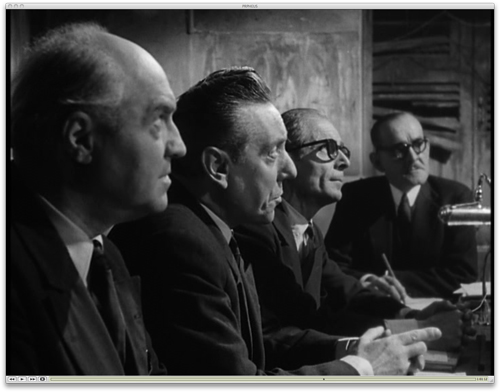
Q: Why is the Melchizedek Priesthood reserved to men? Are there any roles reserved to women?
Hoo boy. The first question is a loaded one, because it cuts to the quick of the issue of Mormonism and gender, on which you might be able to adapt the Jewish adage to Mormons: two Mormons, three opinions. Some will say it’s a relic of 19th Century social normativity further reinforced by the post-WWII culture; some will say it’s divinely inspired and tailored to the inherent strengths and weaknesses of the respective sexes; some will say women are so spiritually inclined that they don’t need leadership positions to teach them how to be that way.
Me? I’d say I don’t know. Maybe it will change in the future, but I won’t pretend to have foreknowledge.
The official LDS Church response to the second question would be (and has been) “Of course!” While that is technically true, it needs some qualification.
Women can be called to many positions, from teaching to family history consultant to Cubmaster (Cub Scouts leader). However, there are many positions exclusively reserved for men (including some that are a little baffling) and those that are exclusively reserved for women are mostly either 1) overseeing fellow females or 2) seemingly based on stereotypical gender roles and perceptions. Included in these are positions in the Relief Society, the organization that incorporates the women of the LDS Church; Young Women, which serves girls ages 12-18 (and mirrored by its male counterpart organization, Young Men); and Primary, the organization that cares for children in the church. In the past, many of these organizations had a huge degree of autonomy: they had their own budgets and regional bulletins, and generally ran genuinely parallel to the male hierarchy.
However, as the LDS Church began to greatly expand outside of the American Mountain West in the 1950s and 60s, the patchwork organization of the Church, many times based on neighborliness and kinship, was deemed no longer robust enough to maintain international unity. In a long process known as Correlation, Church curricula were standardized, the ecclesiastical hierarchy clarified and streamlined, and the women’s organizations were brought under greater direct Priesthood (read: male) supervision and direction, among other sundry things, reducing ecclesiastical autonomy for women.
That said, oftentimes the woman-specific positions are incredibly influential, although your mileage may vary based on the degree of traditionalism in the local leadership that oversees these positions. In my home ward, for example, the Relief Society president is delegated most of the responsibility for administering welfare funds. So yes, there is some position for women to influence the Church. Many are satisfied with that. Many are not.

(best picture that turned up when I googled ‘bar mitzvah’)
Q: Why do you think the Mormon church labels the open-to-all-men category as a ‘priesthood?’ What makes it different from other growing-older-and-affirming-commitment transitions like confirmation in the Catholic Church and bar/bat mitzvahs?
Historians would probably say that it’s a radical outgrowth of the Protestant “priesthood of all believers” conception. However, having grown up Mormon, I don’t see why the category of “priesthood” would depend on it being an exclusionary group (and I would love to hear how you got that perception). One of the ideas is that God disperses His power so that it can be shared as widely as possible. And since all men are given that authority to be priests – to act, in some degree, in God’s place – the terminology comes with it. Another LDS conception is that God wanted to make ancient Israel a “nation of priests and kings” and could not; with the LDS Church, he’s preparing us to fulfill that postponed divine desire.
I also have to admit that I’m not sure exactly what significance confirmation and bar/bat mitzvahs have in their respective traditions. Perhaps the biggest difference is that such transitions in the LDS faith are not usually celebrated. They generally pass quietly; one Sunday, a 12-year-old boy is interviewed, and the next, he is ordained, ready to participate in the officiation of the Sacrament (LDS version of communion/Eucharist, basically). It’s supposed to be a time of added responsibility (that’s when boys and girls can first receive callings to preside over their peer age groups), but the sometimes the biggest shift is that they start going to the classroom of another age group.
In fact, I think LDS baptism would be the closest to those. For children, even if they’ve been raised LDS, the earliest they can get baptized is age eight. Since a baptism doesn’t fit into the regular Sunday meeting schedule (as do Priesthood ordinations, for example) and instead get its own service, there’s more attention given to them. And even though LDS children are listed in church records from birth, it’s when they’re baptized that they’re actually considered full members, accountable for their sins.
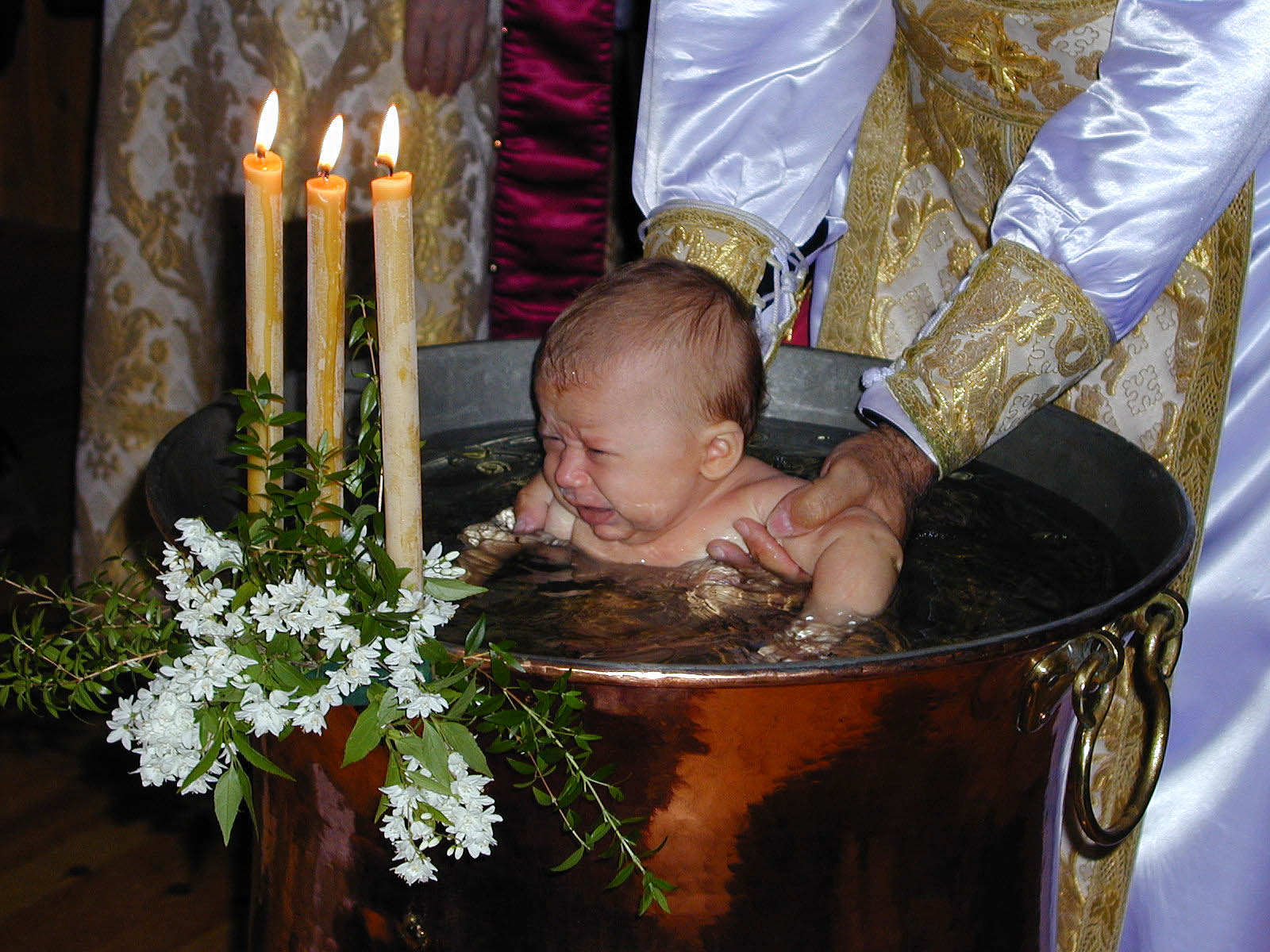
(Mormons don’t do this)
Q: What determines whether an eight-year-old is ready to accept baptism? From discussions of posthumous baptism, I thought baptism in LDS is mainly a prerequisite to everything else not something that necessarily changes you in and of itself. Why not baptize infants?
An eight-year-old receives an interview with her bishop in which he ascertains that her beliefs, commitments, and understanding of baptism are appropriate; children are instructed to prepare for this time as much as they can. If the bishop deems the child unprepared, the baptism could be postponed. In some cases – especially in cases of severe mental disability – baptism is actually regarded as unnecessary because the person, not having a consciousness of right or wrong (and thus free of sin) or a comprehension of the significance of baptism, is regarded as not needing the forgiveness made possible by adherence to the covenants made at baptism.
The thought concerning baptism for the dead is a tad different in that respect from baptism for the living. Because of the impossibility of getting consent from the deceased, we cannot assume they’ve given it; it is thus seen as something that can been rejected (leaving it as if it had never been performed). There might be people, though, who would consent, and for them, it’s necessary that the ordinance be performed in the flesh, with a living body (hence, by living proxies – and here again we get the importance of the material body!). The idea of the baptism’s efficaciousness being contingent on consent is constant, but practicality rules out the possibility of ascertaining consent in the case of the dead (we don’t hold seances, after all). In fact, in the cases in which we know that the dead died under the age of eight, there are actually no baptisms performed or their behalf.
For other questions on infant baptism, I’d refer you to Moroni 8 in the Book of Mormon. On baptism for the dead, Joseph Smith’s words on the subject are in Doctrine and Covenants 128.
Part two of our Q&A is now up!
Previous Post

March 28, 2012
Romney's a Priest? What does that mean?
Next Post
March 28, 2012 Q&A on Mormon Priesthood (Part 2)
Browse Our Archives
Select a Category 7 Quick Takes Apologetics Atheism Book Conversion Debate Tactics Debates Epistemology/Philosophy Housekeeping Ideological Turing Test Marriage Morality in Practice Parsing Catholicism Possibly Heretical Radio Reviews/Recommendations Sequence Index Spiritual Practice Uncategorized
Select a Month April 2017 March 2017 January 2017 December 2016 September 2016 August 2016 July 2016 June 2016 May 2016 April 2016 March 2016 February 2016 January 2016 December 2015 November 2015 October 2015 September 2015 August 2015 July 2015 June 2015 May 2015 April 2015 March 2015 February 2015 January 2015 December 2014 November 2014 October 2014 September 2014 August 2014 July 2014 June 2014 May 2014 April 2014 March 2014 February 2014 January 2014 December 2013 November 2013 October 2013 September 2013 August 2013 July 2013 June 2013 May 2013 April 2013 March 2013 February 2013 January 2013 December 2012 November 2012 October 2012 September 2012 August 2012 July 2012 June 2012 May 2012 April 2012 March 2012 February 2012 January 2012 December 2011 November 2011 October 2011 September 2011 August 2011 July 2011 June 2011 May 2011 April 2011 March 2011 February 2011 January 2011 December 2010 November 2010 October 2010 September 2010 August 2010 July 2010 June 2010
Follow Us!
TAKE THE
Religious Wisdom Quiz
How many plagues did God inflict upon Egypt?
Select your answer to see how you score.
7 10 21 14
Related posts from Unequally Yoked

The Story of Shmuel and Tailoring Support [Guest...
God and the Moral Law in Mormonism
Mormon Enthusiasm for the Self-Made Man

A Mormon Perspective on Interrogating Emotions
TRENDING AT PATHEOS Catholic

Rejecting Doom: Christian Hope And Human Action
Christianity is a religion of hope. We are to have hope and...

It’s What Comes From Within Which Matters
One of the most difficult things for us to understand is why...

Why I Choose the Eucharist Over the Sermon
Choose the Eucharist, Not the Sermon What are we supposed to get...

5 Design Elements Found in Spiritually Rooted Homes
Putting Spirituality Into Home Decor Our homes are more than our living...

Credo: A Story of God Told with the...
About 10 years ago, I began to imagine a personal "Credo" that...

The Anatomy of Divine Revelation in Catholic Thought
The claim that God has made Himself known to human beings is...
view all Catholic blogs
Ad-Free & Subscriber Log-In Subscription Support
- About Us
- 2026 Calendar
- Videos
- Podcasts
- Library of World Religions
- Faith In Media Tracker
- Advertise With Us
- Write for Us
- Privacy Policy
- Terms of Service
- Do Not Sell My Data
- Contact Us
- Radiant Digital
- Manage Newsletter Subscriptions
- Unsubscribe From Notifications
- Sitemap
Copyright 2008-2026, Patheos. All rights reserved.
Subscription Support Ad-Free & Subscriber Log-In
Follow Patheos