
BuddhistCatholicContemplativeEvangelicalGeneral ChristianHinduJewishLatter-day SaintMuslimNew VisionsProgressive Christian
Beliefs
- Buddhist
- Catholic
- Contemplative
- Evangelical
- General Christian
- Hindu
- Jewish
- Latter-day Saint
- More Voices
- Muslim
- New Visions
- Pagan
- Progressive Christian
Topics
- Religion News
- Food and Religion
- Sports and Religion
- Religious Art
- Religious Music and Entertainment
- Religious Events
- History and Religion
- Style and Religion
- Politics and Religion
- Women in Religion
- Recreation Outdoors and Religion
- Business Finance and Religion
- Careers Workplace and Religion
- Education and Religion
- Family Parenting and Religion
- Health Fitness and Religion
- Home and Religion
- Relationships and Religion
- Technology and Religion
- Travel and Religion
Columnists
- Buddhist Columnists
- Business Finance and Religion Columnists
- Careers Workplace and Religion Columnists
- Catholic Columnists
- Contemplative Columnists
- Education and Religion Columnists
- Evangelists Columnists
- Family Parenting and Religion Columnists
- General Christian Columnists
- Health Fitness and Religion Columnists
- Hindu Columnists
- History and Religion Columnists
- Home and Religion Columnists
- Jewish Columnists
- More Voices Columnists
- Latter Day Columnists
- Muslim Columnists
- New Visions Columnists
- Nonreligious Columnists
- Pagan Columnists
- Politics and Religion Columnists
- Progressive Columnists
- Recreation Outdoors and Religion Columnists
- Relationships and Religion Columnists
- Religion News Columnists
- Religious Art Columnists
- Religious Events Columnists
- Religious Music and Entertainment Columnists
- Sports and Religion Columnists
- Style and Religion Columnists
- Technology and Religion Columnists
- Travel and Religion Columnists
- Women in Religion Columnists
Resource Library
- 2026 Calendar
- Library of World Religions
- The 100 Most Holy Places on Earth
- Patheos Answers
- Podcasts
- Videos
- Faith Leaders Database
- Anglican Episcopalian
- Bahai
- Baptist
- Buddhism
- Christianity
- Confucianism
- Eastern Orthodoxy
- Hinduism
- Holiness and Pentecostal
- ISKCON
- Islam
- Judaism
- Lutheran
- Methodist
- The Church of Jesus Christ of Latter-day Saints
- New Age
- Paganism
- Presbytarian and Reformed
- Protestantism
- Religion Behind the Scenes
- Roman Catholic
- Scientology
- Shia Islam
- Sikhism
- Sufism
- Sunni Islam
- Taoism
- Zen
- See all religions
Research Tools
 Ad-Free & Subscriber Log-In Subscription Support
Follow Patheos 

- Trending:
- Advent
- |
- Forgiveness
- |
- Thanksgiving
- |
- Election
- |
- Seasonal Holidays
- |
- Marriage
 Unequally Yoked
- Home
- Catholic
- Exploring Stephen Law’s Evil God Challenge
Exploring Stephen Law’s Evil God Challenge
Last updated on: December 9, 2012 at 10:33 pm by Leah Libresco
Exploring Stephen Law’s Evil God Challenge 2012-12-09T22:33:02-05:00 Leah Libresco
Patheos Explore the world's faith through different perspectives on religion and spirituality! Patheos has the views of the prevalent religions and spiritualities of the world.
Remember you can vote once per day for the About.com Atheism Awards. I’m one of five nominees for Best Atheist Blog. More details here.

Last night, I went out hear Stephen Law talk about his Evil God Challenge as part of the DC Center for Inquiry’s “Voice of Reason” series. Stephen Law is a professor Heythrop College at the University of London and is the editor of Think–a philosophy journal. His Evil God Challenge is meant to knock the wind out of the conventional Christian responses to the Problem of Evil. Here’s the gist:
Imagine that, instead of the Judeo-Christian God (omniscient, omnipotent, omnibenevolent) there was an Evil God that was all-powerful, all-knowing, and totally evil. People who believe in this god are frequently asked by skeptics: “How can you believe in Evil God? Isn’t that hypothesis falsified by the existence of good in the world?”
“Nuh-uh” say the believers in Evil God. “We have plenty of explanations for the Problem of Good. For example…”
- Evil God allows good to exist only so that greater evil may be achieved
- Evil God likes evil best when we freely choose it, but allowing us free will means that some people may choose good
- Evil God works in mysterious ways
Not every Judeo-Christian argument can be successfully transposed in this way, but Law doesn’t need to flip them all for his point to stand. If we think these are weak arguments when mustered by the proponents of Evil God, should we give them any more credence when mustered for actual religions?

Arguments for Evil God may cut two ways, but Cthulhu only cuts one way: Fatally.
Not every theodicy argument has an easy mapping into Law’s hypothetical, but he doesn’t need to debunk every one individually to raise doubts. However, there may be a bigger weakness in Law’s strategy. Law is assuming that a god’s benevolence is logically separable from omnipotence and omniscience. Law essentially assumes that God’s goodness is the equivalent of Euclid’s fifth postulate. He can sub in something else without a contradiction. I’m not so sure.
Knowledge creates constraints. If I know Pythagoras’s theorem perfectly, I’m not free to contradict it. If I told you I understood the theorem and believed it to be false, you would conclude that I didn’t really know it at all.
It’s hard to be sure, at these dizzying heights of abstraction and perfection, but it seems plausible the knowledge of moral law constrains your ability to transgress it. If you had perfect knowledge of the gravity of your choices and the harm you were doing, how could it be possible to freely choose evil. We make it easier by pushing away that knowledge. We kill from far away, where we can’t see faces, we want to make the poor and homeless invisible, we define other humans as lesser people than us.
So if a god had perfect knowledge of the Good, regardless of zer power, how would it be logically possible to will evil? Law’s hypothetical fails before he gets up to resolving the contradiction of good in the world, because the very idea is rooted in a contradiction.
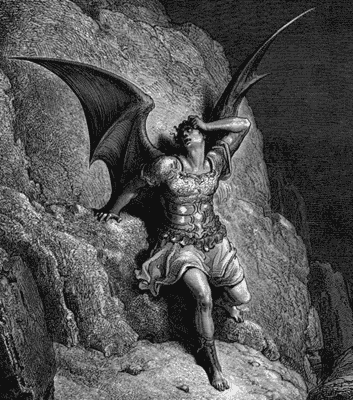
I posed this question to Law during Q&A, and he said the contradiction, whether or not it existed, was irrelevant. Poking around online, I found he expanded on this point during an argument with Edward Feser (author of The Last Superstition):
Assume an evil God is conceptually impossible. Nevertheless, there might also be powerful empirical evidence against an evil God. In fact there is – far too much good in the world. And if that empirical evidence is sufficient to rule an evil God out beyond reasonable doubt (at least until some very good counter-argument etc. is forthcoming), why then isn’t the evil we see sufficient to rule a good god out beyond reasonable doubt(at least until some very good counter-argument etc. is forthcoming)?
I don’t buy this. In math, at least, you aren’t allowed to start with a logical contradiction as a premise. Once you throw a divide-by-zero in, it doesn’t matter if the rest of the proof is internally coherent, you still wouldn’t draw parallels between it and valid reasoning.

So, given this contradiction, what use is the Evil God Challenge? Well, it’s a pretty good reminder of the danger of sophistry. It’s easy to get sucked into debating the Problem of Good for an Evil God without pausing to consider whether the idea of an Evil God is coherent at all. So, be vigilant!
In a similar way, it doesn’t really make sense to raise the Problem of Evil, unless there’s some god on the table with some evidence going for zer. I don’t bother coming up with objections to the way a hypothetical god designed the world unless my interlocutor has come up with some argument that makes it plausible the world has a creator in the first place. So this should never be your starting argument.
But is there another out for Law? One could object and say that omniscience doesn’t need to be included in the properties of an Evil God for the trick to work. Law’s explanations of the Problem of Good would hold together just as well for an Evil Grad Student, running unpleasant simulations on a supercomputer.
The trouble is, that an Evil Grad Student couldn’t serve as a First Cause, couldn’t be a solution to the problem that probably put us on to the question of theodicy in the first place. We’d be privileging the hypothesis in discussing the problem of evil or the problem of good if we didn’t have a good, rent-paying idea of God that was begging the question in the first place.
Previous Post

March 5, 2012
Spotted: A New Patheos Blogger with a Dedicated 'Transhumanist' Tag
Next Post
March 9, 2012 7 Quick Takes (3/9/12)
Browse Our Archives
Select a Category 7 Quick Takes Apologetics Atheism Book Conversion Debate Tactics Debates Epistemology/Philosophy Housekeeping Ideological Turing Test Marriage Morality in Practice Parsing Catholicism Possibly Heretical Radio Reviews/Recommendations Sequence Index Spiritual Practice Uncategorized
Select a Month April 2017 March 2017 January 2017 December 2016 September 2016 August 2016 July 2016 June 2016 May 2016 April 2016 March 2016 February 2016 January 2016 December 2015 November 2015 October 2015 September 2015 August 2015 July 2015 June 2015 May 2015 April 2015 March 2015 February 2015 January 2015 December 2014 November 2014 October 2014 September 2014 August 2014 July 2014 June 2014 May 2014 April 2014 March 2014 February 2014 January 2014 December 2013 November 2013 October 2013 September 2013 August 2013 July 2013 June 2013 May 2013 April 2013 March 2013 February 2013 January 2013 December 2012 November 2012 October 2012 September 2012 August 2012 July 2012 June 2012 May 2012 April 2012 March 2012 February 2012 January 2012 December 2011 November 2011 October 2011 September 2011 August 2011 July 2011 June 2011 May 2011 April 2011 March 2011 February 2011 January 2011 December 2010 November 2010 October 2010 September 2010 August 2010 July 2010 June 2010
Follow Us!
TAKE THE
Religious Wisdom Quiz
True or False: The Sermon on the Mount includes the Lord's Prayer.
Select your answer to see how you score.
TRUE FALSE
Related posts from Unequally Yoked

Rational Faith: More working hypothesis than logical proof
Starting Conversations During Francis's Visit

Desiring Abundance of Life, Not Just Absence of...

Why Not Refer to ISIS by an Epithet?
TRENDING AT PATHEOS Catholic

Bad Survey Questions Distort Eucharistic Theology
It seems to be the newest thing: someone conducts a bad survey...

If Baptism Washes Away Sin, Why Do Catholics...
The seven sacraments stand as the foundation of Catholic ecclesial life. The...

Far from promoting indifference, inaction, or quietism, Paul consistently tells us to...

The Power of Setting a Good Example
Remember last August when the Chicago White Sox hosted a "Pope Hat...

A Catholic Critique of Biblical Unitarianism
If the statistics are to be believed, Unitarianism is rising worldwide. Although...

How Grandma Tourism Helps Grandparents Live Their Vocation
Grandma, The New Travel Influencer What started as a nostalgia-inspired social media...
view all Catholic blogs
Ad-Free & Subscriber Log-In Subscription Support
- About Us
- 2026 Calendar
- Videos
- Podcasts
- Library of World Religions
- Faith In Media Tracker
- Advertise With Us
- Write for Us
- Privacy Policy
- Terms of Service
- Do Not Sell My Data
- Contact Us
- Radiant Digital
- Manage Newsletter Subscriptions
- Unsubscribe From Notifications
- Sitemap
Copyright 2008-2026, Patheos. All rights reserved.
Subscription Support Ad-Free & Subscriber Log-In
Follow Patheos