
BuddhistCatholicContemplativeEvangelicalGeneral ChristianHinduJewishLatter-day SaintMuslimNew VisionsProgressive Christian
Beliefs
- Buddhist
- Catholic
- Contemplative
- Evangelical
- General Christian
- Hindu
- Jewish
- Latter-day Saint
- More Voices
- Muslim
- New Visions
- Pagan
- Progressive Christian
Topics
- Religion News
- Food and Religion
- Sports and Religion
- Religious Art
- Religious Music and Entertainment
- Religious Events
- History and Religion
- Style and Religion
- Politics and Religion
- Women in Religion
- Recreation Outdoors and Religion
- Business Finance and Religion
- Careers Workplace and Religion
- Education and Religion
- Family Parenting and Religion
- Health Fitness and Religion
- Home and Religion
- Relationships and Religion
- Technology and Religion
- Travel and Religion
Columnists
- Buddhist Columnists
- Business Finance and Religion Columnists
- Careers Workplace and Religion Columnists
- Catholic Columnists
- Contemplative Columnists
- Education and Religion Columnists
- Evangelists Columnists
- Family Parenting and Religion Columnists
- General Christian Columnists
- Health Fitness and Religion Columnists
- Hindu Columnists
- History and Religion Columnists
- Home and Religion Columnists
- Jewish Columnists
- More Voices Columnists
- Latter Day Columnists
- Muslim Columnists
- New Visions Columnists
- Nonreligious Columnists
- Pagan Columnists
- Politics and Religion Columnists
- Progressive Columnists
- Recreation Outdoors and Religion Columnists
- Relationships and Religion Columnists
- Religion News Columnists
- Religious Art Columnists
- Religious Events Columnists
- Religious Music and Entertainment Columnists
- Sports and Religion Columnists
- Style and Religion Columnists
- Technology and Religion Columnists
- Travel and Religion Columnists
- Women in Religion Columnists
Resource Library
- 2026 Calendar
- Library of World Religions
- The 100 Most Holy Places on Earth
- Patheos Answers
- Podcasts
- Videos
- Faith Leaders Database
- Anglican Episcopalian
- Bahai
- Baptist
- Buddhism
- Christianity
- Confucianism
- Eastern Orthodoxy
- Hinduism
- Holiness and Pentecostal
- ISKCON
- Islam
- Judaism
- Lutheran
- Methodist
- The Church of Jesus Christ of Latter-day Saints
- New Age
- Paganism
- Presbytarian and Reformed
- Protestantism
- Religion Behind the Scenes
- Roman Catholic
- Scientology
- Shia Islam
- Sikhism
- Sufism
- Sunni Islam
- Taoism
- Zen
- See all religions
Research Tools
 Ad-Free & Subscriber Log-In Subscription Support
Ad-Free & Subscriber Log-In Subscription Support
Follow Patheos 

- Trending:
- Forgiveness
- |
- Marriage
- |
- Consciousness
- |
- Death Penalty
- |
- Election
- |
- Halloween
 Unequally Yoked
- Home
- Catholic
- Simulated Ethics and Brainmodding
Simulated Ethics and Brainmodding
Last updated on: November 27, 2012 at 11:55 am by Leah Libresco
Simulated Ethics and Brainmodding 2012-11-27T11:55:45-05:00 Leah Libresco
Patheos Explore the world's faith through different perspectives on religion and spirituality! Patheos has the views of the prevalent religions and spiritualities of the world.

It’s a week of tough questions about transhumanism. After reading my post on moral hazard for uploaded humans, Gilbert asked:
OK, so people value other people based on some kind of proximity function. In practice they instinctively use some evaluation procedure that generalizes badly to modern situations (where interactions can be more remote) and even worse* to uploads. Perhaps a bit like different polynomials may be functionally identical on some finite fields but not on others so that using the “wrong” one may be efficient for one domain put catastrophic for another one.
Going by your premises the solution seems obvious: Mass upload and then fix the bug.
That is, of course, unless patching healthy minds is somehow taboo. Which it is, for the same reason doing the same to the body is: Both are unnatural in the philosophical sense of the term. But if human nature wasn’t intrinsically worthy of respect, well then you would be better advised to chip away at reverence for the mind-as-it-is so we’d be more comfortable studying how it leads us astray and making any helpful and feasible modifications.
Once again, let me start with the very practical and then wander out to the philosophical. Being able to upload and/or simulate consciousness is no guarantee that we’d understand how it works or how to fix it. Geneticists can sequence the genes of various species and can even synthesize an entire genome, without knowing what any of the genes do or how you would alter their function. So the fact that humans minds could be run outside of conventional bodies wouldn’t mean we’d be able to have direct influence over their workings or that the any changes we could make would have very predictable effects.
That caveat aside, I think Gilbert’s question raises some really interesting ethical dilemmas. You run into the expected problems of identity, but the uncertainty involved in altering the mind also brings up issues of medical ethics. How would you test a mind-modification that you thought might have the potential to do a lot of good?
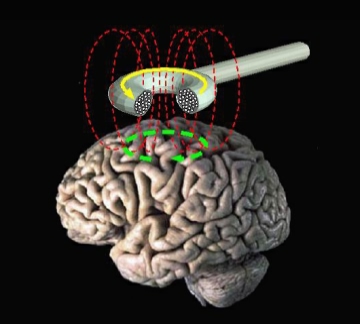
It’s not all science fiction. Check out Transcranial Magnetic Stimulation (http://en.wikipedia.org/wiki/Transcranial_magnetic_stimulation) or brain implants for depression (http://www.nature.com/news/2011/110207/full/news.2011.76.html)
As is standard procedure for risky but promising treatments, the mod could be offered to volunteers in the virtual world who were painfully deficient with regard to their moral instincts and wanted to be better (the equivalent of this guy from C.S. Lewis’s The Great Divorce). It might be tempting to just run computer models, but once you can adequately simulate human minds, that sounds a lot like creating people for the sole purpose of research and then destroying them.
The best option I can come up with is letting volunteers bifurcate. When they agreed to enter the trial, they’d duplicate their software/consciousness and make the change to one of the copies. (Fellow scientists reading this are already squeeing at the rigor of the control group set-up). But at the end of the experiment, what would you do?

Cantor Set (or the flow chart for your experimental design)
Maybe both copies would want to go on as they are, but, if a change dramatically improved our lives, would the control group version of you want to merge with the augmented self? Is there anyway to talk about such a merge (or maybe the initial treatment, too) without it being the same thing as death?
I’m suspicious of any attempt to define a flaw as central to our own identity, but I don’t know how radical a change you can go through and still have any connection to your previous self. For example, I was pretty roundly disliked before I went to college and, in that environment, developed some pretty bad moral habits. I certainly wish that my future self will treat people more like people and less like prompts on a kind of morality SATs, but I don’t wish that Future!Leah would act differently because she had our past erased.
I’m suspicious I’m rebelling mainly against the way the change happens, not it’s magnitude, so I don’t know if I trust my revulsion. We applaud major identity shifts provided they take place over a long timespan, but I don’t see any great virtue in prolonging suffering and bad habits as an end-in-itself. Why shouldn’t the bifurcates subjects remerge and abandon the warped path one of them was stuck on?

How good would a change have to be in order to make it worth your while to subsume your self in a similar but different version? How confident are you that you would recognize the altered you as superior if it truly was?
Call it a fun sci-fi premise. Or a decent metaphor for conversion.
Previous Post

December 7, 2011
Hoist on my own (Virtual) Petard?
Next Post
December 9, 2011 7 Quick Takes (12/9/11)
Browse Our Archives
Select a Category 7 Quick Takes Apologetics Atheism Book Conversion Debate Tactics Debates Epistemology/Philosophy Housekeeping Ideological Turing Test Marriage Morality in Practice Parsing Catholicism Possibly Heretical Radio Reviews/Recommendations Sequence Index Spiritual Practice Uncategorized
Select a Month April 2017 March 2017 January 2017 December 2016 September 2016 August 2016 July 2016 June 2016 May 2016 April 2016 March 2016 February 2016 January 2016 December 2015 November 2015 October 2015 September 2015 August 2015 July 2015 June 2015 May 2015 April 2015 March 2015 February 2015 January 2015 December 2014 November 2014 October 2014 September 2014 August 2014 July 2014 June 2014 May 2014 April 2014 March 2014 February 2014 January 2014 December 2013 November 2013 October 2013 September 2013 August 2013 July 2013 June 2013 May 2013 April 2013 March 2013 February 2013 January 2013 December 2012 November 2012 October 2012 September 2012 August 2012 July 2012 June 2012 May 2012 April 2012 March 2012 February 2012 January 2012 December 2011 November 2011 October 2011 September 2011 August 2011 July 2011 June 2011 May 2011 April 2011 March 2011 February 2011 January 2011 December 2010 November 2010 October 2010 September 2010 August 2010 July 2010 June 2010
Follow Us!
TAKE THE
Religious Wisdom Quiz
What did Isaiah say about Egypt's future in his oracles?
Select your answer to see how you score.
It would prosper It would rule Persia It would be conquered It would conquer Israel
Related posts from Unequally Yoked

The Tony-Winning Guide To Temptation And Grace

Hedgehogs of Redemption and the Comedy of Grace

Mercy, Justice, and How To Tell The Difference

Pinning down *which* error is made in this...
TRENDING AT PATHEOS Catholic

Rejecting Doom: Christian Hope And Human Action
Christianity is a religion of hope. We are to have hope and...

It’s What Comes From Within Which Matters
One of the most difficult things for us to understand is why...

Why I Choose the Eucharist Over the Sermon
Choose the Eucharist, Not the Sermon What are we supposed to get...

5 Design Elements Found in Spiritually Rooted Homes
Putting Spirituality Into Home Decor Our homes are more than our living...

Credo: A Story of God Told with the...
About 10 years ago, I began to imagine a personal "Credo" that...

The Anatomy of Divine Revelation in Catholic Thought
The claim that God has made Himself known to human beings is...
view all Catholic blogs
Ad-Free & Subscriber Log-In Subscription Support
- About Us
- 2026 Calendar
- Videos
- Podcasts
- Library of World Religions
- Faith In Media Tracker
- Advertise With Us
- Write for Us
- Privacy Policy
- Terms of Service
- Do Not Sell My Data
- Contact Us
- Radiant Digital
- Manage Newsletter Subscriptions
- Unsubscribe From Notifications
- Sitemap
Copyright 2008-2026, Patheos. All rights reserved.
Subscription Support Ad-Free & Subscriber Log-In
Follow Patheos