
BuddhistCatholicContemplativeEvangelicalGeneral ChristianHinduJewishLatter-day SaintMuslimNew VisionsProgressive Christian
Beliefs
- Buddhist
- Catholic
- Contemplative
- Evangelical
- General Christian
- Hindu
- Jewish
- Latter-day Saint
- More Voices
- Muslim
- New Visions
- Pagan
- Progressive Christian
Topics
- Religion News
- Food and Religion
- Sports and Religion
- Religious Art
- Religious Music and Entertainment
- Religious Events
- History and Religion
- Style and Religion
- Politics and Religion
- Women in Religion
- Recreation Outdoors and Religion
- Business Finance and Religion
- Careers Workplace and Religion
- Education and Religion
- Family Parenting and Religion
- Health Fitness and Religion
- Home and Religion
- Relationships and Religion
- Technology and Religion
- Travel and Religion
Columnists
- Buddhist Columnists
- Business Finance and Religion Columnists
- Careers Workplace and Religion Columnists
- Catholic Columnists
- Contemplative Columnists
- Education and Religion Columnists
- Evangelists Columnists
- Family Parenting and Religion Columnists
- General Christian Columnists
- Health Fitness and Religion Columnists
- Hindu Columnists
- History and Religion Columnists
- Home and Religion Columnists
- Jewish Columnists
- More Voices Columnists
- Latter Day Columnists
- Muslim Columnists
- New Visions Columnists
- Nonreligious Columnists
- Pagan Columnists
- Politics and Religion Columnists
- Progressive Columnists
- Recreation Outdoors and Religion Columnists
- Relationships and Religion Columnists
- Religion News Columnists
- Religious Art Columnists
- Religious Events Columnists
- Religious Music and Entertainment Columnists
- Sports and Religion Columnists
- Style and Religion Columnists
- Technology and Religion Columnists
- Travel and Religion Columnists
- Women in Religion Columnists
Resource Library
- 2026 Calendar
- Library of World Religions
- The 100 Most Holy Places on Earth
- Patheos Answers
- Podcasts
- Videos
- Faith Leaders Database
- Anglican Episcopalian
- Bahai
- Baptist
- Buddhism
- Christianity
- Confucianism
- Eastern Orthodoxy
- Hinduism
- Holiness and Pentecostal
- ISKCON
- Islam
- Judaism
- Lutheran
- Methodist
- The Church of Jesus Christ of Latter-day Saints
- New Age
- Paganism
- Presbytarian and Reformed
- Protestantism
- Religion Behind the Scenes
- Roman Catholic
- Scientology
- Shia Islam
- Sikhism
- Sufism
- Sunni Islam
- Taoism
- Zen
- See all religions
Research Tools
 Ad-Free & Subscriber Log-In Subscription Support
Ad-Free & Subscriber Log-In Subscription Support
Follow Patheos 

- Trending:
- Forgiveness
- |
- Marriage
- |
- Consciousness
- |
- Death Penalty
- |
- Election
- |
- Halloween
 Unequally Yoked
- Home
- Catholic
- How do you pick a teacher?
How do you pick a teacher?
Last updated on: November 21, 2012 at 1:52 pm by Leah Libresco
How do you pick a teacher? 2012-11-21T13:52:31-05:00 Leah Libresco
Patheos Explore the world's faith through different perspectives on religion and spirituality! Patheos has the views of the prevalent religions and spiritualities of the world.

The Dunning-Kruger effect is a term for people who are too ignorant to recognize that they are mistaken. If you work in politics or public health, it’s easy to feel as though these people are everywhere, but it is possible for most of us to spot people or systems which are better at making certain judgements than we are. And if we find one, it’s rational to defer to its decisions.
This is essentially the kind of system G.K. Chesterton claimed Catholicism to be when he declared it to be a ‘truth-telling thing.’ He was claiming to have found a system that was so much more reliable than his own judgement that he felt it prudent to defer to the wisdom of the church not only when he was undecided, but even if his moral intuitions were in stark opposition to church teaching.
This sounds like a textbook case of organized religion asking believers to doff their brains as well as their hats when they stand before the altar, but I don’t find Chesterton’s position to be irrational in theory. When I read books on quantum theory written for laypeople, I usually have to try to reform my expectations and ideas. This isn’t because quantum theory is irrational, it’s because my intuitions and common sense are wrong. My normal modes of thought are a good-enough approximation of the world for day-to-day life, but they’re no more accurate than Ptolemy’s epicycles.
When Eliezer Yudkowsky talks about rationally deferring to the judgement of another, he uses the example of a computer programmer who is not very good at chess but is able to design a piece of software that plays very well. The programmer still doesn’t know how to play high level chess. He built a system that produces correct results in a way that he can’t replicate in his own mind. If he wants to win matches, he ought always defer to the computer’s suggestion.
It’s a lot easier for the programmer to feel confident that the software is a better chess player than he. It’s harder to figure out what kind of evidence could justifiably give Chesterton that kind of confidence in the church’s moral judgments.
It’s hard to look at any particular move the chess computer makes and judge whether or not it’s a good move, but we don’t have to evaluate the process. We can just look at how many wins the program racks up against different levels of opponents. It’s even easier if we’re trying to build programs to categorize data (as I am in my machine learning class). Every time the algorithm is tweaked, we check it for accuracy.
But if you try to apply this kind of test to a moral truth-telling thing, you run into two big problems. First: there’s the problem of overfitting. In computer science, it’s bad practice to train your prediction program on all the data you have. It’s easy to assume that more data must be better, but using everything you’ve got is going to make your program really good at categorizing the data you already have and really bad at predicting anything that wasn’t in your original data set. After all, the most accurate program is one that just stores all the data you gave it in a big lookup table and returns the numbers you inputted. Not a big improvement. In computer science, you avoid this problem by withholding a certain subset of the data from the computer when it’s learning. When it’s generated a model, you test that formula for accuracy by applying it to the datapoints you held in reserve.
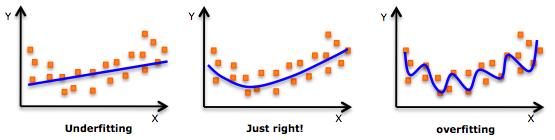
You can’t pull this off with moral quandaries. A church or a philosophy isn’t isolated from the world, so you can’t hold some conundrums back and then try to use them as test cases for the first principles the group you’re evaluating has on offer. So, instead you’re left suspicious that any teaching, especially one sourced from a long, complicated book might have more to do with having an intuition about an answer and hunting up something in your canon that supports it. That hardly likely to give you the confidence to throw over your intuitions for the dogma of a new teacher.
That’s a technical issue, but there’s an ever bigger stumbling block for an aspiring pupil. Unlike the chess example, where it’s easy to keep score by number of wins, it’s hard to figure out how you judge one moral system as more accurate than another.
I’m not preaching relativism, some moral systems take themselves out of the race. There are enough commonly-held moral intuitions which I assign a high level of confidence that I feel comfortable disqualifying any system that doesn’t preach them. To name a few names: solepcism, objectivism, and dark kantianism. But if I consider only those systems that can coexist with my list of unshakeable moral precepts, I haven’t found a useful moral system, I’ve just found the ethical equivalent of a generative set — a summary of my list. To put it formally, I’ve come up with a set of first principles/axioms that I know I can derive some true theorems from, but I have no idea whether this set of axioms only generates true theorems. When two systems that clear my initial bar diverge, I don’t have a good way to pick the winner.
The best schema I have is to look for systems that usually turn out to be right even when I think they’re wrong. That’s the kind of evidence that Chesterton and more modern-day converts like Jennifer Fulwiler of Conversion Diary claim to have found. That’s not been my experience of Catholicism, and most of the predictions it offers me are stuck behind the firewall of faith, impossible to test until you’ve assented at least to the point of theism.
freedom means choosing a master
Previous Post

November 1, 2011
The Matriarchy Trap
Next Post
November 4, 2011 7 Quick Takes (11/4/11)
Browse Our Archives
Select a Category 7 Quick Takes Apologetics Atheism Book Conversion Debate Tactics Debates Epistemology/Philosophy Housekeeping Ideological Turing Test Marriage Morality in Practice Parsing Catholicism Possibly Heretical Radio Reviews/Recommendations Sequence Index Spiritual Practice Uncategorized
Select a Month April 2017 March 2017 January 2017 December 2016 September 2016 August 2016 July 2016 June 2016 May 2016 April 2016 March 2016 February 2016 January 2016 December 2015 November 2015 October 2015 September 2015 August 2015 July 2015 June 2015 May 2015 April 2015 March 2015 February 2015 January 2015 December 2014 November 2014 October 2014 September 2014 August 2014 July 2014 June 2014 May 2014 April 2014 March 2014 February 2014 January 2014 December 2013 November 2013 October 2013 September 2013 August 2013 July 2013 June 2013 May 2013 April 2013 March 2013 February 2013 January 2013 December 2012 November 2012 October 2012 September 2012 August 2012 July 2012 June 2012 May 2012 April 2012 March 2012 February 2012 January 2012 December 2011 November 2011 October 2011 September 2011 August 2011 July 2011 June 2011 May 2011 April 2011 March 2011 February 2011 January 2011 December 2010 November 2010 October 2010 September 2010 August 2010 July 2010 June 2010
Follow Us!
TAKE THE
Religious Wisdom Quiz
How long did Persian empire rule?
Select your answer to see how you score.
180 years 200 years 150 years 250 years
Related posts from Unequally Yoked

Rational Faith: More working hypothesis than logical proof

Starting Conversations During Francis's Visit

Pulling Off Casual Proselytization

Merry Old Christmas Day + Reflections on Modern...
TRENDING AT PATHEOS Catholic

Rejecting Doom: Christian Hope And Human Action
Christianity is a religion of hope. We are to have hope and...

It’s What Comes From Within Which Matters
One of the most difficult things for us to understand is why...

Why I Choose the Eucharist Over the Sermon
Choose the Eucharist, Not the Sermon What are we supposed to get...

5 Design Elements Found in Spiritually Rooted Homes
Putting Spirituality Into Home Decor Our homes are more than our living...

Credo: A Story of God Told with the...
About 10 years ago, I began to imagine a personal "Credo" that...

The Anatomy of Divine Revelation in Catholic Thought
The claim that God has made Himself known to human beings is...
view all Catholic blogs
Ad-Free & Subscriber Log-In Subscription Support
- About Us
- 2026 Calendar
- Videos
- Podcasts
- Library of World Religions
- Faith In Media Tracker
- Advertise With Us
- Write for Us
- Privacy Policy
- Terms of Service
- Do Not Sell My Data
- Contact Us
- Radiant Digital
- Manage Newsletter Subscriptions
- Unsubscribe From Notifications
- Sitemap
Copyright 2008-2026, Patheos. All rights reserved.
Subscription Support Ad-Free & Subscriber Log-In
Follow Patheos