
BuddhistCatholicContemplativeEvangelicalGeneral ChristianHinduJewishLatter-day SaintMuslimNew VisionsProgressive Christian
Beliefs
- Buddhist
- Catholic
- Contemplative
- Evangelical
- General Christian
- Hindu
- Jewish
- Latter-day Saint
- More Voices
- Muslim
- New Visions
- Pagan
- Progressive Christian
Topics
- Religion News
- Food and Religion
- Sports and Religion
- Religious Art
- Religious Music and Entertainment
- Religious Events
- History and Religion
- Style and Religion
- Politics and Religion
- Women in Religion
- Recreation Outdoors and Religion
- Business Finance and Religion
- Careers Workplace and Religion
- Education and Religion
- Family Parenting and Religion
- Health Fitness and Religion
- Home and Religion
- Relationships and Religion
- Technology and Religion
- Travel and Religion
Columnists
- Buddhist Columnists
- Business Finance and Religion Columnists
- Careers Workplace and Religion Columnists
- Catholic Columnists
- Contemplative Columnists
- Education and Religion Columnists
- Evangelists Columnists
- Family Parenting and Religion Columnists
- General Christian Columnists
- Health Fitness and Religion Columnists
- Hindu Columnists
- History and Religion Columnists
- Home and Religion Columnists
- Jewish Columnists
- More Voices Columnists
- Latter Day Columnists
- Muslim Columnists
- New Visions Columnists
- Nonreligious Columnists
- Pagan Columnists
- Politics and Religion Columnists
- Progressive Columnists
- Recreation Outdoors and Religion Columnists
- Relationships and Religion Columnists
- Religion News Columnists
- Religious Art Columnists
- Religious Events Columnists
- Religious Music and Entertainment Columnists
- Sports and Religion Columnists
- Style and Religion Columnists
- Technology and Religion Columnists
- Travel and Religion Columnists
- Women in Religion Columnists
Resource Library
- 2026 Calendar
- Library of World Religions
- The 100 Most Holy Places on Earth
- Patheos Answers
- Podcasts
- Videos
- Faith Leaders Database
- Anglican Episcopalian
- Bahai
- Baptist
- Buddhism
- Christianity
- Confucianism
- Eastern Orthodoxy
- Hinduism
- Holiness and Pentecostal
- ISKCON
- Islam
- Judaism
- Lutheran
- Methodist
- The Church of Jesus Christ of Latter-day Saints
- New Age
- Paganism
- Presbytarian and Reformed
- Protestantism
- Religion Behind the Scenes
- Roman Catholic
- Scientology
- Shia Islam
- Sikhism
- Sufism
- Sunni Islam
- Taoism
- Zen
- See all religions
Research Tools
 Ad-Free & Subscriber Log-In Subscription Support
Ad-Free & Subscriber Log-In Subscription Support
Follow Patheos 

- Trending:
- Forgiveness
- |
- Marriage
- |
- Consciousness
- |
- Death Penalty
- |
- Election
- |
- Halloween
 Unequally Yoked
- Home
- Catholic
- Feser’s Typology of Atheism (Part 2)
Feser’s Typology of Atheism (Part 2)
Last updated on: November 27, 2012 at 11:44 am by Leah Libresco
Feser’s Typology of Atheism (Part 2) 2012-11-27T11:44:42-05:00 Leah Libresco
Patheos Explore the world's faith through different perspectives on religion and spirituality! Patheos has the views of the prevalent religions and spiritualities of the world.

Today, I’m returning to Edward Feser’s typology of atheism. Monday, I took a look at ways atheists approach religious philosophy, today the focus is on responses to religious practice. Here’s how Feser splits up atheists:
A. Religious practice is mostly or entirely contemptible and something we would all be well rid of. The ritual side of religion is just crude and pointless superstition. Religious morality, where it differs from secular morality, is sheer bigotry. Even where certain moral principles associated with a particular religion have value, their association with the religion is merely an accident of history. Moreover, such principles tend to be distorted by the religious context. They certainly do not in any way depend on religion for their justification.
B. Religious practice has a certain admirable gravitas and it is possible that its ritual and moral aspects fulfill a real human need for some people. We can treat it respectfully, the way an anthropologist might treat the practices of a culture he is studying. But it does not fulfill any universal human need, and the most intelligent, well educated, and morally sophisticated human beings certainly have no need for it.
C. Religious practice fulfills a truly universal or nearly universal human need, but unfortunately it has no rational foundation and its metaphysical presuppositions are probably false. This is a tragedy, for the loss of religious belief will make human life shallower and in other ways leave a gaping void in our lives which cannot plausibly be filled by anything else. It may even have grave social consequences. But it is something we must find a way to live with, for atheism is intellectually unavoidable.
Last time, I thought it was reasonable to think you could assign individual religious traditions a single category, but the system breaks down here. Unless I’m just rating religions on ‘ritual’ generically, my scores for an individual religion will whipsaw wildly depending on what practice we’re talking about.
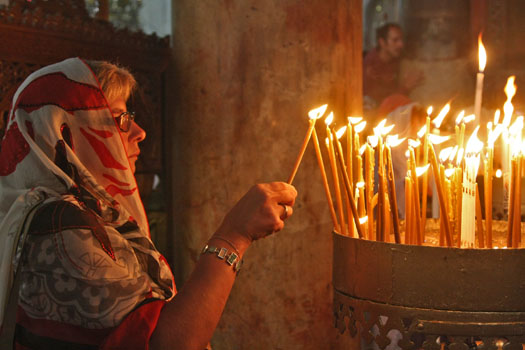
Most individual religious practice falls into a kind of A* Feser doesn’t account for: it’s not particularly pernicious, but it is useless. Genuflecting before you sit at Mass, crossing yourself and saying a prayer when an ambulance passes, saying a blessing over food… the worst harm you’re doing yourself is the opportunity cost of spending time on useless ritual. No worse and no better than knocking on wood.
There are legitimate scary type-A practices. The readiest example I have is Michael and Debi Pearl’s biblically-inspired spanking regimen that has been linked to deaths and serious injury. Also on the list: ex-gay reeducation camps.
Then there are a fair number of type-Bs. I can certainly imagine that requiring yourself to discuss your transgressions with someone else keeps you honest and can help you get out of the hole (provided the sins on your church’s list are actually harmful). When I experimented with prayer, I learned to be better about wanting other people’s good, not just my own. But these salutary effects are in the B-block because I don’t think they depend on religion being true to work. After all, as I pointed out after the Lenten prayer experience, my quasi-Kantianism was so wrong that you didn’t have to be all that correct to be able to spot my error.
I suspect Feser wants me to put ‘ritual’ broadly defined into type-C, but I don’t buy it. Although atheists are still arguing about what atheist ritual and secular authority should look like, there’s no denying plenty of non-religious ritual has taken root and flourished. Trust me that “I love CTY and I love the Passionfruit” will bring a certain subset of the geeky population to tears. Secular ritual isn’t an innovation, either. Immigrant communities and trade associations formed tight-knit societies that incorporated shibboleths and ritual.

What makes religious ritual unique is its ability to be small-c catholic. Anyone can be Catholic and walk into a church anywhere in the world and hear the same liturgy (though, with my weak French, it was hard to pick out anything but the set-in-stone phrases when I attended Mass in Notre Dame). That universalism is something secular ritual can’t match and is the closest anything comes to type-C practise.
But we’re already losing it. And this isn’t a case of mo’dernity, mo’problems; the balkanization of Christianity started a long time ago. At this point, to get into type-C, an atheist would have to wish to actively roll back the Reformation and put the Church at the center of life. I’d like it if there were a universal center to life and if people had the kind of common frame of reference and language that the KJV used to provide, but I can’t try to build all that around something I believe to be false.
The real answer is probably that the population is too large to sustain a universal core culture. Technically, the problem is that the population is too large and that there’s not a universal measure of distance. I can be connected to people arbitrarily far away so it’s hard to build up communities. I’m still not sure what the solution is.

#I’veGot99ProblemsandNisbetRepresentsaSignificantProportionofSaidProblems
Previous Post

November 21, 2011
Feser's Typology of Atheism (Part 1)
Next Post
November 24, 2011 You Must Have Known This'd be the Thanksgiving Post
Browse Our Archives
Select a Category 7 Quick Takes Apologetics Atheism Book Conversion Debate Tactics Debates Epistemology/Philosophy Housekeeping Ideological Turing Test Marriage Morality in Practice Parsing Catholicism Possibly Heretical Radio Reviews/Recommendations Sequence Index Spiritual Practice Uncategorized
Select a Month April 2017 March 2017 January 2017 December 2016 September 2016 August 2016 July 2016 June 2016 May 2016 April 2016 March 2016 February 2016 January 2016 December 2015 November 2015 October 2015 September 2015 August 2015 July 2015 June 2015 May 2015 April 2015 March 2015 February 2015 January 2015 December 2014 November 2014 October 2014 September 2014 August 2014 July 2014 June 2014 May 2014 April 2014 March 2014 February 2014 January 2014 December 2013 November 2013 October 2013 September 2013 August 2013 July 2013 June 2013 May 2013 April 2013 March 2013 February 2013 January 2013 December 2012 November 2012 October 2012 September 2012 August 2012 July 2012 June 2012 May 2012 April 2012 March 2012 February 2012 January 2012 December 2011 November 2011 October 2011 September 2011 August 2011 July 2011 June 2011 May 2011 April 2011 March 2011 February 2011 January 2011 December 2010 November 2010 October 2010 September 2010 August 2010 July 2010 June 2010
Follow Us!
TAKE THE
Religious Wisdom Quiz
Who dreamed about the sun, moon, and stars bowing to him?
Select your answer to see how you score.
Elijah Adam Joseph Daniel
Related posts from Unequally Yoked

How do you throw a fasting and silence...

Starving Laypeople of Devotion in Church

Aunt Alberta And Being Right (but the boring...

The Virtues of Sad Songs (a piece for...
TRENDING AT PATHEOS Catholic

The Parable Of The Sower And The Word...
One of Christ’s most famous parables is that of the sower who...

Rejecting Doom: Christian Hope And Human Action
Christianity is a religion of hope. We are to have hope and...

Why I Choose the Eucharist Over the Sermon
Choose the Eucharist, Not the Sermon What are we supposed to get...

5 Design Elements Found in Spiritually Rooted Homes
Putting Spirituality Into Home Decor Our homes are more than our living...

Credo: A Story of God Told with the...
About 10 years ago, I began to imagine a personal "Credo" that...

The Anatomy of Divine Revelation in Catholic Thought
The claim that God has made Himself known to human beings is...
view all Catholic blogs
Ad-Free & Subscriber Log-In Subscription Support
- About Us
- 2026 Calendar
- Videos
- Podcasts
- Library of World Religions
- Faith In Media Tracker
- Advertise With Us
- Write for Us
- Privacy Policy
- Terms of Service
- Do Not Sell My Data
- Contact Us
- Radiant Digital
- Manage Newsletter Subscriptions
- Unsubscribe From Notifications
- Sitemap
Copyright 2008-2026, Patheos. All rights reserved.
Subscription Support Ad-Free & Subscriber Log-In
Follow Patheos