
BuddhistCatholicContemplativeEvangelicalGeneral ChristianHinduJewishLatter-day SaintMuslimNew VisionsProgressive Christian
Beliefs
- Buddhist
- Catholic
- Contemplative
- Evangelical
- General Christian
- Hindu
- Jewish
- Latter-day Saint
- More Voices
- Muslim
- New Visions
- Pagan
- Progressive Christian
Topics
- Religion News
- Food and Religion
- Sports and Religion
- Religious Art
- Religious Music and Entertainment
- Religious Events
- History and Religion
- Style and Religion
- Politics and Religion
- Women in Religion
- Recreation Outdoors and Religion
- Business Finance and Religion
- Careers Workplace and Religion
- Education and Religion
- Family Parenting and Religion
- Health Fitness and Religion
- Home and Religion
- Relationships and Religion
- Technology and Religion
- Travel and Religion
Columnists
- Buddhist Columnists
- Business Finance and Religion Columnists
- Careers Workplace and Religion Columnists
- Catholic Columnists
- Contemplative Columnists
- Education and Religion Columnists
- Evangelists Columnists
- Family Parenting and Religion Columnists
- General Christian Columnists
- Health Fitness and Religion Columnists
- Hindu Columnists
- History and Religion Columnists
- Home and Religion Columnists
- Jewish Columnists
- More Voices Columnists
- Latter Day Columnists
- Muslim Columnists
- New Visions Columnists
- Nonreligious Columnists
- Pagan Columnists
- Politics and Religion Columnists
- Progressive Columnists
- Recreation Outdoors and Religion Columnists
- Relationships and Religion Columnists
- Religion News Columnists
- Religious Art Columnists
- Religious Events Columnists
- Religious Music and Entertainment Columnists
- Sports and Religion Columnists
- Style and Religion Columnists
- Technology and Religion Columnists
- Travel and Religion Columnists
- Women in Religion Columnists
Resource Library
- 2026 Calendar
- Library of World Religions
- The 100 Most Holy Places on Earth
- Patheos Answers
- Podcasts
- Videos
- Faith Leaders Database
- Anglican Episcopalian
- Bahai
- Baptist
- Buddhism
- Christianity
- Confucianism
- Eastern Orthodoxy
- Hinduism
- Holiness and Pentecostal
- ISKCON
- Islam
- Judaism
- Lutheran
- Methodist
- The Church of Jesus Christ of Latter-day Saints
- New Age
- Paganism
- Presbytarian and Reformed
- Protestantism
- Religion Behind the Scenes
- Roman Catholic
- Scientology
- Shia Islam
- Sikhism
- Sufism
- Sunni Islam
- Taoism
- Zen
- See all religions
Research Tools
 Ad-Free & Subscriber Log-In Subscription Support
Ad-Free & Subscriber Log-In Subscription Support
Follow Patheos 

- Trending:
- Forgiveness
- |
- Marriage
- |
- Consciousness
- |
- Death Penalty
- |
- Election
- |
- Halloween
 Unequally Yoked
- Home
- Catholic
- Happy Ada Lovelace Day!
Happy Ada Lovelace Day!
Last updated on: November 20, 2012 at 5:08 pm by Leah Libresco
Happy Ada Lovelace Day! 2012-11-20T17:08:58-05:00 Leah Libresco
Patheos Explore the world's faith through different perspectives on religion and spirituality! Patheos has the views of the prevalent religions and spiritualities of the world.
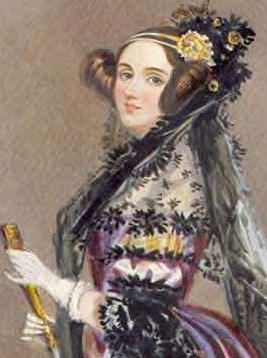
Man, did I pick an auspicious time to transition to Patheos; it’s Ada Lovelace Day.
Ada Lovelace Day aims to raise the profile of women in science, technology, engineering and maths by encouraging people around the world to talk about the women whose work they admire. This international day of celebration helps people learn about the achievements of women in STEM, inspiring others and creating new role models for young and old alike.
Ada Lovelace is widely held to have been the first computer programmer. Close friends with inventor Charle Babbage, Lovelace was intrigued by his Analytical Engine and in 1842, she translated a description of it by italian mathematician Luigi Menabrea. Babbage asked her to expand the article, “as she understood [it] so well”, and this was when she wrote several early ‘computer programs’. Ada Lovelace died of cancer at 36, her potential tragically unfulfilled.
Bloggers are encouraged to feature a woman who set your scientific or mathematical imagination on fire, and, for me, there’s an obvious choice.
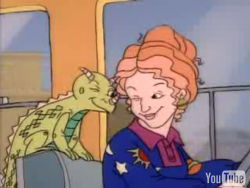
There’s no question that Magic School Bus was my favorite tv show as a kid (and second-place went to Bill Nye the Science Guy). Ms. Frizzle didn’t make science a far-away, totally abstract discipline—something practiced by an arcane priesthood. For her students, science was just the task of wading into the unknown and trying to figure out what the heck was going on.
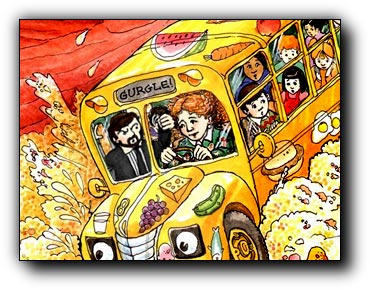 That’s what science is. All the statistics and methodology are just trying to make sure you interpret your observations as accurately as possible. When it comes to relative probability, Homo sapiens is not a very well-calibrated instrument.
The trouble is, a lot of science curricula are focused only on the techniques and methods and never let you get a taste of discovery. Students in these classes can only apply statistical tests iff the problems they come across look enough like the ones in their textbook. They can’t tell you why they’re using them or imagine how someone could have invented them in the first place.
Ms. Frizzle’s rallying cry, “Take chances, make mistakes, get MESSY!” spurred her students to be adventurous observers, interested in following the truth wherever it leads – a great starting point for a scientist.
Now, I’ll admit I feel a little bad picking a fictional woman as my role model on Ada Lovelace day. I do think that fictional women also help challenge stereotypes, and that fiction is a great way to do an end run around your assumptions and carry out philosophy by other means. But when I look at PZ’s post explaining that most of his students can’t name a single living female scientist, I have to throw in a plug for Sarah Flannery.
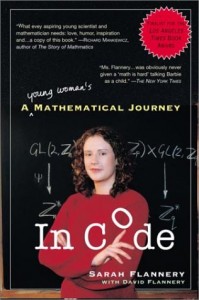
She’s a Irish mathematician and the author of In Code: A Mathematical Journey. In 1999, she was recognized as Ireland’s Young Scientist of the Year for her work on cryptography. Her memoir is warmly written and infectiously enthusiastic. It’d be a great gift for a teen and has the high-level details of her work in appendices if a particularly geeky reader wants to take a crack at it.
Oh, and for bonus science book recommendations (because I can’t stop once I get started), I always have to throw in a plug for Rebecca Skloot’s The Immortal Life of Henrietta Lacks. It’s a brilliant portrait of one of science’s biggest blindspots – remembering to treat experimental subjects as human. And, apropos of my statistics rant above, you might find a remedy in The Lady Tasting Tea: How Statistics Revolutionized Science in the Twentieth Century by David Salsburg. He does a great job illustrating the disputes and failures that produced modern statistical methods instead of treating them as laws mysteriously dispensed from on high. Now, to close out this post properly:
http://www.youtube.com/watch?v=OG3ieifrqyQ
Previous Post

October 7, 2011
Welcome to the new Unequally Yoked!
Next Post
October 10, 2011 Retronymic Marriage
Browse Our Archives
Select a Category 7 Quick Takes Apologetics Atheism Book Conversion Debate Tactics Debates Epistemology/Philosophy Housekeeping Ideological Turing Test Marriage Morality in Practice Parsing Catholicism Possibly Heretical Radio Reviews/Recommendations Sequence Index Spiritual Practice Uncategorized
Select a Month April 2017 March 2017 January 2017 December 2016 September 2016 August 2016 July 2016 June 2016 May 2016 April 2016 March 2016 February 2016 January 2016 December 2015 November 2015 October 2015 September 2015 August 2015 July 2015 June 2015 May 2015 April 2015 March 2015 February 2015 January 2015 December 2014 November 2014 October 2014 September 2014 August 2014 July 2014 June 2014 May 2014 April 2014 March 2014 February 2014 January 2014 December 2013 November 2013 October 2013 September 2013 August 2013 July 2013 June 2013 May 2013 April 2013 March 2013 February 2013 January 2013 December 2012 November 2012 October 2012 September 2012 August 2012 July 2012 June 2012 May 2012 April 2012 March 2012 February 2012 January 2012 December 2011 November 2011 October 2011 September 2011 August 2011 July 2011 June 2011 May 2011 April 2011 March 2011 February 2011 January 2011 December 2010 November 2010 October 2010 September 2010 August 2010 July 2010 June 2010
Follow Us!
TAKE THE
Religious Wisdom Quiz
In the Parable of the Wise and Foolish Virgins, what did the wise bring?
Select your answer to see how you score.
Bread New clothes Extra oil Wine
Related posts from Unequally Yoked



The Boring, Quiet Rituals That Sustain Us Spiritually

Starving Laypeople of Devotion in Church
TRENDING AT PATHEOS Catholic

Rejecting Doom: Christian Hope And Human Action
Christianity is a religion of hope. We are to have hope and...

It’s What Comes From Within Which Matters
One of the most difficult things for us to understand is why...

Why I Choose the Eucharist Over the Sermon
Choose the Eucharist, Not the Sermon What are we supposed to get...

5 Design Elements Found in Spiritually Rooted Homes
Putting Spirituality Into Home Decor Our homes are more than our living...

Credo: A Story of God Told with the...
About 10 years ago, I began to imagine a personal "Credo" that...

The Anatomy of Divine Revelation in Catholic Thought
The claim that God has made Himself known to human beings is...
view all Catholic blogs
Ad-Free & Subscriber Log-In Subscription Support
- About Us
- 2026 Calendar
- Videos
- Podcasts
- Library of World Religions
- Faith In Media Tracker
- Advertise With Us
- Write for Us
- Privacy Policy
- Terms of Service
- Do Not Sell My Data
- Contact Us
- Radiant Digital
- Manage Newsletter Subscriptions
- Unsubscribe From Notifications
- Sitemap
Copyright 2008-2026, Patheos. All rights reserved.
Subscription Support Ad-Free & Subscriber Log-In
Follow Patheos