
BuddhistCatholicContemplativeEvangelicalGeneral ChristianHinduJewishLatter-day SaintMuslimNew VisionsProgressive Christian
Beliefs
- Buddhist
- Catholic
- Contemplative
- Evangelical
- General Christian
- Hindu
- Jewish
- Latter-day Saint
- More Voices
- Muslim
- New Visions
- Pagan
- Progressive Christian
Topics
- Religion News
- Food and Religion
- Sports and Religion
- Religious Art
- Religious Music and Entertainment
- Religious Events
- History and Religion
- Style and Religion
- Politics and Religion
- Women in Religion
- Recreation Outdoors and Religion
- Business Finance and Religion
- Careers Workplace and Religion
- Education and Religion
- Family Parenting and Religion
- Health Fitness and Religion
- Home and Religion
- Relationships and Religion
- Technology and Religion
- Travel and Religion
Columnists
- Buddhist Columnists
- Business Finance and Religion Columnists
- Careers Workplace and Religion Columnists
- Catholic Columnists
- Contemplative Columnists
- Education and Religion Columnists
- Evangelists Columnists
- Family Parenting and Religion Columnists
- General Christian Columnists
- Health Fitness and Religion Columnists
- Hindu Columnists
- History and Religion Columnists
- Home and Religion Columnists
- Jewish Columnists
- More Voices Columnists
- Latter Day Columnists
- Muslim Columnists
- New Visions Columnists
- Nonreligious Columnists
- Pagan Columnists
- Politics and Religion Columnists
- Progressive Columnists
- Recreation Outdoors and Religion Columnists
- Relationships and Religion Columnists
- Religion News Columnists
- Religious Art Columnists
- Religious Events Columnists
- Religious Music and Entertainment Columnists
- Sports and Religion Columnists
- Style and Religion Columnists
- Technology and Religion Columnists
- Travel and Religion Columnists
- Women in Religion Columnists
Resource Library
- 2026 Calendar
- Library of World Religions
- The 100 Most Holy Places on Earth
- Patheos Answers
- Podcasts
- Videos
- Faith Leaders Database
- Anglican Episcopalian
- Bahai
- Baptist
- Buddhism
- Christianity
- Confucianism
- Eastern Orthodoxy
- Hinduism
- Holiness and Pentecostal
- ISKCON
- Islam
- Judaism
- Lutheran
- Methodist
- The Church of Jesus Christ of Latter-day Saints
- New Age
- Paganism
- Presbytarian and Reformed
- Protestantism
- Religion Behind the Scenes
- Roman Catholic
- Scientology
- Shia Islam
- Sikhism
- Sufism
- Sunni Islam
- Taoism
- Zen
- See all religions
Research Tools
 Ad-Free & Subscriber Log-In Subscription Support
Ad-Free & Subscriber Log-In Subscription Support
Follow Patheos 

- Trending:
- Forgiveness
- |
- Marriage
- |
- Consciousness
- |
- Death Penalty
- |
- Election
- |
- Halloween
 Unequally Yoked
- Home
- Catholic
- 7 Quick Science Takes (9/9/11)
7 Quick Science Takes (9/9/11)
Last updated on: November 5, 2012 at 12:38 am by Leah Libresco
7 Quick Science Takes (9/9/11) 2012-11-05T00:38:40-05:00 Leah Libresco
Patheos Explore the world's faith through different perspectives on religion and spirituality! Patheos has the views of the prevalent religions and spiritualities of the world.

–1–
Yesterday I ran a post on science fiction and philosophy and the next one coming up is going to be on the distinction between science fiction and fantasy. So let’s make this a science-themed edition of quick-takes (as if I needed an excuse).
But before we move off sci-fi entirely, I want to link to a post on this topic by John C. Wright, an atheist-to-Catholic convert and Nebula nominee for his scifi writing. When it first ran, the essay was titled “Aliens Need Christ’s Redemption, Too.”
–2–
From the ever-excellent blog Schneider on Security, a link to the following academic paper: “Science Fiction Prototyping and Security Education: Cultivating Contextual and Societal Thinking in Computer Security Education and Beyond.” The researchers recommend using science fiction as a way to raise awareness of computer security issues and keeping them urgent and relevant. It’s certainly a step up from the password security theatre embraced by plenty of companies and websites.
–3–
I really enjoy Google’s tendency to release why-the-heck-not? projects, and Draw from Google Correlate is the latest to delight me. You try to freehand draw a trend line with your cursor, and Google supplies a search term that roughly matches that plot.

Apparently we’re a lot more worried about “sharp pain” than we were in 2004. Have fun futzing around.
–4–
And, if you’re interested in trying to extract meaning from arbitrary-seeming jumbles of data, maybe you’ll like the research I found via Ezra Klein: an interesting hypothesis about the density of concepts in different languages.
The more data-dense the average syllable is, the fewer of those syllables had to be spoken per second — and the slower the speech thus was. English, with a high information density of .91, is spoken at an average rate of 6.19 syllables per second. Mandarin, which topped the density list at .94, was the spoken slowpoke at 5.18 syllables per second. Spanish, with a low-density .63, rips along at a syllable-per-second velocity of 7.82. The true speed demon of the group, however, was Japanese, which edges past Spanish at 7.84, thanks to its low density of .49. Despite those differences, at the end of, say, a minute of speech, all of the languages would have conveyed more or less identical amounts of information.
A friend of mine calls shennanigans, on the grounds that foreign languages always sound fast, since the unfamiliar phonemes mean you can’t tell when anything begins or ends. I imagine that could be true, but linguists could still observe some languages to be more densely packed than others. I don’t know much about linguistics, though, so I’d appreciate a clarification.
–5–
If you’re not already familiar with the Stanford Prison Experiment, check out the wikipedia page and then head over, with everyone else, to Stanford Alumni Magazine, where they’ve published interviews with several of the participants.

The experiment, which took place 1971, randomly divided up a group of volunteers to serve as either guards or convicts in a simulated prison. The experiment swiftly spiraled out of control, as the ‘guards’ began abusing the ‘prisoners’ under their care. It’s become a cautionary example of the corrupting and warping influence of power over people in a dehumanizing situation.
–6–
I’ve been catching up with Common Sense Atheism’s read-all-of-Yudkowsky project and one post I read this week (“Unbounded Scales, Huge Jury Awards, & Futurism“) touches on an interesting aspect of social science and cognitive bias. Here’s a preview:
Kahneman et. al., 1998 and 1999, presented 867 jury-eligible subjects with descriptions of legal cases (e.g., a child whose clothes caught on fire) and asked them to either
- Rate the outrageousness of the defendant’s actions, on a bounded scale
- Rate the degree to which the defendant should be punished, on a bounded scale, or
- Assign a dollar value to punitive damages
And, lo and behold, while subjects correlated very well with each other in their outrage ratings and their punishment ratings, their punitive damages were all over the map. Yet subjects’ rank-ordering of the punitive damages – their ordering from lowest award to highest award – correlated well across subjects….
Which is to say: if you knew the scenario presented – the aforementioned child whose clothes caught on fire – you could take a good guess at the punishment rating, and a good guess at the rank-ordering of the dollar award relative to other cases, but the dollar award itself would be completely unpredictable… Taking the median of twelve randomly selected responses didn’t help much either.
So a jury award for punitive damages isn’t so much an economic valuation as an attitude expression – a psychophysical measure of outrage, expressed on an unbounded scale with no standard modulus.
Read the whole thing, and then see what you could do to compensate for this effect.
–7–
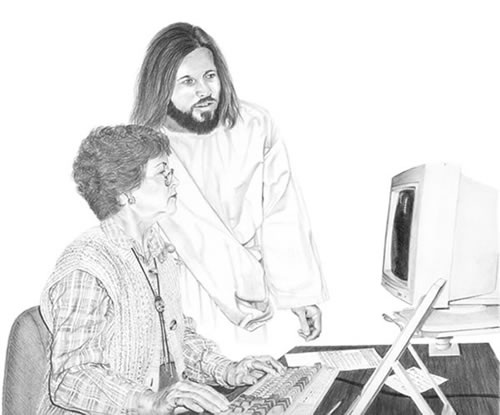
And, to close closer to where we began, check out two English glosses on a Jesuit’s take on the Christian perspective on computer hacking and open source software. (As you may remember from my posts during senior essay season, I’m very invested in these topics). Here’s a quote to think on:
Mr Spadaro says he became interested in the subject when he noticed that hackers and students of hacker culture used “the language of theological value” when writing about creativity and coding, so he decided to examine the idea more deeply. The hacker ethic forged on America’s west coast in the 1970s and 1980s was playful, open to sharing, and ready to challenge models of proprietary control, competition and even private property. Hackers were the origin of the “open source” movement which creates and distributes software that is free in two senses: it costs nothing and its underlying code can be modified by anyone to fit their needs. “In a world devoted to the logic of profit,” wrote Mr Spadaro, hackers and Christians have “much to give each other” as they promote a more positive vision of work, sharing and creativity.
He is not the only person to see an affinity between the open-source hacker ethos and Christianity. Catholic open-source advocates have founded a group called Elèutheros to encourage the church to endorse such software. Its manifesto refers to “strong ideal affinities between Christianity, the philosophy of free software, and the adoption of open formats and protocols”. Marco Fioretti, co-founder of the group, says open-source software teaches the “practical dimension of community and service to others that is already in the church message”. There are also legal motivations. Commercial software such as Microsoft Word is widely pirated in many parts of the world, by Catholics as well as others. Mr Fioretti advocates the use of open-source software instead, because he doesn’t want people “to violate a law without any real reason, just to open a church document.”
[Seven Quick Takes is a blog carnival run by Jen of Conversion Diary]
Previous Post

September 8, 2011
The Continuation of Philosophy by Other Means
Next Post
September 9, 2011 The Idiotic Interfaith 9/11 Backlash
Browse Our Archives
Select a Category 7 Quick Takes Apologetics Atheism Book Conversion Debate Tactics Debates Epistemology/Philosophy Housekeeping Ideological Turing Test Marriage Morality in Practice Parsing Catholicism Possibly Heretical Radio Reviews/Recommendations Sequence Index Spiritual Practice Uncategorized
Select a Month April 2017 March 2017 January 2017 December 2016 September 2016 August 2016 July 2016 June 2016 May 2016 April 2016 March 2016 February 2016 January 2016 December 2015 November 2015 October 2015 September 2015 August 2015 July 2015 June 2015 May 2015 April 2015 March 2015 February 2015 January 2015 December 2014 November 2014 October 2014 September 2014 August 2014 July 2014 June 2014 May 2014 April 2014 March 2014 February 2014 January 2014 December 2013 November 2013 October 2013 September 2013 August 2013 July 2013 June 2013 May 2013 April 2013 March 2013 February 2013 January 2013 December 2012 November 2012 October 2012 September 2012 August 2012 July 2012 June 2012 May 2012 April 2012 March 2012 February 2012 January 2012 December 2011 November 2011 October 2011 September 2011 August 2011 July 2011 June 2011 May 2011 April 2011 March 2011 February 2011 January 2011 December 2010 November 2010 October 2010 September 2010 August 2010 July 2010 June 2010
Follow Us!
TAKE THE
Religious Wisdom Quiz
What famous basilica is in Vatican City?
Select your answer to see how you score.
St. Peter's Basilica St. Basil's Notre Dame St. Paul's
Related posts from Unequally Yoked

7QT: Fake Bears, Faker Weapons, and Austen

7QT: Moms, Pacifist Pilots, and other superheroes

7QT: Remixes, Underwear, & Fake Fingers

7QT: The Peculiar Virtues of Daredevil, Pool Table...
TRENDING AT PATHEOS Catholic

The Parable Of The Sower And The Word...
One of Christ’s most famous parables is that of the sower who...

Rejecting Doom: Christian Hope And Human Action
Christianity is a religion of hope. We are to have hope and...

Why I Choose the Eucharist Over the Sermon
Choose the Eucharist, Not the Sermon What are we supposed to get...

5 Design Elements Found in Spiritually Rooted Homes
Putting Spirituality Into Home Decor Our homes are more than our living...

Credo: A Story of God Told with the...
About 10 years ago, I began to imagine a personal "Credo" that...

The Anatomy of Divine Revelation in Catholic Thought
The claim that God has made Himself known to human beings is...
view all Catholic blogs
Ad-Free & Subscriber Log-In Subscription Support
- About Us
- 2026 Calendar
- Videos
- Podcasts
- Library of World Religions
- Faith In Media Tracker
- Advertise With Us
- Write for Us
- Privacy Policy
- Terms of Service
- Do Not Sell My Data
- Contact Us
- Radiant Digital
- Manage Newsletter Subscriptions
- Unsubscribe From Notifications
- Sitemap
Copyright 2008-2026, Patheos. All rights reserved.
Subscription Support Ad-Free & Subscriber Log-In
Follow Patheos