
BuddhistCatholicContemplativeEvangelicalGeneral ChristianHinduJewishLatter-day SaintMuslimNew VisionsProgressive Christian
Beliefs
- Buddhist
- Catholic
- Contemplative
- Evangelical
- General Christian
- Hindu
- Jewish
- Latter-day Saint
- More Voices
- Muslim
- New Visions
- Pagan
- Progressive Christian
Topics
- Religion News
- Food and Religion
- Sports and Religion
- Religious Art
- Religious Music and Entertainment
- Religious Events
- History and Religion
- Style and Religion
- Politics and Religion
- Women in Religion
- Recreation Outdoors and Religion
- Business Finance and Religion
- Careers Workplace and Religion
- Education and Religion
- Family Parenting and Religion
- Health Fitness and Religion
- Home and Religion
- Relationships and Religion
- Technology and Religion
- Travel and Religion
Columnists
- Buddhist Columnists
- Business Finance and Religion Columnists
- Careers Workplace and Religion Columnists
- Catholic Columnists
- Contemplative Columnists
- Education and Religion Columnists
- Evangelists Columnists
- Family Parenting and Religion Columnists
- General Christian Columnists
- Health Fitness and Religion Columnists
- Hindu Columnists
- History and Religion Columnists
- Home and Religion Columnists
- Jewish Columnists
- More Voices Columnists
- Latter Day Columnists
- Muslim Columnists
- New Visions Columnists
- Nonreligious Columnists
- Pagan Columnists
- Politics and Religion Columnists
- Progressive Columnists
- Recreation Outdoors and Religion Columnists
- Relationships and Religion Columnists
- Religion News Columnists
- Religious Art Columnists
- Religious Events Columnists
- Religious Music and Entertainment Columnists
- Sports and Religion Columnists
- Style and Religion Columnists
- Technology and Religion Columnists
- Travel and Religion Columnists
- Women in Religion Columnists
Resource Library
- 2026 Calendar
- Library of World Religions
- The 100 Most Holy Places on Earth
- Patheos Answers
- Podcasts
- Videos
- Faith Leaders Database
- Anglican Episcopalian
- Bahai
- Baptist
- Buddhism
- Christianity
- Confucianism
- Eastern Orthodoxy
- Hinduism
- Holiness and Pentecostal
- ISKCON
- Islam
- Judaism
- Lutheran
- Methodist
- The Church of Jesus Christ of Latter-day Saints
- New Age
- Paganism
- Presbytarian and Reformed
- Protestantism
- Religion Behind the Scenes
- Roman Catholic
- Scientology
- Shia Islam
- Sikhism
- Sufism
- Sunni Islam
- Taoism
- Zen
- See all religions
Research Tools
 Ad-Free & Subscriber Log-In Subscription Support
Follow Patheos 

- Trending:
- Advent
- |
- Forgiveness
- |
- Thanksgiving
- |
- Election
- |
- Seasonal Holidays
- |
- Marriage
 Unequally Yoked
- Home
- Catholic
- Who Gets to Use Lewis’s Excuse?
Who Gets to Use Lewis’s Excuse?
Last updated on: November 26, 2012 at 4:52 pm by Leah Libresco
Who Gets to Use Lewis’s Excuse? 2012-11-26T16:52:14-05:00 Leah Libresco
Patheos Explore the world's faith through different perspectives on religion and spirituality! Patheos has the views of the prevalent religions and spiritualities of the world.

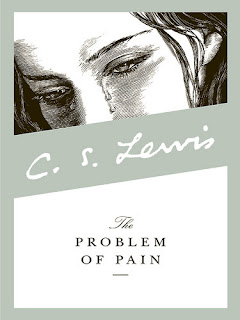
Now that college is over, and I’m wrapping up my guest stint at Daylight Atheism, I finally have time to get back to reading and blogging about books (or more precisely, books about atheism and philosophy, since if I were blogging through all the YA fantasy I’ve been reading, this would be a very different blog). I’ve just finished C.S. Lewis’s The Problem of Pain, but I’m not that interested in discussing the main thesis of the book since, as I’ve said before, I don’t think theodicy is a defeater for Christianity. I find the general structure of Lewis’s argument reasonable, even if I’m unconvinced any god exists that needs his defense. So let’s get on to weird digressions.
At the conclusion of Lewis’s discussion of the Fall, he adds a brief caveat, to explain why his discussion omitted all mention of the parable of the tree of knowledge.
These theories may have done good in their day but they do no good to me and I am not going to invent others. We have recently been told by the scientists that we have no right to expect that the real universe should be picturable, and that if we make mental pictures to illustrate quantum physics we are moving further away from reality, not closer to it. We have clearly even less right to demand that the highest spiritual realities should be picturable, or even explicable in terms of our abstract thought…
I have thought it right to allow this one glance at what is for me an impenetrable curtain, but, as I have said, it makes no part of my present argument. Clearly it would be futile to attempt to solve the problem of pain by producing another problem.
And lest anyone think Lewis is making an unfair criticism of science, I’ve linked below an xkcd cartoon that pretty much recapitulates the heart of his argument:

Lewis intends for this section to let Christians off the hook a little, but, when I read it, I immediately dogeared the page so I could use it in my next round with my Catholic boyfriend. One of the primary points of our disagreement (you know, aside from the existence of God) is that he claims I cannot legitimately believe in some kind of objective absolute morality (usually something akin to virtue ethics) if I don’t have a solid metaphysical system to ground it in.
I still defend myself by saying a moral system can be useful (and clearly superior to some alternatives) if it generates mostly correct answers, i.e. if it is a crude approximation of whatever proper moral judgement would look like. And just as I don’t need to know physics to be able to figure out where a thrown ball will land in time to catch it, I don’t need a full understanding of whatever complex principles undergird moral law to be able to guide my choices and have a good-enough idea of what parts of me don’t measure up.
(Note: In point of fact, I know physics, but can’t reliably catch a ball. Let’s treat me as an aberration, or say I am analogous to many philosophers of the academy).
So am I off the hook? I tend to think that my claim is bolstered by the idea that if there is a just moral law that is binding on all people, it has to be reasonably accessible, or else everyone would have to delegate their moral choices to some arcane priesthood without the ability to discern whether their judgement were correct. In other words, if there’s any topic people should be allowed to get away with using approximations and stories to talk about, it seems like moral law fits the bill.
But if I claim this excuse for myself, I make it a lot harder to attack the people I disagree with or have an argument at all. I’m not sure what heuristic to use when I’m deciding whether someone’s beliefs need a more in depth defense. I’d welcome thoughts and disagreement in the comments section.

Previous Post

May 28, 2011
You Call That Religion?
Next Post
May 31, 2011 Sam Harris, Psychopaths, and Moral Culpability
Browse Our Archives
Select a Category 7 Quick Takes Apologetics Atheism Book Conversion Debate Tactics Debates Epistemology/Philosophy Housekeeping Ideological Turing Test Marriage Morality in Practice Parsing Catholicism Possibly Heretical Radio Reviews/Recommendations Sequence Index Spiritual Practice Uncategorized
Select a Month April 2017 March 2017 January 2017 December 2016 September 2016 August 2016 July 2016 June 2016 May 2016 April 2016 March 2016 February 2016 January 2016 December 2015 November 2015 October 2015 September 2015 August 2015 July 2015 June 2015 May 2015 April 2015 March 2015 February 2015 January 2015 December 2014 November 2014 October 2014 September 2014 August 2014 July 2014 June 2014 May 2014 April 2014 March 2014 February 2014 January 2014 December 2013 November 2013 October 2013 September 2013 August 2013 July 2013 June 2013 May 2013 April 2013 March 2013 February 2013 January 2013 December 2012 November 2012 October 2012 September 2012 August 2012 July 2012 June 2012 May 2012 April 2012 March 2012 February 2012 January 2012 December 2011 November 2011 October 2011 September 2011 August 2011 July 2011 June 2011 May 2011 April 2011 March 2011 February 2011 January 2011 December 2010 November 2010 October 2010 September 2010 August 2010 July 2010 June 2010
Follow Us!
TAKE THE
Religious Wisdom Quiz
Jesus drove the merchants and money-changers out of the temple with this.
Select your answer to see how you score.
Stool Sword Stick Scourge
Related posts from Unequally Yoked



The Boring, Quiet Rituals That Sustain Us Spiritually

Starving Laypeople of Devotion in Church
TRENDING AT PATHEOS Catholic

Bad Survey Questions Distort Eucharistic Theology
It seems to be the newest thing: someone conducts a bad survey...

If Baptism Washes Away Sin, Why Do Catholics...
The seven sacraments stand as the foundation of Catholic ecclesial life. The...

Far from promoting indifference, inaction, or quietism, Paul consistently tells us to...

The Power of Setting a Good Example
Remember last August when the Chicago White Sox hosted a "Pope Hat...

A Catholic Critique of Biblical Unitarianism
If the statistics are to be believed, Unitarianism is rising worldwide. Although...

How Grandma Tourism Helps Grandparents Live Their Vocation
Grandma, The New Travel Influencer What started as a nostalgia-inspired social media...
view all Catholic blogs
Ad-Free & Subscriber Log-In Subscription Support
- About Us
- 2026 Calendar
- Videos
- Podcasts
- Library of World Religions
- Faith In Media Tracker
- Advertise With Us
- Write for Us
- Privacy Policy
- Terms of Service
- Do Not Sell My Data
- Contact Us
- Radiant Digital
- Manage Newsletter Subscriptions
- Unsubscribe From Notifications
- Sitemap
Copyright 2008-2026, Patheos, part of the Radiant Digital network of media brands. All rights reserved.
Subscription Support Ad-Free & Subscriber Log-In
Follow Patheos