
BuddhistCatholicContemplativeEvangelicalGeneral ChristianHinduJewishLatter-day SaintMuslimNew VisionsProgressive Christian
Beliefs
- Buddhist
- Catholic
- Contemplative
- Evangelical
- General Christian
- Hindu
- Jewish
- Latter-day Saint
- More Voices
- Muslim
- New Visions
- Pagan
- Progressive Christian
Topics
- Religion News
- Food and Religion
- Sports and Religion
- Religious Art
- Religious Music and Entertainment
- Religious Events
- History and Religion
- Style and Religion
- Politics and Religion
- Women in Religion
- Recreation Outdoors and Religion
- Business Finance and Religion
- Careers Workplace and Religion
- Education and Religion
- Family Parenting and Religion
- Health Fitness and Religion
- Home and Religion
- Relationships and Religion
- Technology and Religion
- Travel and Religion
Columnists
- Buddhist Columnists
- Business Finance and Religion Columnists
- Careers Workplace and Religion Columnists
- Catholic Columnists
- Contemplative Columnists
- Education and Religion Columnists
- Evangelists Columnists
- Family Parenting and Religion Columnists
- General Christian Columnists
- Health Fitness and Religion Columnists
- Hindu Columnists
- History and Religion Columnists
- Home and Religion Columnists
- Jewish Columnists
- More Voices Columnists
- Latter Day Columnists
- Muslim Columnists
- New Visions Columnists
- Nonreligious Columnists
- Pagan Columnists
- Politics and Religion Columnists
- Progressive Columnists
- Recreation Outdoors and Religion Columnists
- Relationships and Religion Columnists
- Religion News Columnists
- Religious Art Columnists
- Religious Events Columnists
- Religious Music and Entertainment Columnists
- Sports and Religion Columnists
- Style and Religion Columnists
- Technology and Religion Columnists
- Travel and Religion Columnists
- Women in Religion Columnists
Resource Library
- 2026 Calendar
- Library of World Religions
- The 100 Most Holy Places on Earth
- Patheos Answers
- Podcasts
- Videos
- Faith Leaders Database
- Anglican Episcopalian
- Bahai
- Baptist
- Buddhism
- Christianity
- Confucianism
- Eastern Orthodoxy
- Hinduism
- Holiness and Pentecostal
- ISKCON
- Islam
- Judaism
- Lutheran
- Methodist
- The Church of Jesus Christ of Latter-day Saints
- New Age
- Paganism
- Presbytarian and Reformed
- Protestantism
- Religion Behind the Scenes
- Roman Catholic
- Scientology
- Shia Islam
- Sikhism
- Sufism
- Sunni Islam
- Taoism
- Zen
- See all religions
Research Tools
 Ad-Free & Subscriber Log-In Subscription Support
Ad-Free & Subscriber Log-In Subscription Support
Follow Patheos 

- Trending:
- Forgiveness
- |
- Marriage
- |
- Consciousness
- |
- Death Penalty
- |
- Election
- |
- Halloween
 Unequally Yoked
- Home
- Catholic
- Good Fantasy Makes Good Philosophy
Good Fantasy Makes Good Philosophy
Last updated on: October 1, 2012 at 4:39 pm by Leah Libresco
Good Fantasy Makes Good Philosophy 2012-10-01T16:39:26-04:00 Leah Libresco
Patheos Explore the world's faith through different perspectives on religion and spirituality! Patheos has the views of the prevalent religions and spiritualities of the world.

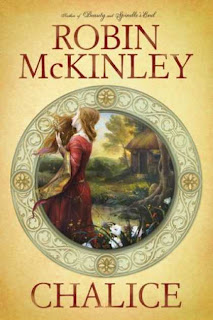
Over spring break, during some of the time I should have spent on my senior essay, I was reading books by Robin McKinley. I’ve read and liked a number of her books, so I was tracking down and reading the ones I’d missed. Some were good, some were so-so, none were as good as Spindle’s End and only Chalice was terrible.
Plenty of authors have trouble with exposition, dropping long, clunky bits of backstory into the plot or forcing characters to spend time explaining things they both know to each other for the benefit of the reader (often referred to as an “As You Know, Bob“). McKinley didn’t make this mistake in Chalice, she went one better: she neglected to include the background information at all.
Without any sense of the constraints the characters were under, I couldn’t feel invested in the plot. The main character was able to do some kinds of magic, but I never was able to figure out how difficult or surprising some of her spells were or what the limits of her ability were. So, as the climax of the book approached, I couldn’t experience it as a challenge, since there was nothing I knew she would have to surmount.
Good fantasy and science fiction (and historical fiction, too) need to set clear expectations of the rules the characters are constrained by, or all plot tension is lost. That doesn’t mean that I need to know every detail of their world, but I need a grasp of the relevant obstacles.
I’m not bringing all this up because I’m planning to expand the focus of this blog to scifi and fantasy lit crit (although one glance at my bookshelf would suggest it’s my real bailiwick), but because I think the failure’s of Chalice are a good illustration of a point I tried (unsuccessfully) to make in my answer to one of Michael Egnor’s eight questions for atheists: Why is there regularity in nature?
Egnor imagined that regularity and coherence implied a Divine Lawgiver who kept causality running. I still think that any world without some kind of reasonably accessible rulebook would be so inhospitable to human life and thought as to be impossible (or at least implausible enough to look like a specific case of the Anthropic Principle). Most arguments about miracles assume that aberration from the natural order is the condition which requires a purposeful agent, and that seems much more plausible than Egnor’s take. (And don’t forget that the necessity of preserving causation, at least most of the time, gives Christians a reasonable out on some problems of theodicy).
I can’t live or act in a lawless world — a world where I can’t make reasonable estimates about cause and effect. It’s ridiculous for Christians to assume that atheists think we live in such a world or that we believe this is the logically necessary fate of people without God. It’s bad writing and bad philosophy. To be honest, if your beliefs point to this conclusion, it’s probably time to look into metaphysical backsliding. And a different novel to boot.

Previous Post

April 9, 2011
Ex-Gays and Debating Mores (Index Post)
Next Post
April 11, 2011 Where Yuan Went Wrong (Part 3)
Browse Our Archives
Select a Category 7 Quick Takes Apologetics Atheism Book Conversion Debate Tactics Debates Epistemology/Philosophy Housekeeping Ideological Turing Test Marriage Morality in Practice Parsing Catholicism Possibly Heretical Radio Reviews/Recommendations Sequence Index Spiritual Practice Uncategorized
Select a Month April 2017 March 2017 January 2017 December 2016 September 2016 August 2016 July 2016 June 2016 May 2016 April 2016 March 2016 February 2016 January 2016 December 2015 November 2015 October 2015 September 2015 August 2015 July 2015 June 2015 May 2015 April 2015 March 2015 February 2015 January 2015 December 2014 November 2014 October 2014 September 2014 August 2014 July 2014 June 2014 May 2014 April 2014 March 2014 February 2014 January 2014 December 2013 November 2013 October 2013 September 2013 August 2013 July 2013 June 2013 May 2013 April 2013 March 2013 February 2013 January 2013 December 2012 November 2012 October 2012 September 2012 August 2012 July 2012 June 2012 May 2012 April 2012 March 2012 February 2012 January 2012 December 2011 November 2011 October 2011 September 2011 August 2011 July 2011 June 2011 May 2011 April 2011 March 2011 February 2011 January 2011 December 2010 November 2010 October 2010 September 2010 August 2010 July 2010 June 2010
Follow Us!
TAKE THE
Religious Wisdom Quiz
What king was known for writing many proverbs?
Select your answer to see how you score.
Saul Solomon David Hezekiah
Related posts from Unequally Yoked



The Boring, Quiet Rituals That Sustain Us Spiritually

Starving Laypeople of Devotion in Church
TRENDING AT PATHEOS Catholic

Rejecting Doom: Christian Hope And Human Action
Christianity is a religion of hope. We are to have hope and...

It’s What Comes From Within Which Matters
One of the most difficult things for us to understand is why...

Why I Choose the Eucharist Over the Sermon
Choose the Eucharist, Not the Sermon What are we supposed to get...

5 Design Elements Found in Spiritually Rooted Homes
Putting Spirituality Into Home Decor Our homes are more than our living...

Credo: A Story of God Told with the...
About 10 years ago, I began to imagine a personal "Credo" that...

The Anatomy of Divine Revelation in Catholic Thought
The claim that God has made Himself known to human beings is...
view all Catholic blogs
Ad-Free & Subscriber Log-In Subscription Support
- About Us
- 2026 Calendar
- Videos
- Podcasts
- Library of World Religions
- Faith In Media Tracker
- Advertise With Us
- Write for Us
- Privacy Policy
- Terms of Service
- Do Not Sell My Data
- Contact Us
- Radiant Digital
- Manage Newsletter Subscriptions
- Unsubscribe From Notifications
- Sitemap
Copyright 2008-2026, Patheos. All rights reserved.
Subscription Support Ad-Free & Subscriber Log-In
Follow Patheos