
BuddhistCatholicContemplativeEvangelicalGeneral ChristianHinduJewishLatter-day SaintMuslimNew VisionsProgressive Christian
Beliefs
- Buddhist
- Catholic
- Contemplative
- Evangelical
- General Christian
- Hindu
- Jewish
- Latter-day Saint
- More Voices
- Muslim
- New Visions
- Pagan
- Progressive Christian
Topics
- Religion News
- Food and Religion
- Sports and Religion
- Religious Art
- Religious Music and Entertainment
- Religious Events
- History and Religion
- Style and Religion
- Politics and Religion
- Women in Religion
- Recreation Outdoors and Religion
- Business Finance and Religion
- Careers Workplace and Religion
- Education and Religion
- Family Parenting and Religion
- Health Fitness and Religion
- Home and Religion
- Relationships and Religion
- Technology and Religion
- Travel and Religion
Columnists
- Buddhist Columnists
- Business Finance and Religion Columnists
- Careers Workplace and Religion Columnists
- Catholic Columnists
- Contemplative Columnists
- Education and Religion Columnists
- Evangelists Columnists
- Family Parenting and Religion Columnists
- General Christian Columnists
- Health Fitness and Religion Columnists
- Hindu Columnists
- History and Religion Columnists
- Home and Religion Columnists
- Jewish Columnists
- More Voices Columnists
- Latter Day Columnists
- Muslim Columnists
- New Visions Columnists
- Nonreligious Columnists
- Pagan Columnists
- Politics and Religion Columnists
- Progressive Columnists
- Recreation Outdoors and Religion Columnists
- Relationships and Religion Columnists
- Religion News Columnists
- Religious Art Columnists
- Religious Events Columnists
- Religious Music and Entertainment Columnists
- Sports and Religion Columnists
- Style and Religion Columnists
- Technology and Religion Columnists
- Travel and Religion Columnists
- Women in Religion Columnists
Resource Library
- 2026 Calendar
- Library of World Religions
- The 100 Most Holy Places on Earth
- Patheos Answers
- Podcasts
- Videos
- Faith Leaders Database
- Anglican Episcopalian
- Bahai
- Baptist
- Buddhism
- Christianity
- Confucianism
- Eastern Orthodoxy
- Hinduism
- Holiness and Pentecostal
- ISKCON
- Islam
- Judaism
- Lutheran
- Methodist
- The Church of Jesus Christ of Latter-day Saints
- New Age
- Paganism
- Presbytarian and Reformed
- Protestantism
- Religion Behind the Scenes
- Roman Catholic
- Scientology
- Shia Islam
- Sikhism
- Sufism
- Sunni Islam
- Taoism
- Zen
- See all religions
Research Tools
 Ad-Free & Subscriber Log-In Subscription Support
Ad-Free & Subscriber Log-In Subscription Support
Follow Patheos 

- Trending:
- Forgiveness
- |
- Marriage
- |
- Consciousness
- |
- Death Penalty
- |
- Election
- |
- Halloween
 Unequally Yoked
- Home
- Catholic
- David Brooks and the Social Automaton
David Brooks and the Social Automaton
Last updated on: September 24, 2012 at 5:48 pm by Leah Libresco
David Brooks and the Social Automaton 2012-09-24T17:48:40-04:00 Leah Libresco
Patheos Explore the world's faith through different perspectives on religion and spirituality! Patheos has the views of the prevalent religions and spiritualities of the world.

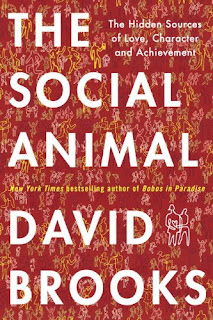
After reading my slam on David Brooks’s The Social Animal, Dylan had some objections:
“Other than the fact that it’s terribly, terribly written and completely expository (it makes the Emile, on which it is clearly modeled, look like an actual novel by comparison), what’s so “yikes” about the exact passage you excerpted? Can you really be such a HP&TMoR fan/transhumanist and also think that treating so-called “cognitive biases” as limitations to be overcome is tantamount to “unweaving the rainbow”? I agree that David Brooks’s (I know you’ll be crotchety about that, too, but it’s actually the older convention for non-plural possessives when the word ends with an S) broader conception of happiness and fulfillment seems pretty bankrupt, but I don’t see how this passage illustrates that.”
I want to start by clearing up one serious misconception: I do not object to the possessive of Brooks being Brooks’s, in fact, I vastly prefer it to Brooks’. Now on to the content.
One of my objections to Brooks is that ‘unweaving the rainbow’ is only ok if you know what you’re doing. Brooks tends to overstate the science he cites. The review today at The New York Times disapprovingly references this tendency as follows:
“Brooks seems willing to take seriously any claim by a cognitive scientist, however idiotic: for example, that since people need only 4,000 words for 98 percent of conversations, the reason they have vocabularies of 60,000 words is to impress and sort out potential mates.”
Brooks’s is willing to simplify complex phenomena past what the data and theories will bear. In my head, I was using the phrase ‘unweaving the rainbow’ to mean discarding what you can’t explain, refusing to acknowledge the whole for fear of revealing the weaknesses of the model. Now that I’ve gone to look at the origin of the phrase (an accusation by John Keats against Isaac Newton), I can see it’s not a good fit for my critique. Keats meant to indict Newton and other scientists for spoiling things with any attempt at explanation. A poor choice of phrase on my part.
My larger objection to Brooks, and the reason I would not put him in the HP&TMoR fan/transhumanist camp, is that he presents a great deal of data and doesn’t want to do much of anything with it. He goes over priming and other discoveries of evolutionary psychology to make it clear our rational minds have less control over us than we think. But, as far as I can tell, he doesn’t outline any measures we can take to wrest this power back.
This is a major contrast with the folks at Less Wrong, who turn explanation into tools for engineering. Brooks seems satisfied with describing some factors underlying the status quo. It’s interesting to know that holding a warm drink may spur me to have warmer feelings; it’s useful for me to grab a hot chocolate before I go to meet someone I know I habitually treat uncharitably.
As far as I can tell from reviews, Brooks’s characters narrate their psychology to themselves but never try to shape it. (I’m not planning to buy the book, given the reviews, but I’ll browse through it in the bookstore when I get back to campus and let you know if I’m wrong about this). The NYT hypothesized that Brooks’s avatars never act because they have no telos:
“Life, morality and politics are not science, but their improvement requires thought — not only thought about the most effective means of shaping people, which is Brooks’s concern, but thought about what our ends should be. Such questions don’t appeal to him, since they cannot be settled by empirical evidence of the kind he feels comfortable with.”
I don’t know if the reviewer’s complaint is accurate about Brooks’s beliefs, but the fact that this book keeps prompting this reaction strengthens my discomfort. Whether Brooks meant to or not, he seems to have written a sterile, simplistic book on human behavior that continues to turn people off. Fostering that distaste is a disservice to science, to transhumanism, and to the pursuit of human virtue.
P.S. Interested in thinking some more about problems of being human? Christian from The Thinking Grounds just posted part 2 of his series on the boundaries of Self and Body.

Previous Post

March 12, 2011
Housekeeping: Comments and Guest Posts
Next Post
March 14, 2011 The Body and Buggy Software
Browse Our Archives
Select a Category 7 Quick Takes Apologetics Atheism Book Conversion Debate Tactics Debates Epistemology/Philosophy Housekeeping Ideological Turing Test Marriage Morality in Practice Parsing Catholicism Possibly Heretical Radio Reviews/Recommendations Sequence Index Spiritual Practice Uncategorized
Select a Month April 2017 March 2017 January 2017 December 2016 September 2016 August 2016 July 2016 June 2016 May 2016 April 2016 March 2016 February 2016 January 2016 December 2015 November 2015 October 2015 September 2015 August 2015 July 2015 June 2015 May 2015 April 2015 March 2015 February 2015 January 2015 December 2014 November 2014 October 2014 September 2014 August 2014 July 2014 June 2014 May 2014 April 2014 March 2014 February 2014 January 2014 December 2013 November 2013 October 2013 September 2013 August 2013 July 2013 June 2013 May 2013 April 2013 March 2013 February 2013 January 2013 December 2012 November 2012 October 2012 September 2012 August 2012 July 2012 June 2012 May 2012 April 2012 March 2012 February 2012 January 2012 December 2011 November 2011 October 2011 September 2011 August 2011 July 2011 June 2011 May 2011 April 2011 March 2011 February 2011 January 2011 December 2010 November 2010 October 2010 September 2010 August 2010 July 2010 June 2010
Follow Us!
TAKE THE
Religious Wisdom Quiz
What is the shortest chapter in the Bible?
Select your answer to see how you score.
Psalm 117 Psalm 119 John 3 Proverbs 31
Related posts from Unequally Yoked



The Boring, Quiet Rituals That Sustain Us Spiritually

Starving Laypeople of Devotion in Church
TRENDING AT PATHEOS Catholic

Rejecting Doom: Christian Hope And Human Action
Christianity is a religion of hope. We are to have hope and...

It’s What Comes From Within Which Matters
One of the most difficult things for us to understand is why...

Why I Choose the Eucharist Over the Sermon
Choose the Eucharist, Not the Sermon What are we supposed to get...

5 Design Elements Found in Spiritually Rooted Homes
Putting Spirituality Into Home Decor Our homes are more than our living...

Credo: A Story of God Told with the...
About 10 years ago, I began to imagine a personal "Credo" that...

The Anatomy of Divine Revelation in Catholic Thought
The claim that God has made Himself known to human beings is...
view all Catholic blogs
Ad-Free & Subscriber Log-In Subscription Support
- About Us
- 2026 Calendar
- Videos
- Podcasts
- Library of World Religions
- Faith In Media Tracker
- Advertise With Us
- Write for Us
- Privacy Policy
- Terms of Service
- Do Not Sell My Data
- Contact Us
- Radiant Digital
- Manage Newsletter Subscriptions
- Unsubscribe From Notifications
- Sitemap
Copyright 2008-2026, Patheos. All rights reserved.
Subscription Support Ad-Free & Subscriber Log-In
Follow Patheos