
BuddhistCatholicContemplativeEvangelicalGeneral ChristianHinduJewishLatter-day SaintMuslimNew VisionsProgressive Christian
Beliefs
- Buddhist
- Catholic
- Contemplative
- Evangelical
- General Christian
- Hindu
- Jewish
- Latter-day Saint
- More Voices
- Muslim
- New Visions
- Pagan
- Progressive Christian
Topics
- Religion News
- Food and Religion
- Sports and Religion
- Religious Art
- Religious Music and Entertainment
- Religious Events
- History and Religion
- Style and Religion
- Politics and Religion
- Women in Religion
- Recreation Outdoors and Religion
- Business Finance and Religion
- Careers Workplace and Religion
- Education and Religion
- Family Parenting and Religion
- Health Fitness and Religion
- Home and Religion
- Relationships and Religion
- Technology and Religion
- Travel and Religion
Columnists
- Buddhist Columnists
- Business Finance and Religion Columnists
- Careers Workplace and Religion Columnists
- Catholic Columnists
- Contemplative Columnists
- Education and Religion Columnists
- Evangelists Columnists
- Family Parenting and Religion Columnists
- General Christian Columnists
- Health Fitness and Religion Columnists
- Hindu Columnists
- History and Religion Columnists
- Home and Religion Columnists
- Jewish Columnists
- More Voices Columnists
- Latter Day Columnists
- Muslim Columnists
- New Visions Columnists
- Nonreligious Columnists
- Pagan Columnists
- Politics and Religion Columnists
- Progressive Columnists
- Recreation Outdoors and Religion Columnists
- Relationships and Religion Columnists
- Religion News Columnists
- Religious Art Columnists
- Religious Events Columnists
- Religious Music and Entertainment Columnists
- Sports and Religion Columnists
- Style and Religion Columnists
- Technology and Religion Columnists
- Travel and Religion Columnists
- Women in Religion Columnists
Resource Library
- 2026 Calendar
- Library of World Religions
- The 100 Most Holy Places on Earth
- Patheos Answers
- Podcasts
- Videos
- Faith Leaders Database
- Anglican Episcopalian
- Bahai
- Baptist
- Buddhism
- Christianity
- Confucianism
- Eastern Orthodoxy
- Hinduism
- Holiness and Pentecostal
- ISKCON
- Islam
- Judaism
- Lutheran
- Methodist
- The Church of Jesus Christ of Latter-day Saints
- New Age
- Paganism
- Presbytarian and Reformed
- Protestantism
- Religion Behind the Scenes
- Roman Catholic
- Scientology
- Shia Islam
- Sikhism
- Sufism
- Sunni Islam
- Taoism
- Zen
- See all religions
Research Tools
 Ad-Free & Subscriber Log-In Subscription Support
Ad-Free & Subscriber Log-In Subscription Support
Follow Patheos 

- Trending:
- Forgiveness
- |
- Marriage
- |
- Consciousness
- |
- Death Penalty
- |
- Election
- |
- Halloween
 Unequally Yoked
- Home
- Catholic
- What Atheists and Republican Strategists Have in Common
What Atheists and Republican Strategists Have in Common
Last updated on: September 10, 2012 at 1:28 am by Leah Libresco
What Atheists and Republican Strategists Have in Common 2012-09-10T01:28:56-04:00 Leah Libresco
Patheos Explore the world's faith through different perspectives on religion and spirituality! Patheos has the views of the prevalent religions and spiritualities of the world.
I recently wrote a post (“The Perils of Decentralized Philosophy“) as a response to Friendly Atheist Hermant Mehta’s attempt to limit the definition of humanism to exclude the gunman who attacked a school board. I argued that atheists and humanists were hurt by a lack of community or sense of responsibility for other people who shared their beliefs. Commenter March Hare took issue with my argument, saying:
There is no need for atheists to band together in that way. It’s not like when a Jew does something all non-Hindus gather together to defend the action or denounce the non-Hinduism of the person. “He wasn’t a real non-Hindu, a real non-Hindu wouldn’t do that.”
The reason non-Hindus don’t unite in defense of a Jew as a fellow non-Hindu is because, whether they are Christians, Jains, or Jews, ‘non-Hindus’ belong to philosophical communities that carry more weight than ‘non-Hinduism.’ Non-Hinduism may be a definable set of people, but it’s not an interesting or compelling one. And, most of the time, neither is atheism. Although atheism may be a very important political category when dealing with church-state issues and creationism, it is pretty well near useless as a philosophical category.
Atheists belong to some other group, even if that group doesn’t have a well known name or tradition. Some atheists are nihilists, some are existentialist, and some are crazy, mixed up proponents of absolute moral law like me, but we all have actual beliefs to defend beyond our lack of belief in God. If you talk about atheists as having a primary loyalty to the philosophical category of athiesm, you’re going to run into trouble, just as a couple of prominent atheist blogs did this week.
John Loftus of Debunking Christianity posted an excerpt from one of his books which stated:
When Christians ask if I have taken the outsider test for my own “belief system,” I simply say “yes I have, that’s why I’m a non-believer.”
They’ll ask if I am equally skeptical of my skepticism, or whether I have subjected my non-belief to non-belief, or my disbelief to disbelief. These questions express double negatives. When re-translated they are asking me to abandon skepticism in favor of a gullible faith, for that’s the opposite of skepticism—something no thinker should do.
Either Loftus is a skeptic in the tradition of Sextus Empiricus and doesn’t really believe anything or being glib and/or disingenuous. But what the Christians are talking about when they ask him about his ‘belief system’ isn’t his skepticism– they want to know what he claims his skepticism reveals as true. What does Loftus think constitutes virtue? What is the goal of human life? Does it matter if we don’t know?
When atheists assail Christians for holes in their theology without ever revealing anything about our own metaphysics and ethics, I get flashbacks to the GOP strategy of cherrypicking budget items to discredit the Democratic budget proposal without ever revealing a full budget proposal of their own.
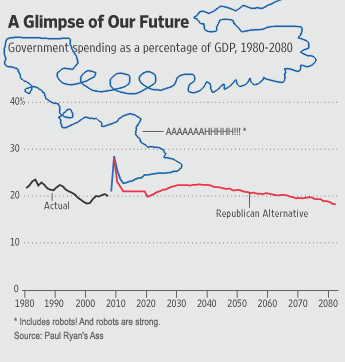
When atheists don’t talk about their own philosophy or pretend they don’t have one, we are walking away from some of the tough discussions we need to have. We’re turning a blind eye to some troubling philosophies that are entirely compatible with atheism.
That’s why I disagree with some comments Hermant Mehta made at Friendly Atheist while explaining why he’s not troubled by divisions within atheism:
We’re not going to be unified when our disbelief in any gods is the only common thread binding us. It’s fine if we support one group or another or none at all. I think we all benefit when we can be counted in some way, but if you choose not to do that via a particular group, so be it.
[…]
Diversity in what we call ourselves, and who we vote for, and where we stand on morality just shows we’re not a homogeneous bunch. That’s a good thing.
Diversity in opinions on morality is NOT an intrinsic good. I’ve known atheists who were nihilists and/or relativists who had an incredible disregard for the suffering of others as a consequence of their philosophies. I don’t talk to a friend who holds these beliefs and feel reassured that I’m part of a vibrant, diverse community of atheist thought– I want to convince them to change their mind because I think their philosophy is false and is likely to hurt my friend and the other people in their life.
I’m glad bloggers like Loftus and Mehta are trying to curb some of the political excesses of the Religious Right, particularly when the evangelical wings try to compromise science education, but that can only be a part of an atheist agenda. If our philosophies are true and compelling and helpful, we ought to discuss our ethics and metaphysics openly and enthusiastically, even if that opens us up to inter-atheist fights. Papering over important moral differences is a good strategy for building political coalitions, but a bad habit for philosophers.

Previous Post

December 31, 2010
Questions for Atheists: Does Moral Law Exist in Itself?
Next Post
January 2, 2011 Throwing Ideas into the Arena
Browse Our Archives
Select a Category 7 Quick Takes Apologetics Atheism Book Conversion Debate Tactics Debates Epistemology/Philosophy Housekeeping Ideological Turing Test Marriage Morality in Practice Parsing Catholicism Possibly Heretical Radio Reviews/Recommendations Sequence Index Spiritual Practice Uncategorized
Select a Month April 2017 March 2017 January 2017 December 2016 September 2016 August 2016 July 2016 June 2016 May 2016 April 2016 March 2016 February 2016 January 2016 December 2015 November 2015 October 2015 September 2015 August 2015 July 2015 June 2015 May 2015 April 2015 March 2015 February 2015 January 2015 December 2014 November 2014 October 2014 September 2014 August 2014 July 2014 June 2014 May 2014 April 2014 March 2014 February 2014 January 2014 December 2013 November 2013 October 2013 September 2013 August 2013 July 2013 June 2013 May 2013 April 2013 March 2013 February 2013 January 2013 December 2012 November 2012 October 2012 September 2012 August 2012 July 2012 June 2012 May 2012 April 2012 March 2012 February 2012 January 2012 December 2011 November 2011 October 2011 September 2011 August 2011 July 2011 June 2011 May 2011 April 2011 March 2011 February 2011 January 2011 December 2010 November 2010 October 2010 September 2010 August 2010 July 2010 June 2010
Follow Us!
TAKE THE
Religious Wisdom Quiz
I am a coat of many colors that sparked jealousy among brothers. What am I?
Select your answer to see how you score.
A royal garment Joseph's coat The priests robe Jacob's robe
Related posts from Unequally Yoked

Starting Conversations During Francis's Visit

Desiring Abundance of Life, Not Just Absence of...

Why Not Refer to ISIS by an Epithet?

Life Lessons that Can't be Taught at College's...
TRENDING AT PATHEOS Catholic

Rejecting Doom: Christian Hope And Human Action
Christianity is a religion of hope. We are to have hope and...

It’s What Comes From Within Which Matters
One of the most difficult things for us to understand is why...

Why I Choose the Eucharist Over the Sermon
Choose the Eucharist, Not the Sermon What are we supposed to get...

5 Design Elements Found in Spiritually Rooted Homes
Putting Spirituality Into Home Decor Our homes are more than our living...

Credo: A Story of God Told with the...
About 10 years ago, I began to imagine a personal "Credo" that...

The Anatomy of Divine Revelation in Catholic Thought
The claim that God has made Himself known to human beings is...
view all Catholic blogs
Ad-Free & Subscriber Log-In Subscription Support
- About Us
- 2026 Calendar
- Videos
- Podcasts
- Library of World Religions
- Faith In Media Tracker
- Advertise With Us
- Write for Us
- Privacy Policy
- Terms of Service
- Do Not Sell My Data
- Contact Us
- Radiant Digital
- Manage Newsletter Subscriptions
- Unsubscribe From Notifications
- Sitemap
Copyright 2008-2026, Patheos. All rights reserved.
Subscription Support Ad-Free & Subscriber Log-In
Follow Patheos