
BuddhistCatholicContemplativeEvangelicalGeneral ChristianHinduJewishLatter-day SaintMuslimNew VisionsProgressive Christian
Beliefs
- Buddhist
- Catholic
- Contemplative
- Evangelical
- General Christian
- Hindu
- Jewish
- Latter-day Saint
- More Voices
- Muslim
- New Visions
- Pagan
- Progressive Christian
Topics
- Religion News
- Food and Religion
- Sports and Religion
- Religious Art
- Religious Music and Entertainment
- Religious Events
- History and Religion
- Style and Religion
- Politics and Religion
- Women in Religion
- Recreation Outdoors and Religion
- Business Finance and Religion
- Careers Workplace and Religion
- Education and Religion
- Family Parenting and Religion
- Health Fitness and Religion
- Home and Religion
- Relationships and Religion
- Technology and Religion
- Travel and Religion
Columnists
- Buddhist Columnists
- Business Finance and Religion Columnists
- Careers Workplace and Religion Columnists
- Catholic Columnists
- Contemplative Columnists
- Education and Religion Columnists
- Evangelists Columnists
- Family Parenting and Religion Columnists
- General Christian Columnists
- Health Fitness and Religion Columnists
- Hindu Columnists
- History and Religion Columnists
- Home and Religion Columnists
- Jewish Columnists
- More Voices Columnists
- Latter Day Columnists
- Muslim Columnists
- New Visions Columnists
- Nonreligious Columnists
- Pagan Columnists
- Politics and Religion Columnists
- Progressive Columnists
- Recreation Outdoors and Religion Columnists
- Relationships and Religion Columnists
- Religion News Columnists
- Religious Art Columnists
- Religious Events Columnists
- Religious Music and Entertainment Columnists
- Sports and Religion Columnists
- Style and Religion Columnists
- Technology and Religion Columnists
- Travel and Religion Columnists
- Women in Religion Columnists
Resource Library
- 2026 Calendar
- Library of World Religions
- The 100 Most Holy Places on Earth
- Patheos Answers
- Podcasts
- Videos
- Faith Leaders Database
- Anglican Episcopalian
- Bahai
- Baptist
- Buddhism
- Christianity
- Confucianism
- Eastern Orthodoxy
- Hinduism
- Holiness and Pentecostal
- ISKCON
- Islam
- Judaism
- Lutheran
- Methodist
- The Church of Jesus Christ of Latter-day Saints
- New Age
- Paganism
- Presbytarian and Reformed
- Protestantism
- Religion Behind the Scenes
- Roman Catholic
- Scientology
- Shia Islam
- Sikhism
- Sufism
- Sunni Islam
- Taoism
- Zen
- See all religions
Research Tools
 Ad-Free & Subscriber Log-In Subscription Support
Ad-Free & Subscriber Log-In Subscription Support
Follow Patheos 

- Trending:
- Forgiveness
- |
- Marriage
- |
- Consciousness
- |
- Death Penalty
- |
- Election
- |
- Halloween
 Unequally Yoked
- Home
- Catholic
- Questions for Atheists:Why is There Evil? (Part 1)
Questions for Atheists:Why is There Evil? (Part 1)
Last updated on: September 6, 2012 at 12:19 am by Leah Libresco
Questions for Atheists:Why is There Evil? (Part 1) 2012-09-06T00:19:42-04:00 Leah Libresco
Patheos Explore the world's faith through different perspectives on religion and spirituality! Patheos has the views of the prevalent religions and spiritualities of the world.
This post is part of a series responding to Michael Egnor’s Eight Questions for New Atheists. You can read through all my answers to Egnor’s questions.
I’ve not really even been that bothered by the problem of theodicy, so, unfortunately, I can’t make good use of what I imagine Egnor though would be the most attractive question for atheists. I think most discussions of evil/theodicy can be split into two separate categories: evil that befalls people and evil that is committed by people, so I’ll tackle this question in two parts.
Evil that happens to people
This category includes harm that befalls people as a result of natural accident (earthquake, illness, etc) and deliberate action by others. This is the ‘why bad things happen to good people’ question.
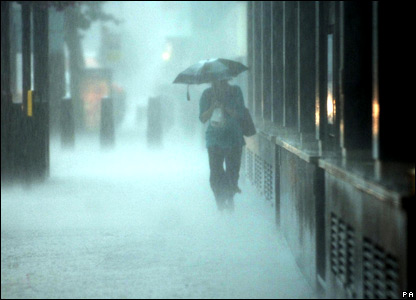
For an atheist the answer is easy: there is no mechanism by which we can escape the logical or physical consequences of the actions of others or of nature. If it begins to rain, we will get wet, regardless of whether we deserve it or how urgent it was to stay dry. There is no way to negotiate with a hurricane, and, although you may try to reason with an enemy soldier, once she fires her gun, there is no arguing with her bullet. As long as there is the possibility of naturally occurring harm and/or deliberately engineered harm by others and if we do not have the superhuman foresight and power that would be necessary to be able to avoid these occurrences, undeserved evils will occur.
I think this exact explanation is available to religious people as well. Even someone who believes in occasional miracles would be hard-pressed to argue for a world of constant intercession to protect us from the consequences of other people’s actions. You quickly end up undermining the entire principle of causality and with it, the possibility of reasoning about our own actions and making reasonable choices. (I discuss this in more detail in my answer to Why is there Regularity/Law in Nature). This line of argument works as well for theists as for atheists; C.S. Lewis makes it very well in Mere Christianity.
There is no reason for anyone, theist or atheist, to be surprised or betrayed by the fact that nature can do us harm. Given our limited knowledge of the scope of our actions, we should be similarly unsurprised that other people do us unintentional or unwitting harm. The only possible avenue of objection is to the fact that people do intentional harm to others. We may justifiably ask why that particular evil exists.
Part Two of this answer, addressing Evil Chosen by People is now up!

Previous Post

November 28, 2010
Marriage, Contract, and Restraint
Next Post
December 2, 2010 Questions for Atheists: Why is there Evil (Part 2)
Browse Our Archives
Select a Category 7 Quick Takes Apologetics Atheism Book Conversion Debate Tactics Debates Epistemology/Philosophy Housekeeping Ideological Turing Test Marriage Morality in Practice Parsing Catholicism Possibly Heretical Radio Reviews/Recommendations Sequence Index Spiritual Practice Uncategorized
Select a Month April 2017 March 2017 January 2017 December 2016 September 2016 August 2016 July 2016 June 2016 May 2016 April 2016 March 2016 February 2016 January 2016 December 2015 November 2015 October 2015 September 2015 August 2015 July 2015 June 2015 May 2015 April 2015 March 2015 February 2015 January 2015 December 2014 November 2014 October 2014 September 2014 August 2014 July 2014 June 2014 May 2014 April 2014 March 2014 February 2014 January 2014 December 2013 November 2013 October 2013 September 2013 August 2013 July 2013 June 2013 May 2013 April 2013 March 2013 February 2013 January 2013 December 2012 November 2012 October 2012 September 2012 August 2012 July 2012 June 2012 May 2012 April 2012 March 2012 February 2012 January 2012 December 2011 November 2011 October 2011 September 2011 August 2011 July 2011 June 2011 May 2011 April 2011 March 2011 February 2011 January 2011 December 2010 November 2010 October 2010 September 2010 August 2010 July 2010 June 2010
Follow Us!
TAKE THE
Religious Wisdom Quiz
What did Jesus do just before raising Lazarus from the dead?
Select your answer to see how you score.
He wept He prayed He preached He climbed a hill
Related posts from Unequally Yoked

Rational Faith: More working hypothesis than logical proof

Starting Conversations During Francis's Visit

Pulling Off Casual Proselytization

Merry Old Christmas Day + Reflections on Modern...
TRENDING AT PATHEOS Catholic

Rejecting Doom: Christian Hope And Human Action
Christianity is a religion of hope. We are to have hope and...

It’s What Comes From Within Which Matters
One of the most difficult things for us to understand is why...

Why I Choose the Eucharist Over the Sermon
Choose the Eucharist, Not the Sermon What are we supposed to get...

5 Design Elements Found in Spiritually Rooted Homes
Putting Spirituality Into Home Decor Our homes are more than our living...

Credo: A Story of God Told with the...
About 10 years ago, I began to imagine a personal "Credo" that...

The Anatomy of Divine Revelation in Catholic Thought
The claim that God has made Himself known to human beings is...
view all Catholic blogs
Ad-Free & Subscriber Log-In Subscription Support
- About Us
- 2026 Calendar
- Videos
- Podcasts
- Library of World Religions
- Faith In Media Tracker
- Advertise With Us
- Write for Us
- Privacy Policy
- Terms of Service
- Do Not Sell My Data
- Contact Us
- Radiant Digital
- Manage Newsletter Subscriptions
- Unsubscribe From Notifications
- Sitemap
Copyright 2008-2026, Patheos. All rights reserved.
Subscription Support Ad-Free & Subscriber Log-In
Follow Patheos