
BuddhistCatholicContemplativeEvangelicalGeneral ChristianHinduJewishLatter-day SaintMuslimNew VisionsProgressive Christian
Beliefs
- Buddhist
- Catholic
- Contemplative
- Evangelical
- General Christian
- Hindu
- Jewish
- Latter-day Saint
- More Voices
- Muslim
- New Visions
- Pagan
- Progressive Christian
Topics
- Religion News
- Food and Religion
- Sports and Religion
- Religious Art
- Religious Music and Entertainment
- Religious Events
- History and Religion
- Style and Religion
- Politics and Religion
- Women in Religion
- Recreation Outdoors and Religion
- Business Finance and Religion
- Careers Workplace and Religion
- Education and Religion
- Family Parenting and Religion
- Health Fitness and Religion
- Home and Religion
- Relationships and Religion
- Technology and Religion
- Travel and Religion
Columnists
- Buddhist Columnists
- Business Finance and Religion Columnists
- Careers Workplace and Religion Columnists
- Catholic Columnists
- Contemplative Columnists
- Education and Religion Columnists
- Evangelists Columnists
- Family Parenting and Religion Columnists
- General Christian Columnists
- Health Fitness and Religion Columnists
- Hindu Columnists
- History and Religion Columnists
- Home and Religion Columnists
- Jewish Columnists
- More Voices Columnists
- Latter Day Columnists
- Muslim Columnists
- New Visions Columnists
- Nonreligious Columnists
- Pagan Columnists
- Politics and Religion Columnists
- Progressive Columnists
- Recreation Outdoors and Religion Columnists
- Relationships and Religion Columnists
- Religion News Columnists
- Religious Art Columnists
- Religious Events Columnists
- Religious Music and Entertainment Columnists
- Sports and Religion Columnists
- Style and Religion Columnists
- Technology and Religion Columnists
- Travel and Religion Columnists
- Women in Religion Columnists
Resource Library
- 2026 Calendar
- Library of World Religions
- The 100 Most Holy Places on Earth
- Patheos Answers
- Podcasts
- Videos
- Faith Leaders Database
- Anglican Episcopalian
- Bahai
- Baptist
- Buddhism
- Christianity
- Confucianism
- Eastern Orthodoxy
- Hinduism
- Holiness and Pentecostal
- ISKCON
- Islam
- Judaism
- Lutheran
- Methodist
- The Church of Jesus Christ of Latter-day Saints
- New Age
- Paganism
- Presbytarian and Reformed
- Protestantism
- Religion Behind the Scenes
- Roman Catholic
- Scientology
- Shia Islam
- Sikhism
- Sufism
- Sunni Islam
- Taoism
- Zen
- See all religions
Research Tools
 Ad-Free & Subscriber Log-In Subscription Support
Ad-Free & Subscriber Log-In Subscription Support
Follow Patheos 

- Trending:
- Forgiveness
- |
- Marriage
- |
- Consciousness
- |
- Death Penalty
- |
- Election
- |
- Halloween
 Unequally Yoked
- Home
- Catholic
- Are Atheists a ‘Side?’
Are Atheists a ‘Side?’
Last updated on: September 3, 2012 at 12:21 pm by Leah Libresco
Are Atheists a ‘Side?’ 2012-09-03T12:21:22-04:00 Leah Libresco
Patheos Explore the world's faith through different perspectives on religion and spirituality! Patheos has the views of the prevalent religions and spiritualities of the world.
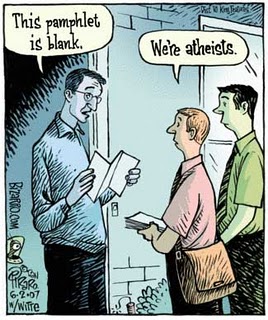
After reading through my disagreement with John Loftus over appropriate tactics for debunk religion, Dom had a few questions:
If atheism, in and of itself, is a fairly slim and uninteresting belief (which, as an atheist, I think it is), and the interesting bit comes from the positive framework you build on top of your atheism, then what does it actually mean to talk about any atheist “side” to this debate that defines itself positively rather than negatively, as furthering an intellectual position rather than trying to tear down the other side’s because you think it’s dangerous? The only thing that really seems to unite you and Loftus in any meaningful way is that you both find Christianity dangerous for similar reasons, which is totally fine, but doesn’t strike me as enough to define an “atheist movement” or “atheist side of the debate”. When you talk about being disappointed at how Loftus’ questions represent “our side”, are you talking about anything beyond “people who intellectually oppose themselves to Christianity”? If so, given the relative lack of *inherent content to atheism, how substantially can that “side” be defined and still be identified by the label “atheist”?*
[Dom had more to say, well worth reading, in the thread]
He’s got a fair point. Almost nothing of interest is a necessary consequence of atheism. However, I still think that there are ways to be an atheist badly that go beyond simply misstating beliefs, lying, or failing to prepare for debate. Let me lay out a couple ways to go wrong:
Failures of Fact

Some ideas are common spurs that drive people to atheism, even if they are not necessary consequences of not believing in God (empiricism, skepticism, a buoyant enthusiasm for the sciences, etc). These ideas are so common that if you were to encounter an atheist who wasn’t convinced by the evidence for evolution or the importance of vaccines.
These still aren’t consequences of atheism or revelations reserved to atheists. These are, to the best of my knowledge, facts, and it happens to be the case that atheists are more likely than most to understand them, since they don’t run counter to any of the tenets of atheism. Contrast this with the dissonance and discomfort felt by biblical literalists when they confront these facts.
When atheists aren’t on the science side of an issue, I think it’s reasonable for the rest of us to get tetchy and talk about them letting the side down.
The beliefs described above are straightforward and (for those of us who pay attention to evidence) so reasonable as to be boring. Consider, instead, an interesting schism on the atheist side between relativists and absolutists.
Failures of Courage

There are beliefs that are fairly common among some atheists that are never claimed or defended as intrinsic parts of atheist philosophies.
Richard Dawkin’s contention that bringing your children up as religious constitutes child abuse is rooted in an understanding of morality as universal and urgent. He does not believe that he ought to be epistemologically modest about blatant abuse, and he does not believe that the facts that prove that it is abuse vary across cultures. In this understanding of morality, Dawkins, Catholicism, and I are all in agreement, even if we all three of us differ in our understanding of what constitutes abuse.
Atheists of this stripe do need to put up a defense/explanation of our own views, even if it introduces splits in our side. We think we’ve got a better grasp of Truth than you, and we want you to come aboard. If you’re making this kind of argument implicitly and not pairing it with a positive statement about your precepts, you’re engaging in lazy argumentation – blasting your opponent on his weak side while refusing to reveal your full argument for the sake of avoiding criticism or controversy. Definitely a case of letting the side down.
Failures of Vision
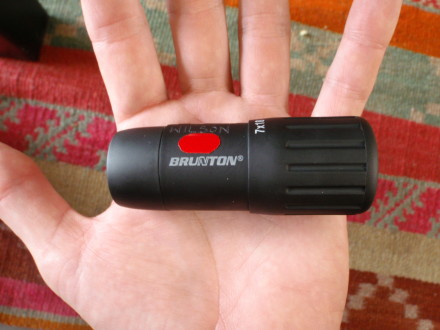 It’s really hard to find an image that illustrates ‘limited vision’
so here is the best result I could turn up for ‘small scope’
Atheists who want to pitch people on abandoning Christianity or religion generally but don’t want them to switch to anything in particular and don’t want to present an alternate idea of morality are also letting the side down, in my view.
They are opening the door to nihilism by only seeking to destroy, rather than to rebuild. If they believe that morality is important and that people who have had their grounding for morality shattered can easily connect with its actual precepts and grounding, I think they are being overly optimistic.
If they believe that the vision of morality put forward by a particular religion is wrong, but they don’t have anything to present as ‘right’ or don’t believe that any morality is really more ‘right’ than another, I don’t know why they bothered to attack religion in the first place. This relativist view undermines the very concept of morality and can be more destructive and harmful than the religion being debunked.

Previous Post

November 12, 2010
7 Quick Takes (11/12/10).
Next Post
November 15, 2010 Update on Glee, Gays, and in-Groups
Browse Our Archives
Select a Category 7 Quick Takes Apologetics Atheism Book Conversion Debate Tactics Debates Epistemology/Philosophy Housekeeping Ideological Turing Test Marriage Morality in Practice Parsing Catholicism Possibly Heretical Radio Reviews/Recommendations Sequence Index Spiritual Practice Uncategorized
Select a Month April 2017 March 2017 January 2017 December 2016 September 2016 August 2016 July 2016 June 2016 May 2016 April 2016 March 2016 February 2016 January 2016 December 2015 November 2015 October 2015 September 2015 August 2015 July 2015 June 2015 May 2015 April 2015 March 2015 February 2015 January 2015 December 2014 November 2014 October 2014 September 2014 August 2014 July 2014 June 2014 May 2014 April 2014 March 2014 February 2014 January 2014 December 2013 November 2013 October 2013 September 2013 August 2013 July 2013 June 2013 May 2013 April 2013 March 2013 February 2013 January 2013 December 2012 November 2012 October 2012 September 2012 August 2012 July 2012 June 2012 May 2012 April 2012 March 2012 February 2012 January 2012 December 2011 November 2011 October 2011 September 2011 August 2011 July 2011 June 2011 May 2011 April 2011 March 2011 February 2011 January 2011 December 2010 November 2010 October 2010 September 2010 August 2010 July 2010 June 2010
Follow Us!
TAKE THE
Religious Wisdom Quiz
Which book is written almost completely as poetry?
Select your answer to see how you score.
Jeremiah Lamentations Isaiah Ezra
Related posts from Unequally Yoked

And You Shall Know the Free Thinkers By...

What's the Difference between Forgiveness and Self-Deception?

In the Moral Landscape, There Still Be Dragons

The Uncharity of Ideological Containment
TRENDING AT PATHEOS Catholic

Rejecting Doom: Christian Hope And Human Action
Christianity is a religion of hope. We are to have hope and...

It’s What Comes From Within Which Matters
One of the most difficult things for us to understand is why...

Why I Choose the Eucharist Over the Sermon
Choose the Eucharist, Not the Sermon What are we supposed to get...

5 Design Elements Found in Spiritually Rooted Homes
Putting Spirituality Into Home Decor Our homes are more than our living...

Credo: A Story of God Told with the...
About 10 years ago, I began to imagine a personal "Credo" that...

The Anatomy of Divine Revelation in Catholic Thought
The claim that God has made Himself known to human beings is...
view all Catholic blogs
Ad-Free & Subscriber Log-In Subscription Support
- About Us
- 2026 Calendar
- Videos
- Podcasts
- Library of World Religions
- Faith In Media Tracker
- Advertise With Us
- Write for Us
- Privacy Policy
- Terms of Service
- Do Not Sell My Data
- Contact Us
- Radiant Digital
- Manage Newsletter Subscriptions
- Unsubscribe From Notifications
- Sitemap
Copyright 2008-2026, Patheos. All rights reserved.
Subscription Support Ad-Free & Subscriber Log-In
Follow Patheos