
BuddhistCatholicContemplativeEvangelicalGeneral ChristianHinduJewishLatter-day SaintMuslimNew VisionsProgressive Christian
Beliefs
- Buddhist
- Catholic
- Contemplative
- Evangelical
- General Christian
- Hindu
- Jewish
- Latter-day Saint
- More Voices
- Muslim
- New Visions
- Pagan
- Progressive Christian
Topics
- Religion News
- Food and Religion
- Sports and Religion
- Religious Art
- Religious Music and Entertainment
- Religious Events
- History and Religion
- Style and Religion
- Politics and Religion
- Women in Religion
- Recreation Outdoors and Religion
- Business Finance and Religion
- Careers Workplace and Religion
- Education and Religion
- Family Parenting and Religion
- Health Fitness and Religion
- Home and Religion
- Relationships and Religion
- Technology and Religion
- Travel and Religion
Columnists
- Buddhist Columnists
- Business Finance and Religion Columnists
- Careers Workplace and Religion Columnists
- Catholic Columnists
- Contemplative Columnists
- Education and Religion Columnists
- Evangelists Columnists
- Family Parenting and Religion Columnists
- General Christian Columnists
- Health Fitness and Religion Columnists
- Hindu Columnists
- History and Religion Columnists
- Home and Religion Columnists
- Jewish Columnists
- More Voices Columnists
- Latter Day Columnists
- Muslim Columnists
- New Visions Columnists
- Nonreligious Columnists
- Pagan Columnists
- Politics and Religion Columnists
- Progressive Columnists
- Recreation Outdoors and Religion Columnists
- Relationships and Religion Columnists
- Religion News Columnists
- Religious Art Columnists
- Religious Events Columnists
- Religious Music and Entertainment Columnists
- Sports and Religion Columnists
- Style and Religion Columnists
- Technology and Religion Columnists
- Travel and Religion Columnists
- Women in Religion Columnists
Resource Library
- 2026 Calendar
- Library of World Religions
- The 100 Most Holy Places on Earth
- Patheos Answers
- Podcasts
- Videos
- Faith Leaders Database
- Anglican Episcopalian
- Bahai
- Baptist
- Buddhism
- Christianity
- Confucianism
- Eastern Orthodoxy
- Hinduism
- Holiness and Pentecostal
- ISKCON
- Islam
- Judaism
- Lutheran
- Methodist
- The Church of Jesus Christ of Latter-day Saints
- New Age
- Paganism
- Presbytarian and Reformed
- Protestantism
- Religion Behind the Scenes
- Roman Catholic
- Scientology
- Shia Islam
- Sikhism
- Sufism
- Sunni Islam
- Taoism
- Zen
- See all religions
Research Tools
 Ad-Free & Subscriber Log-In Subscription Support
Ad-Free & Subscriber Log-In Subscription Support
Follow Patheos 

- Trending:
- Forgiveness
- |
- Marriage
- |
- Consciousness
- |
- Death Penalty
- |
- Election
- |
- Halloween
 Unequally Yoked
- Home
- Catholic
- Optimized and Arbitrary
Optimized and Arbitrary
Last updated on: April 10, 2012 at 9:19 pm by Leah Libresco
Optimized and Arbitrary 2012-04-10T21:19:33-04:00 Leah Libresco
Patheos Explore the world's faith through different perspectives on religion and spirituality! Patheos has the views of the prevalent religions and spiritualities of the world.
This is one of a series of posts about math and morality. I’ll be getting back to the series soon, but I’m currently pausing to answer some of the questions that have been accumulating.
In comments on “On What Evidence?” Crowhill and Charles got into a disagreement about human morality and evolution that I exerpt below.
Crowhill:
Does there have to be some sort of “objective morality” for a dog to know how he’s supposed to behave towards other dogs? Isn’t it entirely possible that dogs simply developed some set of arbitrary social rules that happened to work decently well for them?
Why can’t something similar be true of humans? Why couldn’t we have developed some set of social rules that helped our species survive?
Charles:
You a fatal flaw when you discuss social behavior evolving or ‘developing’ – first you use the word ‘develop’ as if to make it insignificant, second you repeatedly say that they are arbitrary, etc…
If rules exist within a social group because they helped the survival of a social species – they are ANYTHING but arbitrary!
I think it’s actually both reasonable and important to use the term arbitrary to describe evolutionarily guided social systems, but to explain why, I need to switch mathematical subfields to game theory. Game theory can be loosely summarized as the study of how to make choices. Researchers talk about strategies to adopt to try and get the best payoff possible and also characterize common snarls and situations.
A Nash equilibrium occurs when, for each player, the current outcome is optimal assuming that no other player changes his/her strategy. This means that no player has an incentive to change their behavior. A Nash Equilibrium is absolutely not a guarantee that the current state is actually the best for all concerned.
The best known example of a game where the Nash Equilibrium solution sucks and the best solution is unstable is the Prisoner’s Dilemma (click the link for explanation if you’re not familiar). If both players keep mum, either benefits from changing strategy. In the case that they both rat, neither benefits from changing strategy. Even though both being silent is clearly preferable to both snitching, there’s no way to escape from a Nash Equilibrium without finding a way to coordinate action.*
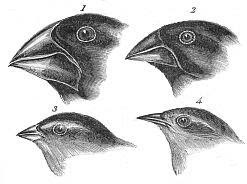
I think it’s reasonable to assume that social behavior represents, if not a perfect Nash Equilibrium, at least something close to one. In that respect, it certainly is not arbitrary. However, I would bet that there are a variety of sets of social norms that are stable enough to be close-enough Nash Equilibria, just like our current situation. This certainly seems to be the case in other aspects of evolution. Think of Darwin’s finches. Each beak configuration is advantageous and distinct, but the choice of which stable configuration prevailed was pretty much arbitrary.
If we thought the structure of our society carried as little moral weight as the structure of a bird’s beak, there would be no reason to be troubled by the fact that some of the values or practices of our society was arbitrary. However, it’s easy to imagine plenty of stable societies that could be construed as Nash Equilibria but which we find to be abhorrent. This is another nail in the coffin of the idea that evolutionary fitness is a valid way to defend our actions. We need to be aware of our social system as arbitrary at least in part and be attentive to ways it ought to be reformed.
*Unrelated to larger point about morality but still interesting:
A lot of effort is put into finding ways to pull people out of unpleasant Nash Equilibria. One of my favorites is the National Popular Vote campaign which aims to do away with the Electoral College. Although each state can decide to apportion it’s electoral votes however it wants, no state has an impetus to deviate if it will mean less attention from politicians. What NPV does is get states to sign on to legislation that promises their electoral votes to the winner of the national popular vote provided enough states have also passed the legislation (it goes into effect when states with electoral votes totaling 270 sign on). The current tally is 6 states and 73 electoral votes.

Previous Post

August 4, 2010
On what evidence?
Next Post
August 5, 2010 Math and Morality Index
Browse Our Archives
Select a Category 7 Quick Takes Apologetics Atheism Book Conversion Debate Tactics Debates Epistemology/Philosophy Housekeeping Ideological Turing Test Marriage Morality in Practice Parsing Catholicism Possibly Heretical Radio Reviews/Recommendations Sequence Index Spiritual Practice Uncategorized
Select a Month April 2017 March 2017 January 2017 December 2016 September 2016 August 2016 July 2016 June 2016 May 2016 April 2016 March 2016 February 2016 January 2016 December 2015 November 2015 October 2015 September 2015 August 2015 July 2015 June 2015 May 2015 April 2015 March 2015 February 2015 January 2015 December 2014 November 2014 October 2014 September 2014 August 2014 July 2014 June 2014 May 2014 April 2014 March 2014 February 2014 January 2014 December 2013 November 2013 October 2013 September 2013 August 2013 July 2013 June 2013 May 2013 April 2013 March 2013 February 2013 January 2013 December 2012 November 2012 October 2012 September 2012 August 2012 July 2012 June 2012 May 2012 April 2012 March 2012 February 2012 January 2012 December 2011 November 2011 October 2011 September 2011 August 2011 July 2011 June 2011 May 2011 April 2011 March 2011 February 2011 January 2011 December 2010 November 2010 October 2010 September 2010 August 2010 July 2010 June 2010
Follow Us!
TAKE THE
Religious Wisdom Quiz
Where does Scripture say, "do not let the sun go down on your anger"?
Select your answer to see how you score.
Genesis Proverbs Ephesians Luke
Related posts from Unequally Yoked

Rational Faith: More working hypothesis than logical proof

Life Lessons that Can't be Taught at College's...

Books that Change the Way You Think [Radio...

Your religion... is it bigger than a breadbox?
TRENDING AT PATHEOS Catholic

Rejecting Doom: Christian Hope And Human Action
Christianity is a religion of hope. We are to have hope and...

It’s What Comes From Within Which Matters
One of the most difficult things for us to understand is why...

Why I Choose the Eucharist Over the Sermon
Choose the Eucharist, Not the Sermon What are we supposed to get...

5 Design Elements Found in Spiritually Rooted Homes
Putting Spirituality Into Home Decor Our homes are more than our living...

Credo: A Story of God Told with the...
About 10 years ago, I began to imagine a personal "Credo" that...

The Anatomy of Divine Revelation in Catholic Thought
The claim that God has made Himself known to human beings is...
view all Catholic blogs
Ad-Free & Subscriber Log-In Subscription Support
- About Us
- 2026 Calendar
- Videos
- Podcasts
- Library of World Religions
- Faith In Media Tracker
- Advertise With Us
- Write for Us
- Privacy Policy
- Terms of Service
- Do Not Sell My Data
- Contact Us
- Radiant Digital
- Manage Newsletter Subscriptions
- Unsubscribe From Notifications
- Sitemap
Copyright 2008-2026, Patheos. All rights reserved.
Subscription Support Ad-Free & Subscriber Log-In
Follow Patheos