
BuddhistCatholicContemplativeEvangelicalGeneral ChristianHinduJewishLatter-day SaintMuslimNew VisionsProgressive Christian
Beliefs
- Buddhist
- Catholic
- Contemplative
- Evangelical
- General Christian
- Hindu
- Jewish
- Latter-day Saint
- More Voices
- Muslim
- New Visions
- Pagan
- Progressive Christian
Topics
- Religion News
- Food and Religion
- Sports and Religion
- Religious Art
- Religious Music and Entertainment
- Religious Events
- History and Religion
- Style and Religion
- Politics and Religion
- Women in Religion
- Recreation Outdoors and Religion
- Business Finance and Religion
- Careers Workplace and Religion
- Education and Religion
- Family Parenting and Religion
- Health Fitness and Religion
- Home and Religion
- Relationships and Religion
- Technology and Religion
- Travel and Religion
Columnists
- Buddhist Columnists
- Business Finance and Religion Columnists
- Careers Workplace and Religion Columnists
- Catholic Columnists
- Contemplative Columnists
- Education and Religion Columnists
- Evangelists Columnists
- Family Parenting and Religion Columnists
- General Christian Columnists
- Health Fitness and Religion Columnists
- Hindu Columnists
- History and Religion Columnists
- Home and Religion Columnists
- Jewish Columnists
- More Voices Columnists
- Latter Day Columnists
- Muslim Columnists
- New Visions Columnists
- Nonreligious Columnists
- Pagan Columnists
- Politics and Religion Columnists
- Progressive Columnists
- Recreation Outdoors and Religion Columnists
- Relationships and Religion Columnists
- Religion News Columnists
- Religious Art Columnists
- Religious Events Columnists
- Religious Music and Entertainment Columnists
- Sports and Religion Columnists
- Style and Religion Columnists
- Technology and Religion Columnists
- Travel and Religion Columnists
- Women in Religion Columnists
Resource Library
- 2026 Calendar
- Library of World Religions
- The 100 Most Holy Places on Earth
- Patheos Answers
- Podcasts
- Videos
- Faith Leaders Database
- Anglican Episcopalian
- Bahai
- Baptist
- Buddhism
- Christianity
- Confucianism
- Eastern Orthodoxy
- Hinduism
- Holiness and Pentecostal
- ISKCON
- Islam
- Judaism
- Lutheran
- Methodist
- The Church of Jesus Christ of Latter-day Saints
- New Age
- Paganism
- Presbytarian and Reformed
- Protestantism
- Religion Behind the Scenes
- Roman Catholic
- Scientology
- Shia Islam
- Sikhism
- Sufism
- Sunni Islam
- Taoism
- Zen
- See all religions
Research Tools
 Ad-Free & Subscriber Log-In Subscription Support
Ad-Free & Subscriber Log-In Subscription Support
Follow Patheos 

- Trending:
- Forgiveness
- |
- Marriage
- |
- Consciousness
- |
- Death Penalty
- |
- Election
- |
- Halloween

- Home
- Progressive Christian
- The Truth About “Homosexuality” in 1 Corinthians 6:9
The Truth About “Homosexuality” in 1 Corinthians 6:9
Last updated on: January 18, 2024 at 3:55 pm by Eric Scot English
The Truth About “Homosexuality” in 1 Corinthians 6:9 2024-01-18T15:55:06-05:00 Eric Scot English
Patheos Explore the world's faith through different perspectives on religion and spirituality! Patheos has the views of the prevalent religions and spiritualities of the world.
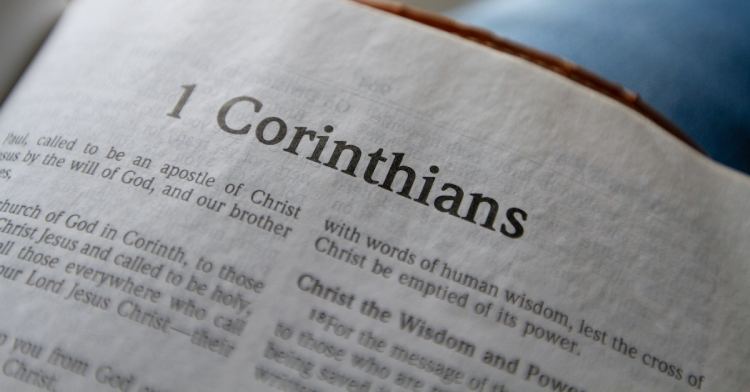
It is a popular trope among progressives to argue that the word homosexual was not in any English translation of the Bible until 1946. I am not sure how long this argument has been making its way around progressive circles but it was thrust back into the spotlight based on a documentary that was done by Sharon Roggio. The documentary was based on Christian authors Kathy Baldock and Ed Oxford who were researching the Revised Standard Version translation. We will talk about that documentary in a moment but first I should explain why I am writing this article.
As I was researching this topic I was disheartened by how political and subjective this passage has become. I mean if we simply look at the Greek it should be clear what the author’s intent was. But in my research, the only clear thing was how divisive this has become. In fact, not even language experts agree on how to interpret the Greek word that is at the center of the debate.
So, instead of relying on experts I decided to research the issue myself and form what I believe to be a logical conclusion based on the evidence. That is what this article is meant to achieve. It is meant to provide a logical rationale for how Christians should properly understand this passage in a way that clears away the mud – at least most of it.
As is true with anyone I have biases. But unlike most people, I am well aware of mine. I am a progressive. I tend to err on the side of inclusivity instead of exclusivity. But I also try to let the truth be my guide regardless of where it may lead and not my opinion. When I give my opinion, I try to qualify it as such in order not to misinform. I will attempt to do the same in this article.
The Revised Standard Version
As I mentioned above much of this debate became a part of the cultural consciousness again when the documentary 1946 came out. What makes much of this documentary interesting, apart from its obvious thesis, is a correspondence that was uncovered between a student and the translators of the Revised Standard Version of the Bible and their mistranslation of 1 Corinthians 6:9.
As the story goes there was a gay seminary student who upon seeing the new translation of the Bible called the Revised Standard Version, became befuddled over the translator’s choice to use the word homosexual in 1 Corinthians 6:9. For context here is the verse as translated by the New International Version:
“Or do you not know that wrongdoers will not inherit the kingdom of God? Do not be deceived: Neither the sexually immoral nor idolaters nor adulterers nor men who have sex with men”
The student explained that this was a mistranslation of the Greek word: Arsenokoitai. Upon reading the explanation that the student provided the head of the translation committee agreed. However, it would not be changed until the 1971 version of the RSV was published.
The Politics of Words
You would think that translating a word should be a pretty straightforward job. But, as I have learned in my study, it is not so. There are several issues at play. First, translating an ancient word is not the same task as translating a modern word. Especially with Koine Greek (and Hebrew for that matter) context is everything. That means that a word’s meaning is derived from its usage in other contexts. Meaning, therefore, is derived once an amalgamation of those contexts occurs. This does mean there is an element of subjectivity involved in deriving meaning because someone has to determine what that word in those contexts means. The additional problem with Arsenokoitai is that it is used only one other time in the New Testament (1 Timothy 1:10).
Here is a great example of the subjective nature of defining words. Bill Mounce is what you would call a mega-scholar. His work in the Greek language is a standard for evangelical seminaries across the country. He defines the word Arsenokoitai as follows: A male engaging in same-gender sexual activity, a sodomite, pederast.
Yet in his Greek New Testament translation, he chooses to interpret this passage as “homosexual” even though right in his definition it also includes the word “pederast”. It is certainly possible the reason Mounce decided on using homosexual is he thinks it is a broader meaning and therefore includes pederasty. However, as a linguist, he should know that the term homosexual is not a broader term but an adjacent term because pederasty was not only related to bisexuality but has nothing to do with modern homosexuality.
For modern translators who have decided to take this route, it is clear that there are anachronisms taking place because they don’t appear to take into account just how different the term is within our vast cultural divide. The term did not mean the same thing in ancient times as it does in today’s world, which is why many have moved away from even using the term homosexual relationship opting instead for same-sex relationships.
The Arguments
Up to this point, we have talked a lot about methodology. This was a necessary approach since we have to understand the complexities of where these interpretations come from in order to understand how we can move forward.
The first argument comes from the translators themselves. The translators of the RSV knew that the translation was incorrect and therefore changed it. This tells us at least the RSV translators knew using the word homosexual was an incorrect translation. However, because it took so long for the change to take place the original passage was melded into the cultural consciousness.
The second argument is related to history. The word had never been translated as homosexual throughout the entire history of the English Bible. And even when it eventually was the translators admitted to their mistake.
Thirdly, the term has two adjacent meanings. This, of course, does not mean we just get to pick one, but what it does mean is that context drives which one should be understood. Since we know that pederasty was a significant social norm in Greco-Roman culture the odds are good that this is what the passage is about.
I think the word should be understood in light of pederasty. The reason is due to what seems to be two hermeneutic keys within the verse itself. The first is the word adultery. However, we know that pederasty was primarily practiced by married men. I believe that is who the text is being directed towards. It seems to me that the centerpiece is to make the connection that this practice is a sin in that it goes against the institution of marriage.
The second key is the word men. Although women indeed practiced homosexuality much less frequently than men, the specificity is still striking. Pederasty was a strictly male practice and therefore it seems that this is how the passage should be understood.
We must understand that the New Testament was not written by “Christians” it was written by Jews and therefore their Hebrew roots colored everything they understood about Jesus. As such the Jewish community was much more sexually conservative than the culture around them.
Adultery was a big deal in both Greco-Roman culture as well as Judaism. The evidence seems to suggest that although the author may have disapproved of homosexual behavior in general (we just don’t know), I do not think that is what he is speaking about here. Instead, it seems that his primary concern was instructing men in the church to behave honorably towards their spouse and God.
We need to keep in mind that when we use what we deem as “clobber” passages as evidence of sin towards others, this behavior is the very thing that Jesus opposed in the religious leaders of his day. The lack of humility and hypocrisy that the religious leaders exhibited towards others lacked any resemblance to what God intends for human relationships. In the end, if it turns out that a homosexual relationship is a sin, then I am certain it is still no greater than the refusal to love others whom we perceive as different from ourselves.
You can view my UNenlightenment YouTube Channel HERE
You can view my UNenlightenment Podcast HERE
You can follow me on FaceBook HERE
Transform your life today by getting my book UNenlightenment HERE.
Evangelical

About Eric English
Eric is a rogue philosopher, theologian, author, podcaster and ninja. He is a father of three, husband of one, and a poet unto himself. Eric’s main areas of thinking are in philosophy (specifically, Soren Kierkegaard), theology (Narrative Perspectivism), and culture. Eric also hosts the podcast UNenlightenment. You can read more about the author here.
Previous Post

December 18, 2023
My Brief Glimpse Into Being Black
Next Post

February 12, 2024 The Unbiblical Ministry of Jesus and Alistair Begg
Recent Comments
"We were all sold that same "bill of goods" about God. The transactional pact: if ..."
God’s Silence and the Anger We’re ..."
"I wish I could give you a hug. A world without suffering would have no ..."
God’s Silence and the Anger We’re ..."
"Thanks for your thoughts, but you pulled a classic conservative move to simply call people ..."
Your God is NOT Real: Evangelical ..."
"Sadly Eric English conveniently avoids addressing the failings of Progressive Left Christianity with it's false/political ..."
Your God is NOT Real: Evangelical ..."
Browse Our Archives
Select a Category Abortion Atonement Bible Book Review Church History Church/Culture Creative Deconstruction Deconstruction & Reconstruction Discipleship End Times Fun with Philosophy Incarnation Issues Jesus Meaning News Philosophy Podcast Polemic Political Problem of Evil Progressive Christianity Questions Return of Christ Second Coming Sexuality The Church Theology Truth Truth Uncategorized Universalism Women in Ministry
Select a Month October 2026 September 2026 August 2026 July 2026 June 2026 May 2026 December 2025 October 2025 September 2025 August 2025 July 2025 June 2025 May 2025 March 2025 February 2025 January 2025 October 2024 September 2024 August 2024 July 2024 June 2024 May 2024 April 2024 March 2024 February 2024 January 2024 December 2023 November 2023 October 2023 September 2023 August 2023 July 2023 June 2023 May 2023 April 2023 March 2023 February 2023 January 2023 December 2022 November 2022 October 2022 August 2022 May 2022 April 2022 March 2022 February 2022 January 2022 December 2021 November 2021 October 2021 August 2021 July 2021 June 2021 May 2021 April 2021 March 2021 February 2021 January 2021 December 2020 November 2020
Follow Us!
TAKE THE
Religious Wisdom Quiz
True or False: 1 Peter teaches that Christians should submit to every human authority for the Lord's sake.
Select your answer to see how you score.
FALSE TRUE
Books by This Author Books by UNenlightenment
Related posts from UNenlightenment

What the WNBA's Transgender Athlete Fight Reveals About...

A Eulogy for the Sleeping Church

Trump’s America or Constantine’s Rome?

Are Christian Nationalists Behind our Involvement with Iran?
TRENDING AT PATHEOS Progressive Christian

What Being a Modern-Day Apostle Means to Me
In my last column, I discussed the ins and outs of modern-day...

Did Ancient China Once Worship the God of...
Across human history, a common thread weaves through the origins of the...

Love Your Neighbor – Including Earth-Kin: Lev. 19,...
God’s command to love your neighbor means acting in an ethical and...

Lead a Church Study of “Jesus and Lao...
Guest writer Jack Thomas (The Irreverent Reverend) reflects on leading his church...

Pastoral Wisdom for Responding to Sermon Pushback
Getting sermon pushback on your social justice sermon? Learn practical, Proverbs-based strategies...

Principles for Understanding the Apostolic Ministry Today
Whenever people discover that my formal ministry title is "apostle," as in...
view all Progressive Christian blogs
What Are Your Thoughts?leave a comment
Ad-Free & Subscriber Log-In Subscription Support
- About Us
- 2026 Calendar
- Videos
- Podcasts
- Library of World Religions
- Faith In Media Tracker
- Advertise With Us
- Write for Us
- Privacy Policy
- Terms of Service
- Do Not Sell My Data
- Contact Us
- Radiant Digital
- Manage Newsletter Subscriptions
- Unsubscribe From Notifications
- Sitemap
Copyright 2008-2026, Patheos. All rights reserved.
Subscription Support Ad-Free & Subscriber Log-In
Follow Patheos