
BuddhistCatholicContemplativeEvangelicalGeneral ChristianHinduJewishLatter-day SaintMuslimNew VisionsProgressive Christian
Beliefs
- Buddhist
- Catholic
- Contemplative
- Evangelical
- General Christian
- Hindu
- Jewish
- Latter-day Saint
- More Voices
- Muslim
- New Visions
- Pagan
- Progressive Christian
Topics
- Religion News
- Food and Religion
- Sports and Religion
- Religious Art
- Religious Music and Entertainment
- Religious Events
- History and Religion
- Style and Religion
- Politics and Religion
- Women in Religion
- Recreation Outdoors and Religion
- Business Finance and Religion
- Careers Workplace and Religion
- Education and Religion
- Family Parenting and Religion
- Health Fitness and Religion
- Home and Religion
- Relationships and Religion
- Technology and Religion
- Travel and Religion
Columnists
- Buddhist Columnists
- Business Finance and Religion Columnists
- Careers Workplace and Religion Columnists
- Catholic Columnists
- Contemplative Columnists
- Education and Religion Columnists
- Evangelists Columnists
- Family Parenting and Religion Columnists
- General Christian Columnists
- Health Fitness and Religion Columnists
- Hindu Columnists
- History and Religion Columnists
- Home and Religion Columnists
- Jewish Columnists
- More Voices Columnists
- Latter Day Columnists
- Muslim Columnists
- New Visions Columnists
- Nonreligious Columnists
- Pagan Columnists
- Politics and Religion Columnists
- Progressive Columnists
- Recreation Outdoors and Religion Columnists
- Relationships and Religion Columnists
- Religion News Columnists
- Religious Art Columnists
- Religious Events Columnists
- Religious Music and Entertainment Columnists
- Sports and Religion Columnists
- Style and Religion Columnists
- Technology and Religion Columnists
- Travel and Religion Columnists
- Women in Religion Columnists
Resource Library
- 2026 Calendar
- Library of World Religions
- The 100 Most Holy Places on Earth
- Patheos Answers
- Podcasts
- Videos
- Faith Leaders Database
- Anglican Episcopalian
- Bahai
- Baptist
- Buddhism
- Christianity
- Confucianism
- Eastern Orthodoxy
- Hinduism
- Holiness and Pentecostal
- ISKCON
- Islam
- Judaism
- Lutheran
- Methodist
- The Church of Jesus Christ of Latter-day Saints
- New Age
- Paganism
- Presbytarian and Reformed
- Protestantism
- Religion Behind the Scenes
- Roman Catholic
- Scientology
- Shia Islam
- Sikhism
- Sufism
- Sunni Islam
- Taoism
- Zen
- See all religions
Research Tools
 Ad-Free & Subscriber Log-In Subscription Support
Ad-Free & Subscriber Log-In Subscription Support
Follow Patheos 

- Trending:
- Forgiveness
- |
- Marriage
- |
- Consciousness
- |
- Death Penalty
- |
- Election
- |
- Halloween

- Home
- Progressive Christian
- History and Religion
- Why My Belief In Jesus Has Never Changed: An Advent Reflection
Why My Belief In Jesus Has Never Changed: An Advent Reflection
Last updated on: December 21, 2022 at 2:02 am by Eric Scot English
Why My Belief In Jesus Has Never Changed: An Advent Reflection 2022-12-21T02:02:51-05:00 Eric Scot English
Patheos Explore the world's faith through different perspectives on religion and spirituality! Patheos has the views of the prevalent religions and spiritualities of the world.
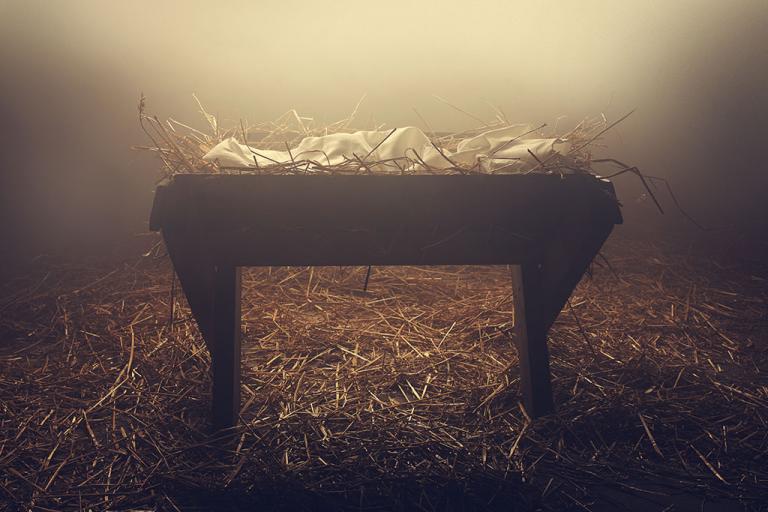
I always seem to get more emotional when the advent season rolls around. Part of it is the whole spectacle of Christmas with kids opening gifts, the music, and various festivities. The other part has to do with my devotion and belief in Jesus of Nazareth and the celebration of the incarnation. No matter how much I have deconstructed over the years my belief in Jesus has never wavered. It’s not because I have some stubborn belief that I am not willing to challenge. Quite the opposite, in fact. It doesn’t matter how much history I study, or how many arguments I hear against him, for whatever reason it has only strengthened my belief and devotion to him and his cause.
I believe, the fact that Jesus was who he said he was is so important that to deny it would necessitate that God doesn’t exist. To me, God only makes sense in a world where Jesus is part of the story. I know that seems like an extreme conclusion, but in a sense, I am putting all of my eggs in the Jesus basket.
In this article, I want to share some of the reasons why I still hold a more “traditional” belief about Jesus and why I am still all in for him.
The Virgin Birth
In progressive circles asking the question as to whether or not Jesus was born of a virgin is almost considered a naive noob type of question. However, I am neither naïve nor a noob and yet I still believe in the virgin birth even as most of my fellow progressives do not.
In general, I tend to default toward the traditional orthodox perspective on issues where I have failed to encounter any evidence to the contrary. I think that is a safe and rational approach when dealing with complicated theological issues. With that said, there is no good argument that I have encountered that contradicts the idea of the virgin birth. And, by the way, just saying, “a virgin can’t have a child” is not an answer (it’s a non-answer because, in a world where God actually does exist, it is certainly possible that this could happen).
What’s more, supposed “impossible” things happen all of the time. Just because someone lacks experience in something doesn’t necessitate that it’s impossible. If that were the case, then much of quantum mechanics would be false simply based upon the criteria that some of the stuff it predicts seems impossible given the standard model.
Moreover, philosophers must also reject the idea of the impossible as well since logic dictates that they believe in the idea of possible worlds, which describes that there exist metaphorical worlds where all possibilities are realized and are therefore possible to exist in the real world.
In my book UNenlightenment I raise the question of the virgin birth. In that section, I develop what I refer to as the Transmutation Argument. In fact, the transmutation argument is the only context that I have found where the virgin birth is not just rational to believe in, but even necessary.
You have to begin with the presupposition that Jesus was who he said he was; namely, God. This is necessary because if Jesus wasn’t God, then whether or not he was born of a virgin is moot. So, beginning with that premise as our starting place the argument is as follows:
Given that Jesus pre-existed in eternity as one member of the Trinity;
And that Jesus incarnated himself on Earth.
Then, in order for Jesus to come to Earth from his eternal abode, one of two things has to occur.
- He has to just appear on Earth, or
- He has to be born on Earth.
Given that the claim is never made that he just appeared on Earth out of nowhere, then we can eliminate that as an option.
So it must be the case that he was born on Earth.
Moreover, given the fact that he was born on Earth, there had to be a way for him to transmute himself from his divine abode to his earthly abode. The only way that is possible is from one divine source to one earthly source. It would not be possible through natural human procreation methods.
Therefore, the virgin birth narrative seems to be the only way to reconcile the transmutation necessity.
This is not a profound argument. It is simply allowing the logic to come to a natural conclusion given that the initial premise is true.
This begs the question: was Jesus really God?
Was Jesus Really God?
This has been one of the most important questions that I have wrestled with throughout my time in the faith. For me, the question I have struggled with is, why was Jesus of Nazareth so special? There were many people during the first century who claimed to be the Messiah. So why Jesus of Nazareth? I have two primary reasons that I continually come back to over and over again that help me maintain this belief that Jesus of Nazareth was who he said he was.
First, of all of those who claimed to be the Messiah, only one stood the test of time. A tradition was created around only one of them. Only Jesus of Nazareth completes the larger metanarrative that is coherent and consistent with the story unfolding in the Ancient Near East.
Second, unlike other messianic leaders, Jesus did not come to orchestrate a way to gain power over others or lead a violent rebellion against Rome. Instead, he came as a humble servant. He sought out the poor and the ostracized. It is counter-intuitive to have this as your mission and not be the Messiah.
One might call this a populist campaign aimed at getting followers and thus creating a mechanism for power. However, when given the chance to renounce his message of peace and love he refused knowing full well that his refusal would result in his death. Not just any death, but an incredibly painful and humiliating crucifixion.
One might say based upon the aforementioned criteria that the great philosopher Socrates would fall into the same category and yet he was not a God. The biggest distinction here is that Socrates never claimed to be God – Jesus of Nazareth did.
You might also argue that many people die a martyr’s death. What makes Jesus’ martyrdom any different? My response is simple. People who die as martyrs, do so because they believe in the thing they are dying for. However, rarely, if ever, does someone die a martyr’s death when they KNOW the thing they are dying for is false. If Jesus was not God, he would have known that, so why did he surrender himself to such a death?
Some Concluding Thoughts
There are many other reasons why I believe that Jesus was the Messiah predicted by the Old Testament Prophets. For example, another would be his message. I resonate with his message of love and tolerance. For me to imitate Jesus means to see the world as he saw it – using his eyes. Every person who ever met Jesus was impacted by the encounter. I want my life to reflect that. I want people to remember me as that type of person. In the end, if am wrong and Jesus was not the Messiah, then I will have still lived a glowing life that impacted humanity for the good. That is all I can hope for.
You can view my UNenlightenment YouTube Channel HERE
You can view my UNenlightenment Podcast HERE
You can follow me on FaceBook HERE
You can purchase the book UNenlightenment HERE.
General Christian
History and Religion

About Eric English
Eric is a rogue philosopher, theologian, author, podcaster and ninja. He is a father of three, husband of one, and a poet unto himself. Eric’s main areas of thinking are in philosophy (specifically, Soren Kierkegaard), theology (Narrative Perspectivism), and culture. Eric also hosts the podcast UNenlightenment. You can read more about the author here.

Next Post
January 3, 2023 Out Into The Desert Is A New Vision For Establishing Community
Browse Our Archives
Select a Category Abortion Atonement Bible Book Review Church History Church/Culture Creative Deconstruction Deconstruction & Reconstruction Discipleship End Times Fun with Philosophy Incarnation Issues Jesus Meaning News Philosophy Podcast Polemic Political Problem of Evil Progressive Christianity Questions Return of Christ Second Coming Sexuality The Church Theology Truth Truth Uncategorized Universalism Women in Ministry
Select a Month October 2026 September 2026 August 2026 July 2026 June 2026 May 2026 December 2025 October 2025 September 2025 August 2025 July 2025 June 2025 May 2025 March 2025 February 2025 January 2025 October 2024 September 2024 August 2024 July 2024 June 2024 May 2024 April 2024 March 2024 February 2024 January 2024 December 2023 November 2023 October 2023 September 2023 August 2023 July 2023 June 2023 May 2023 April 2023 March 2023 February 2023 January 2023 December 2022 November 2022 October 2022 August 2022 May 2022 April 2022 March 2022 February 2022 January 2022 December 2021 November 2021 October 2021 August 2021 July 2021 June 2021 May 2021 April 2021 March 2021 February 2021 January 2021 December 2020 November 2020
Follow Us!
TAKE THE
Religious Wisdom Quiz
What woman followed Naomi to Bethlehem and later married Boaz?
Select your answer to see how you score.
Ruth Hannah Sarah Esther
Books by This Author Books by UNenlightenment
Related posts from UNenlightenment

Your God is NOT Real: Evangelical Idealism

After the Eulogy Comes the Resurrection

Kierkegaard Denied Being a Christian and so should...
What Does It Mean To Be A Christian?
TRENDING AT PATHEOS Progressive Christian

What Being a Modern-Day Apostle Means to Me
In my last column, I discussed the ins and outs of modern-day...

Did Ancient China Once Worship the God of...
Across human history, a common thread weaves through the origins of the...

Love Your Neighbor – Including Earth-Kin: Lev. 19,...
God’s command to love your neighbor means acting in an ethical and...

Lead a Church Study of “Jesus and Lao...
Guest writer Jack Thomas (The Irreverent Reverend) reflects on leading his church...

Pastoral Wisdom for Responding to Sermon Pushback
Getting sermon pushback on your social justice sermon? Learn practical, Proverbs-based strategies...

Principles for Understanding the Apostolic Ministry Today
Whenever people discover that my formal ministry title is "apostle," as in...
view all Progressive Christian blogs
Ad-Free & Subscriber Log-In Subscription Support
- About Us
- 2026 Calendar
- Videos
- Podcasts
- Library of World Religions
- Faith In Media Tracker
- Advertise With Us
- Write for Us
- Privacy Policy
- Terms of Service
- Do Not Sell My Data
- Contact Us
- Radiant Digital
- Manage Newsletter Subscriptions
- Unsubscribe From Notifications
- Sitemap
Copyright 2008-2026, Patheos. All rights reserved.
Subscription Support Ad-Free & Subscriber Log-In
Follow Patheos