
BuddhistCatholicContemplativeEvangelicalGeneral ChristianHinduJewishLatter-day SaintMuslimNew VisionsProgressive Christian
Beliefs
- Buddhist
- Catholic
- Contemplative
- Evangelical
- General Christian
- Hindu
- Jewish
- Latter-day Saint
- More Voices
- Muslim
- New Visions
- Pagan
- Progressive Christian
Topics
- Religion News
- Food and Religion
- Sports and Religion
- Religious Art
- Religious Music and Entertainment
- Religious Events
- History and Religion
- Style and Religion
- Politics and Religion
- Women in Religion
- Recreation Outdoors and Religion
- Business Finance and Religion
- Careers Workplace and Religion
- Education and Religion
- Family Parenting and Religion
- Health Fitness and Religion
- Home and Religion
- Relationships and Religion
- Technology and Religion
- Travel and Religion
Columnists
- Buddhist Columnists
- Business Finance and Religion Columnists
- Careers Workplace and Religion Columnists
- Catholic Columnists
- Contemplative Columnists
- Education and Religion Columnists
- Evangelists Columnists
- Family Parenting and Religion Columnists
- General Christian Columnists
- Health Fitness and Religion Columnists
- Hindu Columnists
- History and Religion Columnists
- Home and Religion Columnists
- Jewish Columnists
- More Voices Columnists
- Latter Day Columnists
- Muslim Columnists
- New Visions Columnists
- Nonreligious Columnists
- Pagan Columnists
- Politics and Religion Columnists
- Progressive Columnists
- Recreation Outdoors and Religion Columnists
- Relationships and Religion Columnists
- Religion News Columnists
- Religious Art Columnists
- Religious Events Columnists
- Religious Music and Entertainment Columnists
- Sports and Religion Columnists
- Style and Religion Columnists
- Technology and Religion Columnists
- Travel and Religion Columnists
- Women in Religion Columnists
Resource Library
- 2026 Calendar
- Library of World Religions
- The 100 Most Holy Places on Earth
- Patheos Answers
- Podcasts
- Videos
- Faith Leaders Database
- Anglican Episcopalian
- Bahai
- Baptist
- Buddhism
- Christianity
- Confucianism
- Eastern Orthodoxy
- Hinduism
- Holiness and Pentecostal
- ISKCON
- Islam
- Judaism
- Lutheran
- Methodist
- The Church of Jesus Christ of Latter-day Saints
- New Age
- Paganism
- Presbytarian and Reformed
- Protestantism
- Religion Behind the Scenes
- Roman Catholic
- Scientology
- Shia Islam
- Sikhism
- Sufism
- Sunni Islam
- Taoism
- Zen
- See all religions
Research Tools
 Ad-Free & Subscriber Log-In Subscription Support
Ad-Free & Subscriber Log-In Subscription Support
Follow Patheos 

- Trending:
- Forgiveness
- |
- Marriage
- |
- Consciousness
- |
- Death Penalty
- |
- Election
- |
- Halloween

- Home
- Progressive Christian
- Why It’s Good That Christianity is Progressive
Why It’s Good That Christianity is Progressive
Last updated on: October 28, 2022 at 4:10 pm by Eric Scot English
Why It’s Good That Christianity is Progressive 2022-10-28T16:10:03-04:00 Eric Scot English
Patheos Explore the world's faith through different perspectives on religion and spirituality! Patheos has the views of the prevalent religions and spiritualities of the world.
If you have ever read Alisa Childers book “Another Gospel”, then you will know that many within the evangelical community think of progressive Christianity as something outside of Christian orthodoxy. Or, in the case of Alisa, that progressive Christians believe in another gospel altogether. Many who dislike progressive Christianity refer to it as dangerous and heretical. And they warn their people to be aware and not fall for the logically coherent teachings espoused in progressive Christianity.
Here is the thing, I don’t disagree with any of the aforementioned claims.
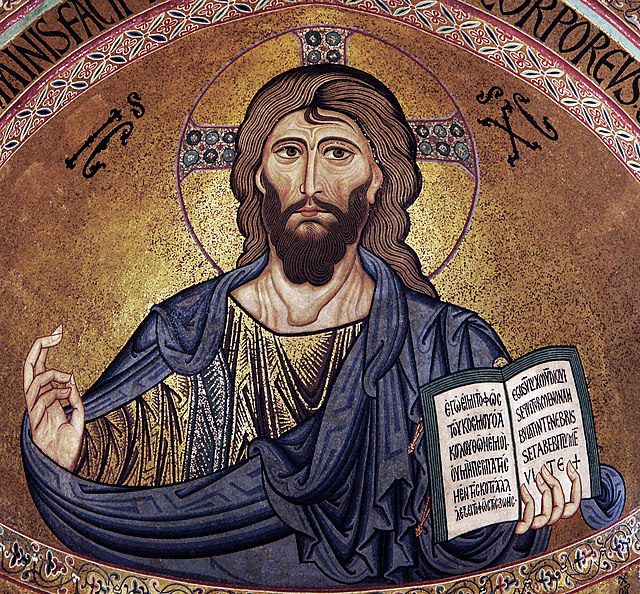
Progressives do follow a different gospel from evangelicals. It’s the gospel contained in the Bible. You know, the one where Jesus goes around healing people, teaching people, and proclaiming the Kingdom of God to the poor and downtrodden. The one where he preaches against the religious leaders of his day whose real aim was to amass power and lord that over the Jews (Matthew 23). The one where those same pious, religious folks murdered him because he was exposing who they were. The one that, despite the hatred the religious leaders had toward him, he loved anyway. That is the gospel that many progressives preach, teach and practice.
With that said, to conservative evangelicals, in particular, I am sure progressive Christians appear dangerous – because they are. Progressive Christians often expose the lies that are taught in the Church and help people, who are brainwashed into believing those lies, to escape. Progressive Christians can often help people find a more authentic version of Jesus through deconstruction and reconstruction. Also, progressive Christians are often able to help people recover from the trauma that many experience in these churches.
I can see why many conservative evangelicals find progressive Christians dangerous.
But, are progressive Christians heretics? Claiming someone is a heretic is a subjective enterprise. Of course, many progressives embrace the term “heretic” as a badge of honor, but this is more idiomatic than it is true in the sense of the term itself. To conservative evangelicals, progressive Christians may look like heretics. But, are progressives heretics, or are evangelicals?
What? How can evangelicals be heretics, are they not the definition of orthodox?
The truth of the matter is that many evangelical doctrines are actually heretical. This is not an attempt at name-calling, it is just the truth. Many doctrines that evangelicals hold to, such as penal substitutionary atonement (Calvin), eternal torment, inerrancy (sola scriptura), and trinitarian subordination (Arianism), etc., are theological theories that are not rooted in orthodoxy, but in the Reformation or clearly defined heretical movements; and yet many believe in these ideas.
Here is the problem with all this. Heresy does not mean “untrue”. It just means that it runs in contradiction to traditional orthodoxy. Is that always bad? What if the early Christians got it wrong? Certainly, the early believers suffered from the same hermeneutical problems that many suffer from today.
What Does Progressive Mean?
First, I should qualify that this is my opinion. Many people define “progressive” differently. I put forth a definition in my upcoming book, UNenlightenment, which I believe is both a coherent and accurate understanding of the term if you are interested in learning more.
To understand progressive Christianity better, we have to ask the question, “what do we mean by ‘progressive’?” Let’s clarify this point first. It does not mean liberal. It is completely unrelated to the political version referred to as progressive liberalism. With that said, the word is complicated. It is an idiomatic moniker labeling a type of Christian who is “in process” of intentionally reevaluating their beliefs.
It is not as much a denomination as it is a milieu. It is a place of evaluation, where like-minded people can exchange ideas in a safe non-judgemental place. This means when people like Alisa Childers call progressive Christianity a different religion, they have a complete misunderstanding of the purpose of progressive Christianity.
For example, you can be a progressive Christian and an evangelical. I have met many of them. In fact, I recently interviewed Randal Rauser who is a theologian and apologist. He considers himself a progressive evangelical. This illustrates the fact that being a progressive Christian just addresses the type of Christian you are, not the brand you buy into or the denomination you worship within. In fact, it serves Christianity better when there are progressive Christians within certain denominations. It creates bridges in a dialogue between the various denominations because progressives are not afraid to interact with other ideas as many nonprogressives are. The hope and confidence of progressive Christians are the results of their experience within the faith instead of their dogma.
Why is Progressive Christianity Necessary?
Progressive Christianity should not be necessary. It should already be the case that Christians are able to express their doubt within the confines of their own church. However, the intolerance of conservative evangelicals is legendary. This means there is little hope that this will change any time soon.
Alisa Childers addressed this question and her solution for wrestling with doubt: “Study Apologetics” – as though doubt is simply the result of a lack of proper information. This illustrates part of the issue that exists between evangelicals and progressive Christians. That is, evangelicals have long been taught that knowing more somehow equates to an increase in spiritual competence. When we put doctrine as the foundation of our beliefs instead of Jesus Christ, then we have a significant problem. And, for many within evangelicalism, that is exactly the case. Since many conservative evangelicals have an idolatrous relationship with the Bible, it’s not a far leap to see why doctrine plays such a pivotal role in their faith.
But it cannot be that way because what ends up happening is that doctrine becomes the word of God. There is a bumper sticker that has been around forever: “The Bible Said It, I Believe it, That Settles it.” This may sound ridiculous to some, but you do not have to look far to see this cliché in action. From White Christian Nationalists to the everyday evangelical sitting in the pew. This worldview is predominant among those calling themselves Christian.
The Top 5 Things I Love About Progressive Christianity
There are many things I love about being a progressive Christian, but I have limited my list to the top 5 things that I think make progressive Christianity stand out.
- I’m Not Alone. I love the fact that I can fellowship with others who are at various stages of doubt and deconstruction. That we can all struggle together in our search for meaning.
- No Judgement Here. I love the fact that I can share what I am learning with another progressive Christian without feeling like they are going to judge me for something I am working through.
- Living My Truth. Part of what drew me to a more progressive Christian worldview is the desire people have for truth – regardless of where it leads them.
- Competence. To be honest, I was surprised at the level of competence that exists within progressive Christianity. This is helpful because the process of deconstruction must have people with whom you can interact with about ideas.
- A Common Calling To Love. Within the diverse beliefs that progressive Christians believe that are common to many is the love and passion that they have for “others”.
Progressive Christianity contains within its ranks many divergent thinkers. Thinkers who take understanding truth seriously. Of course, when you have so many divergent thinkers you run across a lot of different beliefs. From the liberal atheist to the conservative God-fearing Christian there exists a spectrum. On the one hand, many can find this intimidating. On the other hand, there is no doubt that there is someone who can relate to your experiences and can journey alongside you. Progressive Christianity is always about the journey.
You can view my UNenlightenment YouTube Channel HERE
You can view my UNenlightenment Podcast HERE
You can follow me on FaceBook HERE
Get UNenlightenment!

You can purchase UNenlightenment HERE.
You can visit the books website HERE.

About Eric English
Eric is a rogue philosopher, theologian, author podcaster and ninja. He is a father of three, husband of one, and a poet unto himself. Eric’s main areas of thinking are in philosophy (specifically, Soren Kierkegaard), theology (Narrative Perspectivism), and culture. Eric also hosts the podcast UNenlightenment. You can read more about the author here.
Previous Post

October 17, 2022
I'm Going to Die!
Next Post
November 1, 2022 Yes, Another Book on Deconstruction, But This One Is Different
Browse Our Archives
Select a Category Abortion Atonement Bible Book Review Church History Church/Culture Creative Deconstruction Deconstruction & Reconstruction Discipleship End Times Fun with Philosophy Incarnation Issues Jesus Meaning News Philosophy Podcast Polemic Political Problem of Evil Progressive Christianity Questions Return of Christ Second Coming Sexuality The Church Theology Truth Truth Uncategorized Universalism Women in Ministry
Select a Month October 2026 September 2026 August 2026 July 2026 June 2026 May 2026 December 2025 October 2025 September 2025 August 2025 July 2025 June 2025 May 2025 March 2025 February 2025 January 2025 October 2024 September 2024 August 2024 July 2024 June 2024 May 2024 April 2024 March 2024 February 2024 January 2024 December 2023 November 2023 October 2023 September 2023 August 2023 July 2023 June 2023 May 2023 April 2023 March 2023 February 2023 January 2023 December 2022 November 2022 October 2022 August 2022 May 2022 April 2022 March 2022 February 2022 January 2022 December 2021 November 2021 October 2021 August 2021 July 2021 June 2021 May 2021 April 2021 March 2021 February 2021 January 2021 December 2020 November 2020
Follow Us!
TAKE THE
Religious Wisdom Quiz
Who was the first Christian martyr mentioned in Acts?
Select your answer to see how you score.
Stephen Philip James Barnabas
Books by This Author Books by UNenlightenment
Related posts from UNenlightenment

After the Eulogy Comes the Resurrection

A Eulogy for the Sleeping Church

Trump’s America or Constantine’s Rome?

Are Christian Nationalists Behind our Involvement with Iran?
TRENDING AT PATHEOS Progressive Christian

What Being a Modern-Day Apostle Means to Me
In my last column, I discussed the ins and outs of modern-day...

Did Ancient China Once Worship the God of...
Across human history, a common thread weaves through the origins of the...

Love Your Neighbor – Including Earth-Kin: Lev. 19,...
God’s command to love your neighbor means acting in an ethical and...

Lead a Church Study of “Jesus and Lao...
Guest writer Jack Thomas (The Irreverent Reverend) reflects on leading his church...

Pastoral Wisdom for Responding to Sermon Pushback
Getting sermon pushback on your social justice sermon? Learn practical, Proverbs-based strategies...

Principles for Understanding the Apostolic Ministry Today
Whenever people discover that my formal ministry title is "apostle," as in...
view all Progressive Christian blogs
Ad-Free & Subscriber Log-In Subscription Support
- About Us
- 2026 Calendar
- Videos
- Podcasts
- Library of World Religions
- Faith In Media Tracker
- Advertise With Us
- Write for Us
- Privacy Policy
- Terms of Service
- Do Not Sell My Data
- Contact Us
- Radiant Digital
- Manage Newsletter Subscriptions
- Unsubscribe From Notifications
- Sitemap
Copyright 2008-2026, Patheos. All rights reserved.
Subscription Support Ad-Free & Subscriber Log-In
Follow Patheos