
BuddhistCatholicContemplativeEvangelicalGeneral ChristianHinduJewishLatter-day SaintMuslimNew VisionsProgressive Christian
Beliefs
- Buddhist
- Catholic
- Contemplative
- Evangelical
- General Christian
- Hindu
- Jewish
- Latter-day Saint
- More Voices
- Muslim
- New Visions
- Pagan
- Progressive Christian
Topics
- Religion News
- Food and Religion
- Sports and Religion
- Religious Art
- Religious Music and Entertainment
- Religious Events
- History and Religion
- Style and Religion
- Politics and Religion
- Women in Religion
- Recreation Outdoors and Religion
- Business Finance and Religion
- Careers Workplace and Religion
- Education and Religion
- Family Parenting and Religion
- Health Fitness and Religion
- Home and Religion
- Relationships and Religion
- Technology and Religion
- Travel and Religion
Columnists
- Buddhist Columnists
- Business Finance and Religion Columnists
- Careers Workplace and Religion Columnists
- Catholic Columnists
- Contemplative Columnists
- Education and Religion Columnists
- Evangelists Columnists
- Family Parenting and Religion Columnists
- General Christian Columnists
- Health Fitness and Religion Columnists
- Hindu Columnists
- History and Religion Columnists
- Home and Religion Columnists
- Jewish Columnists
- More Voices Columnists
- Latter Day Columnists
- Muslim Columnists
- New Visions Columnists
- Nonreligious Columnists
- Pagan Columnists
- Politics and Religion Columnists
- Progressive Columnists
- Recreation Outdoors and Religion Columnists
- Relationships and Religion Columnists
- Religion News Columnists
- Religious Art Columnists
- Religious Events Columnists
- Religious Music and Entertainment Columnists
- Sports and Religion Columnists
- Style and Religion Columnists
- Technology and Religion Columnists
- Travel and Religion Columnists
- Women in Religion Columnists
Resource Library
- 2026 Calendar
- Library of World Religions
- The 100 Most Holy Places on Earth
- Patheos Answers
- Podcasts
- Videos
- Faith Leaders Database
- Anglican Episcopalian
- Bahai
- Baptist
- Buddhism
- Christianity
- Confucianism
- Eastern Orthodoxy
- Hinduism
- Holiness and Pentecostal
- ISKCON
- Islam
- Judaism
- Lutheran
- Methodist
- The Church of Jesus Christ of Latter-day Saints
- New Age
- Paganism
- Presbytarian and Reformed
- Protestantism
- Religion Behind the Scenes
- Roman Catholic
- Scientology
- Shia Islam
- Sikhism
- Sufism
- Sunni Islam
- Taoism
- Zen
- See all religions
Research Tools
 Ad-Free & Subscriber Log-In Subscription Support
Ad-Free & Subscriber Log-In Subscription Support
Follow Patheos 

- Trending:
- Forgiveness
- |
- Marriage
- |
- Consciousness
- |
- Death Penalty
- |
- Election
- |
- Halloween

- Home
- Progressive Christian
- God is Dead! A Post Easter Reflection
God is Dead! A Post Easter Reflection
Last updated on: August 3, 2022 at 12:10 pm by Eric Scot English
God is Dead! A Post Easter Reflection 2022-08-03T12:10:49-04:00 Eric Scot English
Patheos Explore the world's faith through different perspectives on religion and spirituality! Patheos has the views of the prevalent religions and spiritualities of the world.
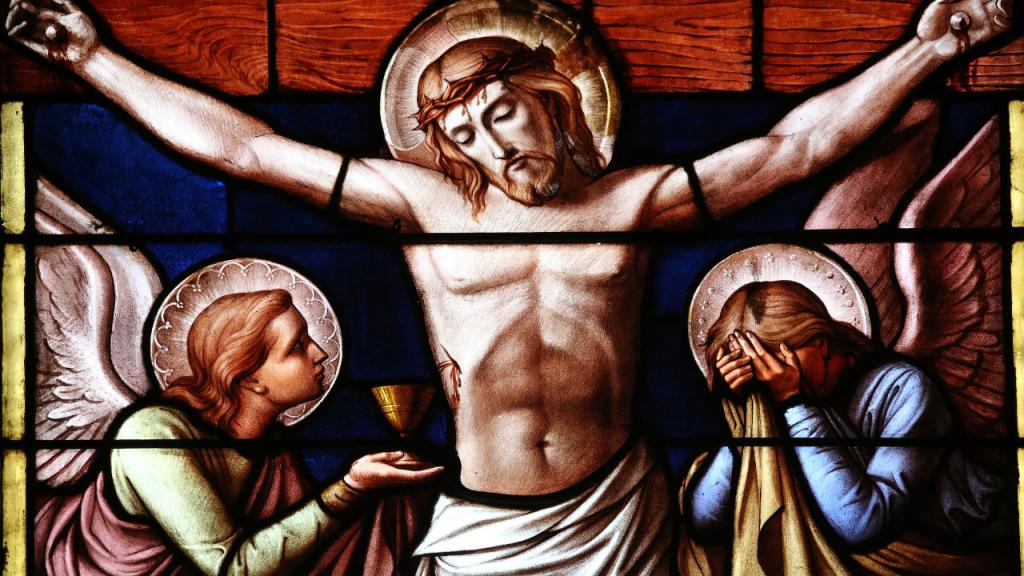
During the Easter season, we focus heavily on the death and resurrection of Jesus Christ. It is a great holiday that reminds us of the pain and suffering and the ultimate victory that Jesus had over the grave. Now that we have had all of our good fuzzy feelings we need to get back to the business of proclaiming what is real and true about God; namely, that he is DEAD!
Throughout his works, Fredrick Nietzsche declared that “God is dead, he remains dead, and we have killed him.” By this Nietzsche meant that the Church’s acts didn’t represent the faith of old. The church had become something else within the enlightenment context. But what he was really saying was that Christianity didn’t exist anymore – even though there were many “Christians” living in Germany at the time.
This is not that different from what Kierkegaard had proclaimed 30 years before. Kierkegaard lived in a time when Lutheranism was the state-sanctioned church. In this context, Kierkegaard said, “…when everyone is a Christian, no one is a Christian.” What is interesting about this is that when Nietzsche was asked about Kierkegaard he claimed to have never heard of him. This means that both philosophers made the same cultural observations even though they did not know each other. Both philosophers were also ostracized for their observations as well from their respected Christian majorities.
According to Kierkegaard God passed away in 313 when Constantine made Christianity the dominant religion of Rome. It is ironic that in Constantine’s attempt to save Christianity he inevitably killed it. By protecting Christianity, it quickly rose to become the political and religious powerhouse of Rome. Everyone became a Christian because it was the expected social convention – convention over conviction as it were.
In the history of the Church, there have been two primary ways conversion took place. Through the persecution of Christians or by force. However, those two methods produced completely different types of Christians. Ironically when Christians are persecuted (really persecuted), more people become Christian, which by the way is evidence that present-day evangelicals are not being persecuted. There is something about the persecution of people groups that brings humans together. You can see this happening in Ukraine right now. People from all over the world are volunteering to fight with them against Russia.
Christianity Needs Politics to Survive, but not Thrive
Hear me out on this one. Nobody is more about the separation of Church and state than I am. However, history has shown us an interesting trend when it comes to the role of the Church and state and the popularity of Christianity. You need not look any further than the relationship between Western and parts of Eastern Christianity to see how this works. According to Philip Jenkins in his marvelous book The Lost History of Christianity The reason that the Western Church became dominant over the East was that it was able to adhere to political structures. Whereas the East, particularly the thriving Oriental branch of the East was ruled by religious leaders and not political institutions. This meant as political leaders changed, their tolerance for disparate religious beliefs ebbed and flowed. Sometimes Christians were persecuted and sometimes they weren’t. However, according to Jenkins, they thrived for at least a thousand years.
Their lack of political integration meant that they struggled to find a home for their history, which meant that much of it has been lost to time. Only recently, through archeology, have we been able to uncover some of this rich history. In the West, being tied to the kingdom meant large libraries and educational institutions where history was not only saved but savored. Christianity and culture were inseparable and therefore resulted in the creation of Christendom.
The consequences of aligning oneself with political institutions are many. However, one stands out more than the others. Integrity! The integrity of Christianity will always be questioned when it is aligned with political institutions. For Christianity to exist as it was originally imagined, it must separate itself from the deceit that is commonplace among politicians. This is why Jesus never entered the secular political realm except to say “render unto Caesar’s that which is Caesar’s.” As the religious leaders of Jesus’ time demonstrated it is difficult, if not impossible to separate religious zeal from political power. When the two are together real zeal for God is nullified because it has become political propaganda.
We have seen this most recently with the Eastern Orthodox Church in Russia. For the Church to survive in Russia, they came out in support of Vladimir Putin’s atrocities in Ukraine – even though they knew the propaganda was a lie. They chose surviving over thriving. Examples in our own country abound with this mentality of surviving over thriving. The most significant recent example is the overwhelming support that Donald Trump and his very white nationalist way of running our country received.
Christians have to decide at some point if they want to simply survive or do they want to thrive? In countries where Christians are persecuted (really persecuted, not the bullshit in America), Christianity is thriving. The paradox holds true that God is more real in times of suffering than he is in times of plenty. There is no other explanation for why Christianity grows during times of persecution than when it is not being threatened.
Is God still dead?
Unfortunately, until Christianity begins to care more about thriving than its survival God will remain dead. We fail to learn from our past and repeat the same destructive patterns over and over again. We need to give Christianity back to Christ and follow him into the unknown. Nobody will be able to argue or vilify a religion that cares more about helping and loving others into the Kingdom. They will, however, fight against political power and any religion associated with it.
In countries where Christianity is thriving, there is an ongoing threat to their existence. But Christianity survives even if Christians don’t. That, I think is the real threat for American Christians – death. Do American Christians really believe in God – so much so that they would be willing to die or suffer because of him? Or is their attempt at maintaining power really an attempt at preserving their lives; their comfortability; their way of life? I question the entire institution of evangelicalism even being Christian until it relinquishes its political ties and gets back to the business of loving God and loving people.
You cannot begin to appreciate how Christianity will change once you give it back to Christ. Doing so will first and foremost put the worship back on God instead of ourselves. We will begin to look at other people differently. We will see them first as children of God and not as conservative or liberal. We will begin to help people regardless if they end up attending our church or not. We will stop “recruiting” people to be Christians. We will help the needy even if it is illegal to do so. We will stop abusing our women and children. We will not be afraid of the LGBTQ + community. We will stop making excuses for racism and begin to take responsibility for our own actions. We will act with integrity.
Being like Christ means that we have eyes that can detect needs. Once Christ is actually represented in our communities, then and only then can we proclaim that God is alive!
You can view my UNenlightenment YouTube Channel HERE
You can view my UNenlightenment Podcast HERE
You can follow me on FaceBook HERE

About Eric English
Eric is a rogue philosopher, theologian, podcaster and ninja. He is a father of three, husband of one, and a poet unto himself. Eric’s main areas of thinking are in philosophy (specifically, Soren Kierkegaard), theology (Narrative Perspectivism), and culture. Eric also hosts the podcast UNenlightenment. If you are interested in having Eric speak at your event, please contact him on Facebook. You can read more about the author here.
Previous Post
April 4, 2022
Jesus Permits Us to Question
Next Post

May 2, 2022 Tertullian On Equality and Mutuality Within Marriage
Browse Our Archives
Select a Category Abortion Atonement Bible Book Review Church History Church/Culture Creative Deconstruction Deconstruction & Reconstruction Discipleship End Times Fun with Philosophy Incarnation Issues Jesus Meaning News Philosophy Podcast Polemic Political Problem of Evil Progressive Christianity Questions Return of Christ Second Coming Sexuality The Church Theology Truth Truth Uncategorized Universalism Women in Ministry
Select a Month October 2026 September 2026 August 2026 July 2026 June 2026 May 2026 December 2025 October 2025 September 2025 August 2025 July 2025 June 2025 May 2025 March 2025 February 2025 January 2025 October 2024 September 2024 August 2024 July 2024 June 2024 May 2024 April 2024 March 2024 February 2024 January 2024 December 2023 November 2023 October 2023 September 2023 August 2023 July 2023 June 2023 May 2023 April 2023 March 2023 February 2023 January 2023 December 2022 November 2022 October 2022 August 2022 May 2022 April 2022 March 2022 February 2022 January 2022 December 2021 November 2021 October 2021 August 2021 July 2021 June 2021 May 2021 April 2021 March 2021 February 2021 January 2021 December 2020 November 2020
Follow Us!
TAKE THE
Religious Wisdom Quiz
What was the portable place of worship called that God commanded Israel to build?
Select your answer to see how you score.
The Ark The Tabernacle The Synagogue The Temple
Books by This Author Books by UNenlightenment
Related posts from UNenlightenment

After the Eulogy Comes the Resurrection

A Eulogy for the Sleeping Church

Are You A Saul Or Paul: The False...
What Does It Mean To Be A Christian?
TRENDING AT PATHEOS Progressive Christian

What Being a Modern-Day Apostle Means to Me
In my last column, I discussed the ins and outs of modern-day...

Did Ancient China Once Worship the God of...
Across human history, a common thread weaves through the origins of the...

Love Your Neighbor – Including Earth-Kin: Lev. 19,...
God’s command to love your neighbor means acting in an ethical and...

Lead a Church Study of “Jesus and Lao...
Guest writer Jack Thomas (The Irreverent Reverend) reflects on leading his church...

Pastoral Wisdom for Responding to Sermon Pushback
Getting sermon pushback on your social justice sermon? Learn practical, Proverbs-based strategies...

Principles for Understanding the Apostolic Ministry Today
Whenever people discover that my formal ministry title is "apostle," as in...
view all Progressive Christian blogs
Ad-Free & Subscriber Log-In Subscription Support
- About Us
- 2026 Calendar
- Videos
- Podcasts
- Library of World Religions
- Faith In Media Tracker
- Advertise With Us
- Write for Us
- Privacy Policy
- Terms of Service
- Do Not Sell My Data
- Contact Us
- Radiant Digital
- Manage Newsletter Subscriptions
- Unsubscribe From Notifications
- Sitemap
Copyright 2008-2026, Patheos. All rights reserved.
Subscription Support Ad-Free & Subscriber Log-In
Follow Patheos