
BuddhistCatholicContemplativeEvangelicalGeneral ChristianHinduJewishLatter-day SaintMuslimNew VisionsProgressive Christian
Beliefs
- Buddhist
- Catholic
- Contemplative
- Evangelical
- General Christian
- Hindu
- Jewish
- Latter-day Saint
- More Voices
- Muslim
- New Visions
- Pagan
- Progressive Christian
Topics
- Religion News
- Food and Religion
- Sports and Religion
- Religious Art
- Religious Music and Entertainment
- Religious Events
- History and Religion
- Style and Religion
- Politics and Religion
- Women in Religion
- Recreation Outdoors and Religion
- Business Finance and Religion
- Careers Workplace and Religion
- Education and Religion
- Family Parenting and Religion
- Health Fitness and Religion
- Home and Religion
- Relationships and Religion
- Technology and Religion
- Travel and Religion
Columnists
- Buddhist Columnists
- Business Finance and Religion Columnists
- Careers Workplace and Religion Columnists
- Catholic Columnists
- Contemplative Columnists
- Education and Religion Columnists
- Evangelists Columnists
- Family Parenting and Religion Columnists
- General Christian Columnists
- Health Fitness and Religion Columnists
- Hindu Columnists
- History and Religion Columnists
- Home and Religion Columnists
- Jewish Columnists
- More Voices Columnists
- Latter Day Columnists
- Muslim Columnists
- New Visions Columnists
- Nonreligious Columnists
- Pagan Columnists
- Politics and Religion Columnists
- Progressive Columnists
- Recreation Outdoors and Religion Columnists
- Relationships and Religion Columnists
- Religion News Columnists
- Religious Art Columnists
- Religious Events Columnists
- Religious Music and Entertainment Columnists
- Sports and Religion Columnists
- Style and Religion Columnists
- Technology and Religion Columnists
- Travel and Religion Columnists
- Women in Religion Columnists
Resource Library
- 2026 Calendar
- Library of World Religions
- The 100 Most Holy Places on Earth
- Patheos Answers
- Podcasts
- Videos
- Faith Leaders Database
- Anglican Episcopalian
- Bahai
- Baptist
- Buddhism
- Christianity
- Confucianism
- Eastern Orthodoxy
- Hinduism
- Holiness and Pentecostal
- ISKCON
- Islam
- Judaism
- Lutheran
- Methodist
- The Church of Jesus Christ of Latter-day Saints
- New Age
- Paganism
- Presbytarian and Reformed
- Protestantism
- Religion Behind the Scenes
- Roman Catholic
- Scientology
- Shia Islam
- Sikhism
- Sufism
- Sunni Islam
- Taoism
- Zen
- See all religions
Research Tools
 Ad-Free & Subscriber Log-In Subscription Support
Ad-Free & Subscriber Log-In Subscription Support
Follow Patheos 

- Trending:
- Forgiveness
- |
- Marriage
- |
- Consciousness
- |
- Death Penalty
- |
- Election
- |
- Halloween

- Home
- Progressive Christian
- Deconstructing Evangelical Orthodoxy
Deconstructing Evangelical Orthodoxy
Last updated on: August 3, 2022 at 12:18 pm by Eric Scot English
Deconstructing Evangelical Orthodoxy 2022-08-03T12:18:42-04:00 Eric Scot English
Patheos Explore the world's faith through different perspectives on religion and spirituality! Patheos has the views of the prevalent religions and spiritualities of the world.
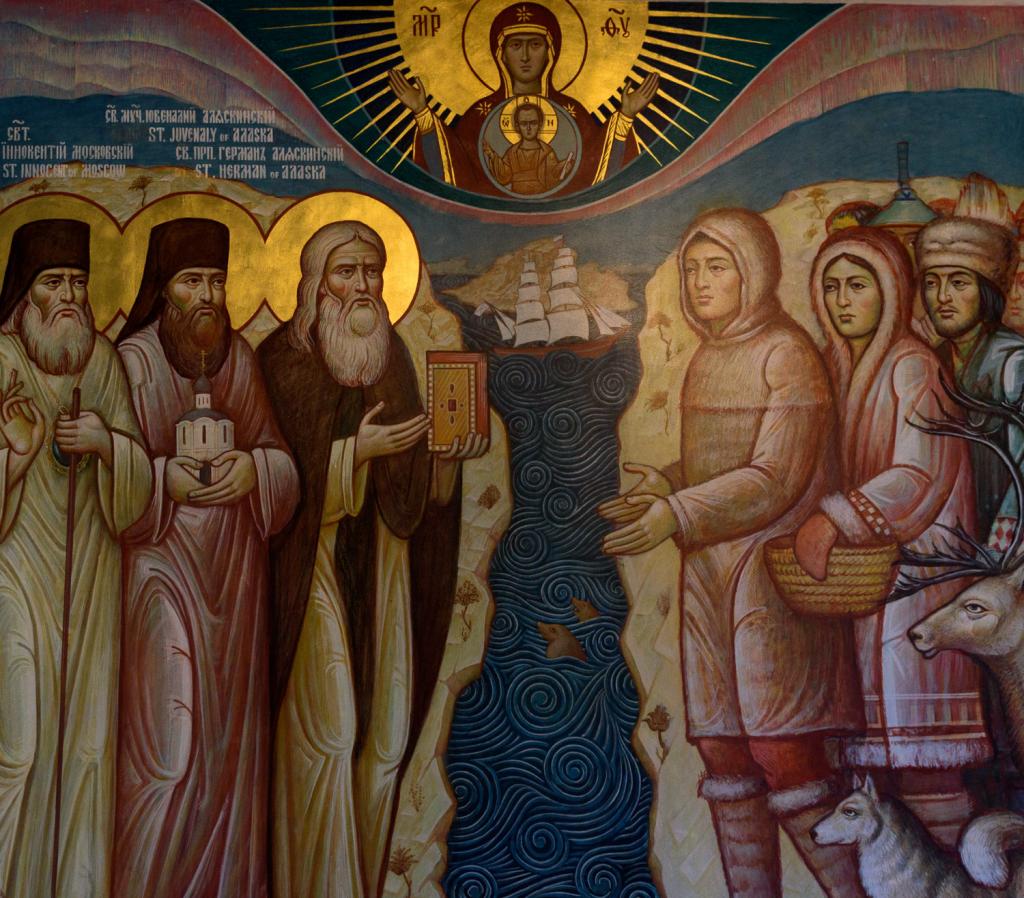
Is there any room for a view of theology that is both progressive as well as orthodox? Do the two ways of thinking contradict one another? On the one hand, progressive theology suggests something current and up-to-date. Whereas, orthodox reflects a belief that has been established for a long time.
Although there are plenty of progressives who desire to make something new out of Christianity, I believe the majority of people are simply interested in discovering the truth about early Christianity. They just want to know who Jesus really was and what early Christianity was all about apart from the denominational baggage that oftentimes colors our understanding of these things. I am one who falls into this category. I am uninterested in making something new, I just want to know Jesus in all of the ways in which I can. I believe progressive Christianity, although far from perfect, creates the best milieu for this to happen.
Understanding progressive Christianity in the later way we can see that there is no inherent contradiction between Christian orthodoxy and progressive Christianity. In fact, I believe if we are doing the progressive task properly, then we should be deconstructing orthodoxy into something that is more accurate to its time.
Unequivocal Orthodoxy
The first step in understanding orthodoxy properly is to understand it without equivocating. Evangelicalism oftentimes looks at orthodoxy as being something that spans all of history when in fact there are two types of orthodoxy. Well…as I will argue, there is only one, but in the evangelical world, two are observed.
The first is the classical view of orthodoxy, which positions itself at the heart of Early Christianity. This timeframe would range from the first council in Jerusalem to the final ecumenical council in the 8th century. Very few would argue with this view of classical orthodoxy – though some might argue about timeframes.
You might be surprised to learn that much of evangelical theology is not contained in classical orthodoxy as they espouse. Instead, much of it is contained within what I term “Reformed Orthodoxy”. What I mean by this is that much of evangelical theology is guided by the axioms established by the reformers (Luther and Calvin in particular).
You see evangelicalism is performing a sleight of hand when it comes to claiming they are orthodox. What I mean is that it is often argued that Luther and Calvin were in fact, re-establishing orthodoxy, which had been corrupted by the Catholic Church. For example, Calvin’s view of the sovereignty of God could be viewed as a reinterpretation of Augustine’s view. Therefore, by believing in Calvin’s view you are also believing in Augustine’s view. However, this is the very definition of equivocation and it is a logical fallacy. Calvin is not just restating what Augustine believed he is reinterpreting what he thinks Augustine believed. This means that he is creating something that has new principles, which are not found in Augustine. The fallacy is contained in the logic that although Augustine might espouse some of Calvin’s beliefs, he would not be a Calvinist. Likewise, although Calvin is borrowing some ideas from Augustine, he is not Augustinian. The entirety of the Reformation is not necessarily a renewing of old beliefs as much as it is a reinterpretation (you might even argue a more progressive understanding) of orthodox beliefs.
When evangelicals argue for having an orthodox faith one really needs to inquire into what that means since much of their “orthodoxy” is shrouded by reformed thinking. You will often hear certain Latin phrases are thrown around like Sola Scriptura (Scripture alone), Sola Fide (Faith Alone), Sola Gratia (Grace Alone), etc. Although these theological principles guided the Reformation (even that is up for debate), they are NOT remotely orthodox.
For example, Augustine did not believe in Faith alone (Sola Fides). Instead, he and his contemporaries believed in a faith and works-based system. It was later grossly distorted by the Catholic Church when they began charging money for indulgences – I digress.
Dogma
At the beginning of the article, I asked the question if orthodoxy and progressive Christianity can be married? Or are they antithetical to each other? The problem with evangelicalism is in how they employ dogma to so-called orthodox beliefs. There is nothing wrong with holding to an orthodox faith – I’d like to think that is what I hold to. It’s when we turn our orthodox faith into dogma that makes it problematic.
Dogmatics creates a seal across orthodoxy whereby we are unable to challenge any widely held belief within the orthodoxy – or even fix a flawed perspective. This is what evangelicalism has largely done. Certain aspects of the given orthodoxy are off-limits because those beliefs have become dogmatic (think creeds and confessions). However, as I asserted earlier, the orthodoxy that has become off-limits isn’t even real orthodoxy but reformed orthodoxy.
Some examples of reformed orthodoxy that have become dogmatic are the “Solas” mentioned earlier. Doctrines like inerrancy, penal substitution, and the majority of Calvinism is doctrine specific to the Reformation or later. Part of the problem is that there is a significant disconnect within evangelicalism’s pillars of theology. Theology is separated into Biblical, Historical, Systematic (Dogmatic), and Practical. All of these pillars should be condensed into a single endeavor so that each one can inform the other.
Why Care About Orthodoxy?
Up to this point, we have neglected an important question. Should we even care about orthodoxy? The Early Church was not infallible, so why do we care so much about what they believed?
There is a reason for this. The idea is that the closer someone is to the original source the more accurate their understanding is regarding the ideas that are presented. They have a better understanding of context as well as the overall worldview of the biblical writer. For example, Polycarp was a disciple of the disciple John. It would be expected that he would have greater insight into the disciple’s ideas than Augustine would – given his proximity to the source. Augustine would seemingly have greater insight, given his proximity to the source, than we would. This is why we rely so heavily on the insights of the Church Fathers. It has less to do with their competency and more to do with their proximity to the original sources.
Not only is it a worthwhile effort to deconstruct evangelicalism’s relationship to orthodoxy, but it is also valuable to deconstruct orthodoxy outside of evangelicalism. Not all insights from the Church Fathers have value. The Church Fathers have been known to make theological decisions based upon their doctrinal presuppositions. Keep in mind that the Church Fathers are just as prone to theological distortion as we are. Therefore, I think we should allow orthodoxy to inform our faith, but not consume it.

About Eric English
Eric is a rogue philosopher, theologian, podcaster and ninja. He is a father of three, husband of one, and a poet unto himself. Eric’s main areas of thinking are in philosophy (specifically, Soren Kierkegaard), theology (Narrative Perspectivism), and culture. Eric also hosts the podcast UNenlightenment. You can read more about the author here.
Previous Post

December 17, 2021
I Once Heard God's Voice
Next Post

January 12, 2022 Does God Exist: An Honest Reflection
Browse Our Archives
Select a Category Abortion Atonement Bible Book Review Church History Church/Culture Creative Deconstruction Deconstruction & Reconstruction Discipleship End Times Fun with Philosophy Incarnation Issues Jesus Meaning News Philosophy Podcast Polemic Political Problem of Evil Progressive Christianity Questions Return of Christ Second Coming Sexuality The Church Theology Truth Truth Uncategorized Universalism Women in Ministry
Select a Month October 2026 September 2026 August 2026 July 2026 June 2026 May 2026 December 2025 October 2025 September 2025 August 2025 July 2025 June 2025 May 2025 March 2025 February 2025 January 2025 October 2024 September 2024 August 2024 July 2024 June 2024 May 2024 April 2024 March 2024 February 2024 January 2024 December 2023 November 2023 October 2023 September 2023 August 2023 July 2023 June 2023 May 2023 April 2023 March 2023 February 2023 January 2023 December 2022 November 2022 October 2022 August 2022 May 2022 April 2022 March 2022 February 2022 January 2022 December 2021 November 2021 October 2021 August 2021 July 2021 June 2021 May 2021 April 2021 March 2021 February 2021 January 2021 December 2020 November 2020
Follow Us!
TAKE THE
Religious Wisdom Quiz
Which prophet was a shepherd and a sycamore-fig farmer?
Select your answer to see how you score.
Amos Micah Daniel Joel
Books by This Author Books by UNenlightenment
Related posts from UNenlightenment
After the Eulogy Comes the Resurrection
What Does It Mean To Be A Christian?
6 Questions Every Evangelical Should Be Asking Themselves

A Progressive Interpretation of the Bible
TRENDING AT PATHEOS Progressive Christian

Why Christians Have a Sacred Duty to Vote:...
The Bible offers strong support for the sacred duty to vote. Here...

What Being a Modern-Day Apostle Means to Me
In my last column, I discussed the ins and outs of modern-day...

Did Ancient China Once Worship the God of...
Across human history, a common thread weaves through the origins of the...

Love Your Neighbor – Including Earth-Kin: Lev. 19,...
God’s command to love your neighbor means acting in an ethical and...

Lead a Church Study of “Jesus and Lao...
Guest writer Jack Thomas (The Irreverent Reverend) reflects on leading his church...

Principles for Understanding the Apostolic Ministry Today
Whenever people discover that my formal ministry title is "apostle," as in...
view all Progressive Christian blogs
Ad-Free & Subscriber Log-In Subscription Support
- About Us
- 2026 Calendar
- Videos
- Podcasts
- Library of World Religions
- Faith In Media Tracker
- Advertise With Us
- Write for Us
- Privacy Policy
- Terms of Service
- Do Not Sell My Data
- Contact Us
- Radiant Digital
- Manage Newsletter Subscriptions
- Unsubscribe From Notifications
- Sitemap
Copyright 2008-2026, Patheos. All rights reserved.
Subscription Support Ad-Free & Subscriber Log-In
Follow Patheos