
BuddhistCatholicContemplativeEvangelicalGeneral ChristianHinduJewishLatter-day SaintMuslimNew VisionsProgressive Christian
Beliefs
- Buddhist
- Catholic
- Contemplative
- Evangelical
- General Christian
- Hindu
- Jewish
- Latter-day Saint
- More Voices
- Muslim
- New Visions
- Pagan
- Progressive Christian
Topics
- Religion News
- Food and Religion
- Sports and Religion
- Religious Art
- Religious Music and Entertainment
- Religious Events
- History and Religion
- Style and Religion
- Politics and Religion
- Women in Religion
- Recreation Outdoors and Religion
- Business Finance and Religion
- Careers Workplace and Religion
- Education and Religion
- Family Parenting and Religion
- Health Fitness and Religion
- Home and Religion
- Relationships and Religion
- Technology and Religion
- Travel and Religion
Columnists
- Buddhist Columnists
- Business Finance and Religion Columnists
- Careers Workplace and Religion Columnists
- Catholic Columnists
- Contemplative Columnists
- Education and Religion Columnists
- Evangelists Columnists
- Family Parenting and Religion Columnists
- General Christian Columnists
- Health Fitness and Religion Columnists
- Hindu Columnists
- History and Religion Columnists
- Home and Religion Columnists
- Jewish Columnists
- More Voices Columnists
- Latter Day Columnists
- Muslim Columnists
- New Visions Columnists
- Nonreligious Columnists
- Pagan Columnists
- Politics and Religion Columnists
- Progressive Columnists
- Recreation Outdoors and Religion Columnists
- Relationships and Religion Columnists
- Religion News Columnists
- Religious Art Columnists
- Religious Events Columnists
- Religious Music and Entertainment Columnists
- Sports and Religion Columnists
- Style and Religion Columnists
- Technology and Religion Columnists
- Travel and Religion Columnists
- Women in Religion Columnists
Resource Library
- 2026 Calendar
- Library of World Religions
- The 100 Most Holy Places on Earth
- Patheos Answers
- Podcasts
- Videos
- Faith Leaders Database
- Anglican Episcopalian
- Bahai
- Baptist
- Buddhism
- Christianity
- Confucianism
- Eastern Orthodoxy
- Hinduism
- Holiness and Pentecostal
- ISKCON
- Islam
- Judaism
- Lutheran
- Methodist
- The Church of Jesus Christ of Latter-day Saints
- New Age
- Paganism
- Presbytarian and Reformed
- Protestantism
- Religion Behind the Scenes
- Roman Catholic
- Scientology
- Shia Islam
- Sikhism
- Sufism
- Sunni Islam
- Taoism
- Zen
- See all religions
Research Tools
 Ad-Free & Subscriber Log-In Subscription Support
Ad-Free & Subscriber Log-In Subscription Support
Follow Patheos 

- Trending:
- Forgiveness
- |
- Marriage
- |
- Consciousness
- |
- Death Penalty
- |
- Election
- |
- Halloween

- Home
- Progressive Christian
- God is NOT Good: A Theodicy
God is NOT Good: A Theodicy
Last updated on: March 23, 2021 at 12:27 pm by Eric Scot English
God is NOT Good: A Theodicy 2021-03-23T12:27:11-04:00 Eric Scot English
Patheos Explore the world's faith through different perspectives on religion and spirituality! Patheos has the views of the prevalent religions and spiritualities of the world.
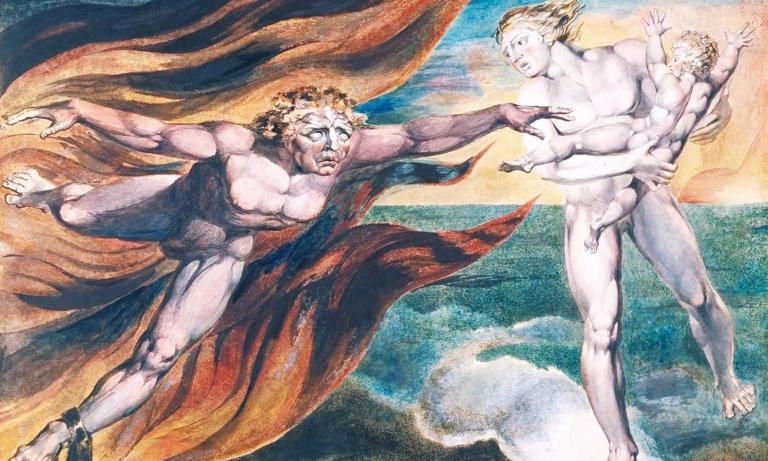
In the opening chapters of Genesis, we read that God created everything in the cosmos in six days. After each creation, we find that God says what He has created was “good”. We oftentimes assume that this proclamation reflects in some way God’s nature. If it is believed that God is good, then it must also be believed that His creation was as good as He is. However, we know this is not logically possible because God cannot create something to reflect His actual being (AKA omnipotence paradox). Therefore, since we know that He is not proclaiming good as a reflection of His nature, then it must be He is using it rhetorically (e.g. this will be good for humanity).
If God is not good, then what is He?
God’s lack of goodness doesn’t make Him unempathetic nor does it make Him evil. In fact, I believe God is amoral, which means that He is neither good nor evil. Just as God is above the laws of nature and even logic, so too is He is above those ethical categories that describe moral decision-making.
If God were a moral being then the possibility of evil is always present within Him. This is what I refer to as a necessary antithesis. Necessary antithesis occurs when a singular claim is made without considering the logical consequences of its antithetical counterpart. For example, if God made moral decisions, then at some point in the process God had to consider the evil option. If He had to consider the evil option, then in some possible world that option is chosen.
God also has no ethical responsibility to another. Humans have ethical responsibility because we live among other humans. There are no laws for God, no rules He must exist by or follow. He is only bound by the logic of His own being.
It seems to me that God’s interaction with humanity in a perceived moral sense is an illusion created by us because we have no way to understand anything outside of moral behavior. Because God is descending from the metaphysical to the physical, He always appears to us to be within the ethical. This ethical framework was created by God for humanity to have boundaries.
One might point to the commandments that God gave to Moses as a justification for the morality of God. However, the commandments that God gave Moses were not commands that reflected God’s nature but were given as a boundary for His followers to live by. A rule of law for the Hebrews.
This raises the question, does God make any decisions? Can His actions ever be judged as right or just? There exist two perspectives when dealing with a metaphysical being like God. The first is the perspective that He has concerning His creation. Second, is the perspective that people have towards God. God’s perspective is unlimited because He has the whole breadth of time available to Him. Whereas, humanity has only the past and the now.
Moreover, God’s actions from His own perspective are what they are, they are neither good nor bad – they just are. However, we judge what we experience from God within an ethical framework because that is our only option. The problem is that when we view God from our ethical perspective, we limit ourselves by not recognizing that there is a dual perspective at play.
Kierkegaard provides us with a great example to better understand this. In Fear and Trembling Kierkegaard helps us to understand something called the “teleological suspension of the ethical”. He uses it in the context of the story of Abraham sacrificing his son, Isaac. From our perspective, God’s proclamation for Abraham to sacrifice his one and only son is absurdly immoral. However, from God’s perspective, it is not.
Why?
Because God already knows what Abraham will do and that there will be no need for human sacrifice. Kierkegaard tells us the only way that we can understand this properly is to suspend our notion of the ethical.
That means when we judge an action from God based on our perspective, we think that the action reflects some ontological aspect of God. But this is just our point of view. Just because we view God from an ethical perspective doesn’t mean that He actually exists within an ethical framework.
The Problem of Evil
There is a direct correlation between the problem of evil and the goodness of God. The problem of evil asks the question, how can God be good while allowing evil and suffering to take place in the world? There have been many attempted explanations, but most fall short. What kind of explanation can we provide for why there exists both evil in the world and a God that is good? (This is also referred to as a theodicy.) The short answer is we cannot.
However, if you take away His ability to perform evil, then you have also taken away any reason God might have for participating in evil. Moreover, the fact that there is evil in the world has nothing to do with whether or not some Divine Being exists. God is not responsible for evil because He did not cause evil to occur – humans did. Evil has nothing to do with the nature of being and therefore, the question of evil as it relates to God’s existence is null.
The better question is why did God not intervene to prevent some evil from occurring? Why did God allow this child to suffer and then die? We call this gratuitous evil. That is, evil that has no apparent reason or purpose to it – it seems arbitrary.
To me, the point that is overlooked is that even if God did not exist, evil still does. Is nature to be held responsible for evil? Who or what would be held responsible for evil in a world where God does not exist? The person who commits the evil is held responsible, both in a world where God does exist, as well as a world where He does not exist.
If anything, the problem of evil does not provide a problem for God’s existence, but rather gives meaning to it. The existence of God provides us hope and meaning into the otherwise dark despair of human suffering. When we are in our deepest despair and question God’s goodness, we can rest in the assurance that God is love. We are told in John 3:16 that God sent His son out of His vast love for humanity. Without God, there is no hope, but there is still human suffering. With God, there is hope and a place filled with the unconditional love of Jesus Christ.
You can view my new UNenlightenment YouTube Channel HERE
You can view my new UNenlightenment Podcast HERE
You can follow me on FaceBook HERE

About Eric Scot English
Eric English is a rogue philosopher, professional web developer, and ninja (in that order). He is a father of three, husband of one, and a poet unto himself. Eric’s main areas of thinking are in philosophy (specifically, Soren Kierkegaard), theology (Narrative Perspectivism), and culture. Follow Eric on Facebook https://www.facebook.com/ericscotenglish You can read more about the author here.
Previous Post
January 26, 2021
Fun With Philosophy: The Soul
Next Post

February 7, 2021 Do Evangelicals Really Believe in God?
Browse Our Archives
Select a Category Abortion Atonement Bible Book Review Church History Church/Culture Creative Deconstruction Deconstruction & Reconstruction Discipleship End Times Fun with Philosophy Incarnation Issues Jesus Meaning News Philosophy Podcast Polemic Political Problem of Evil Progressive Christianity Questions Return of Christ Second Coming Sexuality The Church Theology Truth Truth Uncategorized Universalism Women in Ministry
Select a Month October 2026 September 2026 August 2026 July 2026 June 2026 May 2026 December 2025 October 2025 September 2025 August 2025 July 2025 June 2025 May 2025 March 2025 February 2025 January 2025 October 2024 September 2024 August 2024 July 2024 June 2024 May 2024 April 2024 March 2024 February 2024 January 2024 December 2023 November 2023 October 2023 September 2023 August 2023 July 2023 June 2023 May 2023 April 2023 March 2023 February 2023 January 2023 December 2022 November 2022 October 2022 August 2022 May 2022 April 2022 March 2022 February 2022 January 2022 December 2021 November 2021 October 2021 August 2021 July 2021 June 2021 May 2021 April 2021 March 2021 February 2021 January 2021 December 2020 November 2020
Follow Us!
TAKE THE
Religious Wisdom Quiz
Rejoice in the Lord always. I will say it again: __!
Select your answer to see how you score.
Pray Hope Rejoice Believe
Books by This Author Books by UNenlightenment
Related posts from UNenlightenment

God's Silence and the Anger We're Afraid to...

Are You A Saul Or Paul: The False...

Kierkegaard and Christian Nationalism
Fun with Philosophy: Experimenting with Certainty & God's...
TRENDING AT PATHEOS Progressive Christian

What Being a Modern-Day Apostle Means to Me
In my last column, I discussed the ins and outs of modern-day...

Did Ancient China Once Worship the God of...
Across human history, a common thread weaves through the origins of the...

Love Your Neighbor – Including Earth-Kin: Lev. 19,...
God’s command to love your neighbor means acting in an ethical and...

Lead a Church Study of “Jesus and Lao...
Guest writer Jack Thomas (The Irreverent Reverend) reflects on leading his church...

Pastoral Wisdom for Responding to Sermon Pushback
Getting sermon pushback on your social justice sermon? Learn practical, Proverbs-based strategies...

Principles for Understanding the Apostolic Ministry Today
Whenever people discover that my formal ministry title is "apostle," as in...
view all Progressive Christian blogs
Ad-Free & Subscriber Log-In Subscription Support
- About Us
- 2026 Calendar
- Videos
- Podcasts
- Library of World Religions
- Faith In Media Tracker
- Advertise With Us
- Write for Us
- Privacy Policy
- Terms of Service
- Do Not Sell My Data
- Contact Us
- Radiant Digital
- Manage Newsletter Subscriptions
- Unsubscribe From Notifications
- Sitemap
Copyright 2008-2026, Patheos. All rights reserved.
Subscription Support Ad-Free & Subscriber Log-In
Follow Patheos