
BuddhistCatholicContemplativeEvangelicalGeneral ChristianHinduJewishLatter-day SaintMuslimNew VisionsProgressive Christian
Beliefs
- Buddhist
- Catholic
- Contemplative
- Evangelical
- General Christian
- Hindu
- Jewish
- Latter-day Saint
- More Voices
- Muslim
- New Visions
- Pagan
- Progressive Christian
Topics
- Religion News
- Food and Religion
- Sports and Religion
- Religious Art
- Religious Music and Entertainment
- Religious Events
- History and Religion
- Style and Religion
- Politics and Religion
- Women in Religion
- Recreation Outdoors and Religion
- Business Finance and Religion
- Careers Workplace and Religion
- Education and Religion
- Family Parenting and Religion
- Health Fitness and Religion
- Home and Religion
- Relationships and Religion
- Technology and Religion
- Travel and Religion
Columnists
- Buddhist Columnists
- Business Finance and Religion Columnists
- Careers Workplace and Religion Columnists
- Catholic Columnists
- Contemplative Columnists
- Education and Religion Columnists
- Evangelists Columnists
- Family Parenting and Religion Columnists
- General Christian Columnists
- Health Fitness and Religion Columnists
- Hindu Columnists
- History and Religion Columnists
- Home and Religion Columnists
- Jewish Columnists
- More Voices Columnists
- Latter Day Columnists
- Muslim Columnists
- New Visions Columnists
- Nonreligious Columnists
- Pagan Columnists
- Politics and Religion Columnists
- Progressive Columnists
- Recreation Outdoors and Religion Columnists
- Relationships and Religion Columnists
- Religion News Columnists
- Religious Art Columnists
- Religious Events Columnists
- Religious Music and Entertainment Columnists
- Sports and Religion Columnists
- Style and Religion Columnists
- Technology and Religion Columnists
- Travel and Religion Columnists
- Women in Religion Columnists
Resource Library
- 2026 Calendar
- Library of World Religions
- The 100 Most Holy Places on Earth
- Patheos Answers
- Podcasts
- Videos
- Faith Leaders Database
- Anglican Episcopalian
- Bahai
- Baptist
- Buddhism
- Christianity
- Confucianism
- Eastern Orthodoxy
- Hinduism
- Holiness and Pentecostal
- ISKCON
- Islam
- Judaism
- Lutheran
- Methodist
- The Church of Jesus Christ of Latter-day Saints
- New Age
- Paganism
- Presbytarian and Reformed
- Protestantism
- Religion Behind the Scenes
- Roman Catholic
- Scientology
- Shia Islam
- Sikhism
- Sufism
- Sunni Islam
- Taoism
- Zen
- See all religions
Research Tools
 Ad-Free & Subscriber Log-In Subscription Support
Ad-Free & Subscriber Log-In Subscription Support
Follow Patheos 

- Trending:
- Forgiveness
- |
- Marriage
- |
- Consciousness
- |
- Death Penalty
- |
- Election
- |
- Halloween

- Home
- Evangelical
- A Fourth of July Reflection: Taking Exception to American Exceptionalism
A Fourth of July Reflection: Taking Exception to American Exceptionalism
Last updated on: July 4, 2019 at 8:43 pm by Paul Louis Metzger
A Fourth of July Reflection: Taking Exception to American Exceptionalism 2019-07-04T20:43:37-07:00 Paul Louis Metzger
Patheos Explore the world's faith through different perspectives on religion and spirituality! Patheos has the views of the prevalent religions and spiritualities of the world.
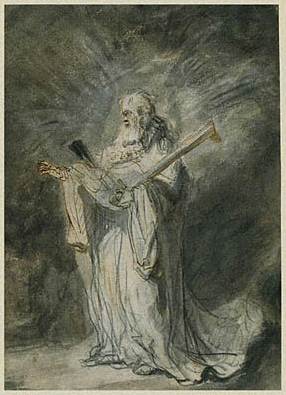
Ferdinand Bol (1616–1680) , God’s Messenger Appears to Joshua. This work is linked to Joshua 5:13 (1642); Wikimedia {{PD-US-expired-abroad}}

Today we who are Americans celebrate the founding of our great nation—a wondrous experiment in the pursuit of democratic ideals. There is much to celebrate for sure: freedom from tyrannical regimes where people have no freedom in the areas of speech and religion, among other human longings and values. Of course, we have had more than our fair or unfair share of overwhelming challenges along the way, such as with the struggles for civil rights for various groups of people, including ethnic minorities and women. Even so, our democracy continues to move forward in pursuit of its values set forth in its founding documents. In the midst of the fanfare, I can’t help but ask: why must many Americans consider our nation to be the best for it to be great? Certainly, it is a great nation. But who are we Americans to say that it is the best or most exceptional nation on the earth, the exception to the rule? What criterion do we use for our long-standing conviction of our exceptionalism? The largest economy? The greatest military? State of the art health care research? Nations in our time and nations to follow will no doubt debate where such superlatives go on the ladder of greatness.
The origins of American exceptionalism is sometimes attributed to John Winthrop’s exhortation to his fellow colonists in New England: “We shall be as a city upon a hill. The eyes of all people are upon us.” However, others claim that it arises in view of the European Enlightenment. According to Donald E. Pease in his article titled “American Exceptionalism” in Oxford Bibliographies, America’s founding fathers
imagined the United States as an unprecedentedly free, new nation based on founding documents—the Declaration of Independence and the Constitution—that announced its unique destiny to become the champion of the universal rights of all humankind. In Rights of Man (1792), Thomas Paine asserted that the “revolution of America presented in politics what was only theory in mechanics.” Despite American exceptionalism’s standing as an invariant tenet of the national creed, however, accounts of the discourse’s content have changed with historical circumstances. American exceptionalism has been taken to mean that America is either “distinctive” (meaning merely different), or “unique” (meaning anomalous), or “exemplary” (meaning a model for other nations to follow), or “exempt” from the laws of historical progress (meaning that it is an “exception” to the laws and rules governing the development of other nations).The particulars attributed to the term have been said to refer to clusters of absent and present elements—the absence of feudal hierarchies, class conflicts, a socialist labor party, trade unionism, and divisive ideological passions, and the presence of a predominant middle class, tolerance for diversity, upward mobility, hospitality toward immigrants, a shared constitutional faith, and liberal individualism—that putatively set America apart from other national cultures. Although historical realities have posed significant challenge, these tenets have proven uncommonly resilient.
I take exception to America’s or any nation’s sense of exceptionalism in light of another nation’s founding documents. In the Bible, the nation of Israel under Joshua was on its way to conquer the Promised Land. As Joshua and the people were about to march on Jericho, Joshua came face to face with an imposing figure with a drawn sword in his hand. Let’s take a look at Joshua 5:13-15:
13 When Joshua was by Jericho, he lifted up his eyes and looked, and behold, a man was standing before him with his drawn sword in his hand. And Joshua went to him and said to him, “Are you for us, or for our adversaries?” 14 And he said, “No; but I am the commander of the army of the LORD. Now I have come.” And Joshua fell on his face to the earth and worshiped and said to him, “What does my lord say to his servant?” 15 And the commander of the LORD’s army said to Joshua, “Take off your sandals from your feet, for the place where you are standing is holy.” And Joshua did so (ESV).
As revealed in this passage, Joshua asks the “man” looming before him whose side is he on, to which the figure responds that he is not on either side. Rather, he has come as the commander of the Lord’s most exceptional army of heaven. Joshua falls flat before the heavenly commander in homage and then takes off his sandals in response to the commander’s command. It is reminiscent of what the Angel of the LORD told Moses to do in Exodus 3:4-6:
“Moses, Moses!” And he said, “Here I am.” 5 Then he said, “Do not come near; take your sandals off your feet, for the place on which you are standing is holy ground.” 6 And he said, “I am the God of your father, the God of Abraham, the God of Isaac, and the God of Jacob.” And Moses hid his face, for he was afraid to look at God (ESV).
This text may, or rather should, also call to mind Paul’s hymn of praise to Jesus in Philippians 2:9-11:
9 Therefore God has highly exalted him and bestowed on him the name that is above every name, 10 so that at the name of Jesus every knee should bow, in heaven and on earth and under the earth, 11 and every tongue confess that Jesus Christ is Lord, to the glory of God the Father.
How about the rest of us, especially those who claim to be American Christians? Do we presume that God is on our side, just like soldiers of various military forces that have gone into battle throughout history with “Gott mit uns” or “God with us” (or in some other language) etched on their belt buckles, rolling off their tongues, and stirring in their hearts? I honor the bravery of America’s soldiers throughout the generations, who have put themselves in harm’s way for our democratic ideals and our society at large. Still, the presumption that we might find lurking in our souls that God is on our side does not pay honor to the commander of the Lord’s army–Jesus. The question is not to be posed to God: “What side are you on?” but “Lord, what side are we on?”
Patriotism is a very good thing—maintaining loyalty to one’s nation. However, blind nationalism and exceptionalism that claims that one’s country can do no wrong, or that one’s country is synonymous with the kingdom of God is by no means exceptional from the vantage point of the Bible. Even God’s chosen people—Israel—had to guard against such presumption or face God’s stinging rebuke or worse, including abandonment of its empire and imprisonment in exile. If such is the case with God’s chosen people in the Bible, do we think God would excuse us who espouse America as God’s chosen nation from a similar fate?
Previous Post

July 2, 2013
My Top 5 Books on Evangelism
Next Post
July 8, 2013 White Theology, Part I
Browse Our Archives
Select a Category Uncategorized
Select a Month June 2025 April 2025 March 2025 January 2025 December 2024 November 2024 October 2024 September 2024 August 2024 July 2024 June 2024 May 2024 April 2024 March 2024 February 2024 January 2024 December 2023 November 2023 October 2023 September 2023 August 2023 July 2023 June 2023 May 2023 April 2023 March 2023 February 2023 January 2023 December 2022 November 2022 October 2022 September 2022 August 2022 July 2022 June 2022 May 2022 April 2022 March 2022 February 2022 January 2022 December 2021 November 2021 October 2021 September 2021 August 2021 July 2021 June 2021 May 2021 April 2021 March 2021 February 2021 January 2021 December 2020 November 2020 October 2020 September 2020 August 2020 July 2020 June 2020 May 2020 April 2020 March 2020 February 2020 January 2020 December 2019 November 2019 October 2019 September 2019 August 2019 July 2019 June 2019 May 2019 April 2019 March 2019 February 2019 January 2019 December 2018 November 2018 October 2018 September 2018 August 2018 July 2018 June 2018 May 2018 April 2018 March 2018 February 2018 January 2018 December 2017 November 2017 October 2017 September 2017 August 2017 July 2017 June 2017 May 2017 April 2017 March 2017 February 2017 January 2017 December 2016 November 2016 October 2016 September 2016 August 2016 July 2016 June 2016 May 2016 April 2016 March 2016 February 2016 January 2016 December 2015 November 2015 October 2015 September 2015 August 2015 July 2015 June 2015 May 2015 April 2015 March 2015 February 2015 January 2015 December 2014 November 2014 October 2014 September 2014 August 2014 July 2014 June 2014 May 2014 April 2014 March 2014 February 2014 January 2014 December 2013 November 2013 October 2013 September 2013 August 2013 July 2013 June 2013 May 2013 April 2013 March 2013 February 2013 January 2013 December 2012 November 2012 October 2012 September 2012 August 2012 July 2012 June 2012 May 2012 April 2012 March 2012 February 2012
Follow Us!
TAKE THE
Religious Wisdom Quiz
What did Ezekiel cook his food over as a sign of coming judgment?
Select your answer to see how you score.
Cow dung Ashes Wood Stones
Books by This Author Books by Paul Louis Metzger
Related posts from Uncommon God, Common Good

Heavenly Father’s Day on Trinity Sunday

Easter Triduum: Obey Your Thirst—for God

Holy Week Is Humble Week: "Beware of Becoming...

Excavating the Person in a Throwaway Culture
TRENDING AT PATHEOS Evangelical

The REST of Your Life: A Creative Wrestles...
This week I had a conversation with a good friend from church....

How the author of the world's best hymn...
I've been working with John Newton for a while now. This makes...

Long before this Lectio Divina, Psalm 130 - the song - started...

What About the Trees? Another Living Parable
After I finished writing the last article about falling leaves as a...

Why Classical Education Is a Conversation, Not a...
Come and Read: Joy in Classical Education When I was a little...

Cornell University has received a great deal of negative publicity and intense...
view all Evangelical blogs
Ad-Free & Subscriber Log-In Subscription Support
- About Us
- 2026 Calendar
- Videos
- Podcasts
- Library of World Religions
- Faith In Media Tracker
- Advertise With Us
- Write for Us
- Privacy Policy
- Terms of Service
- Do Not Sell My Data
- Contact Us
- Radiant Digital
- Manage Newsletter Subscriptions
- Unsubscribe From Notifications
- Sitemap
Copyright 2008-2026, Patheos. All rights reserved.
Subscription Support Ad-Free & Subscriber Log-In
Follow Patheos