
BuddhistCatholicContemplativeEvangelicalGeneral ChristianHinduJewishLatter-day SaintMuslimNew VisionsProgressive Christian
Beliefs
- Buddhist
- Catholic
- Contemplative
- Evangelical
- General Christian
- Hindu
- Jewish
- Latter-day Saint
- More Voices
- Muslim
- New Visions
- Pagan
- Progressive Christian
Topics
- Religion News
- Food and Religion
- Sports and Religion
- Religious Art
- Religious Music and Entertainment
- Religious Events
- History and Religion
- Style and Religion
- Politics and Religion
- Women in Religion
- Recreation Outdoors and Religion
- Business Finance and Religion
- Careers Workplace and Religion
- Education and Religion
- Family Parenting and Religion
- Health Fitness and Religion
- Home and Religion
- Relationships and Religion
- Technology and Religion
- Travel and Religion
Columnists
- Buddhist Columnists
- Business Finance and Religion Columnists
- Careers Workplace and Religion Columnists
- Catholic Columnists
- Contemplative Columnists
- Education and Religion Columnists
- Evangelists Columnists
- Family Parenting and Religion Columnists
- General Christian Columnists
- Health Fitness and Religion Columnists
- Hindu Columnists
- History and Religion Columnists
- Home and Religion Columnists
- Jewish Columnists
- More Voices Columnists
- Latter Day Columnists
- Muslim Columnists
- New Visions Columnists
- Nonreligious Columnists
- Pagan Columnists
- Politics and Religion Columnists
- Progressive Columnists
- Recreation Outdoors and Religion Columnists
- Relationships and Religion Columnists
- Religion News Columnists
- Religious Art Columnists
- Religious Events Columnists
- Religious Music and Entertainment Columnists
- Sports and Religion Columnists
- Style and Religion Columnists
- Technology and Religion Columnists
- Travel and Religion Columnists
- Women in Religion Columnists
Resource Library
- 2026 Calendar
- Library of World Religions
- The 100 Most Holy Places on Earth
- Patheos Answers
- Podcasts
- Videos
- Faith Leaders Database
- Anglican Episcopalian
- Bahai
- Baptist
- Buddhism
- Christianity
- Confucianism
- Eastern Orthodoxy
- Hinduism
- Holiness and Pentecostal
- ISKCON
- Islam
- Judaism
- Lutheran
- Methodist
- The Church of Jesus Christ of Latter-day Saints
- New Age
- Paganism
- Presbytarian and Reformed
- Protestantism
- Religion Behind the Scenes
- Roman Catholic
- Scientology
- Shia Islam
- Sikhism
- Sufism
- Sunni Islam
- Taoism
- Zen
- See all religions
Research Tools
 Ad-Free & Subscriber Log-In Subscription Support
Ad-Free & Subscriber Log-In Subscription Support
Follow Patheos 

- Trending:
- Forgiveness
- |
- Marriage
- |
- Consciousness
- |
- Death Penalty
- |
- Election
- |
- Halloween

- Home
- Evangelical
- Family, Parenting and Religion
- Stimulate Growth by Grace
Stimulate Growth by Grace
Last updated on: February 3, 2024 at 11:03 am by Paul Louis Metzger
Stimulate Growth by Grace 2024-02-03T11:03:40-08:00 Paul Louis Metzger
Patheos Explore the world's faith through different perspectives on religion and spirituality! Patheos has the views of the prevalent religions and spiritualities of the world.
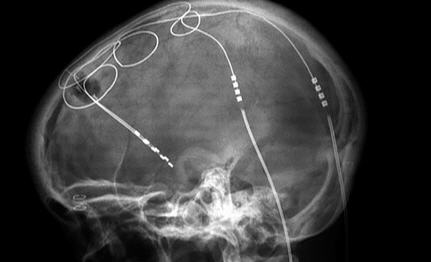
Deep Brain Stimulation Probes of the skull; 28 October 2013; http://radiopaedia.org/articles/deep-brain-stimulation; Author Dr. Craig Hacking, A. Prof Frank Gaillard; Creative Commons

One of the most important endeavors in life is to stimulate a meaningful response in someone for personal growth. But what happens if they are not interested, or do not demonstrate an ability to signal a meaningful response? This post reflects on this subject and highlights the importance of stimulation motivated by compassion and grace.
As an educator, I work hard to try and motivate student interest on a topic. Take, for example, the modern philosopher and ethicist, Immanuel Kant. Most of my students are not inclined to study Kant, but we ‘ought’ to account for him in courses involving philosophy and ethics. To use Kantian language, it is my “moral duty”!
Kant’s writing style is not inviting to most students. His thought processes and terminology are daunting to comprehend and master. Initially, and sometimes continuously, the look you see in their eyes when you say “Kant” conveys the non-verbal reply “can’t.” But I keep trying.
I have even stooped to show classes a short Monty Python comedy skit on German and Greek philosophers competing in a football match in the attempt to awaken curiosity in philosophy. I am not sure the students learn anything about Kant through it. For one, there is only a brief mention of his categorical imperative. But at least it helps them laugh a bit amid crying themselves to sleep while reading him!
I wish I had time when visiting Christopher to read Kant and other philosophers to him. Much of my time goes to doing range of motion exercises, while talking to him and advocating for him with staff. Of course, I also talk to my son, sing songs for him, play music on his tablet. The list goes on. Come to think of it, if I could find a recording of Eminem performing Kant’s three critiques to rap, Christopher and some of my students might find that far more meaningful than my perpetual rant.
It is not only teachers who seek to motivate others to take interest in a subject or product. Preachers, advertisers, salespeople, coaches, politicians, and therapists are all trying to stimulate a response. What happens when no response is forthcoming? Resort to Monty Python or Eminem?
We work hard to stimulate responses in Christopher since his traumatic brain injury three years ago. Medical personnel do, too. It can be hit or miss, which is quite discouraging at times. I have gotten so desperate on occasion that I have said to my son with a smile on my face that I would rejoice if he would haul off and punch me in the nose. Indeed, I would rejoice! And I bet you down deep inside he would really like to do it some days when I am singing to him. The nurse whom we call the “Second Mom” is delighted when he has given her the middle finger (no doubt to indicate there is only one way to heaven) in response to putting eye drops in his eyes. He hates those drops, but they love each other. They have quite the bond.
My wife and I have witnessed Christopher trying to respond to our prompts. He will move his fingers and limbs ever so slowly and faintly on most occasions. At other times, we look into his eyes and see only a blank stare. That is what minimal consciousness entails—you never know what you will get in response to prompts.
We are seeking ways to stimulate more responses in Christopher. Stimulation is everything, but we can only be there for an hour or two each day. We are thankful for the resources we have to hand that will make it possible to gain more therapies for Christopher. Please pray for wisdom on how to proceed as we advocate for increased stimulation.
All too often, we give up trying to stimulate someone if they do not respond to prompts. We might say “hello” to another person many times, but stop doing so, if they never reply. I might be tempted to stop teaching Kant based on initial reactions to him. However, I have a “moral duty” to keep at it! It is not about what students want me to do, but what I ought to do, if I am thinking in a Kantian vein.
Insurance providers often place limits on when patients can receive therapies. If someone does not respond, the therapies cease. Fortunately, several medical doctors support our effort to increase therapies. For example, our palliative care and medical ethicist advisor Dr. Potter maintains that instead of providing stimulation only in the event one shows responsiveness, one should provide stimulation in the hope of generating a response. It might not come quickly. But like Dr. Potter and the pain clinic doctor maintain, it might take a significant amount of time to cultivate a meaningful response. We won’t know unless we try.
All too often, insurance providers are like the rest of us. Stimulation is a rare commodity. If you exert and spend it, you will diminish it. The same holds for compassion. It is a scarce resource, so if you spend it, you will lose it. Fortunately, there is another outlook. Philosopher Michael Sandel (who likes Kant!) maintains that compassion is like a muscle. If you use it, it will grow.
I do not intend any disrespect to insurance providers. They are having to account for limited resources to apply to a daunting number of patients. That said, it becomes quite discouraging when therapies cease for Christopher due to a lack of sufficient responsiveness. The determination is made that society will get more bang for their buck if and when the money can go to patients who will respond more frequently to prompts.
I am thankful that God continues to try and stimulate me through compassion, even when I rarely respond as I ought. I don’t think God does it merely based on a moral duty, but because God really is passionate about loving me—and you, too! Just this morning, I read 1 John. 1 John 4:10 and 4:19 are inspiring verses that stimulated in me a response of deep affection and gratitude: “This is love: not that we loved God, but that he loved us and sent his Son as an atoning sacrifice for our sins” and “We love because he first loved us.”
God keeps saying hello to us, keeps reaching out to us, keeps seeking to stimulate a response of love for God and others. God does not stop trying to stimulate us even after countless efforts. If that is the case with God, how can I be different, if I claim to love God? I need to love like God loves. I need to try and stimulate love like God does. May each of us keep seeking to stimulate growth in others no matter what. May we love because God first loved us and continues to love us.
We are thankful for countless people who have been such examples of God’s love to us. Even though Christopher is not further along in his recovery at this point, they still pray. They still encourage. They still give. They have provided so sacrificially for Christopher, his wife, and daughter, and it is making a difference. On account of God’s stimulating love on display through them, we have the emotional energy to keep fighting for Christopher and his family, to keep stimulating, in vibrant hope that he will respond increasingly. He simply needs more stimulation, and we have every intention of making that a reality. It is not simply based on a moral duty, but on God’s abundant, stimulating grace.
Family, Parenting and Religion
Health, Fitness and Religion

About Paul Louis Metzger
Paul Louis Metzger, Ph.D., is Professor of Theology & Culture, Multnomah University & Seminary; Director of The Institute for Cultural Engagement: New Wine, New Wineskins; and Author and Editor of numerous works, including More Than Things: A Personalist Ethics for a Throwaway Culture (IVP Academic, 2023). You can read more about the author here.
Previous Post

January 22, 2024
The Power of Providential Thinking
Next Post

March 2, 2024 Reenchanting Patient Care in a Disenchanted Age
Recent Comments
"Humility is a powerful weapon of mass construction. "On Palm Sunday, Jesus rides in triumph ..."
Holy Week Is Humble Week: “Beware ..."
"There is a new counter-apologetic method which is successfully being used against the arguments of ..."
Heavenly Father’s Day on Trinity Sunday
"A throwaway culture cannot be our way of proceeding was often emphasized by the late ..."
Excavating the Person in a Throwaway ..."
"Dr. Metzger, I appreciate your insight and transparency in this post. I have just added ..."
Embracing Emotions’ Full Range: From Grief ..."
Browse Our Archives
Select a Category Uncategorized
Select a Month June 2025 April 2025 March 2025 January 2025 December 2024 November 2024 October 2024 September 2024 August 2024 July 2024 June 2024 May 2024 April 2024 March 2024 February 2024 January 2024 December 2023 November 2023 October 2023 September 2023 August 2023 July 2023 June 2023 May 2023 April 2023 March 2023 February 2023 January 2023 December 2022 November 2022 October 2022 September 2022 August 2022 July 2022 June 2022 May 2022 April 2022 March 2022 February 2022 January 2022 December 2021 November 2021 October 2021 September 2021 August 2021 July 2021 June 2021 May 2021 April 2021 March 2021 February 2021 January 2021 December 2020 November 2020 October 2020 September 2020 August 2020 July 2020 June 2020 May 2020 April 2020 March 2020 February 2020 January 2020 December 2019 November 2019 October 2019 September 2019 August 2019 July 2019 June 2019 May 2019 April 2019 March 2019 February 2019 January 2019 December 2018 November 2018 October 2018 September 2018 August 2018 July 2018 June 2018 May 2018 April 2018 March 2018 February 2018 January 2018 December 2017 November 2017 October 2017 September 2017 August 2017 July 2017 June 2017 May 2017 April 2017 March 2017 February 2017 January 2017 December 2016 November 2016 October 2016 September 2016 August 2016 July 2016 June 2016 May 2016 April 2016 March 2016 February 2016 January 2016 December 2015 November 2015 October 2015 September 2015 August 2015 July 2015 June 2015 May 2015 April 2015 March 2015 February 2015 January 2015 December 2014 November 2014 October 2014 September 2014 August 2014 July 2014 June 2014 May 2014 April 2014 March 2014 February 2014 January 2014 December 2013 November 2013 October 2013 September 2013 August 2013 July 2013 June 2013 May 2013 April 2013 March 2013 February 2013 January 2013 December 2012 November 2012 October 2012 September 2012 August 2012 July 2012 June 2012 May 2012 April 2012 March 2012 February 2012
Follow Us!
TAKE THE
Religious Wisdom Quiz
What meal did the Israelites eat before leaving Egypt?
Select your answer to see how you score.
Feast of Booths Firstfruits Day of Atonement meal Passover
Books by This Author Books by Paul Louis Metzger
Related posts from Uncommon God, Common Good

Stimulate Your Brain and Soul with Good Medicine...

Heavenly Father’s Day on Trinity Sunday

Easter Triduum: Obey Your Thirst—for God

Holy Week Is Humble Week: "Beware of Becoming...
TRENDING AT PATHEOS Evangelical

The REST of Your Life: A Creative Wrestles...
This week I had a conversation with a good friend from church....

How the author of the world's best hymn...
I've been working with John Newton for a while now. This makes...

Long before this Lectio Divina, Psalm 130 - the song - started...

What About the Trees? Another Living Parable
After I finished writing the last article about falling leaves as a...

Why Classical Education Is a Conversation, Not a...
Come and Read: Joy in Classical Education When I was a little...

Cornell University has received a great deal of negative publicity and intense...
view all Evangelical blogs
What Are Your Thoughts?leave a comment
Ad-Free & Subscriber Log-In Subscription Support
- About Us
- 2026 Calendar
- Videos
- Podcasts
- Library of World Religions
- Faith In Media Tracker
- Advertise With Us
- Write for Us
- Privacy Policy
- Terms of Service
- Do Not Sell My Data
- Contact Us
- Radiant Digital
- Manage Newsletter Subscriptions
- Unsubscribe From Notifications
- Sitemap
Copyright 2008-2026, Patheos. All rights reserved.
Subscription Support Ad-Free & Subscriber Log-In
Follow Patheos