
BuddhistCatholicContemplativeEvangelicalGeneral ChristianHinduJewishLatter-day SaintMuslimNew VisionsProgressive Christian
Beliefs
- Buddhist
- Catholic
- Contemplative
- Evangelical
- General Christian
- Hindu
- Jewish
- Latter-day Saint
- More Voices
- Muslim
- New Visions
- Pagan
- Progressive Christian
Topics
- Religion News
- Food and Religion
- Sports and Religion
- Religious Art
- Religious Music and Entertainment
- Religious Events
- History and Religion
- Style and Religion
- Politics and Religion
- Women in Religion
- Recreation Outdoors and Religion
- Business Finance and Religion
- Careers Workplace and Religion
- Education and Religion
- Family Parenting and Religion
- Health Fitness and Religion
- Home and Religion
- Relationships and Religion
- Technology and Religion
- Travel and Religion
Columnists
- Buddhist Columnists
- Business Finance and Religion Columnists
- Careers Workplace and Religion Columnists
- Catholic Columnists
- Contemplative Columnists
- Education and Religion Columnists
- Evangelists Columnists
- Family Parenting and Religion Columnists
- General Christian Columnists
- Health Fitness and Religion Columnists
- Hindu Columnists
- History and Religion Columnists
- Home and Religion Columnists
- Jewish Columnists
- More Voices Columnists
- Latter Day Columnists
- Muslim Columnists
- New Visions Columnists
- Nonreligious Columnists
- Pagan Columnists
- Politics and Religion Columnists
- Progressive Columnists
- Recreation Outdoors and Religion Columnists
- Relationships and Religion Columnists
- Religion News Columnists
- Religious Art Columnists
- Religious Events Columnists
- Religious Music and Entertainment Columnists
- Sports and Religion Columnists
- Style and Religion Columnists
- Technology and Religion Columnists
- Travel and Religion Columnists
- Women in Religion Columnists
Resource Library
- 2026 Calendar
- Library of World Religions
- The 100 Most Holy Places on Earth
- Patheos Answers
- Podcasts
- Videos
- Faith Leaders Database
- Anglican Episcopalian
- Bahai
- Baptist
- Buddhism
- Christianity
- Confucianism
- Eastern Orthodoxy
- Hinduism
- Holiness and Pentecostal
- ISKCON
- Islam
- Judaism
- Lutheran
- Methodist
- The Church of Jesus Christ of Latter-day Saints
- New Age
- Paganism
- Presbytarian and Reformed
- Protestantism
- Religion Behind the Scenes
- Roman Catholic
- Scientology
- Shia Islam
- Sikhism
- Sufism
- Sunni Islam
- Taoism
- Zen
- See all religions
Research Tools
 Ad-Free & Subscriber Log-In Subscription Support
Ad-Free & Subscriber Log-In Subscription Support
Follow Patheos 

- Trending:
- Forgiveness
- |
- Marriage
- |
- Consciousness
- |
- Death Penalty
- |
- Election
- |
- Halloween

- Home
- Evangelical
- If You Have Faith the Size of a Hypothalamus…
If You Have Faith the Size of a Hypothalamus…
Last updated on: March 29, 2021 at 7:04 am by Paul Louis Metzger
If You Have Faith the Size of a Hypothalamus… 2021-03-29T07:04:20-07:00 Paul Louis Metzger
Patheos Explore the world's faith through different perspectives on religion and spirituality! Patheos has the views of the prevalent religions and spiritualities of the world.
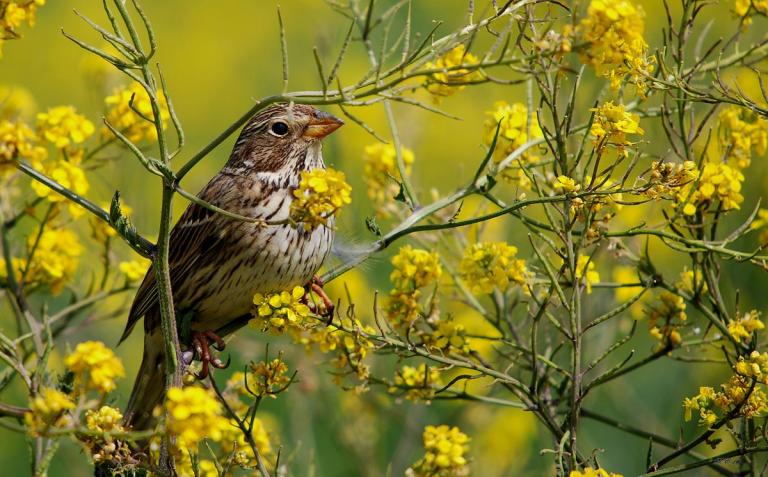
“A Corn Bunting amid mustard flowers, in southeastern Turkey,” Dûrzan cîrano, April 16, 2010; Creative Commons

It doesn’t take something of great size or magnitude in the arena of spirituality or neurology to mess with our entire system. Maybe it is a damaging statement or experience in a longstanding relationship or damaging of a small bodily part. A memory trigger or a loss of memory, a problem with regulating emotion. What will it take for healing to occur?
My son Christopher’s hypothalamus was no doubt severely damaged by his traumatic brain injury. After all, functions controlled by the hypothalamus are not functioning properly, such as the autonomic nervous system. You would think this little structure in the brain the size of an almond is not so important, but it really is. According to one article, the hypothalamus is the
“region of the brain lying below the thalamus and making up the floor of the third cerebral ventricle. The hypothalamus is an integral part of the brain. It is a small cone-shaped structure that projects downward from the brain, ending in the pituitary (infundibular) stalk, a tubular connection to the pituitary gland. The hypothalamus contains a control centre for many functions of the autonomic nervous system, and it has effects on the endocrine system because of its complex interaction with the pituitary gland.”
It is also worth noting that according to the same article “The hypothalamus, like the rest of the brain, consists of interconnecting neurons that are nourished by a rich supply of blood.”
Another treatment of the hypothalamus asserts: “While it’s very small, the hypothalamus plays a crucial role in many important functions, including:
-
releasing hormones
-
regulating body temperature
-
maintaining daily physiological cycles…
-
regulating emotional responses.”
Moving from the field of neurology to botany, the mustard seed is also seemingly unimportant because of its size. But when the mustard seed grows, it becomes a very large garden plant the size of a tree where the branches serve as perches for birds. In his botanical parallel to the kingdom of heaven, Jesus tells his disciples this parable:
“The kingdom of heaven is like a mustard seed, which a man took and planted in his field. Though it is the smallest of all seeds, yet when it grows, it is the largest of garden plants and becomes a tree, so that the birds come and perch in its branches.” (Matthew 13:31-32; NIV)
Jesus refers again to the mustard seed in the Gospel of Matthew. Jesus has just come down from the mountaintop experience of the transfiguration. In coming down from the mountain, he witnesses his disciples’ lack of faith. They cannot cast a demon from a boy, so Jesus does:
Then the disciples came to Jesus in private and asked, “Why couldn’t we drive it out?” He replied, “Because you have so little faith. Truly I tell you, if you have faith as small as a mustard seed, you can say to this mountain, ‘Move from here to there,’ and it will move. Nothing will be impossible for you.” (Matthew 17:19-21; NIV)
Later, following Palm Sunday during Holy Week, Jesus curses a fig tree and it withers immediately, to his disciples’ astonishment. Jesus again makes a connection between faith and moving mountains:
“Truly I tell you, if you have faith and do not doubt, not only can you do what was done to the fig tree, but also you can say to this mountain, ‘Go, throw yourself into the sea,’ and it will be done. If you believe, you will receive whatever you ask for in prayer.” (Matthew 21:21-22; NIV)
My faith can scale the heights on Transfiguration Sunday or on Palm Sunday when everyone is cheering. My faith can then avalanche down to the depths when the tide of emotion changes and premature prognoses set in. Maybe you are like Jesus’ disciples and me?
Premature prognoses show up in so many contexts. In medicine, so many observers make premature assessments of what will happen in an individual patient’s case based on statistics. But as Dr. Robert Potter (M.D., Ph.D.), an internal medicine, palliative care and medical ethics specialist who served at Oregon Health and Science University argues, each patient is the exception to the rule and statistics do not dictate what will happen in each individual case. In many cases, six months to a year provides sufficient time to discern the prognosis for a given patient (For more on this subject, refer here and here to prior posts). In other areas of life, we are also tempted to make predictions way in advance. But as Pastor Tom Schiave once shared with me about prospects for people’s growth personally and relationally, “It’s never over at halftime.” Even so, while I know these things to be true, still those who are quick to make premature prognoses in all kinds of ways easily distract me so that I take my eyes off long-term, strategic thinking and careful analysis involving hope in the area of medicine, as well as in relationships with God and fellow humans. So, like the disciples of old, I cry out to the Lord: “Increase our faith!” (Luke 17:5; NIV).
In the case of my son, I pray for faith the size of a mustard seed or hypothalamus. I pray for the healing of damaged neurons in the hypothalamus and for new connections to be made between neurons involving neuroplasticity where old pathways are gone (Refer here for a discussion of neuroplasticity). I also pray that God would heal your and my damaged emotions and memories and create new spiritual and relational pathways where old connections with God and others have ceased. Will you please join me in this prayer?
About Paul Louis Metzger
Paul Louis Metzger, Ph.D., is Professor of Theology & Culture, Multnomah University & Seminary; Director of The Institute for Cultural Engagement: New Wine, New Wineskins; and Author and Editor of numerous works, including Cultural Encounters: A Journal for the Theology of Culture. You can read more about the author here.
Previous Post

March 23, 2021
Sharing Pain Can Be Cathartic and Catalytic for Building Community
Next Post
March 30, 2021 The Courage to Be or Not to Be: That Is the Question
Browse Our Archives
Select a Category Uncategorized
Select a Month June 2025 April 2025 March 2025 January 2025 December 2024 November 2024 October 2024 September 2024 August 2024 July 2024 June 2024 May 2024 April 2024 March 2024 February 2024 January 2024 December 2023 November 2023 October 2023 September 2023 August 2023 July 2023 June 2023 May 2023 April 2023 March 2023 February 2023 January 2023 December 2022 November 2022 October 2022 September 2022 August 2022 July 2022 June 2022 May 2022 April 2022 March 2022 February 2022 January 2022 December 2021 November 2021 October 2021 September 2021 August 2021 July 2021 June 2021 May 2021 April 2021 March 2021 February 2021 January 2021 December 2020 November 2020 October 2020 September 2020 August 2020 July 2020 June 2020 May 2020 April 2020 March 2020 February 2020 January 2020 December 2019 November 2019 October 2019 September 2019 August 2019 July 2019 June 2019 May 2019 April 2019 March 2019 February 2019 January 2019 December 2018 November 2018 October 2018 September 2018 August 2018 July 2018 June 2018 May 2018 April 2018 March 2018 February 2018 January 2018 December 2017 November 2017 October 2017 September 2017 August 2017 July 2017 June 2017 May 2017 April 2017 March 2017 February 2017 January 2017 December 2016 November 2016 October 2016 September 2016 August 2016 July 2016 June 2016 May 2016 April 2016 March 2016 February 2016 January 2016 December 2015 November 2015 October 2015 September 2015 August 2015 July 2015 June 2015 May 2015 April 2015 March 2015 February 2015 January 2015 December 2014 November 2014 October 2014 September 2014 August 2014 July 2014 June 2014 May 2014 April 2014 March 2014 February 2014 January 2014 December 2013 November 2013 October 2013 September 2013 August 2013 July 2013 June 2013 May 2013 April 2013 March 2013 February 2013 January 2013 December 2012 November 2012 October 2012 September 2012 August 2012 July 2012 June 2012 May 2012 April 2012 March 2012 February 2012
Follow Us!
TAKE THE
Religious Wisdom Quiz
How many chapters are in the Book of Isaiah?
Select your answer to see how you score.
52 31 22 66
Books by This Author Books by Paul Louis Metzger
Related posts from Uncommon God, Common Good

Heavenly Father’s Day on Trinity Sunday

Easter Triduum: Obey Your Thirst—for God

Holy Week Is Humble Week: "Beware of Becoming...

Excavating the Person in a Throwaway Culture
TRENDING AT PATHEOS Evangelical

The REST of Your Life: A Creative Wrestles...
This week I had a conversation with a good friend from church....

How the author of the world's best hymn...
I've been working with John Newton for a while now. This makes...

Long before this Lectio Divina, Psalm 130 - the song - started...

What About the Trees? Another Living Parable
After I finished writing the last article about falling leaves as a...

Why Classical Education Is a Conversation, Not a...
Come and Read: Joy in Classical Education When I was a little...

Cornell University has received a great deal of negative publicity and intense...
view all Evangelical blogs
Ad-Free & Subscriber Log-In Subscription Support
- About Us
- 2026 Calendar
- Videos
- Podcasts
- Library of World Religions
- Faith In Media Tracker
- Advertise With Us
- Write for Us
- Privacy Policy
- Terms of Service
- Do Not Sell My Data
- Contact Us
- Radiant Digital
- Manage Newsletter Subscriptions
- Unsubscribe From Notifications
- Sitemap
Copyright 2008-2026, Patheos. All rights reserved.
Subscription Support Ad-Free & Subscriber Log-In
Follow Patheos