
BuddhistCatholicContemplativeEvangelicalGeneral ChristianHinduJewishLatter-day SaintMuslimNew VisionsProgressive Christian
Beliefs
- Buddhist
- Catholic
- Contemplative
- Evangelical
- General Christian
- Hindu
- Jewish
- Latter-day Saint
- More Voices
- Muslim
- New Visions
- Pagan
- Progressive Christian
Topics
- Religion News
- Food and Religion
- Sports and Religion
- Religious Art
- Religious Music and Entertainment
- Religious Events
- History and Religion
- Style and Religion
- Politics and Religion
- Women in Religion
- Recreation Outdoors and Religion
- Business Finance and Religion
- Careers Workplace and Religion
- Education and Religion
- Family Parenting and Religion
- Health Fitness and Religion
- Home and Religion
- Relationships and Religion
- Technology and Religion
- Travel and Religion
Columnists
- Buddhist Columnists
- Business Finance and Religion Columnists
- Careers Workplace and Religion Columnists
- Catholic Columnists
- Contemplative Columnists
- Education and Religion Columnists
- Evangelists Columnists
- Family Parenting and Religion Columnists
- General Christian Columnists
- Health Fitness and Religion Columnists
- Hindu Columnists
- History and Religion Columnists
- Home and Religion Columnists
- Jewish Columnists
- More Voices Columnists
- Latter Day Columnists
- Muslim Columnists
- New Visions Columnists
- Nonreligious Columnists
- Pagan Columnists
- Politics and Religion Columnists
- Progressive Columnists
- Recreation Outdoors and Religion Columnists
- Relationships and Religion Columnists
- Religion News Columnists
- Religious Art Columnists
- Religious Events Columnists
- Religious Music and Entertainment Columnists
- Sports and Religion Columnists
- Style and Religion Columnists
- Technology and Religion Columnists
- Travel and Religion Columnists
- Women in Religion Columnists
Resource Library
- 2026 Calendar
- Library of World Religions
- The 100 Most Holy Places on Earth
- Patheos Answers
- Podcasts
- Videos
- Faith Leaders Database
- Anglican Episcopalian
- Bahai
- Baptist
- Buddhism
- Christianity
- Confucianism
- Eastern Orthodoxy
- Hinduism
- Holiness and Pentecostal
- ISKCON
- Islam
- Judaism
- Lutheran
- Methodist
- The Church of Jesus Christ of Latter-day Saints
- New Age
- Paganism
- Presbytarian and Reformed
- Protestantism
- Religion Behind the Scenes
- Roman Catholic
- Scientology
- Shia Islam
- Sikhism
- Sufism
- Sunni Islam
- Taoism
- Zen
- See all religions
Research Tools
 Ad-Free & Subscriber Log-In Subscription Support
Ad-Free & Subscriber Log-In Subscription Support
Follow Patheos 

- Trending:
- Forgiveness
- |
- Marriage
- |
- Consciousness
- |
- Death Penalty
- |
- Election
- |
- Halloween

- Home
- Evangelical
- Why Should We Give Thanks to God During Thankless Times?
Why Should We Give Thanks to God During Thankless Times?
Last updated on: November 26, 2020 at 9:45 am by Paul Louis Metzger
Why Should We Give Thanks to God During Thankless Times? 2020-11-26T09:45:44-08:00 Paul Louis Metzger
Patheos Explore the world's faith through different perspectives on religion and spirituality! Patheos has the views of the prevalent religions and spiritualities of the world.
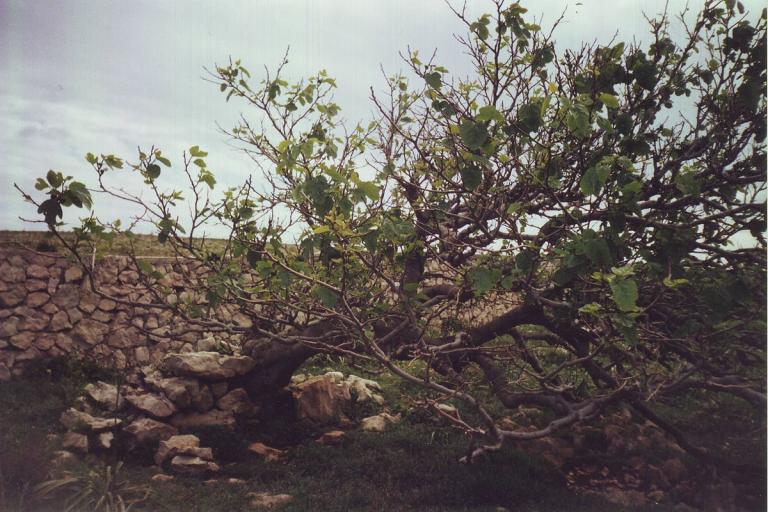
“Old Fig Tree,” Creative Commons

Many of us may feel there is little reason to give thanks this Thanksgiving. We may be facing relational, physical, mental, financial, occupational, and cultural challenges. The list could go on. These struggles may weigh heavily upon our faith. In the midst of such difficulties, we can take comfort from Habakkuk 3:17-19. The writer does not deny that life’s circumstances can be incredibly daunting. It looks like nothing seems to be working for him and his people and that all is lost. Even so, the prophet does not allow his circumstances to overwhelm and destroy his faith. In fact, his focus leads him to a higher plane of existence as he rejoices in the Lord.
Habakkuk 3:17-19 is a good spiritual wake up call for me on Thanksgiving, or any day for that matter. I read Habakkuk during my morning meditations yesterday and posted this reflection at Facebook:
Do I rejoice in God no matter my circumstances, or do I focus on my circumstances, which can easily take away my joy? The former focus on God will strengthen me to ascend to the heights. The latter will cause me to lose my footing, slip, and fall. As the biblical text below closes, it makes for a good praise song with stringed instruments.
“17 Though the fig tree does not blossom,
and no fruit is on the vines;
though the produce of the olive fails,
and the fields yield no food;
though the flock is cut off from the fold,
and there is no herd in the stalls,
18 yet I will rejoice in the Lord;
I will exult in the God of my salvation.
19 God, the Lord, is my strength;
he makes my feet like the feet of a deer,
and makes me tread upon the heights.
To the leader: with stringed instruments.” (Habakkuk 3:17-19)
I was so struck and thankful for what family and friends at Facebook shared in response about how they treasure and take to heart Habakkuk’s words for their own faith journey. I know a bit about the painful struggles of life that some of them experience and I gained greater confidence in the Lord in the midst of their own wrestling with God and taking to heart God’s word for daily life.
It is worth noting in this context that some listings for Habakkuk render his name as meaning “wrestler” or “one who embraces.” Habakkuk wrestles with God and struggles with the realization that God is going to use the godless Chaldeans to judge his people Judah for their rebellion. Habakkuk’s struggle is ultimately one of wrestling with God.
Further to what my friends and I wrote at Facebook, I wish to share three points in light of this biblical passage as to why it is important to rejoice in the Lord and give thanks to God during thankless times:
- Giving thanks to God helps us take a step back, take a deep breath, and gives us overarching perspective. Giving thanks to God in the midst of thankless circumstances helps us see the big picture rather than simply our seemingly overwhelming circumstances. It helps us see God afresh and God’s big picture plan and enduring care for our lives during hard times. As the prophet shares, God IS his savior—“the God of my salvation.” The Lord is “my strength.” What we need more than anything in life is renewed vision of God and to see things from God’s eye’s point of view. Giving thanks to God helps us do just that. It may have been CS Lewis who said: I’m not thankful that any god exists, but that this God exists. I’m thankful that the God of my salvation exists, the Lord who is my strength. Here’s what Abraham Heschel writes about Habakkuk’s wrestling with God in view of the vision of God’s judgment on sin just prior to quoting Habakkuk 3:17-18. Right after stating that the prophet Habakkuk realizes that the mystery of divine anger is “an instrument necessary for redemption” and that the prophet humbly beseeches God to remember mercy in the midst of anger (Habakkuk 3:2), Heschel writes:
The prophet trembles, but he also has the power to wait on the Lord. However, the depth of his experience lies deeper than trust and faith. What the prophet faces is not his own faith. He faces God. To sense the living God is to sense infinite goodness, infinite wisdom, infinite beauty. Such a sensation is a sensation of joy. The world may be dismal; the wrath may turn the gardens into a desert; yet the prophet “will rejoice in the Lord.” This, it seems, is Habakkuk’s personal answer to the vision (Abraham J. Heschel, The Prophets {Harper*/*Perennial Classics, 2001}, page 183).
What we need more than anything is to come face to face with God, as Habakkuk does in chapter 3.
2. Giving thanks to God reminds us that all is not lost, that the final chapter on our lives has not been written, that our journey is not over, no matter how overwhelming our circumstances may be. Whether it is a matter of divine judgment, as in the case of Judah in Habakkuk’s historical context, or simply a matter of overwhelming challenges and obstacles in life, never give up. Take to heart Habakkuk’s words for those times when you think you may be down for the count: “he makes my feet like the feet of a deer, and makes me tread upon the heights.” Now that’s quite something to rejoice over and for which to give thanks. It’s not over until it’s over, and it’s never over for those who hope in God for merciful deliverance. So, in view of God, don’t count Habakkuk or yourselves out.
3. Gives thanks to God is energizing to us, just as it was for Habakkuk who scaled the heights in hope. Such energizing hope can carry over to encourage others. I was encouraged by what my friends shared at Facebook about giving thanks in view of Habakkuk. Just think—for centuries, this prophet’s words have encouraged people of faith to keep going and not roll over and die. Are we the kind of people who are exceptionally honest about expressing how we feel about what we are enduring? Honesty is good. Let us also be exceptionally hopeful about God in the midst of what we are enduring and express it to others. May we be the kind of people who energize rather than paralyze faith by rejoicing in God in the midst of severe challenges, just like Habakkuk here. Consider Paul, too, who writes about rejoicing in God and giving thanks while enduring imprisonment, as recorded in Philippians 4:4-7. Reading such passages as these and taking them to heart and into our daily lives will encourage us and give us courage to face each day with renewed vision and strength to scale the heights. Giving thanks to God will help us grow in resilience and encourage others to keep going no matter what given their God who matters most.
Continue giving thanks to God during thankless times. We’ll all be better for it.
About Paul Louis Metzger
Paul Louis Metzger, Ph.D., is Professor of Theology & Culture at Multnomah University & Seminary; Director of The Institute for Cultural Engagement: New Wine, New Wineskins; and author of numerous works including Setting the Spiritual Clock: Sacred Time Breaking Through the Spiritual Eclipse (Cascade, 2020). You can read more about the author here.
Previous Post

November 21, 2020
Setting the Spiritual Clock from Alpha to Omega and Back Again
Next Post
November 27, 2020 What Liturgy Shapes Your Church—a Sacred or Secular One?
Browse Our Archives
Select a Category Uncategorized
Select a Month June 2025 April 2025 March 2025 January 2025 December 2024 November 2024 October 2024 September 2024 August 2024 July 2024 June 2024 May 2024 April 2024 March 2024 February 2024 January 2024 December 2023 November 2023 October 2023 September 2023 August 2023 July 2023 June 2023 May 2023 April 2023 March 2023 February 2023 January 2023 December 2022 November 2022 October 2022 September 2022 August 2022 July 2022 June 2022 May 2022 April 2022 March 2022 February 2022 January 2022 December 2021 November 2021 October 2021 September 2021 August 2021 July 2021 June 2021 May 2021 April 2021 March 2021 February 2021 January 2021 December 2020 November 2020 October 2020 September 2020 August 2020 July 2020 June 2020 May 2020 April 2020 March 2020 February 2020 January 2020 December 2019 November 2019 October 2019 September 2019 August 2019 July 2019 June 2019 May 2019 April 2019 March 2019 February 2019 January 2019 December 2018 November 2018 October 2018 September 2018 August 2018 July 2018 June 2018 May 2018 April 2018 March 2018 February 2018 January 2018 December 2017 November 2017 October 2017 September 2017 August 2017 July 2017 June 2017 May 2017 April 2017 March 2017 February 2017 January 2017 December 2016 November 2016 October 2016 September 2016 August 2016 July 2016 June 2016 May 2016 April 2016 March 2016 February 2016 January 2016 December 2015 November 2015 October 2015 September 2015 August 2015 July 2015 June 2015 May 2015 April 2015 March 2015 February 2015 January 2015 December 2014 November 2014 October 2014 September 2014 August 2014 July 2014 June 2014 May 2014 April 2014 March 2014 February 2014 January 2014 December 2013 November 2013 October 2013 September 2013 August 2013 July 2013 June 2013 May 2013 April 2013 March 2013 February 2013 January 2013 December 2012 November 2012 October 2012 September 2012 August 2012 July 2012 June 2012 May 2012 April 2012 March 2012 February 2012
Follow Us!
TAKE THE
Religious Wisdom Quiz
Which book is written almost completely as poetry?
Select your answer to see how you score.
Ezra Jeremiah Isaiah Lamentations
Books by This Author Books by Paul Louis Metzger
Related posts from Uncommon God, Common Good

Heavenly Father’s Day on Trinity Sunday

Easter Triduum: Obey Your Thirst—for God

Holy Week Is Humble Week: "Beware of Becoming...

Excavating the Person in a Throwaway Culture
TRENDING AT PATHEOS Evangelical

The REST of Your Life: A Creative Wrestles...
This week I had a conversation with a good friend from church....

How the author of the world's best hymn...
I've been working with John Newton for a while now. This makes...

Long before this Lectio Divina, Psalm 130 - the song - started...

What About the Trees? Another Living Parable
After I finished writing the last article about falling leaves as a...

Why Classical Education Is a Conversation, Not a...
Come and Read: Joy in Classical Education When I was a little...

Cornell University has received a great deal of negative publicity and intense...
view all Evangelical blogs
Ad-Free & Subscriber Log-In Subscription Support
- About Us
- 2026 Calendar
- Videos
- Podcasts
- Library of World Religions
- Faith In Media Tracker
- Advertise With Us
- Write for Us
- Privacy Policy
- Terms of Service
- Do Not Sell My Data
- Contact Us
- Radiant Digital
- Manage Newsletter Subscriptions
- Unsubscribe From Notifications
- Sitemap
Copyright 2008-2026, Patheos. All rights reserved.
Subscription Support Ad-Free & Subscriber Log-In
Follow Patheos