
BuddhistCatholicContemplativeEvangelicalGeneral ChristianHinduJewishLatter-day SaintMuslimNew VisionsProgressive Christian
Beliefs
- Buddhist
- Catholic
- Contemplative
- Evangelical
- General Christian
- Hindu
- Jewish
- Latter-day Saint
- More Voices
- Muslim
- New Visions
- Pagan
- Progressive Christian
Topics
- Religion News
- Food and Religion
- Sports and Religion
- Religious Art
- Religious Music and Entertainment
- Religious Events
- History and Religion
- Style and Religion
- Politics and Religion
- Women in Religion
- Recreation Outdoors and Religion
- Business Finance and Religion
- Careers Workplace and Religion
- Education and Religion
- Family Parenting and Religion
- Health Fitness and Religion
- Home and Religion
- Relationships and Religion
- Technology and Religion
- Travel and Religion
Columnists
- Buddhist Columnists
- Business Finance and Religion Columnists
- Careers Workplace and Religion Columnists
- Catholic Columnists
- Contemplative Columnists
- Education and Religion Columnists
- Evangelists Columnists
- Family Parenting and Religion Columnists
- General Christian Columnists
- Health Fitness and Religion Columnists
- Hindu Columnists
- History and Religion Columnists
- Home and Religion Columnists
- Jewish Columnists
- More Voices Columnists
- Latter Day Columnists
- Muslim Columnists
- New Visions Columnists
- Nonreligious Columnists
- Pagan Columnists
- Politics and Religion Columnists
- Progressive Columnists
- Recreation Outdoors and Religion Columnists
- Relationships and Religion Columnists
- Religion News Columnists
- Religious Art Columnists
- Religious Events Columnists
- Religious Music and Entertainment Columnists
- Sports and Religion Columnists
- Style and Religion Columnists
- Technology and Religion Columnists
- Travel and Religion Columnists
- Women in Religion Columnists
Resource Library
- 2026 Calendar
- Library of World Religions
- The 100 Most Holy Places on Earth
- Patheos Answers
- Podcasts
- Videos
- Faith Leaders Database
- Anglican Episcopalian
- Bahai
- Baptist
- Buddhism
- Christianity
- Confucianism
- Eastern Orthodoxy
- Hinduism
- Holiness and Pentecostal
- ISKCON
- Islam
- Judaism
- Lutheran
- Methodist
- The Church of Jesus Christ of Latter-day Saints
- New Age
- Paganism
- Presbytarian and Reformed
- Protestantism
- Religion Behind the Scenes
- Roman Catholic
- Scientology
- Shia Islam
- Sikhism
- Sufism
- Sunni Islam
- Taoism
- Zen
- See all religions
Research Tools
 Ad-Free & Subscriber Log-In Subscription Support
Ad-Free & Subscriber Log-In Subscription Support
Follow Patheos 

- Trending:
- Forgiveness
- |
- Marriage
- |
- Consciousness
- |
- Death Penalty
- |
- Election
- |
- Halloween

- Home
- Evangelical
- What Liturgy Shapes Your Church—a Sacred or Secular One?
What Liturgy Shapes Your Church—a Sacred or Secular One?
Last updated on: November 27, 2020 at 11:59 am by Paul Louis Metzger
What Liturgy Shapes Your Church—a Sacred or Secular One? 2020-11-27T11:59:38-08:00 Paul Louis Metzger
Patheos Explore the world's faith through different perspectives on religion and spirituality! Patheos has the views of the prevalent religions and spiritualities of the world.
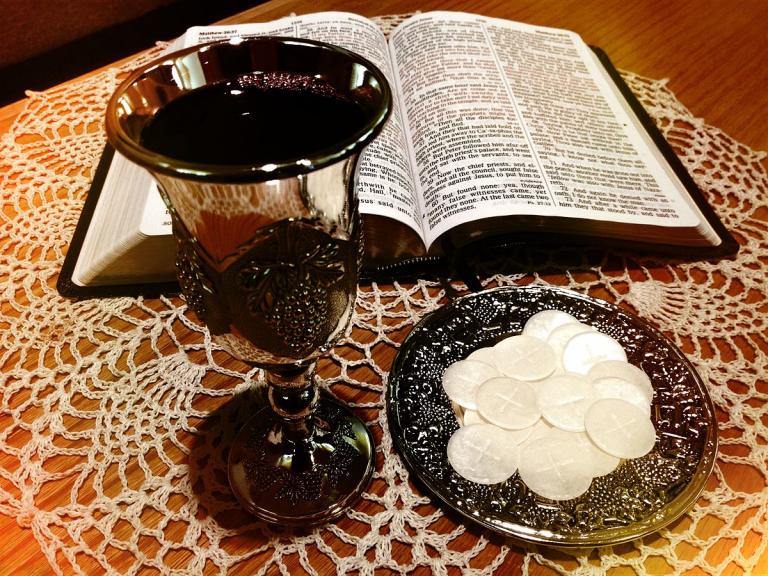
“Communion Table,” by John Snyder, January 18, 2014; Creative Commons

What liturgy shapes your church—a sacred liturgy or a secular one?
In asking this question, I call to mind a conversation years ago with noted Lutheran theologian Robert W. Jenson. We were talking about consumerism and secularism. He remarked in terse terms: “Secularism will either empty the church or secularize the church.”
Here is what I believe Jenson had in mind. Churches that retained their traditional Christian symbolism and liturgy have often lost consumers to churches that celebrate such things as Super Bowl Sunday. Both forms of church lose: one loses members in a secular age and the other loses a vital sense of the sacred. In the latter form of church, there is more of a tendency to honor the secular calendar than the church calendar. Black Friday can easily replace Good Friday in terms of importance (as the free market often shapes the imaginations of Christians like me more than the freedom from bondage to sin), and churches will often close their doors on a Sunday if Christmas falls on the first day of the week. Moreover, the celebration of ascension out of debt (while certainly vitally important) through such helpful counsel as that found in Dave Ramsey’s Financial Peace University can easily replace emphasis on Christ’s Ascension that Sunday or any other Sunday throughout the year.
Several years ago I was interviewed by a local news station about why so many Evangelical churches were closing their doors on Christmas Sunday. I remember how he and his crew closed their coverage: the reporter was standing outside a church reading church closings almost as if he were announcing school closings due to inclement weather conditions. All the churches in question were Evangelical and Charismatic. None of those churches closing their doors were Mainline Protestant, Roman Catholic, or Orthodox, from what I could recall. It was striking that the reporter added while announcing one church closing that interested parties could obtain a DVD of the Christmas service by contacting the church office. They did not need to worry about being present together at church to receive the message and experience a service.
The rationale given to the reporter by one pastor of a very large church for his church closing their doors on Christmas Sunday was that the leadership wanted families to be together on Christmas Day. What about those singles and divorcees, elderly widows and widowers, whose only families were their local churches? What was available to them? The decision to close church doors on Christmas so that people can be with their immediate families may reveal that the nuclear family is seen as more sacred than the sacred family.
Of course, COVID complicates this reality for all of us. Church leaders and congregations differ as to the response to take in the face of the pandemic. May we all model discernment as to providing holistic care of soul, mind, and body for our congregations whether we meet remotely or in person. Churches that flow with the rhythm of the church calendar will more naturally keep their doors open physically or remotely over Zoom on Christmas Sunday than if they flow with the rhythm of the secular calendar. Thoughtful consideration of the church calendar—with its emphasis that Christmas leads from Good Friday to Easter to the Ascension to Pentecost—helps us see that God opens the door to people from every tribe and tongue to become children of God by faith in Christ through the Spirit, not by nuclear family lines (See John 1:12-13; Acts 10:24-48; 15:7-11). Of course, accounting for sacred church liturgy does not alone make a church truly inclusive. We need to be intentional and approach all people with the eye of inclusive faith, hope, and love. Still, Christian symbolism with its sacred rhythm of life matters, including the church calendar.
As a closing note, I have addressed themes set forth in this blog post in my new book, Setting the Spiritual Clock: Sacred Time Breaking Through the Secular Eclipse (Cascade, 2020). Various Christian traditions mark their calendars to reflect the biblical and ecclesial narrative and enhance public worship. Such efforts safeguard against secularization’s encroachment in the church’s life. Setting the Spiritual Clock serves as a guide and traveling companion for the liturgical year, which circles the glorious Son as he breaks through the secular eclipse. The following video provides information about this new volume.
About Paul Louis Metzger
Paul Louis Metzger, Ph.D., is Professor of Theology & Culture, Multnomah University/Seminary; Director of The Institute for Cultural Engagement: New Wine, New Wineskins; and author of Setting the Spiritual Clock: Sacred Time Breaking Through the Secular Eclipse, as well as Consuming Jesus: Beyond Race and Class Divisions in a Consumer Church. You can read more about the author here.
Previous Post

November 26, 2020
Why Should We Give Thanks to God During Thankless Times?
Next Post
November 28, 2020 Sin with Dignity: Musings from Moses to Steinbeck
Browse Our Archives
Select a Category Uncategorized
Select a Month June 2025 April 2025 March 2025 January 2025 December 2024 November 2024 October 2024 September 2024 August 2024 July 2024 June 2024 May 2024 April 2024 March 2024 February 2024 January 2024 December 2023 November 2023 October 2023 September 2023 August 2023 July 2023 June 2023 May 2023 April 2023 March 2023 February 2023 January 2023 December 2022 November 2022 October 2022 September 2022 August 2022 July 2022 June 2022 May 2022 April 2022 March 2022 February 2022 January 2022 December 2021 November 2021 October 2021 September 2021 August 2021 July 2021 June 2021 May 2021 April 2021 March 2021 February 2021 January 2021 December 2020 November 2020 October 2020 September 2020 August 2020 July 2020 June 2020 May 2020 April 2020 March 2020 February 2020 January 2020 December 2019 November 2019 October 2019 September 2019 August 2019 July 2019 June 2019 May 2019 April 2019 March 2019 February 2019 January 2019 December 2018 November 2018 October 2018 September 2018 August 2018 July 2018 June 2018 May 2018 April 2018 March 2018 February 2018 January 2018 December 2017 November 2017 October 2017 September 2017 August 2017 July 2017 June 2017 May 2017 April 2017 March 2017 February 2017 January 2017 December 2016 November 2016 October 2016 September 2016 August 2016 July 2016 June 2016 May 2016 April 2016 March 2016 February 2016 January 2016 December 2015 November 2015 October 2015 September 2015 August 2015 July 2015 June 2015 May 2015 April 2015 March 2015 February 2015 January 2015 December 2014 November 2014 October 2014 September 2014 August 2014 July 2014 June 2014 May 2014 April 2014 March 2014 February 2014 January 2014 December 2013 November 2013 October 2013 September 2013 August 2013 July 2013 June 2013 May 2013 April 2013 March 2013 February 2013 January 2013 December 2012 November 2012 October 2012 September 2012 August 2012 July 2012 June 2012 May 2012 April 2012 March 2012 February 2012
Follow Us!
TAKE THE
Religious Wisdom Quiz
What were the first man and woman’s names in the Bible?
Select your answer to see how you score.
Jacob and Rachel Samson and Delilah Joseph and Mary Adam and Eve
Books by This Author Books by Paul Louis Metzger
Related posts from Uncommon God, Common Good

Heavenly Father’s Day on Trinity Sunday

Easter Triduum: Obey Your Thirst—for God

Holy Week Is Humble Week: "Beware of Becoming...

Excavating the Person in a Throwaway Culture
TRENDING AT PATHEOS Evangelical

The REST of Your Life: A Creative Wrestles...
This week I had a conversation with a good friend from church....

How the author of the world's best hymn...
I've been working with John Newton for a while now. This makes...

Long before this Lectio Divina, Psalm 130 - the song - started...

What About the Trees? Another Living Parable
After I finished writing the last article about falling leaves as a...

Why Classical Education Is a Conversation, Not a...
Come and Read: Joy in Classical Education When I was a little...

Cornell University has received a great deal of negative publicity and intense...
view all Evangelical blogs
Ad-Free & Subscriber Log-In Subscription Support
- About Us
- 2026 Calendar
- Videos
- Podcasts
- Library of World Religions
- Faith In Media Tracker
- Advertise With Us
- Write for Us
- Privacy Policy
- Terms of Service
- Do Not Sell My Data
- Contact Us
- Radiant Digital
- Manage Newsletter Subscriptions
- Unsubscribe From Notifications
- Sitemap
Copyright 2008-2026, Patheos. All rights reserved.
Subscription Support Ad-Free & Subscriber Log-In
Follow Patheos