
BuddhistCatholicContemplativeEvangelicalGeneral ChristianHinduJewishLatter-day SaintMuslimNew VisionsProgressive Christian
Beliefs
- Buddhist
- Catholic
- Contemplative
- Evangelical
- General Christian
- Hindu
- Jewish
- Latter-day Saint
- More Voices
- Muslim
- New Visions
- Pagan
- Progressive Christian
Topics
- Religion News
- Food and Religion
- Sports and Religion
- Religious Art
- Religious Music and Entertainment
- Religious Events
- History and Religion
- Style and Religion
- Politics and Religion
- Women in Religion
- Recreation Outdoors and Religion
- Business Finance and Religion
- Careers Workplace and Religion
- Education and Religion
- Family Parenting and Religion
- Health Fitness and Religion
- Home and Religion
- Relationships and Religion
- Technology and Religion
- Travel and Religion
Columnists
- Buddhist Columnists
- Business Finance and Religion Columnists
- Careers Workplace and Religion Columnists
- Catholic Columnists
- Contemplative Columnists
- Education and Religion Columnists
- Evangelists Columnists
- Family Parenting and Religion Columnists
- General Christian Columnists
- Health Fitness and Religion Columnists
- Hindu Columnists
- History and Religion Columnists
- Home and Religion Columnists
- Jewish Columnists
- More Voices Columnists
- Latter Day Columnists
- Muslim Columnists
- New Visions Columnists
- Nonreligious Columnists
- Pagan Columnists
- Politics and Religion Columnists
- Progressive Columnists
- Recreation Outdoors and Religion Columnists
- Relationships and Religion Columnists
- Religion News Columnists
- Religious Art Columnists
- Religious Events Columnists
- Religious Music and Entertainment Columnists
- Sports and Religion Columnists
- Style and Religion Columnists
- Technology and Religion Columnists
- Travel and Religion Columnists
- Women in Religion Columnists
Resource Library
- 2026 Calendar
- Library of World Religions
- The 100 Most Holy Places on Earth
- Patheos Answers
- Podcasts
- Videos
- Faith Leaders Database
- Anglican Episcopalian
- Bahai
- Baptist
- Buddhism
- Christianity
- Confucianism
- Eastern Orthodoxy
- Hinduism
- Holiness and Pentecostal
- ISKCON
- Islam
- Judaism
- Lutheran
- Methodist
- The Church of Jesus Christ of Latter-day Saints
- New Age
- Paganism
- Presbytarian and Reformed
- Protestantism
- Religion Behind the Scenes
- Roman Catholic
- Scientology
- Shia Islam
- Sikhism
- Sufism
- Sunni Islam
- Taoism
- Zen
- See all religions
Research Tools
 Ad-Free & Subscriber Log-In Subscription Support
Ad-Free & Subscriber Log-In Subscription Support
Follow Patheos 

- Trending:
- Forgiveness
- |
- Marriage
- |
- Consciousness
- |
- Death Penalty
- |
- Election
- |
- Halloween

- Home
- Evangelical
- Great Leaders Model Empathy and Humaneness, Not Inhumanity
Great Leaders Model Empathy and Humaneness, Not Inhumanity
Last updated on: October 30, 2020 at 7:11 pm by Paul Louis Metzger
Great Leaders Model Empathy and Humaneness, Not Inhumanity 2020-10-30T19:11:58-07:00 Paul Louis Metzger
Patheos Explore the world's faith through different perspectives on religion and spirituality! Patheos has the views of the prevalent religions and spiritualities of the world.
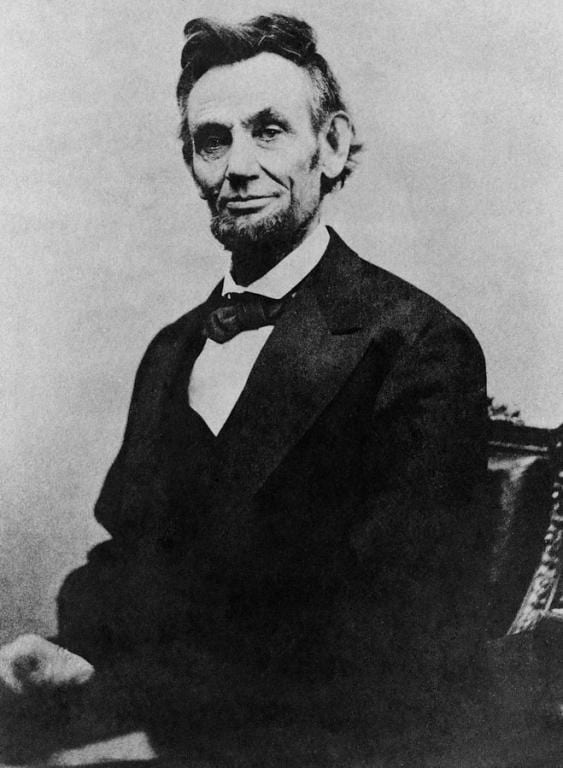

I am doing a series of blog posts related to leadership as we approach the U.S. Presidential election. This is my third blog post on the qualities of leadership that President Lincoln modeled (refer here and here for the first two posts), as discussed in Doris Kearns Goodwin’s bestselling Team of Rivals: the Political Genius of Abraham Lincoln, winner of the Lincoln Prize. One of the qualities that Goodwin highlights was Lincoln’s empathy, which is constitutive of humaneness. There are so many examples and quotations from which to choose in the book, from Lincoln’s engagement with Frederick Douglass and regard for African Americans’ well-being (207, 208, 551, 553, 700), to soldiers, families of fallen soldiers, the defeated South (724, 732), those he was tasked to condemn or pardon for offenses committed during the war, and even animals (103-104).
Goodwin writes,
Lincoln’s abhorrence of hurting another was born of more than simple compassion. He possessed extraordinary empathy—the gift or curse of putting himself in the place of another, to experience what they were feeling, to understand their motives and desires. The philosopher Adam Smith described this faculty: “By the imagination, we place ourselves in his situation … we enter as it were into his body and become in some measure him.” This capacity Smith saw as “the source of our fellow-feeling for the misery of others … by changing places in fancy with the sufferer … we come either to conceive or to be affected by what he feels.” In a world environed by cruelty and injustice, Lincoln’s remarkable empathy was inevitably a source of pain. His sensibilities were not only acute, they were raw (104).
Another example comes from Lincoln’s personal interaction with Frederick Douglass. Douglass, who had been a formidable critic of Lincoln and his Administration’s policies throughout much of Lincoln’s first term, was acquainted with numerous prominent abolitionists. Still, he said of Lincoln that he was “the first great man that I talked with in the United States freely, who in no single instance reminded me of the difference between himself and myself, of the difference of color” (207). Lincoln and Douglass came to respect one another greatly. No doubt, it started with their ability to intuit deeply and perceive keenly one another’s humanity.
Long after Lincoln’s passing, the great Russian novelist Leo Tolstoy recounted his visit to the North Caucuses in 1908 where a tribal chief asked Tolstoy to tell stories of the great figures of history. Upon coming to a close, the chief stopped Tolstoy and informed him that he had forgotten to recount the greatest leader of them all—Lincoln. So Tolstoy regrouped and told the chief and his people everything he knew of Lincoln (747-748). In recounting that scene, Tolstoy went on to write that Lincoln “was a humanitarian as broad as the world. He was bigger than his country—bigger than all the Presidents together.” While “not a great general like Napoleon or Washington,” nor “such a skilful statesman as Gladstone or Frederick the Great,” “his supremacy expresses itself altogether in his peculiar moral power and in the greatness of his character” (748).
Lincoln is certainly not without his detractors, as we find among Native American accounts (refer here and here), as well as in some quarters in the South. Lincoln was a product of his time with his evolving views on emancipation, and yet transcended his time on the question of slavery more than any abolitionist in what he was able to achieve before his assassination. By no means was Lincoln divine or semi-divine, and he knew it. And perhaps we find here a key ingredient that went into the formation of his greatness. Lincoln’s early life and upbringing were of no major consequence in his own mind. He experienced so many hardships, challenges, and failures along life’s course. Given his range of experiences, as he mingled and interfaced with people of so many sectors and classes in society, he came to inhabit their longings and fears, ambitions, foibles, and struggles in a synthetic manner.
Unlike 2016 Presidential candidates Trump and Clinton who referred to one another and/or their followers as disgusting and despicable, sentiments which have only become more fever-pitched in the present presidential political season on the opposing sides, Lincoln somehow never saw himself above and apart from others, no matter what side of a conflict he was on. Certainly, his sense of his own intellectual and political powers, pursuit of greatness, and moral conviction were acute. But he never forgot where he came from and never sought to leave others behind, but to bring the country as a whole with him in pursuit of a more perfect and humane union. Empathy is a largely missing quality in our political and cultural discourse today, just like it was in 2016, as social psychologist Jonathan Haidt noted in November of that year. Empathy is not intended to eradicate moral conviction and the pursuit of justice, but to infuse such traits with the needed relational elasticity that will lead to equitable and humane justice for all and what Dr. King called the Beloved Community. This community would involve equitable rights for African Americans in solidarity with those who had once been their oppressors but who would become their companions in a “double victory,” as King articulated in his Christmas sermon of 1967. Empathy involves humility that gets us off our high moral horses so that we can see that to varying degrees, as with Lincoln’s challenge to the North and the South in his Second Inaugural, we all have a burden of guilt and responsibility to bear before the Almighty in keeping with the degree of our involvement in the conflict, including our abilities, authority, and resources at our disposal to effect moral and humane systemic change.
Lincoln was an avid student of human nature. His empathic ability to step inside others’ shoes helped him not only in perceiving and diagnosing his political opponents’ moves to strategic effect, as Goodwin notes (104), but also it helped him come to terms increasingly with the people he was called to serve, among them Northerners and Southerners, Blacks and Whites. In the midst of the horrors of war and man’s inhumanity toward man, Lincoln saw people’s humanity more than most. It’s as if he took to heart the line from Simon Bishop in one of my favorite movies (besides Spielberg’s Lincoln, of course), As Good As It Gets, “If you stare at someone long enough, you discover their humanity.”
No doubt, we can find fault with Lincoln for doing too little or not doing nearly enough. But may we not find fault with empathy and humaneness, which marks the greatest of leaders in abundant measure.
About Paul Louis Metzger
Paul Louis Metzger, Ph.D., is Professor of Theology & Culture, Multnomah University and Seminary; Director of The Institute for Cultural Engagement: New Wine, New Wineskins; and author of numerous works. You can read more about the author here.
Previous Post

October 18, 2020
Bottoms Up: Don’t Pass Over the Passover for the Christian Life
Next Post
November 1, 2020 Great Leaders Model Courage of Conviction, Not Cowardice or Temerity
Browse Our Archives
Select a Category Uncategorized
Select a Month June 2025 April 2025 March 2025 January 2025 December 2024 November 2024 October 2024 September 2024 August 2024 July 2024 June 2024 May 2024 April 2024 March 2024 February 2024 January 2024 December 2023 November 2023 October 2023 September 2023 August 2023 July 2023 June 2023 May 2023 April 2023 March 2023 February 2023 January 2023 December 2022 November 2022 October 2022 September 2022 August 2022 July 2022 June 2022 May 2022 April 2022 March 2022 February 2022 January 2022 December 2021 November 2021 October 2021 September 2021 August 2021 July 2021 June 2021 May 2021 April 2021 March 2021 February 2021 January 2021 December 2020 November 2020 October 2020 September 2020 August 2020 July 2020 June 2020 May 2020 April 2020 March 2020 February 2020 January 2020 December 2019 November 2019 October 2019 September 2019 August 2019 July 2019 June 2019 May 2019 April 2019 March 2019 February 2019 January 2019 December 2018 November 2018 October 2018 September 2018 August 2018 July 2018 June 2018 May 2018 April 2018 March 2018 February 2018 January 2018 December 2017 November 2017 October 2017 September 2017 August 2017 July 2017 June 2017 May 2017 April 2017 March 2017 February 2017 January 2017 December 2016 November 2016 October 2016 September 2016 August 2016 July 2016 June 2016 May 2016 April 2016 March 2016 February 2016 January 2016 December 2015 November 2015 October 2015 September 2015 August 2015 July 2015 June 2015 May 2015 April 2015 March 2015 February 2015 January 2015 December 2014 November 2014 October 2014 September 2014 August 2014 July 2014 June 2014 May 2014 April 2014 March 2014 February 2014 January 2014 December 2013 November 2013 October 2013 September 2013 August 2013 July 2013 June 2013 May 2013 April 2013 March 2013 February 2013 January 2013 December 2012 November 2012 October 2012 September 2012 August 2012 July 2012 June 2012 May 2012 April 2012 March 2012 February 2012
Follow Us!
TAKE THE
Religious Wisdom Quiz
In 2 Timothy, what does Paul say about everyone who wants to live a godly life?
Select your answer to see how you score.
They will receive a crown They will be blessed They will be persecuted They will face trials
Books by This Author Books by Paul Louis Metzger
Related posts from Uncommon God, Common Good

Heavenly Father’s Day on Trinity Sunday

Easter Triduum: Obey Your Thirst—for God

Holy Week Is Humble Week: "Beware of Becoming...

Excavating the Person in a Throwaway Culture
TRENDING AT PATHEOS Evangelical

The REST of Your Life: A Creative Wrestles...
This week I had a conversation with a good friend from church....

How the author of the world's best hymn...
I've been working with John Newton for a while now. This makes...

Long before this Lectio Divina, Psalm 130 - the song - started...

What About the Trees? Another Living Parable
After I finished writing the last article about falling leaves as a...

Why Classical Education Is a Conversation, Not a...
Come and Read: Joy in Classical Education When I was a little...

Cornell University has received a great deal of negative publicity and intense...
view all Evangelical blogs
Ad-Free & Subscriber Log-In Subscription Support
- About Us
- 2026 Calendar
- Videos
- Podcasts
- Library of World Religions
- Faith In Media Tracker
- Advertise With Us
- Write for Us
- Privacy Policy
- Terms of Service
- Do Not Sell My Data
- Contact Us
- Radiant Digital
- Manage Newsletter Subscriptions
- Unsubscribe From Notifications
- Sitemap
Copyright 2008-2026, Patheos. All rights reserved.
Subscription Support Ad-Free & Subscriber Log-In
Follow Patheos