
BuddhistCatholicContemplativeEvangelicalGeneral ChristianHinduJewishLatter-day SaintMuslimNew VisionsProgressive Christian
Beliefs
- Buddhist
- Catholic
- Contemplative
- Evangelical
- General Christian
- Hindu
- Jewish
- Latter-day Saint
- More Voices
- Muslim
- New Visions
- Pagan
- Progressive Christian
Topics
- Religion News
- Food and Religion
- Sports and Religion
- Religious Art
- Religious Music and Entertainment
- Religious Events
- History and Religion
- Style and Religion
- Politics and Religion
- Women in Religion
- Recreation Outdoors and Religion
- Business Finance and Religion
- Careers Workplace and Religion
- Education and Religion
- Family Parenting and Religion
- Health Fitness and Religion
- Home and Religion
- Relationships and Religion
- Technology and Religion
- Travel and Religion
Columnists
- Buddhist Columnists
- Business Finance and Religion Columnists
- Careers Workplace and Religion Columnists
- Catholic Columnists
- Contemplative Columnists
- Education and Religion Columnists
- Evangelists Columnists
- Family Parenting and Religion Columnists
- General Christian Columnists
- Health Fitness and Religion Columnists
- Hindu Columnists
- History and Religion Columnists
- Home and Religion Columnists
- Jewish Columnists
- More Voices Columnists
- Latter Day Columnists
- Muslim Columnists
- New Visions Columnists
- Nonreligious Columnists
- Pagan Columnists
- Politics and Religion Columnists
- Progressive Columnists
- Recreation Outdoors and Religion Columnists
- Relationships and Religion Columnists
- Religion News Columnists
- Religious Art Columnists
- Religious Events Columnists
- Religious Music and Entertainment Columnists
- Sports and Religion Columnists
- Style and Religion Columnists
- Technology and Religion Columnists
- Travel and Religion Columnists
- Women in Religion Columnists
Resource Library
- 2026 Calendar
- Library of World Religions
- The 100 Most Holy Places on Earth
- Patheos Answers
- Podcasts
- Videos
- Faith Leaders Database
- Anglican Episcopalian
- Bahai
- Baptist
- Buddhism
- Christianity
- Confucianism
- Eastern Orthodoxy
- Hinduism
- Holiness and Pentecostal
- ISKCON
- Islam
- Judaism
- Lutheran
- Methodist
- The Church of Jesus Christ of Latter-day Saints
- New Age
- Paganism
- Presbytarian and Reformed
- Protestantism
- Religion Behind the Scenes
- Roman Catholic
- Scientology
- Shia Islam
- Sikhism
- Sufism
- Sunni Islam
- Taoism
- Zen
- See all religions
Research Tools
 Ad-Free & Subscriber Log-In Subscription Support
Ad-Free & Subscriber Log-In Subscription Support
Follow Patheos 

- Trending:
- Forgiveness
- |
- Marriage
- |
- Consciousness
- |
- Death Penalty
- |
- Election
- |
- Halloween

- Home
- Evangelical
- Conspiracy Theories: In Pursuit of Truth
Conspiracy Theories: In Pursuit of Truth
Last updated on: September 6, 2020 at 8:03 am by Paul Louis Metzger
Conspiracy Theories: In Pursuit of Truth 2020-09-06T08:03:01-07:00 Paul Louis Metzger
Patheos Explore the world's faith through different perspectives on religion and spirituality! Patheos has the views of the prevalent religions and spiritualities of the world.
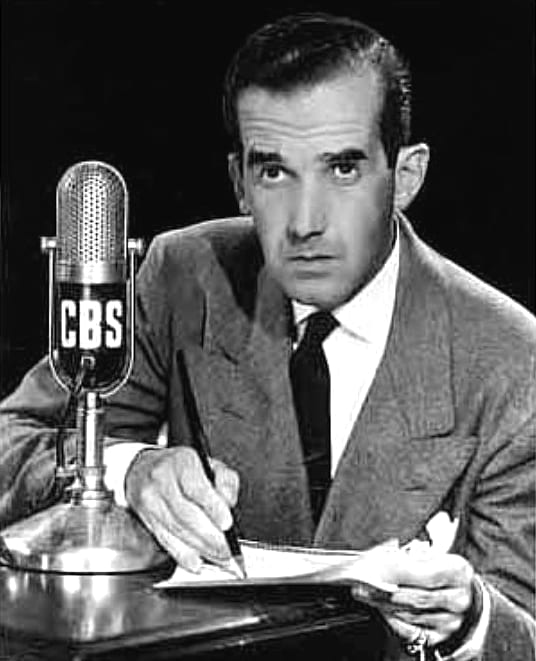
Photo of Edward R. Murrow prior to his assignment in London to cover the Royal Wedding in 1947; October 28, 1947. Wikimedia. Murrow was the broadcast journalist who took on Senator Joseph McCarthy and his hunt for what he claimed were widespread communist infiltrators in the US federal government.

Conspiracy theories come in all sizes and shapes and fall across the ideological and cultural spectrum. A conspiracy theory may be true or false, even though we typically assume “conspiracy theories” are just plain false (Refer here to an article detailing “5 US national security-related conspiracy theories that turned out to be true”).
Now, no one I know or have come across wants to be called a conspiracy theorist, as it is generally considered a derogatory label. It can be like calling someone a cult leader or member. So, when we use both terms to label someone, we are in danger of insulting them twice.
To clear up misconceptions about conspiracy theories and their immediately negative associations and reactions, it will prove beneficial to provide a working definition. Here’s how political scientist Joseph E. Uscinski, an expert on the subject matter, defines conspiracy theories in a recent video recorded interview:
A conspiracy theory…is a[n] accusatory perception in which a small group of powerful people are working in secret for their own benefit against the common good and in a way that undermines our bedrock ground rules against the widespread use of force and fraud. And further, this perception has not been granted legitimacy as true by the appropriate epistemological experts with data that is open to refutation.
Based on this definition, New Testament Christianity may have been deemed a conspiracy theory movement. It was also considered a sect or cult—fringe group. We will return to this topic in a future post.
Now, let’s categorize a few different kinds of conspiracy theories. We might find a divine conspiracy theory, as in Dallas Willard’s book The Divine Conspiracy, which is on Jesus’ school of discipleship. We might come across a demonic conspiracy theory, as in C.S. Lewis’s Screwtape Letters in which the demons prey on a human. Lastly, we might read about a human conspiracy theory, as in Bob Woodward and Carl Bernstein’s All the President’s Men, which was the full account of the Watergate Scandal.
What would count as other examples of human conspiracy theories? Depending on how one defines “epistemological experts,” as articulated above in Prof. Uscinski’s definition, “human” conspiracy theories may include the following examples: the movie JFK, Whitewater, the documentaries Inconvenient Truth, Inconvenient Sequel, and Bowling at Columbine, Benghazi, Pizzagate, and Russian Collusion (Check out the interview with Prof. Uscinski on the nature and breadth of conspiracy theories, including in the political realm, and how to analyze their presumed merits).
For what it’s worth, I affirm some of these “conspiracies theories” as more sound/true than others. Still, based on Prof. Uscinski’s definition and depending on how one defines “epistemological experts,” they might all fit the label “conspiracy theory.” Now one might think (wrongly) that I am conspiring to infuriate ‘both sides’ by claiming that conspiracies theories are no respecter of the right or left. Rather than dismiss out of hand a claim marshaled against one’s preferred political party, candidate, religion (for example, The DaVinci Code), and personal icon with the label “conspiracy theory,” we need to consider each conspiracy theory claim and discern whether it is factual.
In view of the prior reflections, what is required is public scrutiny, subject matter expertise, patience, and civility. No doubt, the process of evaluation and engagement of a given conspiracy theory can be exacting and exhausting. However, that does not excuse us from doing the heavy lifting and analyzing each claim as to its potential merits. Here are some (though not all) helpful guidelines to consider when analyzing conspiracies theories and their critiques:
- Those making the conspiracy theory claims must themselves go public rather than remain anonymous to enhance the credibility of their assertions. One of my concerns about Q of QAnon is that we do not know who Q is. Given the gravity of Q’s allegations, it is important to come forward and announce him or herself as well as substantiate the claims made.
- Those making the conspiracy theory claims must be open to vetting and debating their theories with subject matter experts. Vague allusions easily come across as delusions. While subject matter experts themselves may be found to be in error during or as a result of the discourse, all parties must be willing to analyze and debate theories thoroughly. It is important that those who put forth theories that detail conspiracies guard against making unsubstantiated claims, ones that they easily retract later without admitting mistakes. A claim that is not open to falsification cannot be substantiated and verified, and thus cannot be regarded as truly meaningful. The onus is on those putting forth conspiracy theories, or what are deemed conspiracies against the prevailing expert opinion in a given field, to make the case for their assertions and allegations, as the burden of proof is on them. A charge in itself does not warrant acceptance.
- Those articulating what are considered conspiracy theories or who are seeking to dismantle them appear more trustworthy when they do not serve to benefit or profit from their assertions, but perhaps have everything to lose. Consider here the FBI’s rigorous attempts to discredit Martin Luther King, Jr. under Edgar J. Hoover. According to The Washington Post,
Until her own death in 2006, Coretta Scott King, who endured the FBI’s campaign to discredit her husband, was open in her belief that a conspiracy led to the assassination. Her family filed a civil suit in 1999 to force more information into the public eye, and a Memphis jury ruled that the local, state and federal governments were liable for King’s death. The full transcript of the trial remains posted on the King Center’s website.
Dr. King and his family certainly suffered greatly for what they took to be the FBI’s withering and unjust scrutiny (Note here: sometimes those who seek to expose conspiracy theories as untrue may themselves be in danger of losing everything, as a Scientist American article points out in the case of scientist Stephan Lewandowsky). While not surefire proof, since someone asserting a conspiracy theory may wish to go down in history as unique or as a sacrificial lamb with a martyr’s complex, nonetheless, willingness to risk all for one’s claims merits that their views receive closer analysis.
From the flipside, consider here the statement Sara Northrup, former wife of L. Ron Hubbard, the Founder of Scientology, alleged that Hubbard made. Business Insider writes,
If true, that’s a staggering, disturbing claim, since religion does not exist to make people wealthy, but relationally whole. Now whether one would consider Scientology’s claims over the years that false information was being circulated worldwide to discredit Hubbard and the church a conspiracy theory, the Los Angeles Times claimed that Scientology’s operation “Snow White” evolved into a “massive criminal conspiracy.” Here is the full context of the statement in the Los Angeles Times:
Snow White began in 1973 as an effort by Scientology through Freedom of Information proceedings to purge government files of what Hubbard thought was false information being circulated worldwide to discredit him and the church. But the operation soon mushroomed into a massive criminal conspiracy, executed by the church’s legal and investigative arm, the Guardian Office.
Related to the point above on making conspiracy claims or assertions that do not prove self-serving, those confirming the accuracy of conspiracy theories add to their credibility to the extent their organization or movement is at risk of losing ground as a result of the charges. For example, Republicans and Democrats, Atheists and Christians, enhance the merits of their claims when they side with positions that could damage their political and ideological parties. Such was the case back in 1974 when an increasing number of Republicans in Congress refused to protect President Nixon in 1974 from the specter of impeachment.
- Another important factor comes into play when analyzing conspiracy theories. We gain credibility when we do not shout down our opponents, resort to character assassinations and name calling like “stupid,” “crazy,” “despicable,” and “disgusting.” We gain a greater hearing across the cultural divide in addressing conspiracy theory claims when we are peaceable, humble, and where possible empathic. For more on this subject, check out Chris Anderson’s interview with Bill Gates on TED starting at 30:37, especially beginning at 33:30. Anderson’s problematic language, quoted above, flies in the face of what Jonathan Haidt shared with Anderson about what is needed in public discourse at TedTalks in 2016: “Can a Divided America Heal?”
Whether we are asserting a conspiracy theory or trying to dismantle one, we could learn a thing or two from the renowned broadcast journalist Edward R. Murrow who took on the powerful US Senator Joseph McCarthy who destroyed people and their careers as he sought to rid the US government and society of what McCarthy alleged was widespread communist infiltration (Refer here for Murrow’s March 1954 broadcast critiquing McCarthy’s “Red Scare” claims and tactics). In an age where sensationalism easily dominates politics, religion, and the news, we can all learn from and follow the example of Murrow, who was known for his “just-the-facts, no-hype style of reporting and his careful separation of opinion from facts.” “The ultimate argument against McCarthy wasn’t Murrow’s facts, but his character.”
In the next post on this subject, we will consider whether the Christian faith and its claims function as a conspiracy theory.
Check out this video discussion for more on the subject matter of this blog post.
https://youtu.be/7ekQh_32uhY
About Paul Louis Metzger
Paul Louis Metzger, Ph.D., is Professor of Christian Theology & Theology of Culture, Multnomah University & Seminary, Director of The Institute for Cultural Engagement: New Wine, New Wineskins, and Editor of Cultural Encounters: A Journal for the Theology of Culture. You can read more about the author here.
Previous Post

August 23, 2020
Conspiracy Theories: Harmful and/or Healthy?
Next Post
September 11, 2020 Post 9/11: Christian Nationalism, the Global Church & Jesus’ Kingdom
Browse Our Archives
Select a Category Uncategorized
Select a Month June 2025 April 2025 March 2025 January 2025 December 2024 November 2024 October 2024 September 2024 August 2024 July 2024 June 2024 May 2024 April 2024 March 2024 February 2024 January 2024 December 2023 November 2023 October 2023 September 2023 August 2023 July 2023 June 2023 May 2023 April 2023 March 2023 February 2023 January 2023 December 2022 November 2022 October 2022 September 2022 August 2022 July 2022 June 2022 May 2022 April 2022 March 2022 February 2022 January 2022 December 2021 November 2021 October 2021 September 2021 August 2021 July 2021 June 2021 May 2021 April 2021 March 2021 February 2021 January 2021 December 2020 November 2020 October 2020 September 2020 August 2020 July 2020 June 2020 May 2020 April 2020 March 2020 February 2020 January 2020 December 2019 November 2019 October 2019 September 2019 August 2019 July 2019 June 2019 May 2019 April 2019 March 2019 February 2019 January 2019 December 2018 November 2018 October 2018 September 2018 August 2018 July 2018 June 2018 May 2018 April 2018 March 2018 February 2018 January 2018 December 2017 November 2017 October 2017 September 2017 August 2017 July 2017 June 2017 May 2017 April 2017 March 2017 February 2017 January 2017 December 2016 November 2016 October 2016 September 2016 August 2016 July 2016 June 2016 May 2016 April 2016 March 2016 February 2016 January 2016 December 2015 November 2015 October 2015 September 2015 August 2015 July 2015 June 2015 May 2015 April 2015 March 2015 February 2015 January 2015 December 2014 November 2014 October 2014 September 2014 August 2014 July 2014 June 2014 May 2014 April 2014 March 2014 February 2014 January 2014 December 2013 November 2013 October 2013 September 2013 August 2013 July 2013 June 2013 May 2013 April 2013 March 2013 February 2013 January 2013 December 2012 November 2012 October 2012 September 2012 August 2012 July 2012 June 2012 May 2012 April 2012 March 2012 February 2012
Follow Us!
TAKE THE
Religious Wisdom Quiz
Where did Elisha multiply oil?
Select your answer to see how you score.
Samaria Shunem Zarephath Jericho
Books by This Author Books by Paul Louis Metzger
Related posts from Uncommon God, Common Good

Heavenly Father’s Day on Trinity Sunday

Easter Triduum: Obey Your Thirst—for God

Holy Week Is Humble Week: "Beware of Becoming...

Excavating the Person in a Throwaway Culture
TRENDING AT PATHEOS Evangelical

The REST of Your Life: A Creative Wrestles...
This week I had a conversation with a good friend from church....

How the author of the world's best hymn...
I've been working with John Newton for a while now. This makes...

Long before this Lectio Divina, Psalm 130 - the song - started...

What About the Trees? Another Living Parable
After I finished writing the last article about falling leaves as a...

Why Classical Education Is a Conversation, Not a...
Come and Read: Joy in Classical Education When I was a little...

Cornell University has received a great deal of negative publicity and intense...
view all Evangelical blogs
Ad-Free & Subscriber Log-In Subscription Support
- About Us
- 2026 Calendar
- Videos
- Podcasts
- Library of World Religions
- Faith In Media Tracker
- Advertise With Us
- Write for Us
- Privacy Policy
- Terms of Service
- Do Not Sell My Data
- Contact Us
- Radiant Digital
- Manage Newsletter Subscriptions
- Unsubscribe From Notifications
- Sitemap
Copyright 2008-2026, Patheos. All rights reserved.
Subscription Support Ad-Free & Subscriber Log-In
Follow Patheos