
BuddhistCatholicContemplativeEvangelicalGeneral ChristianHinduJewishLatter-day SaintMuslimNew VisionsProgressive Christian
Beliefs
- Buddhist
- Catholic
- Contemplative
- Evangelical
- General Christian
- Hindu
- Jewish
- Latter-day Saint
- More Voices
- Muslim
- New Visions
- Pagan
- Progressive Christian
Topics
- Religion News
- Food and Religion
- Sports and Religion
- Religious Art
- Religious Music and Entertainment
- Religious Events
- History and Religion
- Style and Religion
- Politics and Religion
- Women in Religion
- Recreation Outdoors and Religion
- Business Finance and Religion
- Careers Workplace and Religion
- Education and Religion
- Family Parenting and Religion
- Health Fitness and Religion
- Home and Religion
- Relationships and Religion
- Technology and Religion
- Travel and Religion
Columnists
- Buddhist Columnists
- Business Finance and Religion Columnists
- Careers Workplace and Religion Columnists
- Catholic Columnists
- Contemplative Columnists
- Education and Religion Columnists
- Evangelists Columnists
- Family Parenting and Religion Columnists
- General Christian Columnists
- Health Fitness and Religion Columnists
- Hindu Columnists
- History and Religion Columnists
- Home and Religion Columnists
- Jewish Columnists
- More Voices Columnists
- Latter Day Columnists
- Muslim Columnists
- New Visions Columnists
- Nonreligious Columnists
- Pagan Columnists
- Politics and Religion Columnists
- Progressive Columnists
- Recreation Outdoors and Religion Columnists
- Relationships and Religion Columnists
- Religion News Columnists
- Religious Art Columnists
- Religious Events Columnists
- Religious Music and Entertainment Columnists
- Sports and Religion Columnists
- Style and Religion Columnists
- Technology and Religion Columnists
- Travel and Religion Columnists
- Women in Religion Columnists
Resource Library
- 2026 Calendar
- Library of World Religions
- The 100 Most Holy Places on Earth
- Patheos Answers
- Podcasts
- Videos
- Faith Leaders Database
- Anglican Episcopalian
- Bahai
- Baptist
- Buddhism
- Christianity
- Confucianism
- Eastern Orthodoxy
- Hinduism
- Holiness and Pentecostal
- ISKCON
- Islam
- Judaism
- Lutheran
- Methodist
- The Church of Jesus Christ of Latter-day Saints
- New Age
- Paganism
- Presbytarian and Reformed
- Protestantism
- Religion Behind the Scenes
- Roman Catholic
- Scientology
- Shia Islam
- Sikhism
- Sufism
- Sunni Islam
- Taoism
- Zen
- See all religions
Research Tools
 Ad-Free & Subscriber Log-In Subscription Support
Ad-Free & Subscriber Log-In Subscription Support
Follow Patheos 

- Trending:
- Forgiveness
- |
- Marriage
- |
- Consciousness
- |
- Death Penalty
- |
- Election
- |
- Halloween

- Home
- Evangelical
- Conspiracy Theories: Harmful and/or Healthy?
Conspiracy Theories: Harmful and/or Healthy?
Last updated on: August 23, 2020 at 9:20 am by Paul Louis Metzger
Conspiracy Theories: Harmful and/or Healthy? 2020-08-23T09:20:59-07:00 Paul Louis Metzger
Patheos Explore the world's faith through different perspectives on religion and spirituality! Patheos has the views of the prevalent religions and spiritualities of the world.
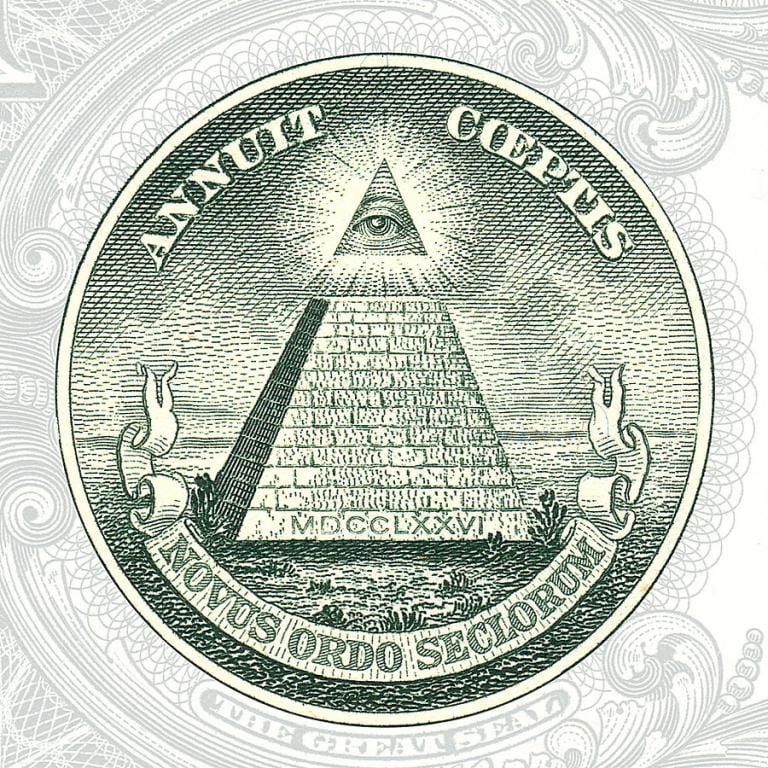
“Pyramid with the all-seeing eye on the back side of the US 1-Dollar bill,” de: Benutzer: Verwüstung, September 20, 2009, Public Domain; “The Eye of Providence, or the all-seeing eye of God, seen here on the US$1 bill, has been taken by some to be evidence of a conspiracy involving the founders of the United States and the Illuminati.” Wikipedia.

There’s a lot in the news these days on conspiracy theories. My colleague John W. Morehead and I have been reflecting upon conspiracy theories, too. In fact, we are doing a series of posts here at my blog column on the subject. If we step back and look at the sweep of American history, we may be surprised to know that there has often been a predilection for such theorizing. It’s in the tap water or in the ‘Covid’ air—just like a conspiracy theory might claim. Maybe you know someone who is a conspiracy theorist or an adherent. Then again, how would you even know? Why does it matter that we discuss this subject? How harmful or healthy could theorizing about conspiracies really be?
To address many of these types of questions, we reached out to Joseph E. Uscinski (JEU), who is Associate Professor of Political Science at the University of Miami. He studies public opinion and mass media with a focus on conspiracy theories, misinformation, and disinformation. He is the coauthor of American Conspiracy Theories (Oxford, 2014), editor of Conspiracy Theories and the People Who Believe Them (Oxford, 2018), and author of Conspiracy Theories: A Primer (Rowman & Littlefield, 2020). Here are the questions John Morehead and I asked. You can find Dr. Uscinski’s answers in the video at the close of this blog post.
John W. Morehead (JWM): In an essay in Argumenta, you stated that “conspiracy theories” is loaded terminology. Why is that and how would you define “conspiracy theories”?
JEU:
PLM: There are certain assumptions and stereotypes about who believes in conspiracy theories. What are they? Is everyone susceptible (if that’s the correct term) to believing in them? Regardless of the answer to this question, what makes some/or all susceptible?
JEU:
JWM: Why does this matter? Are they just theories, or do they have negative and possibly dangerous import? What kind of decisions are people making as a result of conspiracy thinking influences? How is such thinking shaping our society?
JEU:
JWM: How does partisanship and proximity to power play a part?
JEU:
PLM: In our current political context, more people are becoming aware of and talking about QAnon, including its popularity on the right. What are some other popular conspiracy theories of the past and present across the ideological and political spectrum? How far back does this go in American history?
JEU:
JWM: In your book Conspiracy Theories: A Primer, your final chapter discusses conspiracy theories related to President Trump. Can you discuss some of these and how the internet has contributed to them?
JEU:
JWM: In your Argumenta essay noted earlier, you argue that conspiracy theories should not be treated as wrong, and that they are necessary to the healthy functioning of society. This will be a hard pill to swallow for some and may sound confusing in light of what was discussed previously during this interview. Could you please unpack what you were getting at in the Argumenta essay along these lines?
JEU:
PLM: Last but not least, how would you encourage us to engage conspiracy theories and their adherents in conversation in order to foster healthy discourse for societal flourishing?
JEU:
About Paul Louis Metzger
Paul Louis Metzger, Ph.D., is Professor of Theology & Culture, Multnomah University & Seminary, Director of The Institute for Cultural Engagement: New Wine, New Wineskins, and author of numerous works, including New Wine Tastings: Theological Essays of Cultural Engagement. You can read more about the author here.
Previous Post

August 21, 2020
Orthopathy: It’s Not a Multifaith Weed Killer
Next Post
September 6, 2020 Conspiracy Theories: In Pursuit of Truth
Browse Our Archives
Select a Category Uncategorized
Select a Month June 2025 April 2025 March 2025 January 2025 December 2024 November 2024 October 2024 September 2024 August 2024 July 2024 June 2024 May 2024 April 2024 March 2024 February 2024 January 2024 December 2023 November 2023 October 2023 September 2023 August 2023 July 2023 June 2023 May 2023 April 2023 March 2023 February 2023 January 2023 December 2022 November 2022 October 2022 September 2022 August 2022 July 2022 June 2022 May 2022 April 2022 March 2022 February 2022 January 2022 December 2021 November 2021 October 2021 September 2021 August 2021 July 2021 June 2021 May 2021 April 2021 March 2021 February 2021 January 2021 December 2020 November 2020 October 2020 September 2020 August 2020 July 2020 June 2020 May 2020 April 2020 March 2020 February 2020 January 2020 December 2019 November 2019 October 2019 September 2019 August 2019 July 2019 June 2019 May 2019 April 2019 March 2019 February 2019 January 2019 December 2018 November 2018 October 2018 September 2018 August 2018 July 2018 June 2018 May 2018 April 2018 March 2018 February 2018 January 2018 December 2017 November 2017 October 2017 September 2017 August 2017 July 2017 June 2017 May 2017 April 2017 March 2017 February 2017 January 2017 December 2016 November 2016 October 2016 September 2016 August 2016 July 2016 June 2016 May 2016 April 2016 March 2016 February 2016 January 2016 December 2015 November 2015 October 2015 September 2015 August 2015 July 2015 June 2015 May 2015 April 2015 March 2015 February 2015 January 2015 December 2014 November 2014 October 2014 September 2014 August 2014 July 2014 June 2014 May 2014 April 2014 March 2014 February 2014 January 2014 December 2013 November 2013 October 2013 September 2013 August 2013 July 2013 June 2013 May 2013 April 2013 March 2013 February 2013 January 2013 December 2012 November 2012 October 2012 September 2012 August 2012 July 2012 June 2012 May 2012 April 2012 March 2012 February 2012
Follow Us!
TAKE THE
Religious Wisdom Quiz
Who wrote two letters known for emphasizing "truth" and "love"?
Select your answer to see how you score.
Peter John Paul James
Books by This Author Books by Paul Louis Metzger
Related posts from Uncommon God, Common Good

Heavenly Father’s Day on Trinity Sunday

Easter Triduum: Obey Your Thirst—for God

Holy Week Is Humble Week: "Beware of Becoming...

Excavating the Person in a Throwaway Culture
TRENDING AT PATHEOS Evangelical

The REST of Your Life: A Creative Wrestles...
This week I had a conversation with a good friend from church....

How the author of the world's best hymn...
I've been working with John Newton for a while now. This makes...

Long before this Lectio Divina, Psalm 130 - the song - started...

What About the Trees? Another Living Parable
After I finished writing the last article about falling leaves as a...

Why Classical Education Is a Conversation, Not a...
Come and Read: Joy in Classical Education When I was a little...

Cornell University has received a great deal of negative publicity and intense...
view all Evangelical blogs
Ad-Free & Subscriber Log-In Subscription Support
- About Us
- 2026 Calendar
- Videos
- Podcasts
- Library of World Religions
- Faith In Media Tracker
- Advertise With Us
- Write for Us
- Privacy Policy
- Terms of Service
- Do Not Sell My Data
- Contact Us
- Radiant Digital
- Manage Newsletter Subscriptions
- Unsubscribe From Notifications
- Sitemap
Copyright 2008-2026, Patheos. All rights reserved.
Subscription Support Ad-Free & Subscriber Log-In
Follow Patheos