
BuddhistCatholicContemplativeEvangelicalGeneral ChristianHinduJewishLatter-day SaintMuslimNew VisionsProgressive Christian
Beliefs
- Buddhist
- Catholic
- Contemplative
- Evangelical
- General Christian
- Hindu
- Jewish
- Latter-day Saint
- More Voices
- Muslim
- New Visions
- Pagan
- Progressive Christian
Topics
- Religion News
- Food and Religion
- Sports and Religion
- Religious Art
- Religious Music and Entertainment
- Religious Events
- History and Religion
- Style and Religion
- Politics and Religion
- Women in Religion
- Recreation Outdoors and Religion
- Business Finance and Religion
- Careers Workplace and Religion
- Education and Religion
- Family Parenting and Religion
- Health Fitness and Religion
- Home and Religion
- Relationships and Religion
- Technology and Religion
- Travel and Religion
Columnists
- Buddhist Columnists
- Business Finance and Religion Columnists
- Careers Workplace and Religion Columnists
- Catholic Columnists
- Contemplative Columnists
- Education and Religion Columnists
- Evangelists Columnists
- Family Parenting and Religion Columnists
- General Christian Columnists
- Health Fitness and Religion Columnists
- Hindu Columnists
- History and Religion Columnists
- Home and Religion Columnists
- Jewish Columnists
- More Voices Columnists
- Latter Day Columnists
- Muslim Columnists
- New Visions Columnists
- Nonreligious Columnists
- Pagan Columnists
- Politics and Religion Columnists
- Progressive Columnists
- Recreation Outdoors and Religion Columnists
- Relationships and Religion Columnists
- Religion News Columnists
- Religious Art Columnists
- Religious Events Columnists
- Religious Music and Entertainment Columnists
- Sports and Religion Columnists
- Style and Religion Columnists
- Technology and Religion Columnists
- Travel and Religion Columnists
- Women in Religion Columnists
Resource Library
- 2026 Calendar
- Library of World Religions
- The 100 Most Holy Places on Earth
- Patheos Answers
- Podcasts
- Videos
- Faith Leaders Database
- Anglican Episcopalian
- Bahai
- Baptist
- Buddhism
- Christianity
- Confucianism
- Eastern Orthodoxy
- Hinduism
- Holiness and Pentecostal
- ISKCON
- Islam
- Judaism
- Lutheran
- Methodist
- The Church of Jesus Christ of Latter-day Saints
- New Age
- Paganism
- Presbytarian and Reformed
- Protestantism
- Religion Behind the Scenes
- Roman Catholic
- Scientology
- Shia Islam
- Sikhism
- Sufism
- Sunni Islam
- Taoism
- Zen
- See all religions
Research Tools
 Ad-Free & Subscriber Log-In Subscription Support
Follow Patheos 

- Trending:
- Advent
- |
- Forgiveness
- |
- Thanksgiving
- |
- Election
- |
- Seasonal Holidays
- |
- Marriage

- Home
- Evangelical
- Remember Hanukkah and Celebrate Religious Liberty
Remember Hanukkah and Celebrate Religious Liberty
Last updated on: December 27, 2019 at 11:53 am by Paul Louis Metzger
Remember Hanukkah and Celebrate Religious Liberty 2019-12-27T11:53:50-08:00 Paul Louis Metzger
Patheos Explore the world's faith through different perspectives on religion and spirituality! Patheos has the views of the prevalent religions and spiritualities of the world.
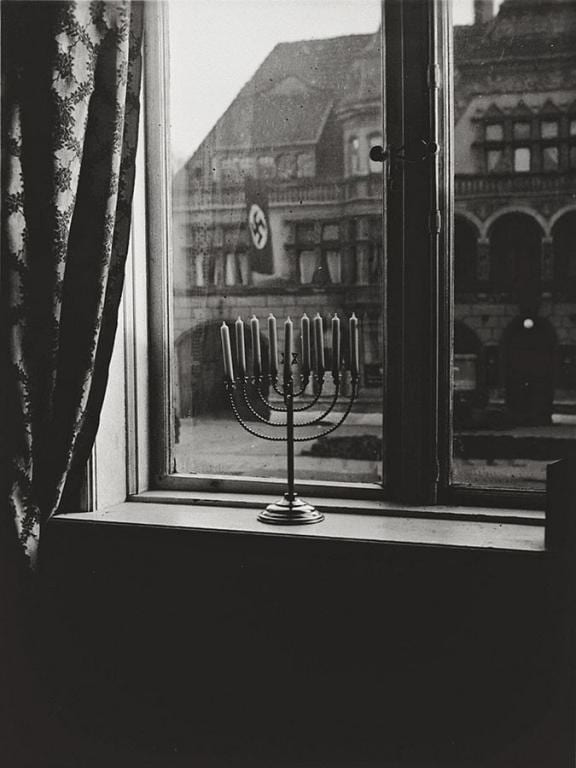

Edward Gibbon famously remarked: “The various modes of worship which prevailed in the Roman world were all considered by the people as equally true; by the philosopher as equally false; and by the magistrate as equally useful. And thus toleration produced not only mutual indulgence, but even religious concord.”[1] I do not think the Roman Empire owned the copyright on this view of religion. It has triumphed in many eras. However, dissenting views have arisen throughout history. Take, for example, the story of the Maccabees and their Judean followers whose courage and conviction serve as inspiration for the eight-day Jewish holiday known as Hanukkah, which is celebrated in December every year. The Maccabees refused to succumb to the tyrannical demands of the Syrian king Antiochus IV, who sought to force them to worship the Greek God Zeus and partake in pagan sacrifices. Beginning in 167 BCE and culminating in 164 BCE with the capture, cleansing and rededication of the second Temple in Jerusalem, the Maccabees and their small band of soldiers fought for religious liberty and against what we might call today the commodification of their religion. The chief symbol of Hanukkah is the menorah, which is an eight branched candelabra. The eight branches signify the miraculous intervention of God: the one drop of oil remaining in a jar at the Temple’s reclamation burned for eight days in the menorah, when it should have burned only for one.
It has been argued that Antiochus IV or Antiochus Epiphanies was surprised that the Jewish people should take such offense at his attempts of adapting and syncretizing religious traditions in service to his rule, in keeping with Gibbon’s claim noted at the outset of this piece. According to R. Kendall Soulen, Antiochus likely maintained that Israel’s God was simply a tribal name for the transcendent and all-encompassing nameless deity of imperial rule.[2] Little did Antiochus truly grasp that for the monotheistic Maccabees the God whom the Jewish people knew and worshiped as the LORD—the name for the God of the Covenant made with the Patriarchs and revealed to Moses at the burning bush—was the Almighty God above Heaven and Earth, who would not allow his name or his named people to be commodified by tyrants. As with Moses and Pharaoh, the Maccabees declared that Antiochus should cease and desist.[3]
Throughout much of their history, the Jewish people have sought to navigate those religious, cultural and political forces that would deprive them of their religious liberty. Some have claimed that Christmas in the United States has posed a threat to Judaism, and thus Hanukkah has been elevated to greater prominence as a Jewish religious holiday than would be historically warranted given that it is relatively late and extrabiblical in its origin, unlike Passover or Succoth.[4] Regardless of the historical triggers for its emergence as a cherished holiday, it serves to counter forces that would weaken the Jewish heritage:
Since Hanukkah is not biblically ordained, the liturgy for the holiday is not well developed. It is actually a quite minor festival. However, it has become one of the most beloved of Jewish holidays. In an act of defiance against those in the past and in the present who would root out Jewish practice, the observance of Hanukkah has assumed a visible community aspect. Jews will often gather for communal celebrations and public candle lighting. At such celebrations, Hanukkah songs are sung and traditional games such as dreidel are played.[5]
Hanukkah, like many religious holidays, serves to mold a people according to the substance and form of a given spiritual tradition and story so that they and their tradition do not become eclipsed by competing narratives, whether secular or religious. In particular, Hanukkah addresses the vital concerns of religious liberty and freedom of worship. One analysis claims that the theology and themes behind Hanukkah entail the following: “Like Passover, Hanukkah is a holiday that celebrates the liberation from oppression. It also provides a strong argument in favor of freedom of worship and religion. In spite of the human action that is commemorated, never far from the surface is the theology that the liberation was possible only thanks to the miraculous support of the Divine.”[6]
Going beyond singular reflection on Hanukkah, there are many reasons why people celebrate religious holidays, including Christmas and Hanukkah. Some of those reasons include ethnic, nationalist, and consumerist agendas. The following point on Hanukkah made in The Atlantic piece noted earlier could be extended to other holidays, including in the Christian tradition: “It’s so simple, so conveniently vague, that it has been used by rabbis, advertisers, Zionists, Hebrew school teachers, and parents to promote everything from ethnic pride and nationalism to engagement in Jewish life and buying stuff.”[7]
Speaking of ethnic pride and nationalism, from my vantage point, we need to guard against those forces that bind and rebind societies in ways that favor one people group to the detriment of others. The call for religious liberty, for example, should not be taken by Christians as a rallying cry to enforce Christian hegemony in the U.S. to the detriment of Jews, Muslims, Atheists, and others. However, the solution is not the privatization and subjectification of religion, whereby it becomes merely the object of sentimental attraction of religious individuals, who should keep their convictions to themselves. On this view, the only time religion is given public credence is when it serves the GNP with the purchase of goods and services in the marketplace of commodified desire during holiday seasons.
The dominant mindset in the U.S. favors the democratization of religion. For one, it is seen to safeguard against religious hegemony. Against this backdrop, religious holidays like Hanukkah and Christmas are like consumer products. Celebrate them, if you wish. Pick and choose and mix them together, if you like. They merely exist for fostering holiday cheer and a sense of mystery, nostalgia, or novelty. Contrary to what many Americans think, such democratization is a form of tyranny.
Today in our free market society, tyranny often takes the shape of consumer demand. This demand transforms, reshapes, and co-opts the great religious traditions so that they no longer serve to bind societies, but rather cater to other forces’ agendas. Lesslie Newbigin puts the matter this way:
Different religious traditions lose their capacity to be the binding element of societies and become instead mere options for religious consumers to select for their own private reasons, reasons which are not to be argued about. Thus “democratized,” religions enter the marketplace as objects of subjective choices in much the same way as brands of toothpaste and laundry soap.[8]
As Newbigin suggests, religious traditions are better and rightly conceived as metaphysical underpinnings that serve to bind and rebind societies. The remembrance of Hanukkah with its historic claim to honor the LORD, whose name is not to be discarded and replaced by the leading brand deity of the month, whether Egyptian or Greek or Roman, German, American, or other, should inspire us to safeguard space for the religious and cultural minority voices whether they be Jewish, Palestinian, African American, Mexican, or other, whatever their tradition, rather than oppress them. We who are Christians should remember and show respect for Hanukkah during Advent and Christmastide and cherish the biblical Jewish holidays that support and give rise to our own holy days like Passover and Pentecost. May we also safeguard against religious hegemony and its consumerized counterpart that for all its supposed merits can never rebind society in a manner that protects the rights of religious and non-religious minorities and the people generally from magistrates and rulers who would use religion for their own ends to commodify the masses.
The Institute for Cultural Engagement: New Wine, New Wineskins will host a conference titled “Religious Liberty—For All” on Saturday, March 14, 2020 at Multnomah University and Seminary in Portland, Oregon. Refer here to the post introducing the conference.
_______________
[1]Edward Gibbon, The Decline and Fall of the Roman Empire, 3 vols. (New York: The Modern Library, 1995), 1:22.
[2]See R. Kendall Soulen, “‘Go Tell Pharaoh,’ Or, Why Empires Prefer a Nameless God,” Cultural Encounters: A Journal for the Theology of Culture 1, no. 2 (Summer 2005): 51-52.
[3]See Soulen’s entire essay, “‘Go Tell Pharaoh,’ Or, Why Empires Prefer a Nameless God,” pages 49-59.
[4]For critical reflection on this argument and Hanukkah’s significance in the Jewish community in the United States, see Emma Green, “Hanukkah, Why? Cultural critics often blame Christmas for the festival’s commercialized kitsch. The real story is much more complicated,” The Atlantic, December 9, 2015, https://www.theatlantic.com/business/archive/2015/12/hanukkah-sucks-amirite/419649/ (accessed on 12/27/2019). Green writes: “So why, in America, has Hanukkah taken on outsized significance? Because it serves a particular purpose: an opportunity to negotiate the twin, competing pressures of ethnic tension and assimilation. As the Rowan University historian Dianne Ashton writes in her book, Hanukkah in America, ‘Hanukkah’s strongest American advocates seem to have been those who felt the complexities of American Jewish life most acutely.’” For a treatment of Hanukkah in more general terms, refer here: “Hanukkah,” Encyclopaedia Britannica; https://www.britannica.com/topic/Hanukkah (accessed on 12/27/2019).
[5]“Hanukkah 101: From candle-lighting to Maccabees and latkes to dreidels,” My Jewish Learning; https://www.myjewishlearning.com/article/hanukkah-101/ (accessed on 12/27/2019).
[6]“Hanukkah 101: From candle-lighting to Maccabees and latkes to dreidels,” My Jewish Learning; https://www.myjewishlearning.com/article/hanukkah-101/ (accessed on 12/27/2019). See also the discussion of Hanukkah in Malka Drucker, The Family Treasury of Jewish Holidays, with illustrations by Nancy Patz (Boston: Little, Brown and Company, 1994), page 46.
[7]Green, “Hanukkah, Why?”; https://www.theatlantic.com/business/archive/2015/12/hanukkah-sucks-amirite/419649/ (accessed on 12/27/2019).
[8]Lesslie Newbigin, “Religion for the Marketplace,” Christian Uniqueness Reconsidered: The Myth of a Pluralistic Theology of Religions, ed. Gavin D’Costa, Faith Meets Faith Series in interreligious Dialogue (Maryknoll, NY: Orbis Books, 1990), page 152.
Previous Post

December 26, 2019
Put the Cross Back in Christmas and Joy in Christmastide
Next Post
December 28, 2019 Religious Liberty and Holiday Shopping
Browse Our Archives
Select a Category Uncategorized
Select a Month June 2025 April 2025 March 2025 January 2025 December 2024 November 2024 October 2024 September 2024 August 2024 July 2024 June 2024 May 2024 April 2024 March 2024 February 2024 January 2024 December 2023 November 2023 October 2023 September 2023 August 2023 July 2023 June 2023 May 2023 April 2023 March 2023 February 2023 January 2023 December 2022 November 2022 October 2022 September 2022 August 2022 July 2022 June 2022 May 2022 April 2022 March 2022 February 2022 January 2022 December 2021 November 2021 October 2021 September 2021 August 2021 July 2021 June 2021 May 2021 April 2021 March 2021 February 2021 January 2021 December 2020 November 2020 October 2020 September 2020 August 2020 July 2020 June 2020 May 2020 April 2020 March 2020 February 2020 January 2020 December 2019 November 2019 October 2019 September 2019 August 2019 July 2019 June 2019 May 2019 April 2019 March 2019 February 2019 January 2019 December 2018 November 2018 October 2018 September 2018 August 2018 July 2018 June 2018 May 2018 April 2018 March 2018 February 2018 January 2018 December 2017 November 2017 October 2017 September 2017 August 2017 July 2017 June 2017 May 2017 April 2017 March 2017 February 2017 January 2017 December 2016 November 2016 October 2016 September 2016 August 2016 July 2016 June 2016 May 2016 April 2016 March 2016 February 2016 January 2016 December 2015 November 2015 October 2015 September 2015 August 2015 July 2015 June 2015 May 2015 April 2015 March 2015 February 2015 January 2015 December 2014 November 2014 October 2014 September 2014 August 2014 July 2014 June 2014 May 2014 April 2014 March 2014 February 2014 January 2014 December 2013 November 2013 October 2013 September 2013 August 2013 July 2013 June 2013 May 2013 April 2013 March 2013 February 2013 January 2013 December 2012 November 2012 October 2012 September 2012 August 2012 July 2012 June 2012 May 2012 April 2012 March 2012 February 2012
Follow Us!
TAKE THE
Religious Wisdom Quiz
What baby was placed in a basket in the river?
Select your answer to see how you score.
Moses Joseph Samuel Jesus
Books by This Author Books by Paul Louis Metzger
Related posts from Uncommon God, Common Good

Heavenly Father’s Day on Trinity Sunday

Easter Triduum: Obey Your Thirst—for God

Holy Week Is Humble Week: "Beware of Becoming...

Excavating the Person in a Throwaway Culture
TRENDING AT PATHEOS Evangelical

Making Stones Into Bread: Choosing the “Right” Work
I was on my online arts ministry Zoom meeting with the International...

Ukraine’s exhausted Christians face fifth winter of war
By Julian Lukins The full-scale war in Ukraine is taking “a serious...

Russell Brand's Conviction is not anti-Christian Persecution
How do we shed the reputation that the Church is OK with...

Have you ever caught yourself saying, “I’ll do it tomorrow,” or “Now...

Write Your Story: A Great Way to Find...
A few month’s back, my son was scrolling around Facebook and saw...

Throughout history, people have pursued pleasure, possessions, relationships, and success in an...
view all Evangelical blogs
Ad-Free & Subscriber Log-In Subscription Support
- About Us
- 2026 Calendar
- Videos
- Podcasts
- Library of World Religions
- Faith In Media Tracker
- Advertise With Us
- Write for Us
- Privacy Policy
- Terms of Service
- Do Not Sell My Data
- Contact Us
- Radiant Digital
- Manage Newsletter Subscriptions
- Unsubscribe From Notifications
- Sitemap
Copyright 2008-2026, Patheos. All rights reserved.
Subscription Support Ad-Free & Subscriber Log-In
Follow Patheos